
What Vertical Storage Should Do
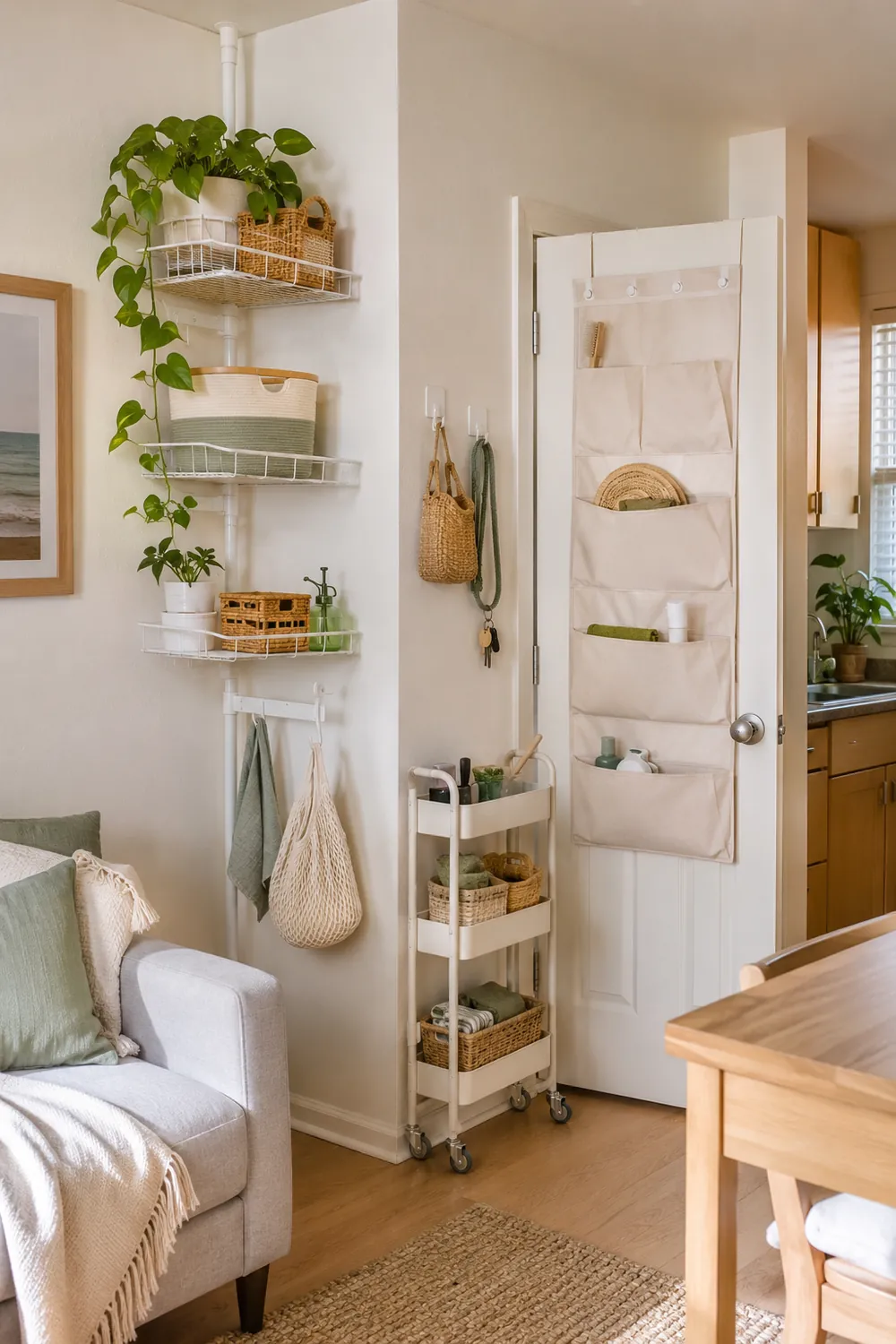
The finished system should increase capacity without blocking movement, darkening windows, covering vents, or making every wall feel busy. For a broader planning framework, see the Small Space Storage Guide and How to Add Storage to a Small Apartment. Frequently used items should remain easy to reach, while lighter occasional items move higher.
Result checklist
- Floor area stays open
- Daily items remain reachable
- Heavy items stay low
- Doors and windows function
- Storage remains stable
- Visual clutter stays controlled
Quick Answer
Choose one primary vertical-storage method: a tall narrow shelf, compatible wall shelving, an over-door organizer, removable hooks, a slim rolling cart, or a freestanding unit above an unused fixture. If the whole room needs a reset first, use the Home Organization: Complete Guide or How to Organize a Home Room by Room before buying organizers. Measure width, height, depth, door swing, outlet and vent locations, and safe reach before installation. Store heavier items lower and lighter occasional items higher.
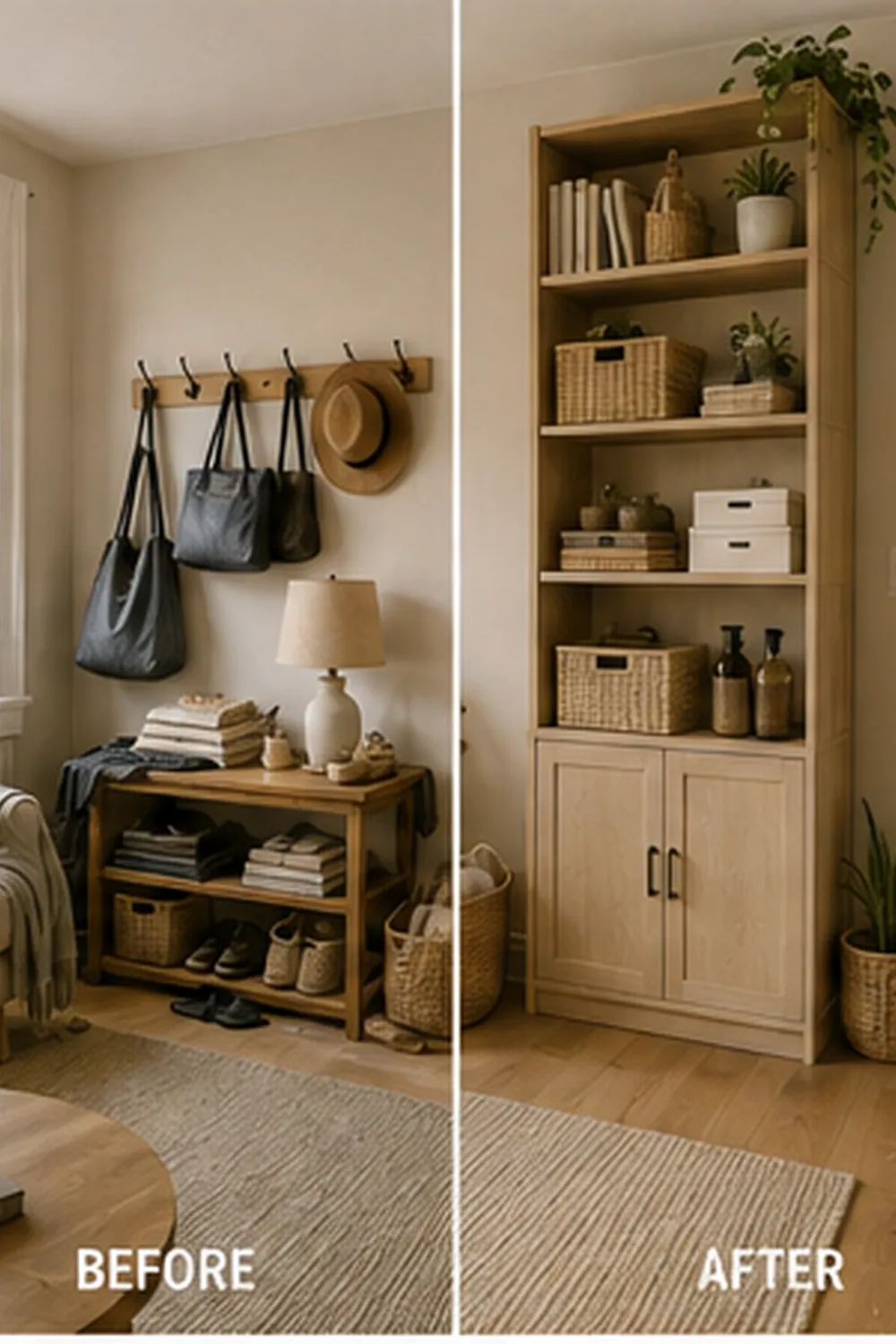
Table of Contents
When Vertical Storage Is the Right Solution
| Problem | Best vertical response | Check first |
|---|---|---|
| Floor baskets crowd the room | One tall narrow shelf | Footprint, stability, anchoring, and reach |
| A door has unused space | Over-door organizer or hooks | Door thickness, loaded depth, and closure |
| A narrow gap is empty | Slim rolling cart | Gap width, wheel path, and removal clearance |
| Wall space is available | Mounted shelves or rails | Wall construction, lease rules, and load |
| Space above a fixture is unused | Freestanding over-fixture unit | Fixture access, stability, plumbing, and ventilation |
| Daily items collect on surfaces | Reachable hooks or lower shelves | Return habit and category limits |
Choose the Right Vertical Storage Type
Tall Narrow Shelving
Best when a narrow footprint is available and one unit can replace several smaller pieces. This is especially useful in a small closet or narrow entryway.
Mounted Shelves and Rails
Best for permanent or approved installations where the wall and load requirements are understood.
Over-Door Storage
Best on compatible hinged doors that still open and close fully when loaded. It can be especially useful in a small entryway with no closet or a reach-in closet.
Slim Rolling Carts
Best for narrow gaps where storage must move for cleaning or access. Similar thinking works in small kitchens, small bathrooms, and small laundry rooms.
Hooks and Grippers
Best for lightweight daily-use items on compatible surfaces.
Freestanding Storage Towers
Best above toilets, washers, desks, or other zones when access and stability remain clear.
The One-Vertical-Zone Rule
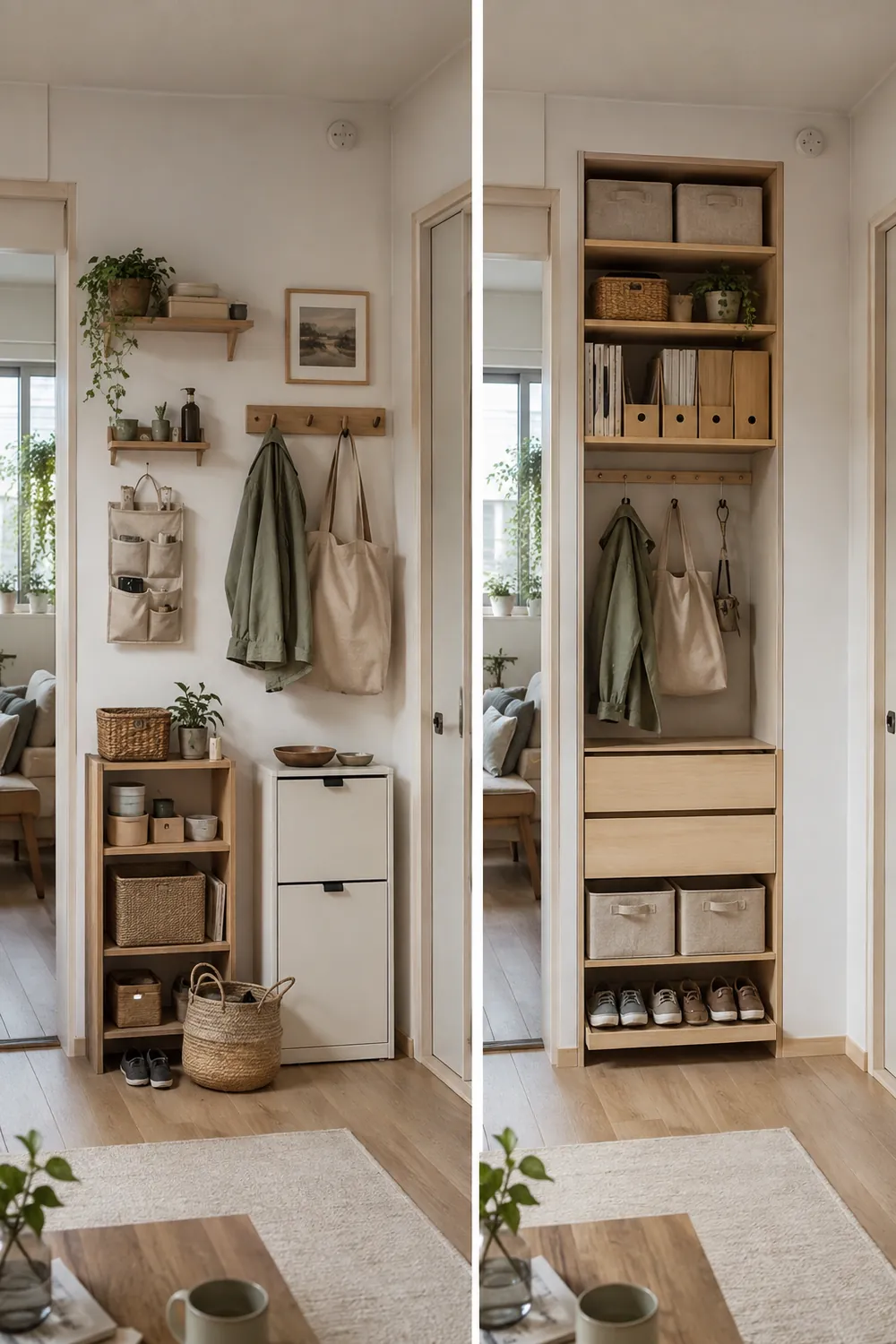
Start with one strong vertical-storage zone per room. If visual clutter is already a problem, pair this rule with the systems in Home Organization Mistakes to Avoid and the Daily Home Reset Routine. Several unrelated shelves, hooks, towers, and hanging organizers can make the room feel more crowded than one measured system.
Measure Before Installing Vertical Storage
Width and Depth
Measure the wall, gap, door, fixture, or furniture footprint and preserve the walking path.
Height and Reach
Measure ceiling height, trim, sprinklers, lights, comfortable reach, and the space needed to remove containers.
Door and Window Movement
Check doors, closet panels, windows, curtains, handles, and nearby drawers through their full range.
Wall and Surface Conditions
Identify wall construction, studs where required, finish compatibility, moisture, lease restrictions, and anchoring instructions. Renters should also compare renter-friendly storage ideas before choosing a permanent wall system.
Follow manufacturer instructions for assembly, load limits, anchoring, mounting surfaces, and removal. Keep heavy items low, do not place fragile or hazardous items overhead, and preserve exits, vents, outlets, heaters, plumbing, and service access.
Assign Items by Vertical Level
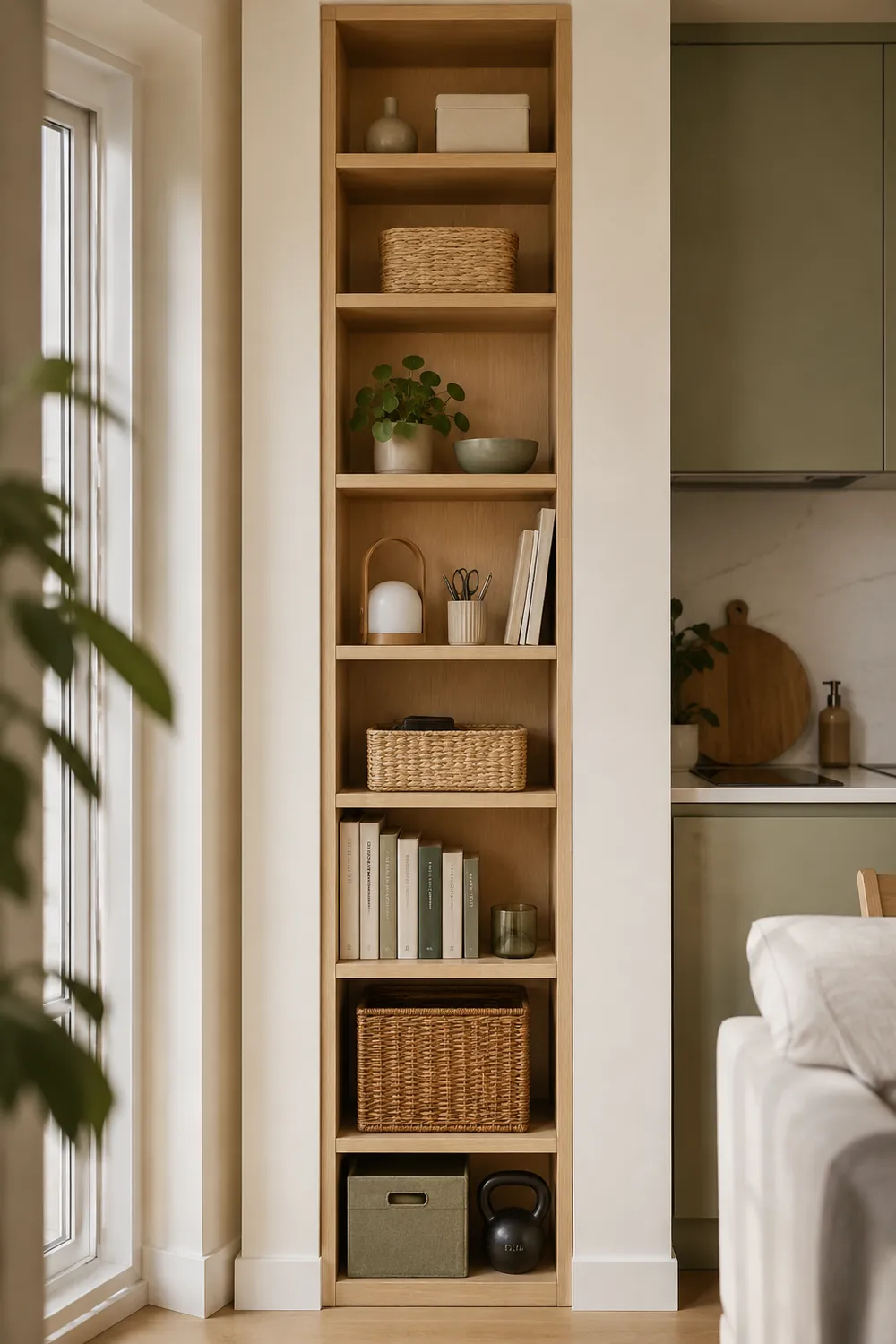
Lower Level
Heavy containers, frequently handled baskets, books, appliances, and stable closed storage. In kitchens and pantries, the same lower-level principle works well with the Pantry Organization Guide and Pantry Shelf Spacing Guide.
Reachable Middle
Daily-use items, active supplies, current routines, and categories that need frequent return.
Upper Level
Lightweight seasonal, occasional, decorative, or backup items that can be retrieved safely.
How to Use Vertical Storage by Room
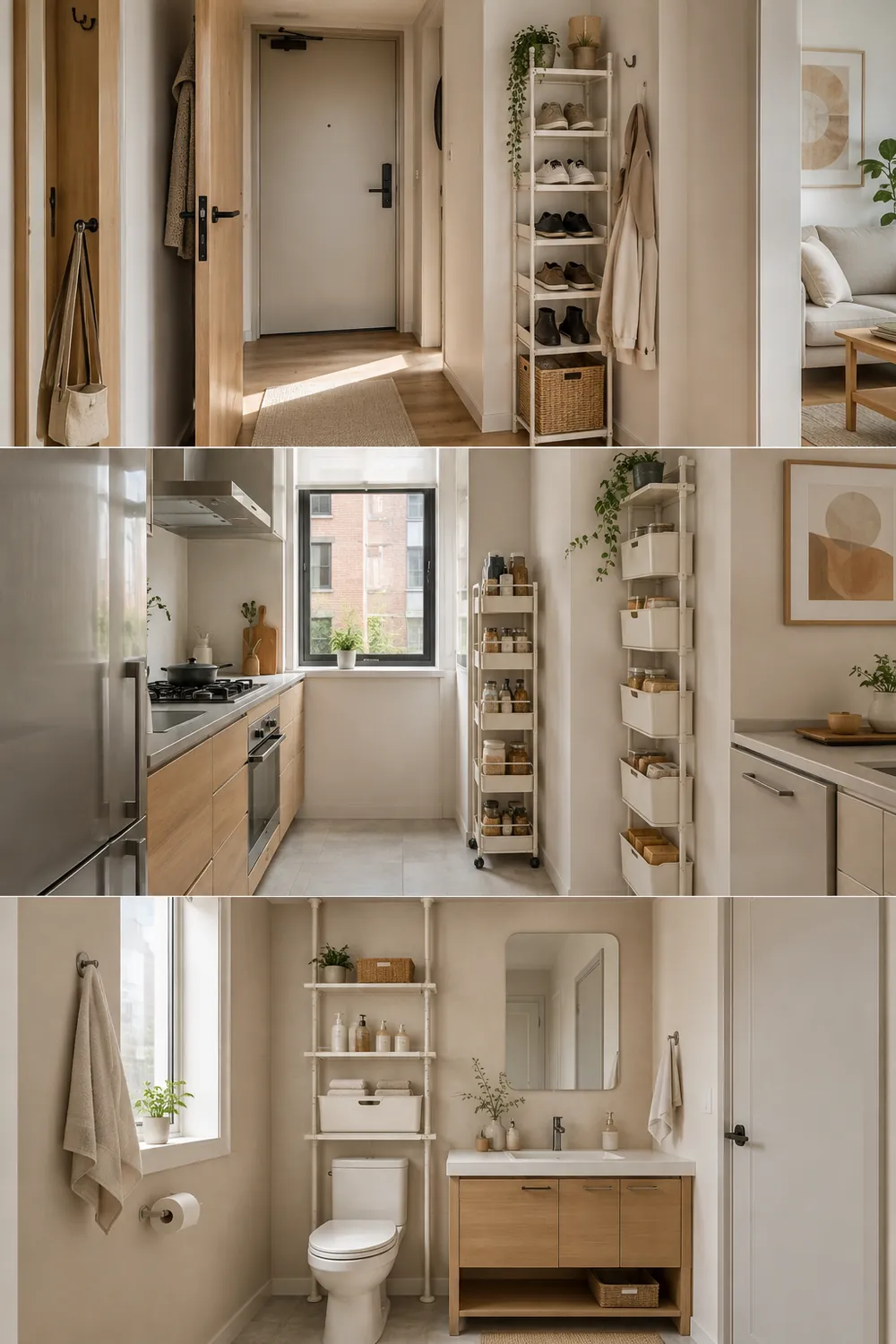
Entryway
Best method: a narrow shoe tower, reachable hooks, or one tall closed unit. For more options, see Entryway Organization Guide, How to Organize Shoes by the Front Door, and How to Keep an Entryway Clutter-Free.
Avoid: blocking the entry door, narrowing the exit path, or stacking heavy items overhead.
Living Room
Best method: one tall bookcase or one coordinated wall-storage zone with a few closed baskets.
Avoid: filling every wall or mixing too many unrelated shelf styles.
Bedroom
Best method: over-door storage, slim shelving, or a tall closed cabinet for mixed categories.
Avoid: storing daily-use clothing or accessories so high that they never get returned.
Kitchen
Best method: wall rails, a narrow rolling cart, tall pantry storage, or compatible cabinet-door organization. Related planning guides include the Kitchen Organization Guide, How to Keep Kitchen Counters Clutter-Free, and How to Organize a Kitchen Without a Pantry.
Avoid: blocking appliance ventilation, outlets, cabinet doors, or valuable prep space.
Bathroom
Best method: over-toilet storage, tension-pole shelving, hooks, or a slim cart. See the Bathroom Organization Guide, How to Organize Under the Bathroom Sink, and How to Organize a Bathroom Vanity for complementary storage zones.
Avoid: blocking plumbing, ventilation, shower access, or the space needed to clean around fixtures.
Laundry Area
Best method: an over-machine shelf, narrow rolling cart, or wall-mounted drying/storage system. Continue with the Laundry Room Organization Guide, How to Organize a Laundry Closet, and How to Organize Laundry Supplies.
Avoid: blocking machine doors, hoses, valves, vents, or service access.
Compare Vertical Storage Methods
| Method | Best for | Floor space used | Installation | Renter-friendly? | Visual clutter risk | Main trade-off |
|---|---|---|---|---|---|---|
| Tall narrow shelf | Books, baskets, pantry overflow | Low | Freestanding; anchoring may be required | Usually | Medium | Open shelves can look busy |
| Wall-mounted rail / shelving | Kitchens, closets, utility walls | None | Wall mounting | Usually no | Low–medium | Wall type and load limits matter |
| Over-door organizer | Shoes, accessories, lightweight categories | None | Hangs over compatible door | Yes | Medium | Loaded depth can affect door closure |
| Removable hooks | Light daily-use items | None | Adhesive / removable system | Yes, on compatible surfaces | Low | Surface and load limits matter |
| Slim rolling cart | Narrow kitchen, bath, or laundry gaps | Low | Freestanding | Yes | Medium | Needs a clear wheel path |
| Over-fixture tower | Bathroom or laundry vertical space | Low | Freestanding | Usually | Medium | Can feel bulky; service access matters |
| Tension-pole system | Bathrooms and no-drill renter setups | Very low | Tension / no drill | Yes, when compatible | Low | Ceiling/surface compatibility and stability matter |
| Narrow entryway tower | Shoes and small entryway items | Very low | Freestanding | Yes | Medium | Can look busy if overloaded |
| Tall closed cabinet | Mixed supplies, toiletries, cleaning, pantry overflow | Low | Freestanding; anchoring may be required | Usually | Low | Door swing and depth must be measured |
Open vs Closed Vertical Storage
Use Open Storage For
Books, attractive daily items, uniform baskets, plants, and objects that are easy to reset.
Use Closed or Opaque Storage For
Paperwork, cables, backup toiletries, cleaning products, mixed accessories, and visually inconsistent categories. In pantry zones, small-pantry organization and pantries with no shelves are good examples of when closed or contained storage matters.
How to Use Vertical Storage Step by Step
Identify the category needing storage
Choose the inventory problem before the organizer. If the entire home feels disorganized, start with How to Organize Your Home so vertical storage solves a real category problem instead of becoming more furniture.
Reduce the category
Remove duplicates, damaged items, and things stored in the wrong room.
Choose one vertical zone
Select a wall, door, narrow gap, or over-fixture area.
Protect access
Mark doors, windows, vents, outlets, heaters, plumbing, and walking paths.
Measure the full system
Include storage depth, doors, bins, hooks, handles, and removal space.
Confirm installation requirements
Check wall type, lease rules, anchoring, load, and surface compatibility.
Place heavy items low
Keep the system stable and easier to use.
Keep daily items reachable
Use the middle zone for active routines. The goal is the same as in How to Create Pantry Zones—keep frequent-use categories where they can be grabbed and returned quickly.
Use upper space selectively
Store lightweight occasional items high.
Test movement and cleaning
Open doors, remove containers, walk around, and clean the full area.
Vertical Storage Mistakes
Installing too many small shelves
The room gains visual noise without gaining useful capacity.
Placing heavy items high
Retrieval becomes difficult and falling risk increases.
Ignoring anchoring instructions
Tall furniture or mounted systems may become unstable.
Blocking doors or windows
Storage interferes with movement, light, ventilation, and emergency access.
Using every wall
The room feels enclosed and difficult to reset.
Storing daily items too high
Frequently used items stay on surfaces because returning them is inconvenient.
Buying storage before measuring
A useful product can still fail if doors, trim, outlets, or walking clearance were never checked.
Mixing too many organizer styles
Several unrelated systems can make a small room feel visually fragmented. The same principle appears in clutter-free kitchen counters and clutter-free entryways.
Leaving visual clutter exposed
Open storage works best for coordinated items; mixed supplies often need closed or opaque storage.
Assuming renter-friendly means damage-proof
Removable hooks and tension systems still require compatible surfaces, correct installation, and careful removal.
Final Recommendation
For most rooms, use one tall narrow shelving unit or one organized wall zone as the primary vertical system. Add compatible hooks or door storage only for a specific daily category, and use a slim rolling cart when a true narrow gap exists. Keep heavy items low, daily items reachable, and some vertical space intentionally empty.
Cross-Cluster Idea: Use the Same Vertical-Space Logic Around Appliances
Vertical storage is not only for shoes, toiletries, and books. The same wall-first approach works around countertop appliances. Inplanty’s Coffee Stations & Espresso Setups cluster shows how shelving, carts, cabinet zones, and hidden backup storage can free work surfaces in small kitchens and improve coffee-station storage.
Best Vertical Storage Products by Use Case
These nine verified Amazon US products solve different vertical-storage problems. They are not a single room package, and there is intentionally no duplicate product type just to increase the count.
Affiliate disclosure: As an Amazon Associate, Inplanty may earn from qualifying purchases.

Furinno LUDER 5-Tier Narrow Bookshelf
Best for: Living rooms, bedrooms, offices, and pantry overflow where one narrow freestanding unit can replace several small storage pieces.
Why it works: Adds five vertical levels while keeping the footprint narrow.
Main trade-off: Open shelves expose visual clutter, and tall furniture may require anchoring.
Check before buying: Measure footprint, reach, stability, and the manufacturer’s anchoring requirements.
Who should skip it: Skip it if you need concealed storage for visually mixed items.
View on Amazon
SPACEKEEPER 4-Tier Slim Rolling Storage Cart
Best for: Narrow gaps in bathrooms, kitchens, and laundry zones where storage needs to move for access or cleaning.
Why it works: Uses height in a very narrow footprint and can roll out when needed.
Main trade-off: It needs a clear wheel path and enough room to pull the cart out.
Check before buying: Measure gap width, wheel path, door swing, and nearby vents or appliance doors.
Who should skip it: Skip it if the cart would live in a walkway or block a frequently opened cabinet.
View on Amazon
Whitmor Over-the-Door Shoe Shelves — 26 Sections
Best for: Shoes and lightweight accessories when a compatible door has unused vertical area.
Why it works: Adds storage without taking floor or wall space.
Main trade-off: Loaded depth can interfere with door closure or nearby furniture.
Check before buying: Check door thickness, handle clearance, wall collision, and the loaded organizer depth.
Who should skip it: Skip it if the door already swings into a tight passage or cannot close cleanly when loaded.
View on Amazon
Command Large Utility Hooks
Best for: Lightweight daily-use items that need a return point without permanent drilling.
Why it works: Creates small vertical hanging zones on compatible surfaces.
Main trade-off: Surface preparation, finish compatibility, load limits, and removal instructions matter.
Check before buying: Check the wall finish, object weight, lease rules, and whether the hook location interferes with doors or drawers.
Who should skip it: Skip it for heavy, fragile, hazardous, or high-value objects.
View on Amazon
VASAGLE 4-Tier Over-the-Toilet Storage
Best for: Bathrooms where the space above the toilet is otherwise unused.
Why it works: Adds multiple storage levels without consuming a separate floor zone.
Main trade-off: The unit can feel bulky and must preserve plumbing and cleaning access.
Check before buying: Measure fixture width, wall clearance, plumbing access, floor level, and stability requirements.
Who should skip it: Skip it if the room is so narrow that the frame makes the toilet area feel enclosed.
View on Amazon
Colingmill Twin Rail Upright Wall Shelving System
Best for: Kitchens, closets, and utility walls where adjustable wall-mounted shelving can replace floor furniture.
Why it works: Moves storage onto the wall and lets shelf positions be adjusted along the vertical rails.
Main trade-off: It is a true mounted system, so wall construction, fasteners, and installation quality matter.
Check before buying: Confirm wall type, mounting hardware, load requirements, lease rules, and clearance around outlets or vents.
Who should skip it: Skip it if you cannot drill or do not know whether the wall can support the intended load.
View on Amazon
HAMITOR Shower Caddy Tension Pole
Best for: Renters and small bathrooms needing vertical storage without permanent wall drilling.
Why it works: Uses floor-to-ceiling tension to create multiple storage tiers in one corner.
Main trade-off: Tension systems depend on compatible surfaces, correct adjustment, and stable installation.
Check before buying: Measure floor-to-ceiling height and confirm the floor and ceiling surfaces are suitable for the system.
Who should skip it: Skip it where surfaces are fragile, sloped, unstable, or outside the manufacturer’s supported installation range.
View on Amazon
VASAGLE 7-Tier Vertical Shoe Rack
Best for: Small entryways where shoes need to rise vertically instead of spreading across the floor.
Why it works: Creates several shoe levels in a narrow vertical footprint and adds hooks for small entry items.
Main trade-off: Open shoe storage can look cluttered when every tier is packed.
Check before buying: Measure the entry path, door swing, baseboards, and how far shoes project from the unit.
Who should skip it: Skip it if you prefer concealed shoe storage or the entryway is too narrow for exposed footwear.
View on Amazon
Iwell Tall Narrow Storage Cabinet
Best for: Bathrooms, kitchens, entryways, or living areas where visually mixed supplies should stay concealed.
Why it works: Uses vertical height while doors and a drawer reduce visual noise.
Main trade-off: A closed cabinet needs more depth and clearance for door and drawer movement than open shelving.
Check before buying: Measure cabinet depth, door swing, drawer clearance, baseboards, stability, and anchoring requirements.
Who should skip it: Skip it if the room is too tight for doors to open comfortably.
View on AmazonCopy These Vertical Storage Setups

Tiny Apartment Entryway
For: renters and small apartments with shoes and grab-and-go items collecting near the door. Pair this setup with Narrow Entryway Storage Ideas or Shoe Cabinet vs Entryway Bench if you are deciding how much open versus concealed shoe storage you need.
- VASAGLE 7-Tier Vertical Shoe Rack
- Command Large Utility Hooks
- Whitmor Over-the-Door Shoe Shelves when the door is compatible
- One closed basket for visually mixed small items
Why it works: shoes rise vertically, lightweight daily items get reachable return points, and the floor path stays clearer.
Avoid: blocking the door swing or turning every visible surface into open storage.
Small Bathroom
For: bathrooms with little cabinet space and unused height around fixtures or corners. The How to Organize a Small Bathroom and Bathroom Organization Checklist can help you plan the rest of the room around this vertical zone.
- VASAGLE Over-the-Toilet Storage
- SPACEKEEPER Slim Rolling Cart
- HAMITOR Tension-Pole Storage
- Opaque bins for visually mixed toiletries
Why it works: it divides storage between fixture space, a narrow mobile zone, and a no-drill corner system.
Avoid: blocking plumbing, ventilation, shower access, or cleaning space.
Renter-Friendly Kitchen
For: small kitchens where permanent wall drilling is not allowed. For another appliance-heavy small-space example, see How to Create a Coffee Station Without Counter Space and Coffee Station on a Cart.
- SPACEKEEPER Slim Rolling Cart
- Command Large Utility Hooks on compatible surfaces
- A tension-pole system only where the manufacturer supports the installation environment
- Iwell Tall Narrow Cabinet when closed storage is needed
Why it works: the system adds vertical and narrow-gap capacity while keeping permanent wall changes to a minimum.
Avoid: blocking appliance ventilation, electrical access, or the main prep surface.
Frequently Asked Questions About Vertical Storage
What is vertical storage?
Vertical storage uses wall height, tall narrow furniture, doors, over-fixture space, hooks, and stacked zones to increase capacity without using as much floor area.
How do you use vertical storage in a small room?
Choose one main vertical zone, keep daily items at reachable heights, place lighter occasional items higher, and preserve doors, windows, vents, outlets, and walking paths.
Is tall shelving better than several small shelves?
Often yes. One measured tall unit can create clearer capacity and less visual fragmentation than many small storage pieces spread across a room.
How high should daily-use items be stored?
Keep frequently used items within comfortable reach. Store lighter occasional items higher and heavier items lower, following the furniture or mounting instructions.
Can renters use vertical storage?
Yes. Freestanding shelving, rolling carts, over-door organizers, tension systems, and compatible removable hooks can add vertical capacity without permanent installation.
How do you keep tall storage from tipping?
Follow the manufacturer’s stability and anchoring instructions, place heavier items lower, keep the unit level, and avoid exceeding load limits.
What should not be stored high up?
Avoid placing heavy, fragile, hazardous, or frequently used items where they are difficult to reach or could fall.
How do you stop vertical storage from looking cluttered?
Use broad categories, repeat a small number of container types, keep some open space, and place visually mixed items in closed or opaque storage.