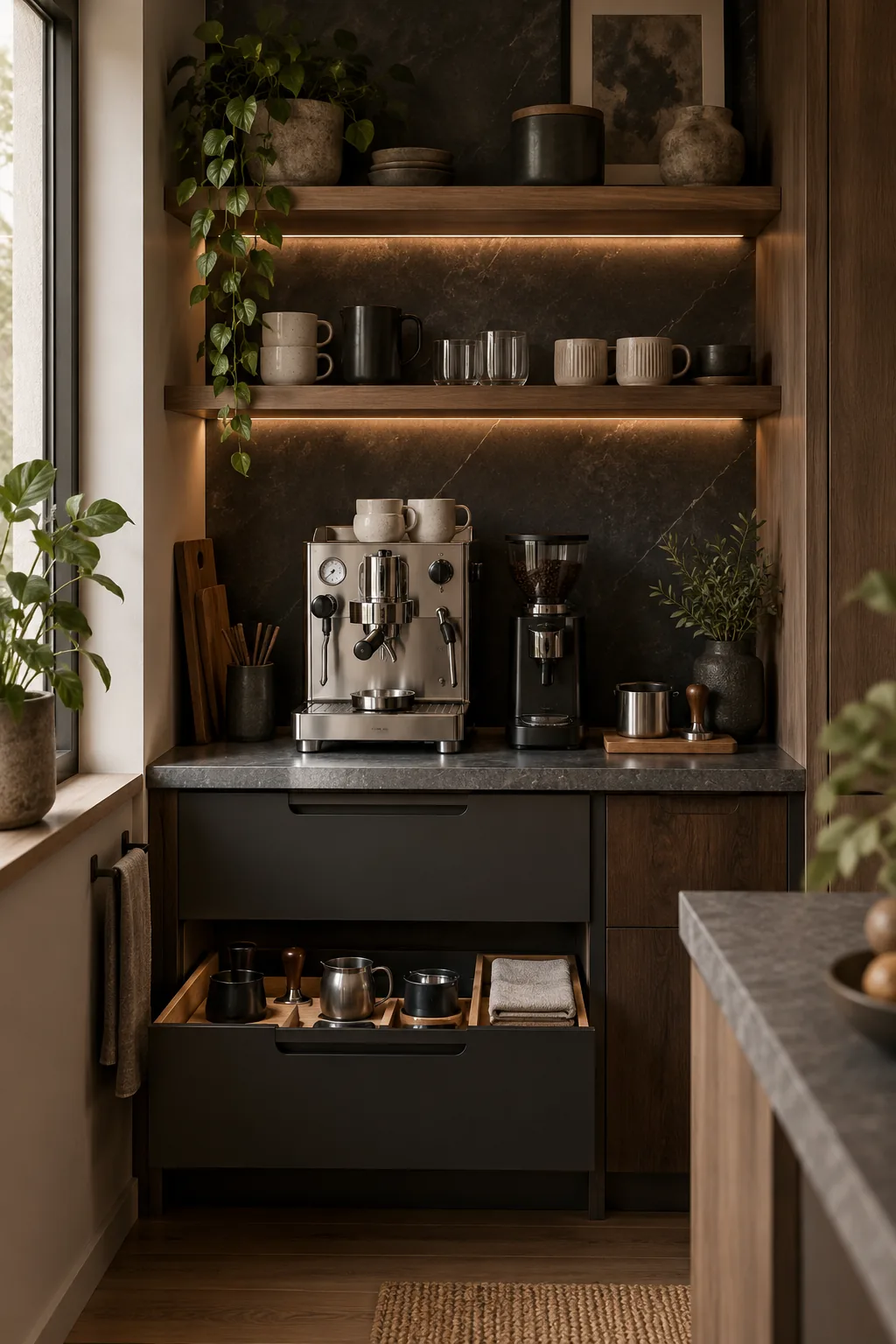
The best coffee station is the one that keeps everything together
A compact apartment can still support a beautiful coffee ritual. The key is to stop treating the machine, mugs, beans, syrups, and accessories as separate kitchen clutter.
A well-planned coffee station gives every item a home. It can live on an existing counter, a rolling cart, a cabinet, a narrow console, or a small section of wall.
The six setups below are designed around different space constraints, rental limitations, storage needs, and coffee habits. If your specific problem is having no usable counter space at all, start with How to Create a Coffee Station Without Counter Space; this page is for comparing complete apartment coffee-station layouts you can copy.
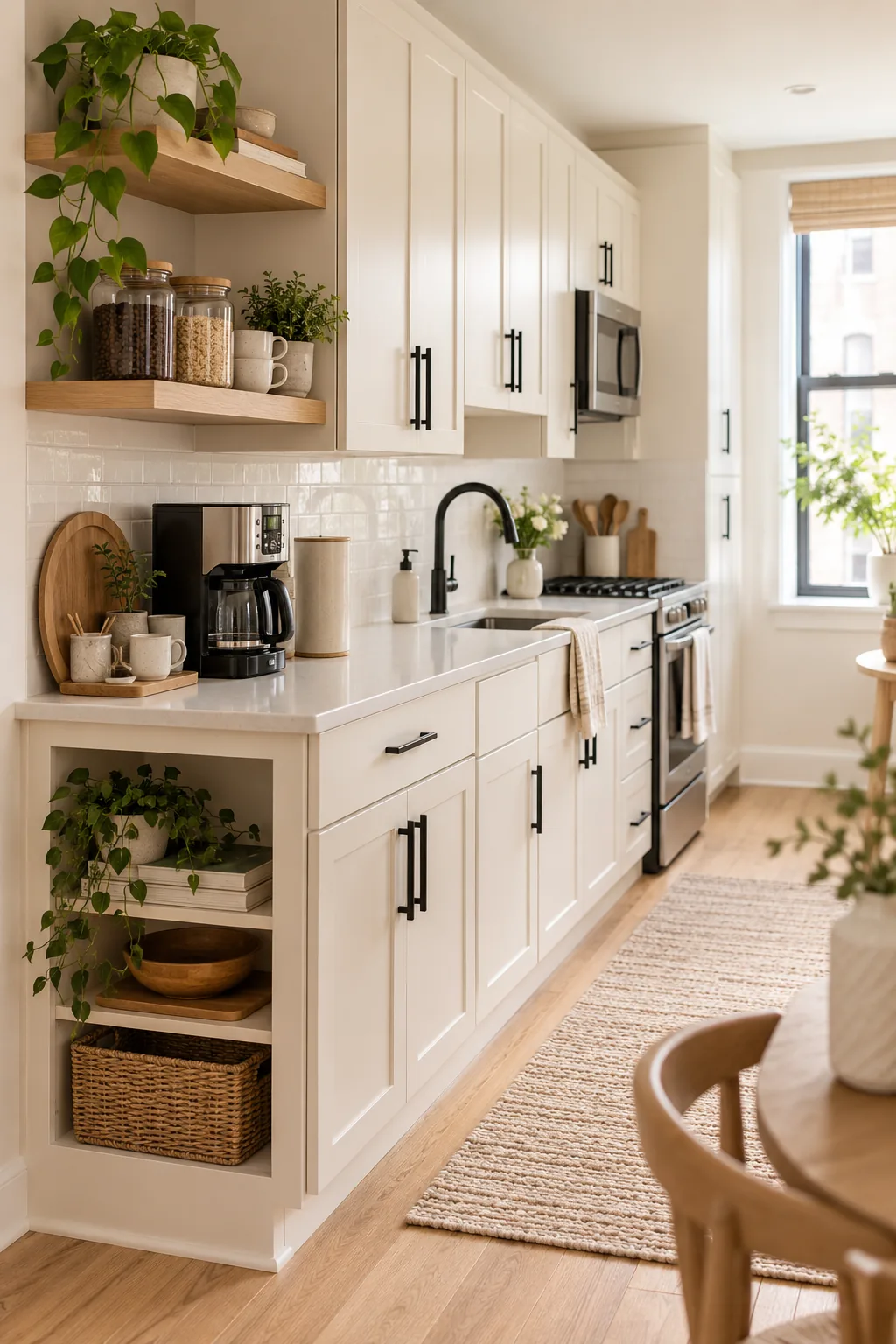
Four rules that keep a small coffee station organized
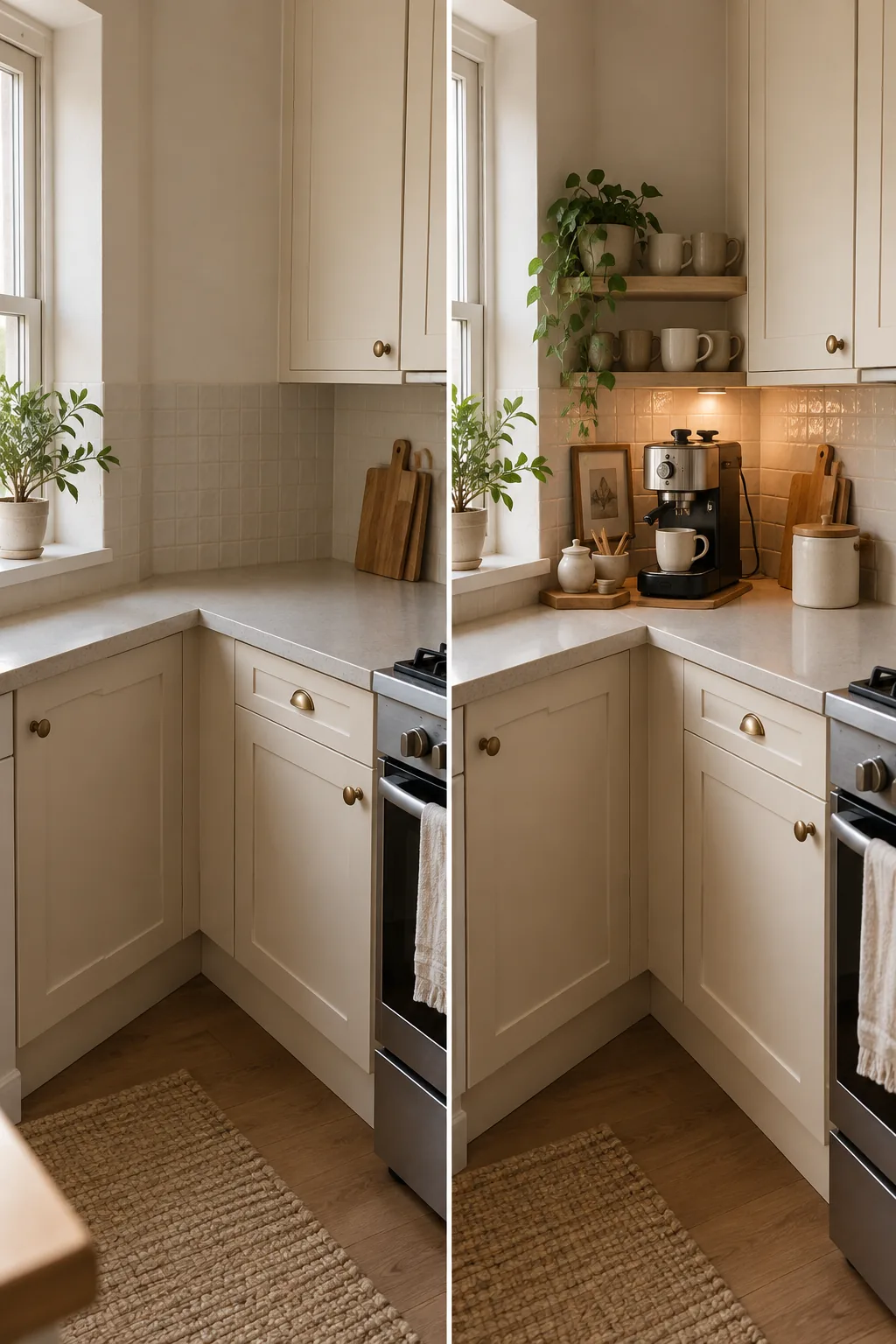
Keep the daily items visible
The machine, beans, favorite mugs, and milk pitcher should be easy to reach.
Hide the backup supplies
Extra pods, filters, syrups, and cleaning tools belong in baskets, drawers, or cabinets.
Use vertical space
Shelves, mug hooks, and stackable organizers reduce pressure on the work surface.
Repeat one finish
Matching wood, black metal, glass, or ceramic details make the station feel intentional.
Coffee station ideas for every type of small space
Each layout below is a complete starting point rather than a list of unrelated products. Choose the room strategy first, then recreate the furniture, brewing, storage, and styling layers that make that particular setup work.
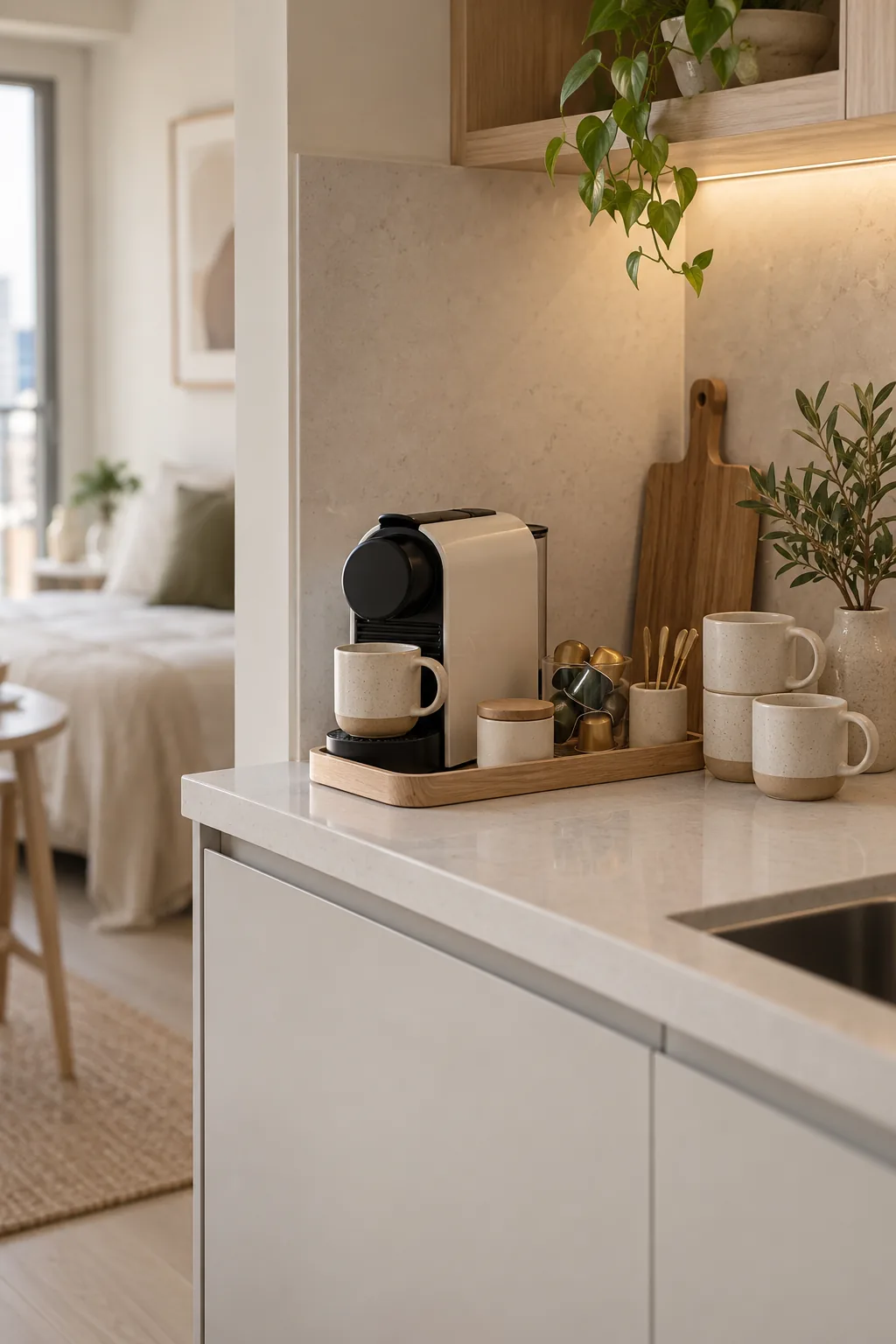
1. Minimalist Countertop Coffee Station
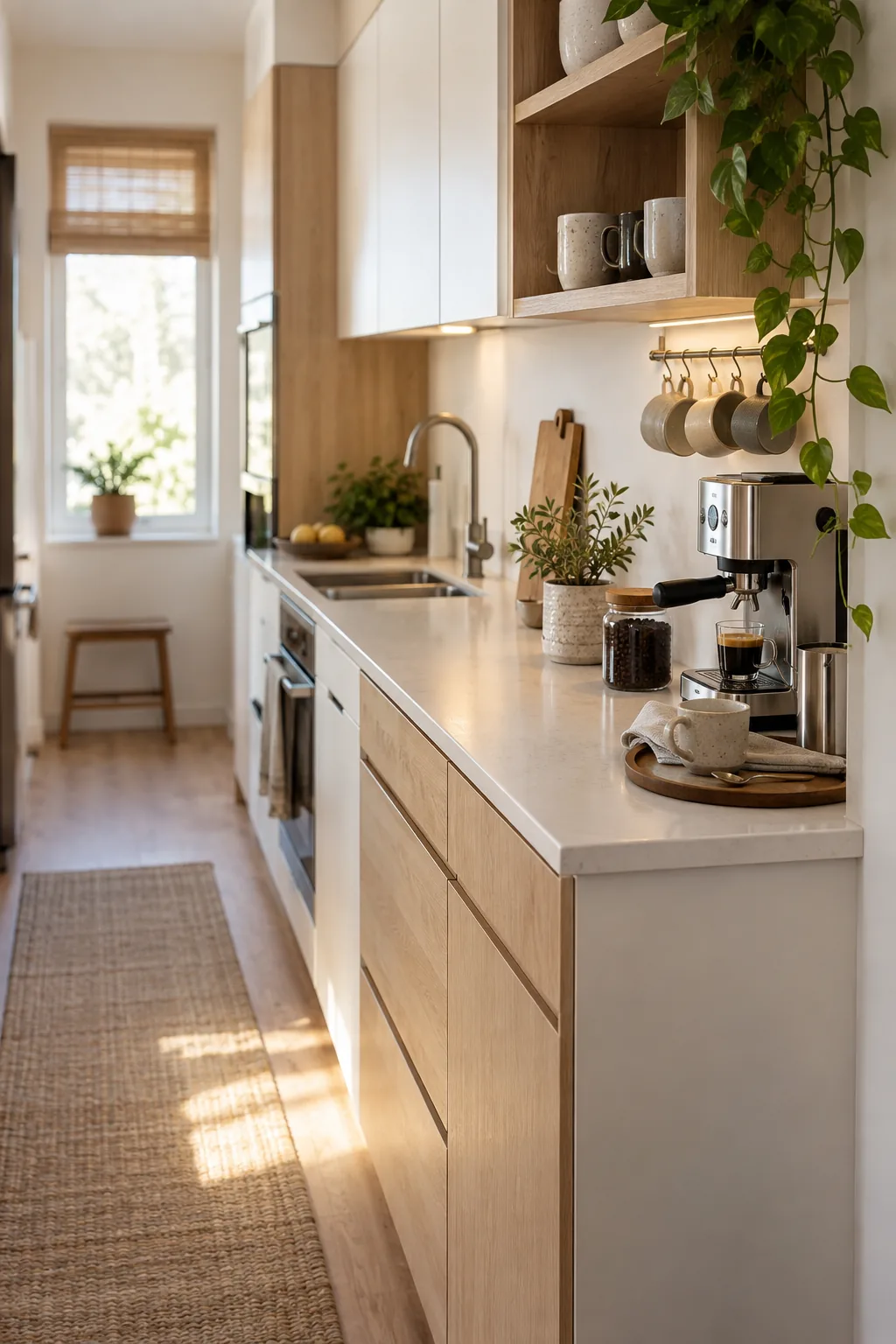
Use a decorative tray to visually contain the entire setup. A compact machine, one coffee canister, and a small mug holder are enough to create a polished station without sacrificing the whole counter. If your kitchen is especially tight, compare more coffee station ideas for small kitchens.
Best for: Best when you already have a small usable counter.
What you can skip: Skip extra furniture if the tray-based setup already keeps the routine contained.
- Uses space you already have
- Easy to reset after each use
- Fits studio and galley kitchens
- Works with modern interiors
- CASABREWS CM5418 Compact Espresso Machine
- OXO Brew Compact Conical Burr Grinder
- gmisun Airtight Coffee Canister Set
- Wisuce Bamboo Coffee Mug Tree
Copy the look: keep this version intentionally tight. Group the machine and grinder together, use one matching canister set, and let the mug tree provide the only vertical accent.
2. Coffee Cart Corner
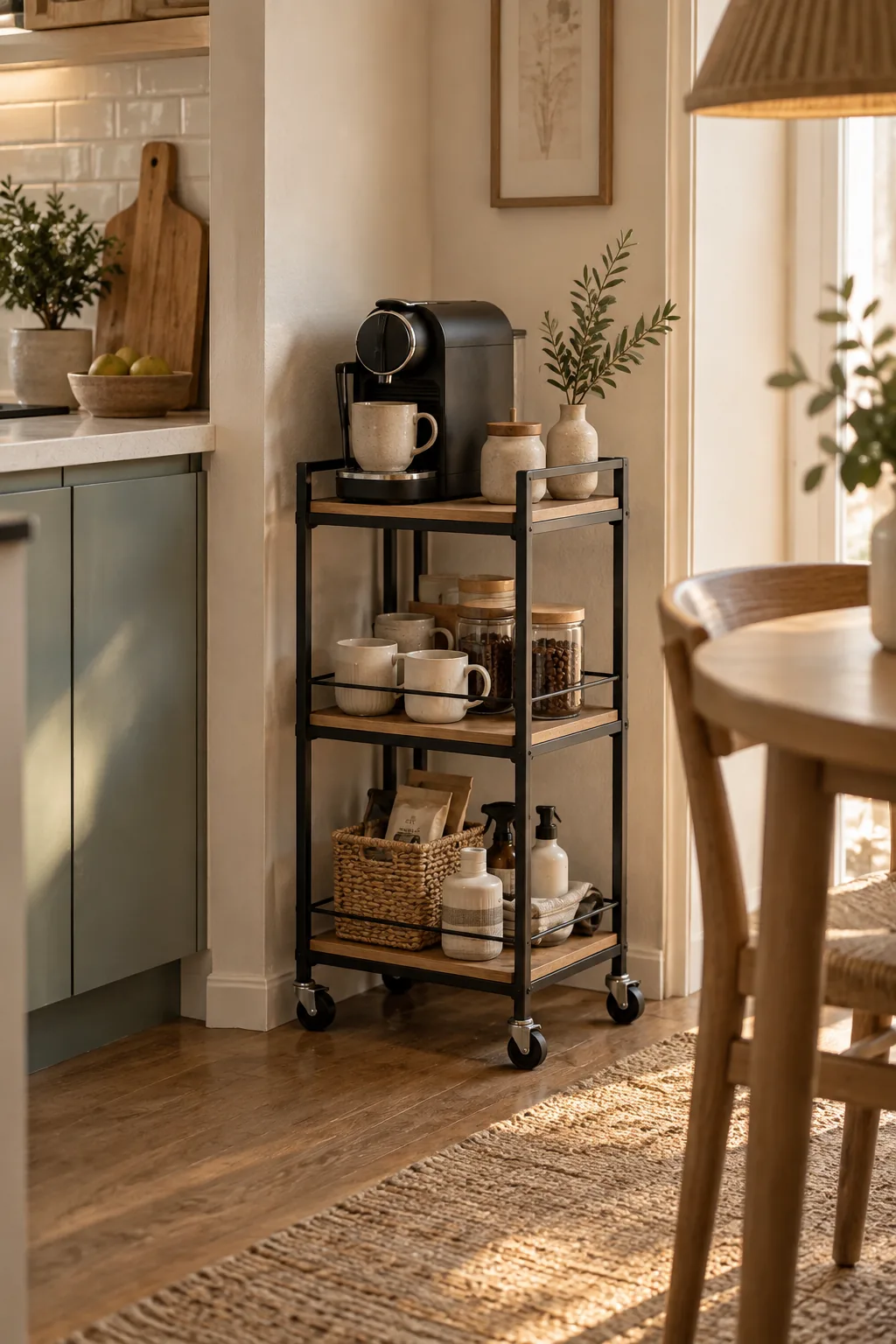
A rolling cart creates a dedicated coffee zone without permanent cabinetry. Use the top for the machine and reserve lower shelves for beans, syrups, cups, and cleaning supplies. If this is your preferred layout, see the full coffee station on a cart guide.
Best for: Best for renters or anyone who needs the station to move.
What you can skip: Skip the cart if it would narrow an important walkway.
- Can move when needed
- Does not require drilling
- Separates coffee supplies from cooking space
- Works in corners and dining nooks
- SUNALLY Slim Rolling Storage Cart
- CASABREWS CM5418 Compact Espresso Machine
- gmisun Airtight Coffee Canister Set
Copy the look: treat the top shelf as the brewing surface and the lower levels as storage. Keep the cart mobile instead of surrounding it with extra furniture.
3. Coffee Bar Cabinet
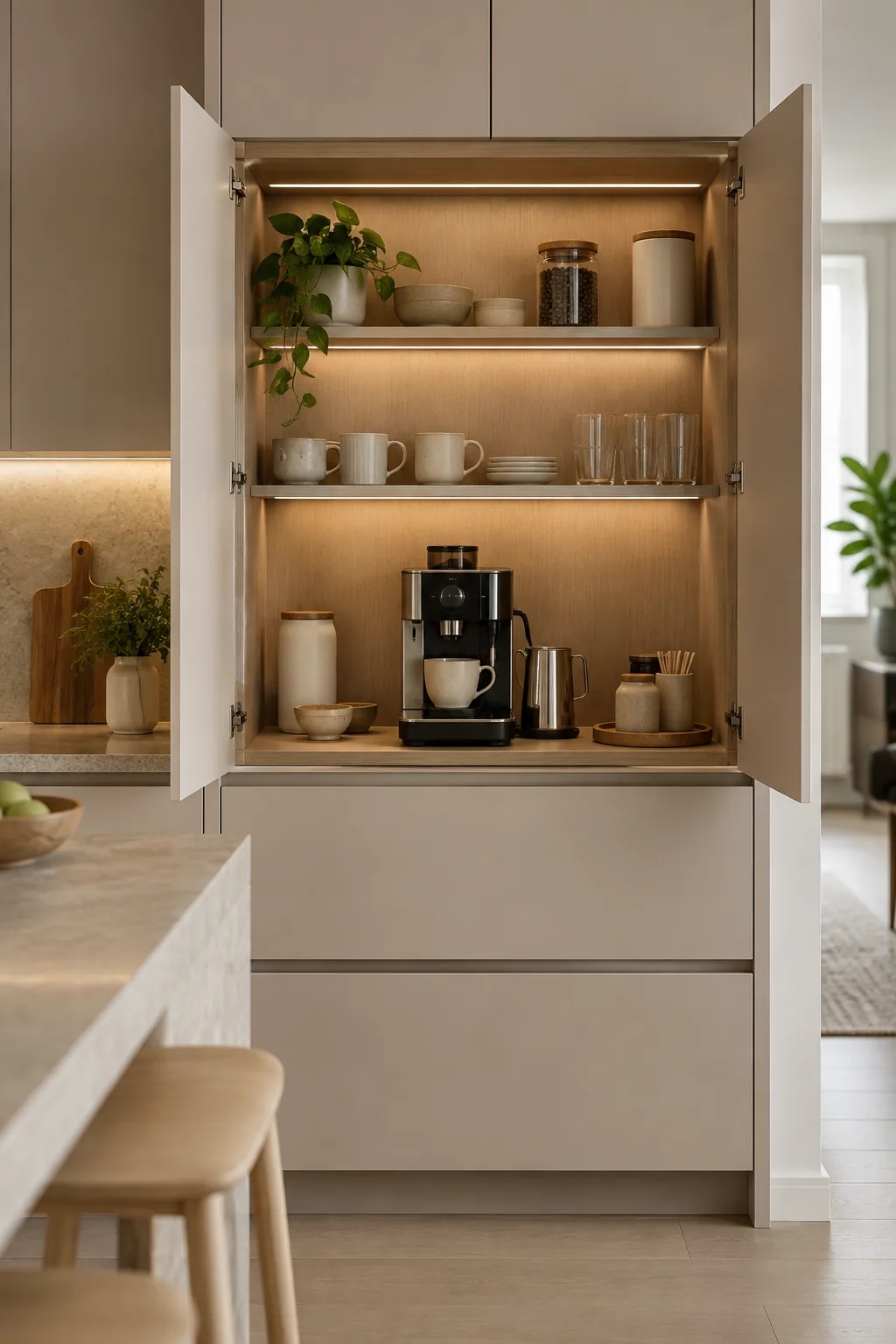
A dedicated cabinet makes the station feel like part of the room rather than a group of loose appliances. Closed storage is especially useful for pods, filters, syrups, backup beans, and cleaning supplies. See the complete coffee station in a cabinet guide, and use hidden-storage ideas for small spaces when the apartment needs visual calm beyond the coffee area.
Best for: Best when hidden storage matters more than the smallest footprint.
What you can skip: Skip a full cabinet if the apartment cannot spare the floor space.
- Conceals extra supplies
- Adds organization outside the kitchen
- Creates a defined beverage zone
- Doubles as decorative furniture
- SMORBOSS Fluted Coffee Bar Cabinet
- CASABREWS CM5418 Compact Espresso Machine
- OXO Brew Compact Conical Burr Grinder
Copy the look: let the cabinet be the visual anchor. Keep the machine and grinder on the working surface and move backup beans, cups, filters, and cleaning supplies behind the doors.
4. Floating Shelf Coffee Nook
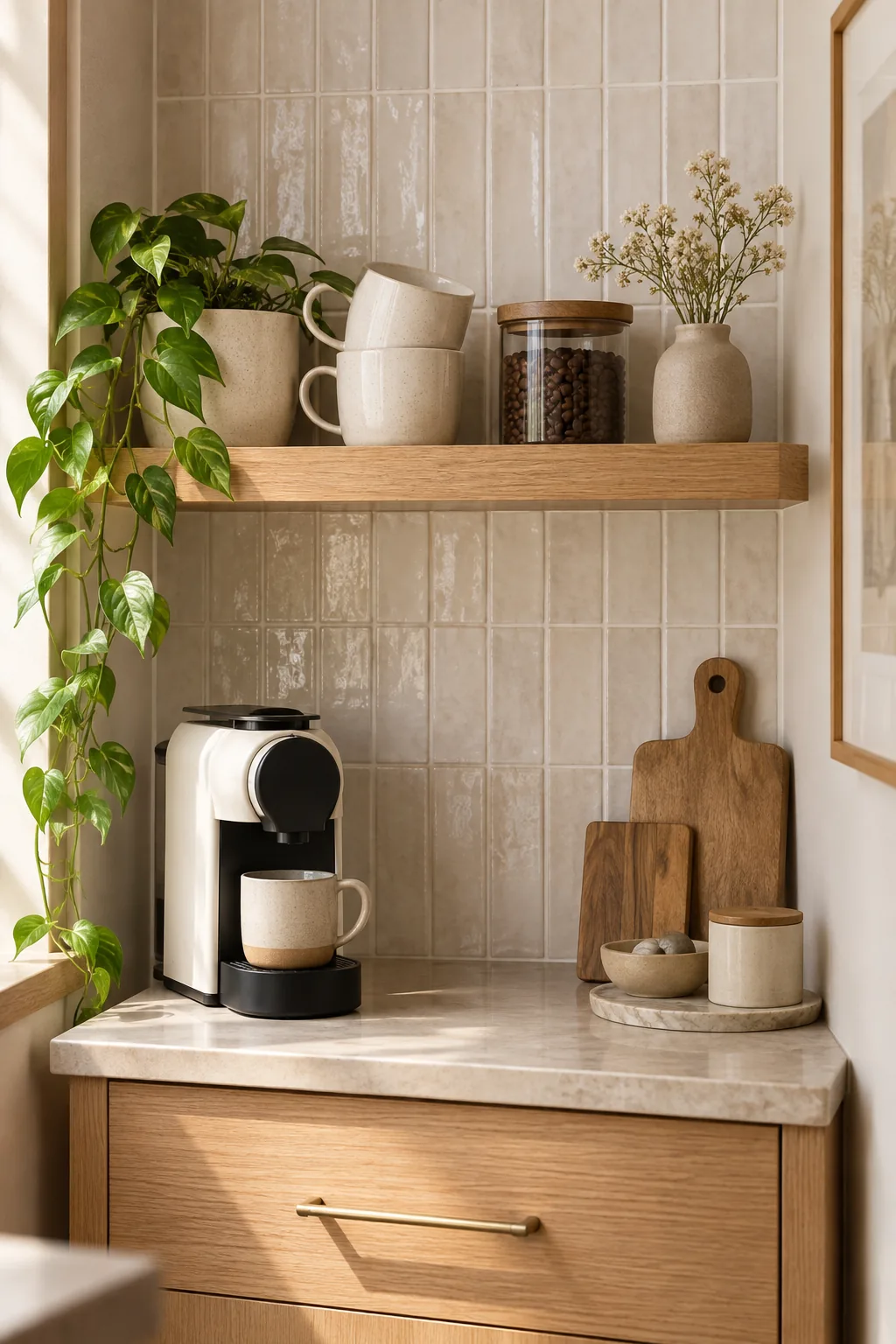
Use wall space for mugs, canisters, and decorative pieces while keeping the machine on the narrow surface below. This setup makes the station feel lighter than a full cabinet. For the wider room strategy, see how to use vertical storage without making a room feel crowded.
Best for: Best when wall height is available but floor space is limited.
What you can skip: Skip permanent shelves if drilling is not allowed.
- Preserves floor area
- Turns blank wall space into storage
- Creates strong visual height
- Works in galley kitchens
- Homeforia 24-Inch Solid Pine Floating Shelves
- CASABREWS CM5418 Compact Espresso Machine
- gmisun Airtight Coffee Canister Set
Copy the look: keep the brewing surface below visually quiet and use the shelves for lighter pieces—mugs, beans, and one restrained decorative layer.
5. Living Room Coffee Station
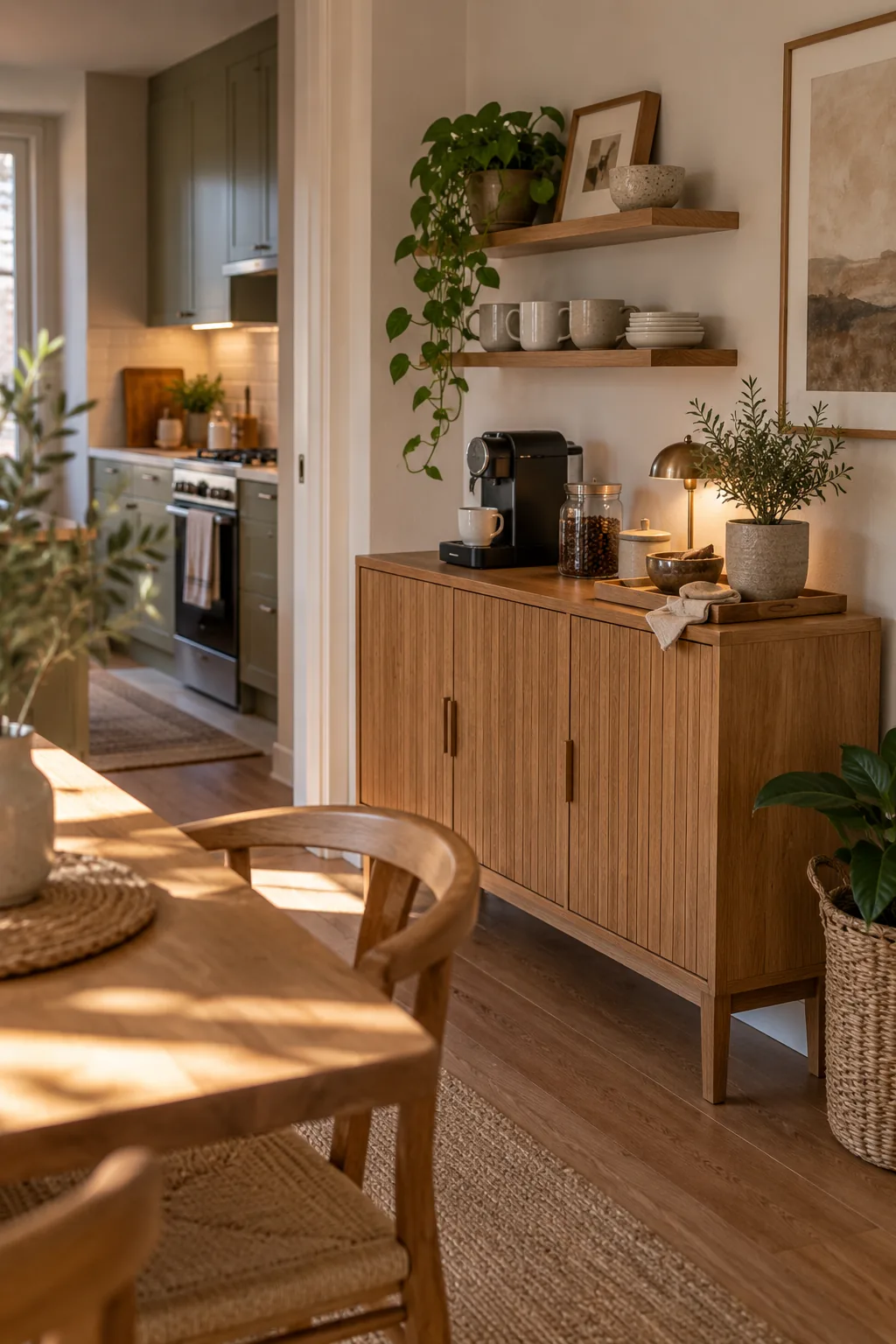
When the kitchen cannot spare any room, move the ritual to a narrow console or sideboard near the dining or living area. Closed baskets can keep backup supplies visually quiet. If the coffee station is part of a larger storage shortage, see how to add storage to a small apartment without making it feel smaller.
Best for: Best when the kitchen is full but a dining or living-room wall is underused.
What you can skip: Skip this layout if carrying water across the room would make the routine annoying.
- Moves clutter out of the kitchen
- Works well in open layouts
- Can look like styled furniture
- Creates an entertaining station
- Ecoprsio Narrow Console Table with Power Outlets
- CASABREWS CM5418 Compact Espresso Machine
- gmisun Airtight Coffee Canister Set
Copy the look: choose a console that reads as living-room furniture first. Group the coffee equipment to one side and preserve negative space so the station feels styled rather than commercial.
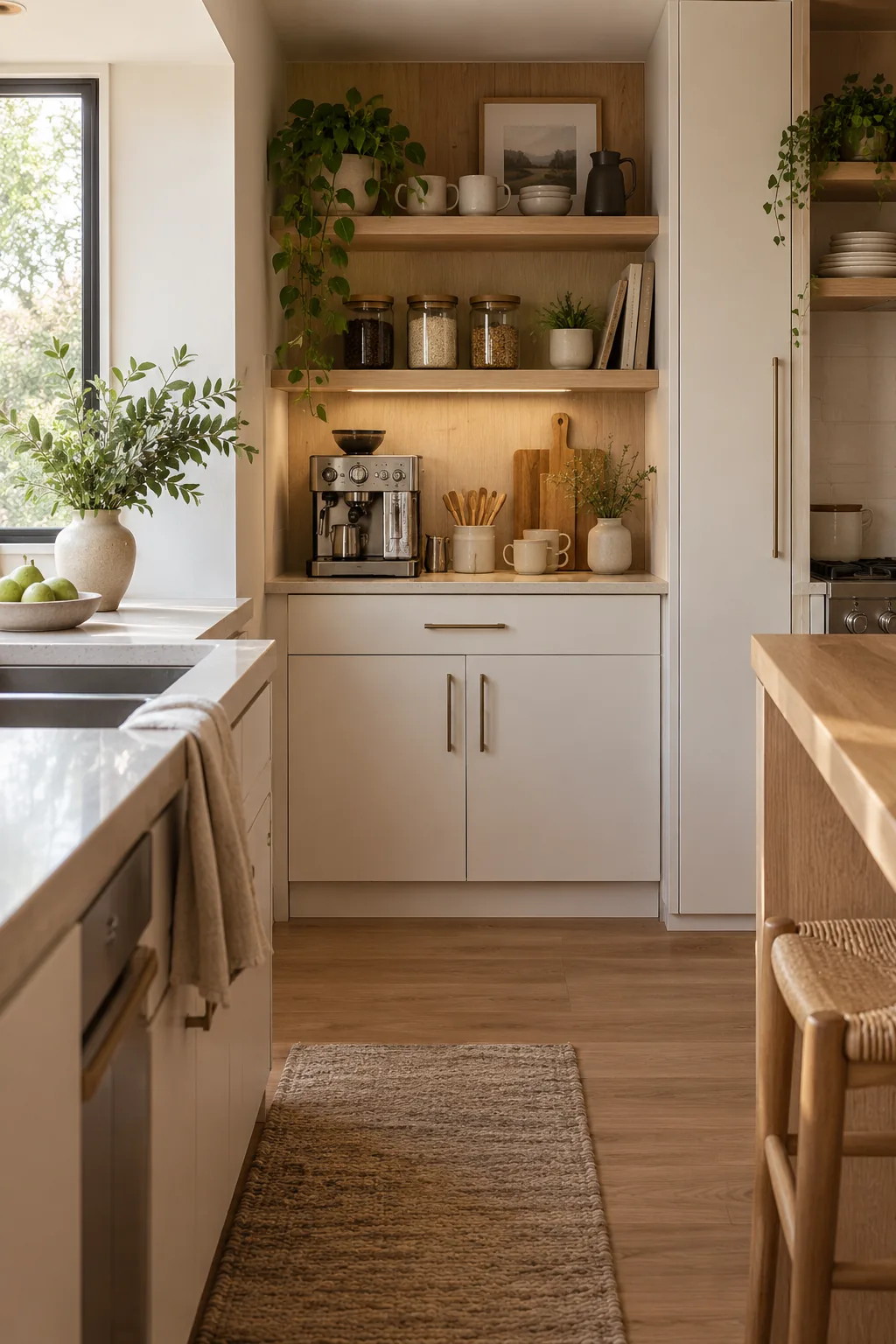
6. Luxury Apartment Café
Create a dedicated ritual with an integrated espresso machine, organized storage, warm lighting, and a restrained palette. The setup should feel premium, not crowded.
Best for: Best for a serious daily espresso routine with room for a dedicated furniture piece.
What you can skip: Skip premium extras that do not improve the drinks you actually make.
- Turns coffee into a daily experience
- Keeps premium tools organized
- Creates a memorable focal point
- Can replace separate kitchen storage
- SMORBOSS Fluted Coffee Bar Cabinet
- CASABREWS CM5418 Compact Espresso Machine
- OXO Brew Compact Conical Burr Grinder
- gmisun Airtight Coffee Canister Set
Copy the look: spend the visual budget on one substantial furniture piece, coordinated wood, and a complete brewing workflow. Premium should mean calmer and more intentional—not more objects.
As an Amazon Associate, Inplanty may earn from qualifying purchases. Product prices and availability can change.
Which coffee station setup fits your apartment?
| Your space | Best setup | Why | Main trade-off |
|---|---|---|---|
| Very small kitchen | Minimalist countertop | Uses existing space and keeps the routine compact | Limited storage |
| Rental apartment | Rolling coffee cart | Portable and requires no permanent installation | Takes some floor space |
| Clutter-prone home | Coffee bar cabinet | Hides backup supplies and creates a polished look | Largest furniture footprint |
| Narrow wall or galley kitchen | Floating shelf nook | Moves storage upward instead of outward | May require drilling |
| Open-plan apartment | Living room station | Frees kitchen counters and uses overlooked walls | Needs careful styling |
| Serious coffee hobby | Luxury apartment café | Supports a complete premium workflow | Higher cost and more equipment |
When the coffee station is really a storage problem