
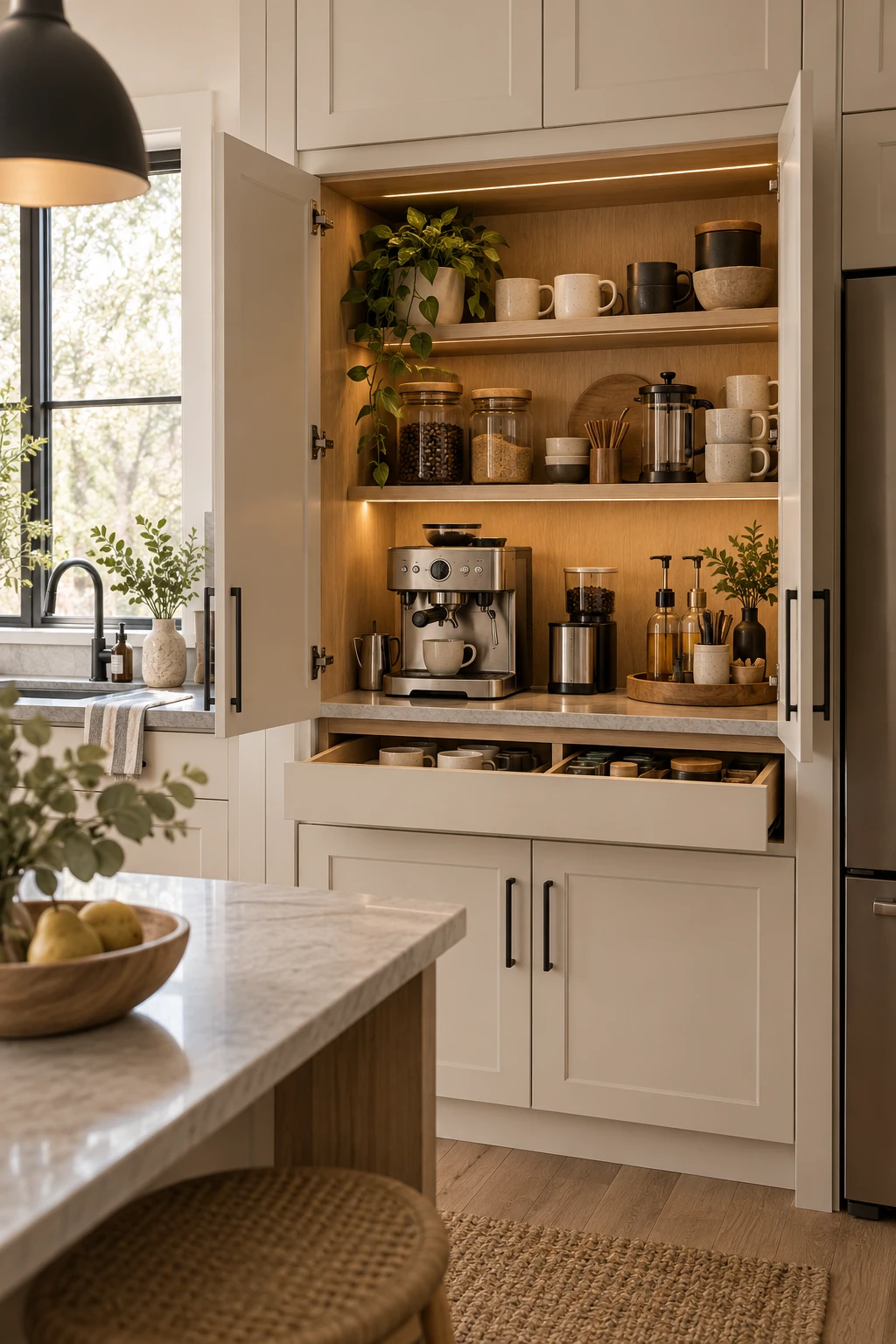
Quick Answer
Place the machine on the strongest, easiest-to-reach shelf with all manufacturer-required clearance. Keep the cabinet doors fully open during use when necessary, store mugs above, daily coffee and filters beside the machine, small tools in a drawer or bin, and unopened supplies and maintenance products below.
Is a Cabinet the Best Place for Your Coffee Station?
A cabinet works best when you want the coffee setup hidden between uses and the appliance can operate safely with the doors open.
Start with the full guide Coffee Station Ideas & Setup Guides Compare layouts, storage approaches, carts, cabinets, small-space solutions, and espresso setups.Cabinet Space Is Too Tight?
If the machine cannot safely fit and operate inside the cabinet, move the setup to a cart, shelf, or another unused zone instead.
Working With a Small Kitchen?
Compare cabinet, corner, cart, shelf, and dining-side layouts before committing to one location.
What the Finished Cabinet Coffee Station Should Achieve
The finished cabinet should open into a complete brewing zone and close into a visually calm piece of storage after the machine is cool, clean, dry, and safely positioned.
Finished result checklist
- Machine operates safely
- Doors open without obstruction
- Water remains easy to refill
- Daily mugs and coffee stay accessible
- Backstock remains hidden
- Steam and spills are controlled
Table of Contents
Coffee Station Cabinet Ideas
Appliance Garage Coffee Station
Use a counter-level cabinet with doors that open fully and preserve access to the machine, water, outlet, steam, and cleanup.
Pantry Cabinet Coffee Station
Reserve one strong shelf for brewing, one shelf above for mugs and coffee, and lower shelves for refills and cleaning supplies. If the cabinet is part of a cramped kitchen, first see how to organize a small kitchen with limited storage so the coffee setup does not compete with everyday cooking space.
Freestanding Armoire Station
Use a furniture-style cabinet when the kitchen lacks built-in storage, after confirming structure, power, ventilation, and safe operating depth.
Base-Cabinet Coffee Bar
Place the machine on the counter or pull-out work shelf and use the base cabinet for mugs, pods, filters, and backstock.
Hidden Espresso Cabinet
Build separate grinder, dosing, tamping, machine, milk, and cleanup zones without blocking steam or portafilter movement.
Pod Coffee Cabinet
Use a compact brewer, a pod drawer or cabinet bin, four to six mugs, and one disposal route inside or beside the cabinet. For the full daily-use system, see how to organize a coffee station.
How to Measure a Cabinet Coffee Station
| Measurement | Include | Why it matters |
|---|---|---|
| Interior width | Machine, grinder, handles, preparation space | The appliance body alone may fit while the workflow does not |
| Interior depth | Machine feet, reservoir, cord, door track | Doors or backs may interfere with operation |
| Interior height | Lids, reservoirs, hoppers, cups | Top access often needs more space than expected |
| Shelf capacity | Machine, grinder, water, tools, repeated use | The shelf must safely support the full setup |
| Door clearance | Hinges, pocket doors, handles, neighboring cabinets | Doors must remain fully open during use when required |
| Operating clearance | Steam wand, portafilter, mugs, pitcher, cleanup | A stored machine may fit while a working machine does not |
The Best Cabinet Coffee Station Layout
Machine Zone
Place the machine on the strongest shelf with open access to controls, water, cups, and required clearance.
Active Coffee
Keep one coffee supply, filters or pods, scoop, and daily tool beside the machine.
Mugs and Cups
Store only the daily mug group above the station; move guest and seasonal mugs elsewhere.
Small Tools
Use a drawer or divided bin for spoons, filters, scales, dosing tools, and spare accessories.
Backstock
Keep unopened coffee, bulk pods, and extra filters below the active zone.
Maintenance
Store compatible cleaning products safely away from food, children, pets, heat, and moisture.
How to Build the Cabinet Coffee Station
Choose the Primary Brewing Method
Design around one daily machine before allocating storage to secondary brewers and accessories.
Read the Appliance Instructions
Confirm support, electrical, ventilation, heat, steam, water, first-use, and cleaning requirements.
Measure the Cabinet and Machine
Include operating movement, not only the closed appliance dimensions.
Confirm the Shelf and Outlet
Use appropriate professional help when cabinet structure or electrical work needs evaluation or modification.
Create the Active Shelf
Place the machine, one coffee supply, and required daily tools within easy reach.
Add Vertical Storage
Use upper shelves or compatible risers for lightweight mugs and supplies without crowding the appliance. If the cabinet is forcing everything upward, see how to use vertical storage without making a room feel crowded.
Separate Backstock
Move bulk pods, unopened coffee, extra filters, and maintenance products below or elsewhere.
Test the Full Routine
Open the doors, refill water, brew, steam, serve, discard waste, wipe the station, and close it safely.
Follow the machine and cabinet requirements for shelf strength, ventilation, heat, steam, electrical access, cords, water, doors, and clearances. Keep doors open whenever required and do not close the cabinet around a hot, steaming, wet, or operating appliance.
Cabinet Storage by Brewing Method
Pod Coffee Cabinet
Keep the brewer on the main shelf, pods in a drawer or bin, mugs above, and bulk cartons below.
Drip Coffee Cabinet
Store active coffee and filters beside the machine, with mugs above and unopened coffee below.
Pour-Over Cabinet
Group the kettle, dripper, filters, grinder, scale, server, and active coffee in workflow order.
Espresso Cabinet
Preserve grinder, dosing, tamping, portafilter, milk, knock-box, cup, and cleanup movement.
For the complete storage system, see Coffee Station Storage Ideas. For espresso-specific placement, use How to Set Up an Espresso Machine at Home.
Choose Only the Pieces Your Cabinet Actually Needs
Start with the problem your cabinet has: a machine that needs a smaller footprint, pods that need a drawer, mugs that need vertical storage, or loose coffee tools that need one contained home. You do not need every product below. Build the smallest setup that makes the daily routine easier, and always confirm appliance and cabinet requirements before buying.
Affiliate disclosure: As an Amazon Associate, Inplanty may earn from qualifying purchases.
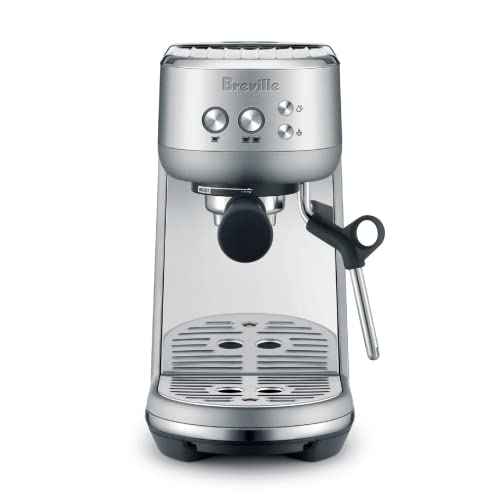
Breville Bambino
Best for: measured cabinet or appliance-garage setups that need a compact machine.
Check: live dimensions, reservoir, steam, heat, electrical, and manufacturer clearance requirements.
View on Amazon →
Amazon Basics Pod Drawer
Best for: hidden compatible pod storage when the combined machine height still fits.
Check: machine weight, total height, drawer access, and shelf clearance.
View on Amazon →
SONGMICS Cabinet Organizer Shelves
Best for: separating mugs, filters, and coffee on compatible cabinet shelves.
Check: interior height, depth, shelf load, and door closure.
View on Amazon →
DEPAOTLUX Mug Hooks
Best for: compatible vertical mug storage outside the appliance heat and steam zone.
Check: mounting, mug weight, cabinet material, doors, head clearance, and appliance clearance.
View on Amazon →
Veken Coffee Canister
Best for: one active supply of beans or grounds on a compatible shelf.
Trade-off: unnecessary when suitable original packaging already works.
View on Amazon →
ALELION Coffee Station Organizer
Best for: packets, pods, cups, or stirrers in a wide cabinet.
Trade-off: it can consume valuable appliance space when the cabinet is narrow.
View on Amazon →Cabinet Coffee Station Comparisons
| Decision | Choose the first option when | Choose the second option when |
|---|---|---|
| Appliance garage vs pantry cabinet | Counter-level access and integrated doors matter | More vertical storage and hidden backstock matter |
| Open shelf vs closed doors | Immediate ventilation and access matter | The station can be safely concealed after use |
| Fixed shelf vs pull-out shelf | The appliance operates safely in place | A professionally suitable pull-out improves access and support |
| Pod drawer vs cabinet bin | Machine height and drawer support are compatible | Counter or shelf clearance is limited |
| Mug hooks vs shelf riser | Mounting and appliance clearance are safe | You want a removable solution inside the cabinet |
| Cabinet station vs cart | Hidden storage and a built-in appearance matter | Mobility and rental flexibility matter |
Complete Cabinet Coffee Station Setups
Existing Cabinet Setup
- Use a compatible existing shelf
- Store four mugs above
- Keep active coffee beside the brewer
- Use one drawer or bin for tools
- Move backstock below
Compact Capsule Cabinet
- Compact brewer on main shelf
- Pods in drawer or cabinet bin
- Mugs on riser above
- Bulk pods below
- Waste route nearby
Hidden Espresso Cabinet
- Machine and grinder on strong work shelf
- Clear dosing and tamping space
- Cups and pitcher nearby
- Knock box and towels accessible
- Doors fully open during use
Appliance-Garage Transformation
- Professionally evaluated cabinetry and power
- Appropriate doors and operating clearance
- Integrated drawer storage
- Upper mug shelf
- Lower maintenance and backstock zone
Final Recommendation
Build the cabinet around safe appliance operation first and storage second. Use the main shelf for the machine and daily workflow, upper storage for mugs and light supplies, drawers for small tools, and lower shelves for backstock. Close the cabinet only after the machine is no longer operating, hot, steaming, wet, or obstructed.
Frequently Asked Questions
Can you put a coffee machine inside a cabinet?
Only when the cabinet provides the ventilation, heat, steam, electrical, lid, reservoir, and operating clearances required by the machine manufacturer.
What cabinet works best for a coffee station?
An appliance garage, pantry cabinet, armoire, tall cabinet, or wide base cabinet can work when dimensions, shelf strength, outlet, ventilation, and door movement are compatible.
How do you organize it?
Keep the machine on the main work shelf, daily coffee and tools beside it, mugs above, small accessories in drawers or bins, and unopened supplies and cleaning products below.
Should the doors stay open while brewing?
Doors should remain fully open whenever required for safe operation, ventilation, steam clearance, reservoir access, or appliance instructions.
How do you protect the cabinet from steam?
Follow the appliance and cabinet requirements, preserve clearance, keep doors open when needed, and avoid operating the machine where steam or heat can damage surrounding surfaces.