
Why You Don’t Need Counter Space
Most people assume a coffee station begins with an empty counter. In a small apartment kitchen, that is usually the one thing you do not have. The better approach is to stop treating the countertop as the only useful surface.
Walls, cabinet interiors, pantry shelves, rolling carts, awkward corners, and narrow vertical furniture can all become part of a complete coffee setup. Once the brewing equipment and supplies are grouped into one intentional zone, the kitchen feels calmer even if its actual size never changes.
The core idea
A coffee station is not a piece of furniture. It is a system. If the machine, mugs, beans, tools, and cleaning supplies each have a clear home, the station works—even when those items are split across a wall, cart, cabinet, and pantry.
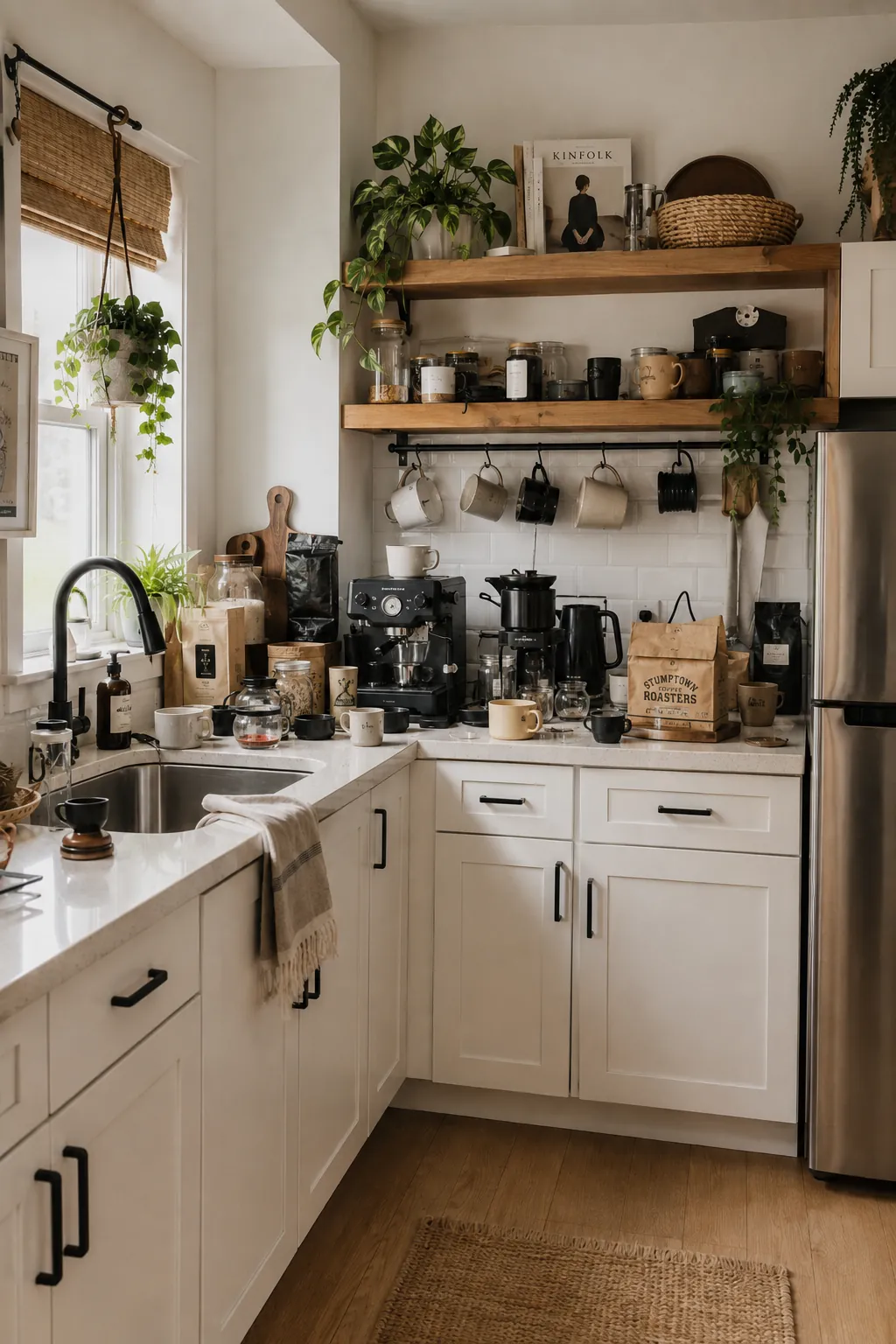
Crowded counters, scattered coffee supplies, mismatched mugs, and no dedicated zone
Before
Coffee bags live in one cabinet, filters in another, mugs are stacked wherever they fit, and every morning begins with searching and rearranging.
After
A compact coffee system uses the wall, a slim cart, cabinet organizers, and pantry storage to create a calm routine with almost no permanent counter use.
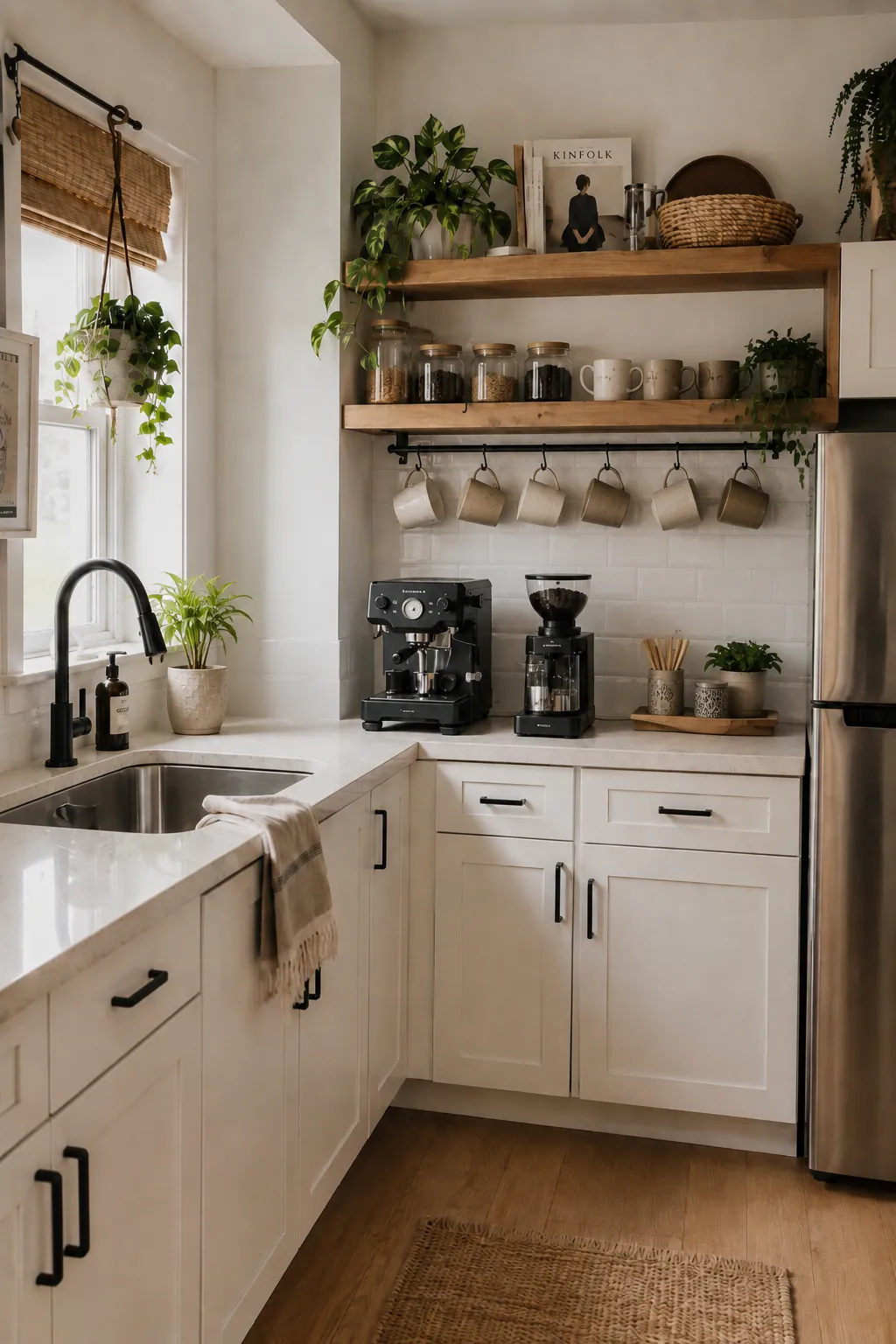
Same kitchen transformed with vertical storage, cart, lighting, and hidden organization
Find Unused Space in Your Kitchen
Before buying anything, look for space that already exists but is not working hard enough. If the whole kitchen feels overloaded, start with how to organize a small kitchen with limited storage before adding more furniture. A blank wall beside the refrigerator, the end of a cabinet run, the interior of a pantry door, a narrow gap near the dining area, or a deep cabinet with poor visibility may be enough.
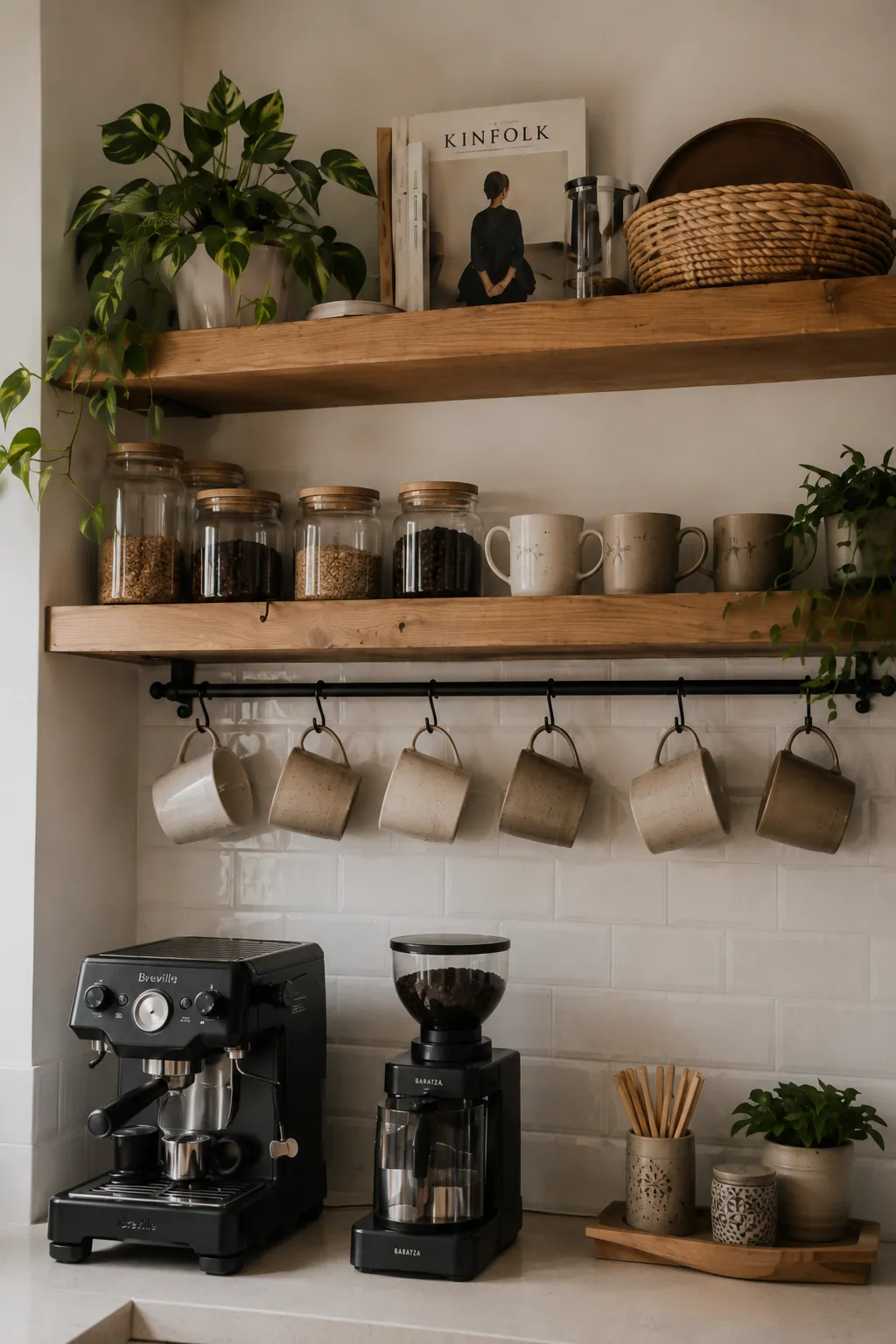
Floating shelves, wall mug rack, compact espresso setup, and warm wood details
Vertical Coffee Station Ideas
When floor and counter space are limited, the wall becomes the most valuable part of the kitchen. The same principle is covered in our guide to using vertical storage without making a room feel crowded. Floating shelves can hold mugs, jars, coffee beans, and a few decorative pieces. A wall-mounted mug rack moves cups out of cabinets and keeps them close to the brewing zone.
The BAYKA floating shelves create a flexible foundation, while the Scandinavian-style wall shelf adds warmth and visual character. The Dahey mug rack can sit beneath or beside the shelves so frequently used mugs remain easy to reach.
Keep the lowest shelf practical
Use it for mugs, beans, filters, or the tools you reach for every day.
Reserve upper shelves for light items
Decorative accents, spare cups, and greenery belong higher up.
Leave negative space
Do not fill every inch. Empty space helps the station feel intentional rather than crowded.
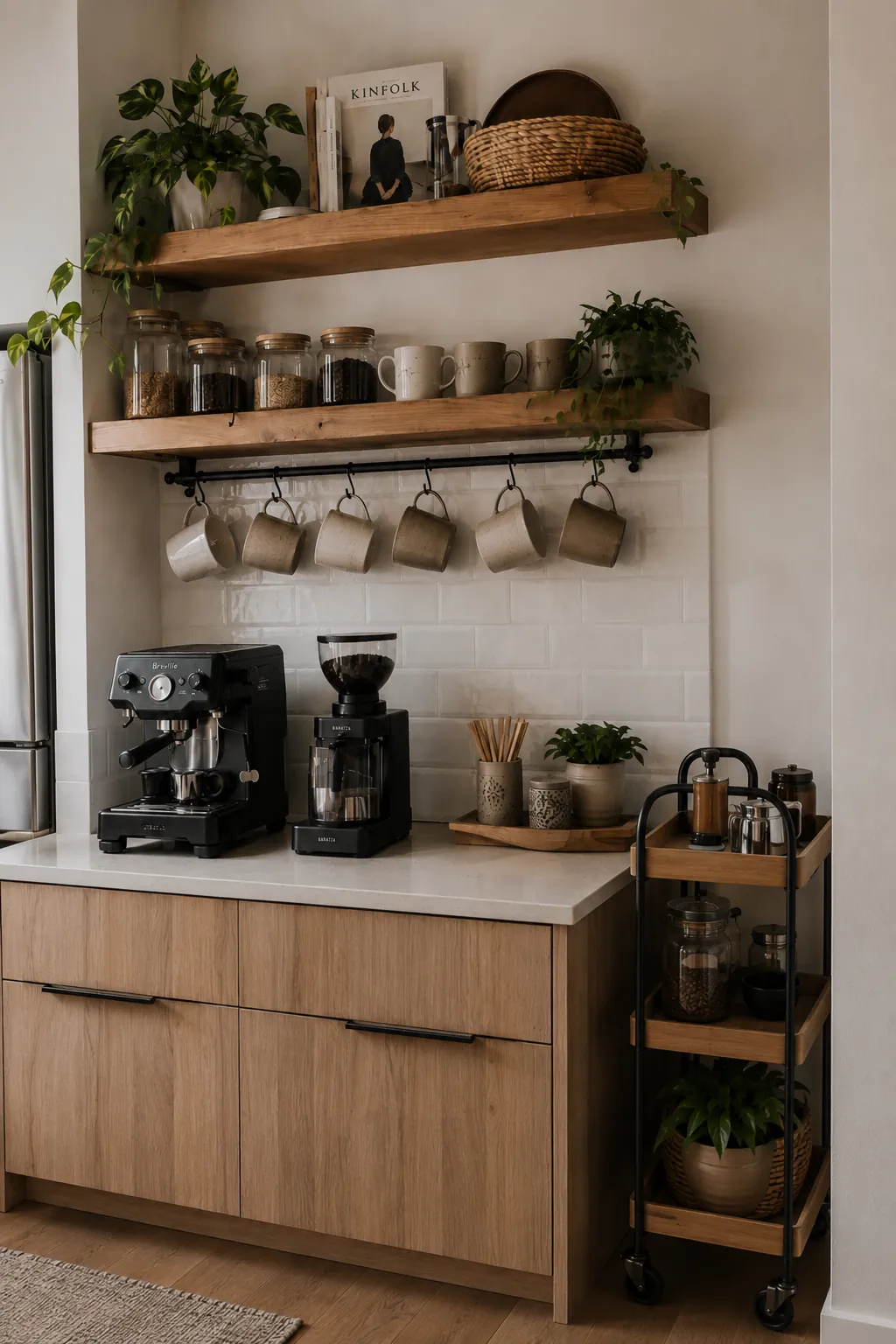
Slim rolling cart with compact espresso machine, grinder, and organized lower shelves
Rolling Coffee Cart Solutions
A slim rolling cart is one of the easiest ways to create a coffee station without permanently sacrificing a kitchen surface. If this is your preferred direction, compare more coffee station cart layouts before you buy. It gives the espresso machine and grinder a dedicated home, then moves when the kitchen needs to serve another purpose.
The Hencawima slim rolling cart works best when the top level is reserved for brewing. Lower shelves can hold the Airscape canister, cups, towels, cleaning tools, and backup supplies. If the kitchen is especially narrow, park the cart against a wall and pull it forward only while making coffee.
The SUNMORY tree shelf is another option when mobility matters less than vertical capacity. Its narrow footprint allows it to function as a coffee tower beside a wall, pantry, or dining nook.
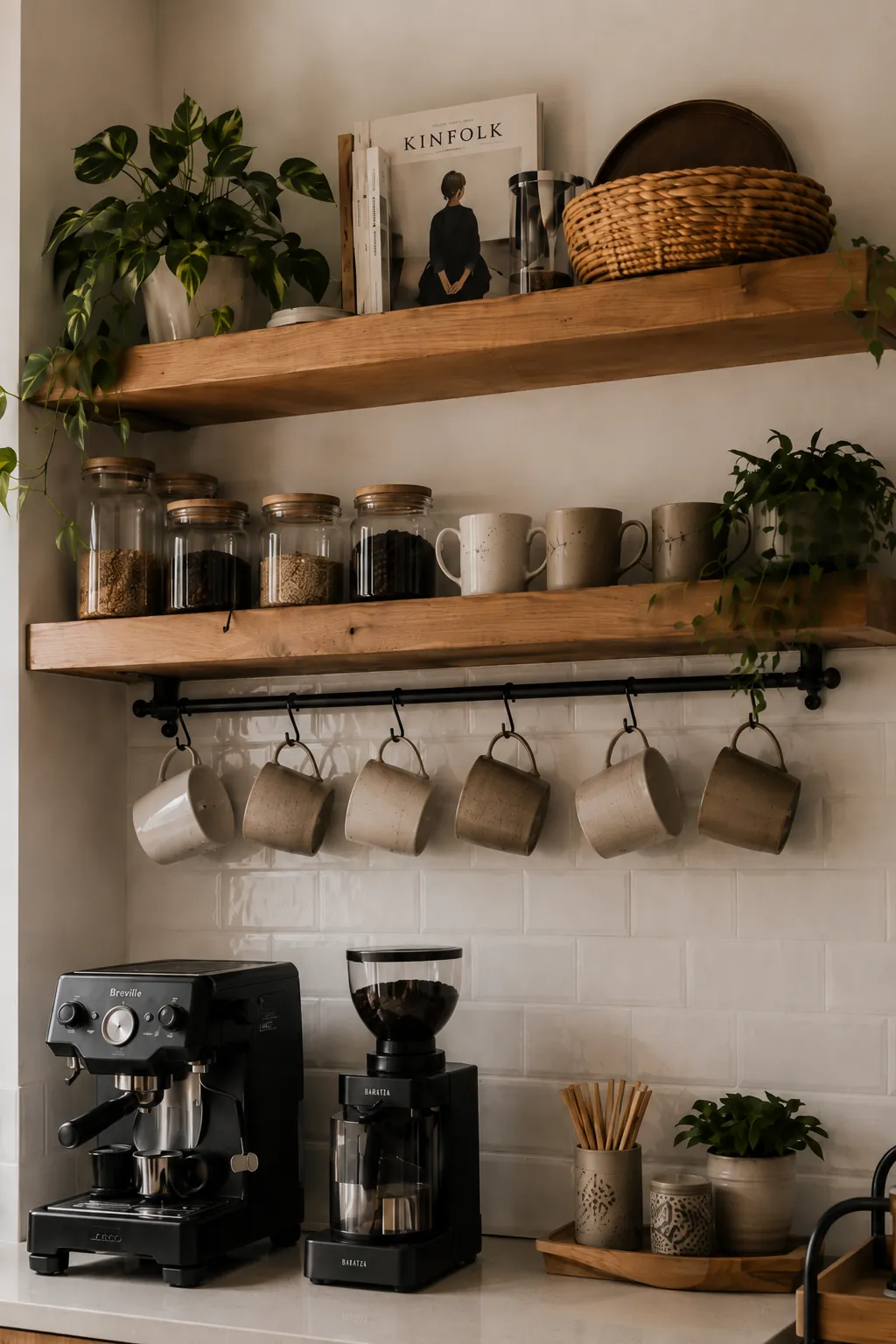
Minimal wall-mounted coffee bar with coordinated mugs, canister, and ambient lighting
Floating Shelf Coffee Stations
A floating-shelf coffee station works well when the machine has a small base surface but everything else needs to move upward. The goal is not to place the espresso machine on a lightweight shelf. Instead, use the shelf system to remove accessories from the brewing surface.
Store mugs, beans, pods, filters, and decorative pieces above the machine. Keep heavier items lower and lighter styling objects higher. Add Govee strip lighting beneath the lowest shelf to create practical task light and a boutique café atmosphere.
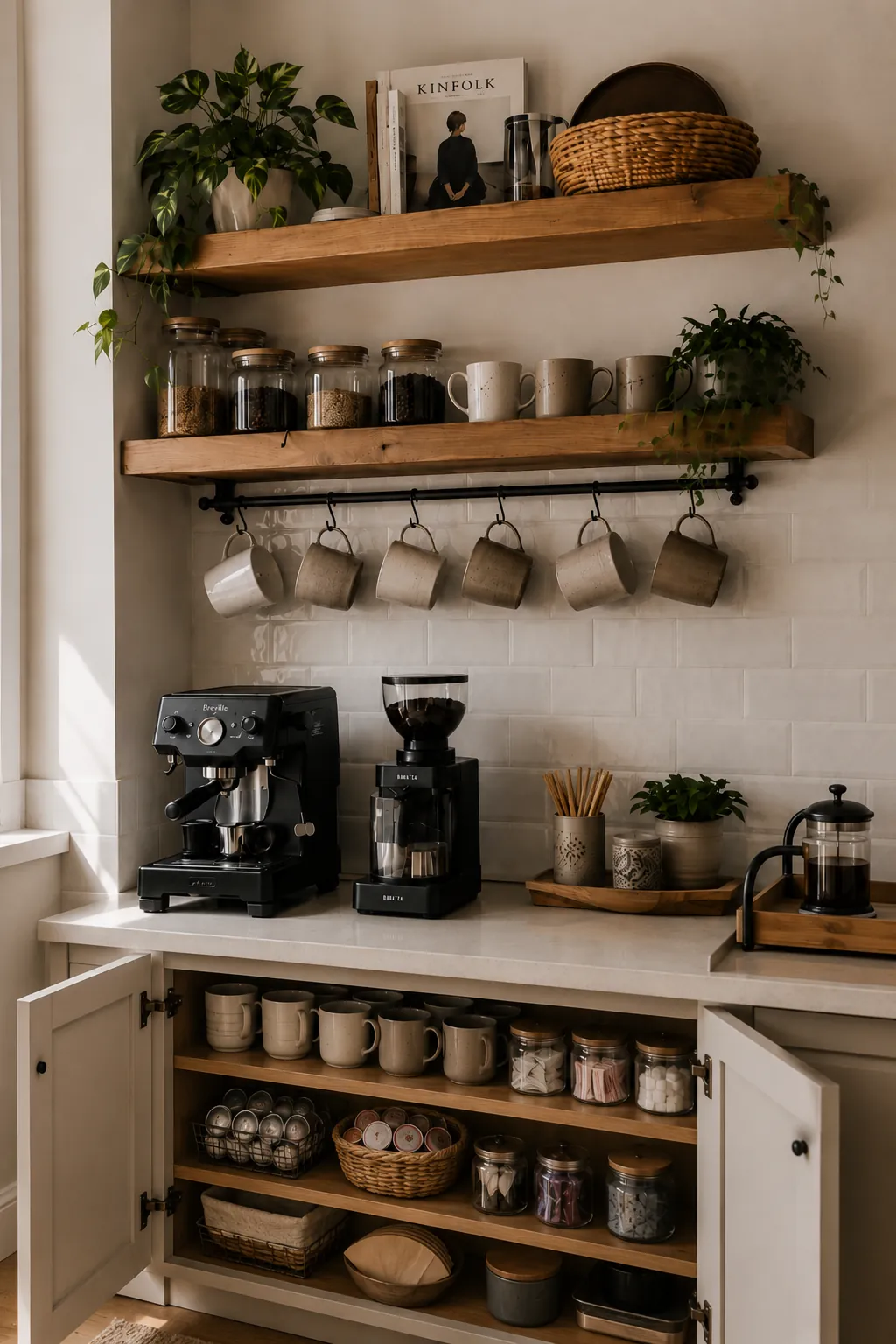
Hidden cabinet setup with pull-out organizer, stacked mugs, pods, and compact equipment
Cabinet Coffee Stations
If you prefer a cleaner visual look, convert one cabinet into a hidden coffee station. For a full version of this approach, see how to build a coffee station in a cabinet. A pull-out organizer brings supplies forward so nothing disappears into the back. The PAKETA organizer is especially useful in deep lower cabinets, while the Aifeedi mug organizer adds vertical storage inside an upper cabinet.
Keep pods in the BLACKSMITH FAMILY organizer, small tools in the Welaxy tray, and cleaning brushes in the Haundry caddy below. The cabinet can then close when the station is not in use, making this one of the best options for minimalist kitchens.
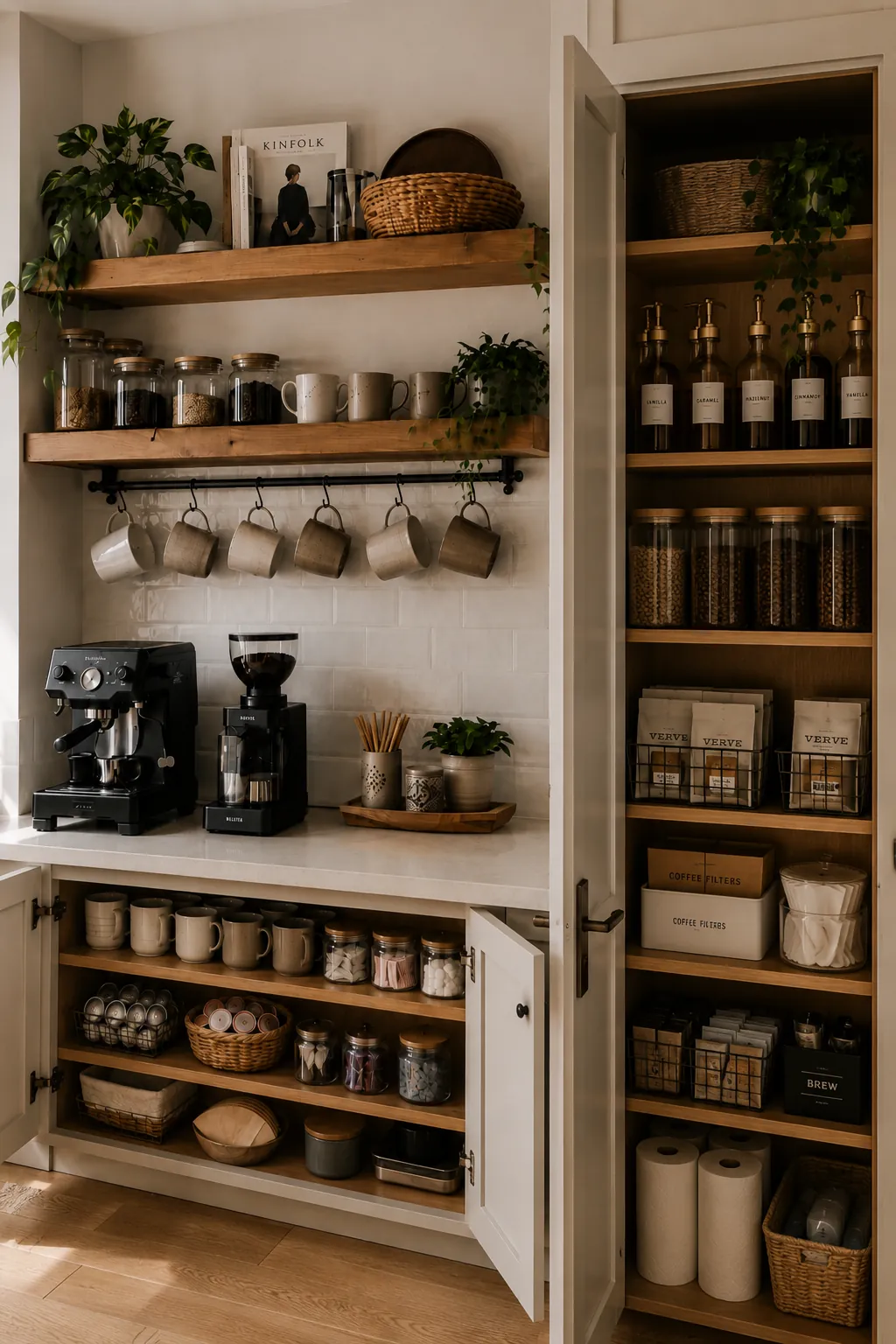
Organized pantry shelf with airtight containers, mugs, beans, and brewing accessories
Pantry Coffee Station Ideas
A pantry coffee station does not need to hold the machine itself. If pantry space is already tight, see how to organize a kitchen without a pantry. It can support the brewing zone by storing beans, pods, sugar, syrups, filters, and backup supplies in one place. This reduces visual noise around the machine and makes restocking easier.
Use Vtopmart airtight containers for dry supplies and label only what needs quick identification. Keep the Airscape canister near the brewing zone for daily beans, then use pantry containers for backups. This creates a practical front-of-house and back-of-house system similar to a small café.
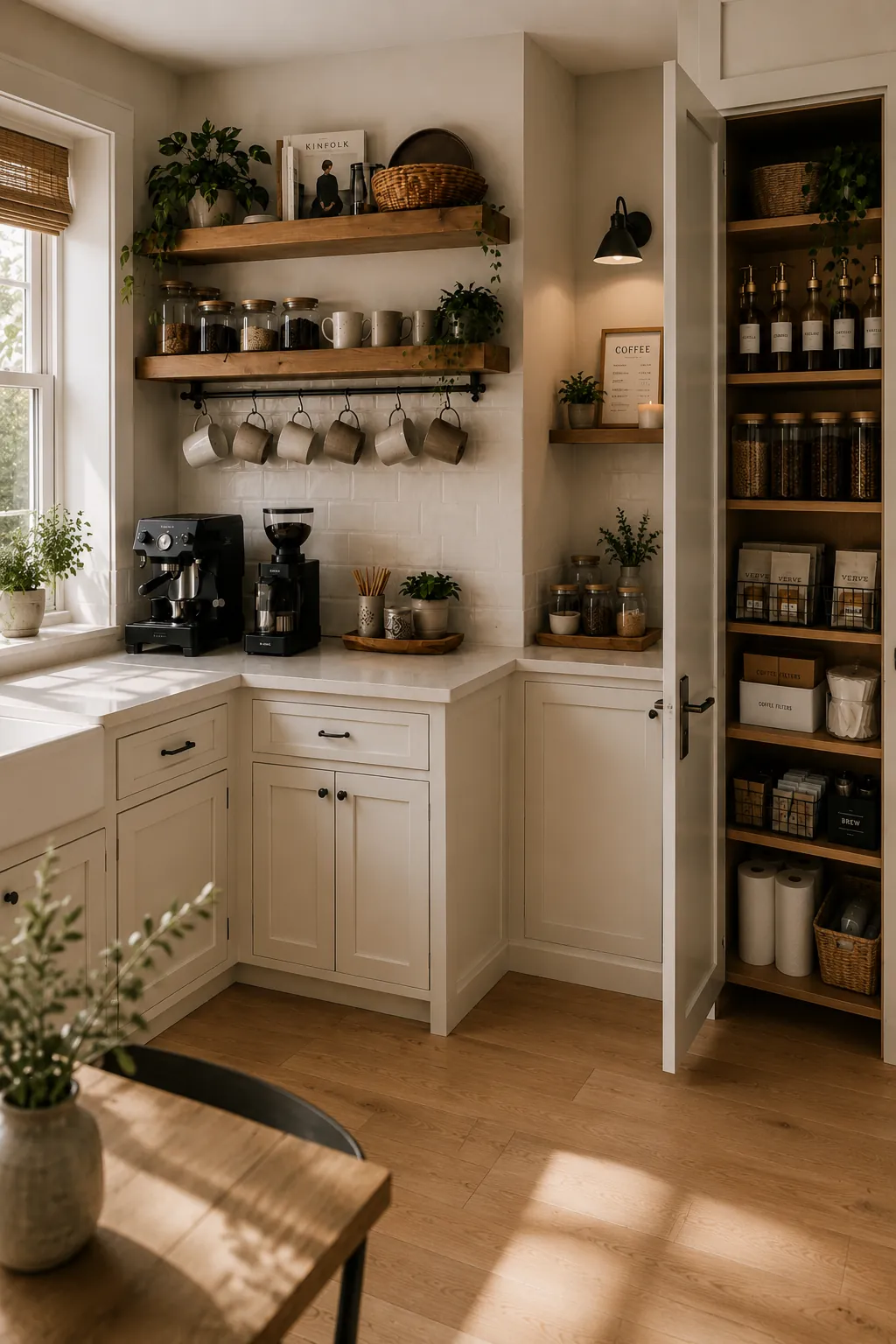
Compact corner shelf transformed into a cozy Scandinavian coffee nook
Corner Coffee Station Ideas
Awkward kitchen corners often have more potential than they appear to. For more room-specific options, compare these coffee station ideas for small kitchens. The CHOEZON corner ladder shelf can transform a dead corner into a vertical station without blocking the room. Use the strongest lower surface for practical storage and the upper levels for mugs, towels, plants, and décor.
In a corner layout, lighting matters. A Brightech Kai lamp can make the station feel warm and deliberate, especially when the corner sits outside the main kitchen lighting zone.
Hidden Coffee Station Solutions
A hidden setup is ideal for studios, open-plan apartments, and kitchens where visual calm matters as much as function. For the same strategy beyond the coffee zone, see how to create hidden storage in a small space. The easiest version uses a cabinet for tools and supplies, a rolling cart for the machine, and wall storage for mugs. When the station is not in use, the cart can move into a pantry or against a nearby wall.
Another option is to keep the espresso machine on a pull-out shelf inside a cabinet designed for appliance access. Always confirm ventilation, weight support, outlet access, and manufacturer clearance before using any appliance inside enclosed cabinetry.
Build a Compact Brewing Zone
The CASABREWS CM5418 and OXO compact burr grinder create a practical core for a small station. Arrange them in the order you use them: grinder first, espresso machine second, cup landing area last. This simple left-to-right workflow prevents unnecessary movement.
The Airscape canister, Maestri House scale, MEION WDT tool, Apexstone tamper mat, Auden Arctic knock box, and Adorever pitcher support a more complete espresso routine without requiring oversized equipment. The Zulay frother is a useful alternative for milk drinks when space is too limited for larger accessories.
Keep cleaning tools close but hidden. The CAFEMASY brush set and Myselect grinder brush can live together in the Haundry caddy below the main surface.
Organization Tips
Group by frequency
Daily-use items stay closest to the machine. Weekly and backup supplies move to cabinets or pantry storage. For a fuller system, use Coffee Station Storage Ideas.
Use one container per category
Pods, filters, tools, and cleaning items should each have a dedicated home. Syrup-heavy setups can use the separate coffee syrup storage ideas guide.
Limit visible mugs
Display only a coordinated daily set. Store extras inside the cabinet.
Choose narrow accessories
Compact tools and vertical organizers preserve more usable surface.
Control cables
Route cords behind furniture or along the wall so the station reads as one clean composition. If the station still feels scattered, see How to Organize a Coffee Station for a complete daily-use and backstock system.
Reset weekly
Remove anything that migrated into the station and return each item to its assigned zone.
Common Mistakes
A cart that blocks cabinet doors or walkways will make the kitchen harder to use.
Too many visible cups quickly make a small station look crowded.
Open shelving works best when practical items and empty space are balanced.
Espresso machines and kettles need safe space for heat, steam, and refilling.
One plant, one tray, and one small art piece are usually enough.
Cleaning tools need a nearby home or they will end up scattered across the kitchen.
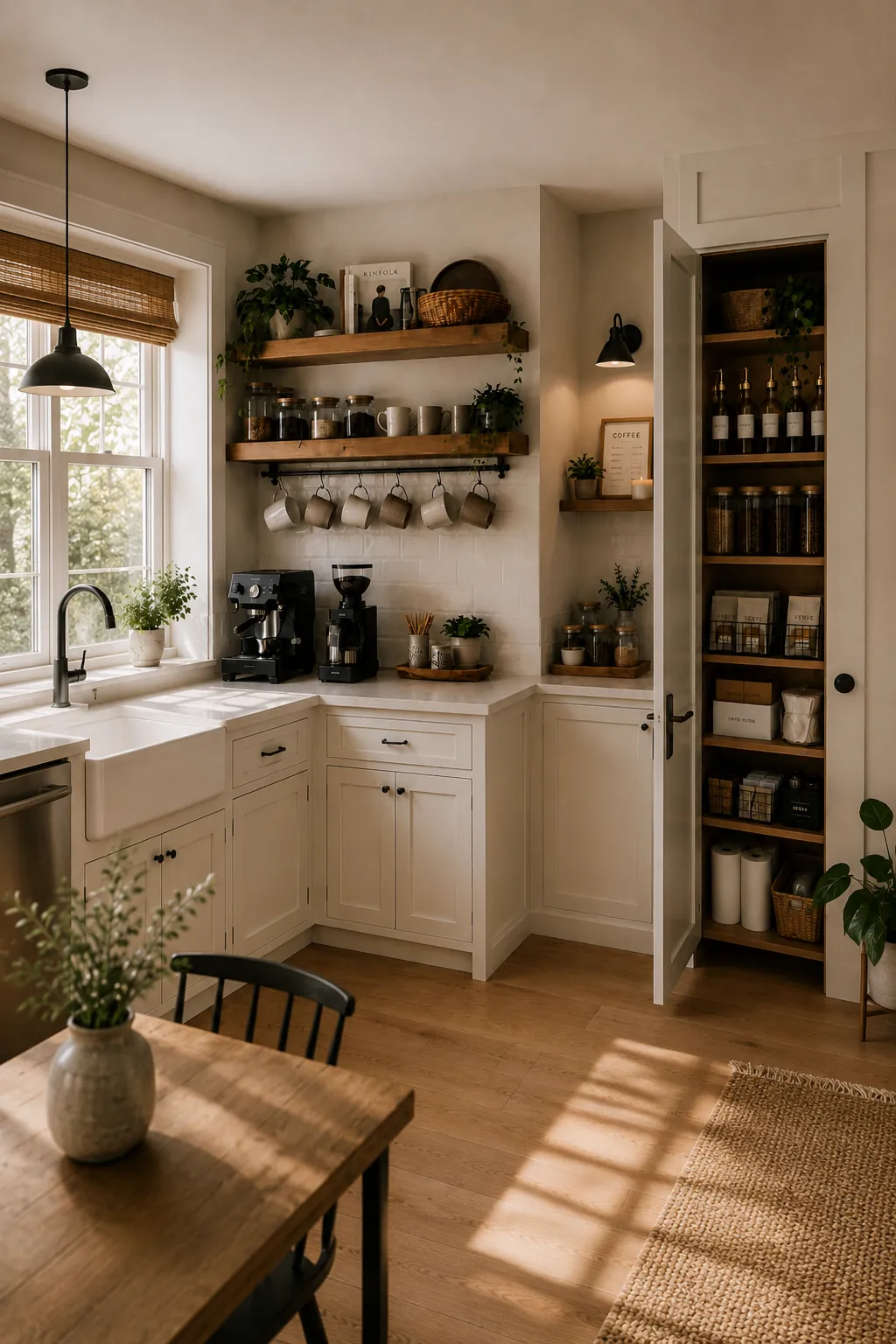
Wall shelves, slim cart, hidden cabinet storage, pantry containers, and warm Scandinavian styling working together
Complete Room Recreation
Start with one primary solution instead of trying to use every idea at once. In most small kitchens, the strongest combination is a slim cart for brewing, floating shelves for mugs and display, a cabinet organizer for hidden tools, and pantry containers for backup supplies.
Choose Only What Solves Your Space Problem
Do not buy every item below. Start with the problem you actually have: no brewing surface, not enough wall storage, inaccessible cabinets, a compact espresso workflow, or too much pantry backstock.
Affiliate disclosure: As an Amazon Associate, Inplanty may earn from qualifying purchases.

Hencawima Slim Rolling Coffee Cart
Best for: creating a complete brewing surface when the kitchen has no spare counter.
Skip it if: a cabinet or nearby sideboard already gives the machine a safe permanent home.
View on Amazon →
Dahey Wall-Mounted Mug Rack
Best for: moving daily mugs off the counter and out of crowded cabinets.
Skip it if: you cannot mount safely or prefer closed storage.
View on Amazon →
PAKETA Pull-Out Cabinet Organizer
Best for: bringing coffee tools and backstock forward in a deep cabinet.
Skip it if: the cabinet is shallow or already easy to access.
View on Amazon →
CASABREWS CM5418 Compact Espresso Machine
Best for: a narrow cart or compact brewing surface where a full-size machine would dominate the setup.
Skip it if: you already own a brewer that fits the planned surface safely.
View on Amazon →
OXO Brew Compact Conical Burr Grinder
Best for: keeping the espresso or fresh-coffee setup narrow.
Skip it if: your machine has a built-in grinder or you use pre-ground coffee.
View on Amazon →
Vtopmart Airtight Pantry Containers
Best for: moving bulk supplies away from the visible brewing zone.
Skip it if: original packaging already stores neatly and stays easy to identify.
View on Amazon →Keep Planning Your Coffee Station
Frequently Asked Questions
Can I create a coffee station with no countertop at all?
Yes. A slim rolling cart, corner shelf, or reinforced pull-out cabinet surface can replace a permanent counter. Use wall shelves and hidden storage for everything else.
What is the best solution for renters?
A rolling cart paired with freestanding mug storage and removable wall-mounting solutions is usually the most flexible approach.
How much space does a small coffee station need?
A functional setup can fit into a narrow 18- to 30-inch footprint when vertical storage and compact appliances are used.
Where should mugs go in a small kitchen?
Use a wall-mounted rack, rotating mug tree, or cabinet stacker. Keep only the mugs used most often near the brewing zone.
How do I keep the station from looking cluttered?
Limit the color palette, hide maintenance supplies, group small accessories in trays, and leave open space on shelves.
Can an espresso machine go inside a cabinet?
Only when the cabinet offers safe weight support, ventilation, outlet access, and the appliance manufacturer’s required clearance. Do not operate heat- or steam-producing appliances in an enclosed space without confirming those requirements.
Final Inspiration
The absence of counter space does not prevent you from creating a beautiful coffee station. It simply changes where the station lives. A blank wall, a narrow cart, an overlooked corner, or one organized cabinet can become the foundation of a calm morning routine.
The finished result should feel integrated into the home rather than squeezed into it. If you live in an apartment, continue with these small apartment coffee station ideas. With warm wood, neutral ceramics, soft lighting, and disciplined organization, even the smallest kitchen can support a coffee ritual that feels intentional, efficient, and genuinely enjoyable.