
Quick Answer
Place the brewer and one active coffee supply on the top. Store daily mugs, pods, filters, spoons, and sweeteners on the easiest middle tier. Use the bottom tier or cabinet for unopened coffee, bulk pods, extra mugs, and cleaning supplies. Keep the cart locked and stationary whenever the appliance is operating. If you are still deciding which cart style to buy, compare the current options in Best Coffee Carts for Small Spaces.
Choose the Cart That Solves Your Space Problem
Do not shop by appearance first. Choose the cart by the job it needs to do: fit a narrow wall, hide backstock, add a drawer for espresso tools, stay inexpensive, or look more like furniture. The six options below are current Amazon examples for those different needs.
Affiliate disclosure: As an Amazon Associate, Inplanty may earn from qualifying purchases.

Hencawima 3-Tier Slim Rolling Coffee Cart
Best for: Small kitchens that need a narrow worktop plus concealed and open storage.
Recommended layout: Machine and active coffee on top; daily supplies in the basket; backstock behind the doors.
Check before buying: Machine footprint, total work height, door movement, outlet route, wheel locks, and safe operating clearance.
View on Amazon →
Hencawima 3-Tier Coffee Bar Cabinet
Best for: A furniture-like coffee cart with open display, storage basket, and hooks.
Recommended layout: Brewer and coffee on top; cups and serving items on the middle shelf; refills and cleaning below.
Check before buying: Overall footprint, hook placement, visual clutter, steam clearance, and whether the listed work height is comfortable.
View on Amazon →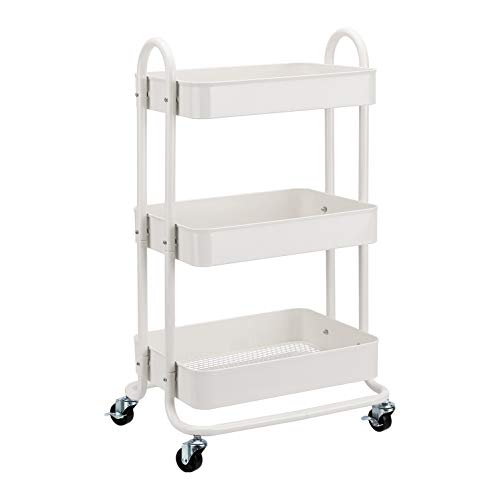
Amazon Basics 3-Tier Rolling Utility Cart
Best for: Budget pod, pour-over, tea, or lightweight coffee setups.
Recommended layout: Compact brewer or manual tools on top; mugs and active coffee in the middle; backstock below.
Check before buying: Top dimensions, appliance support, tray edges, load, wheel stability, cord path, and open-storage clutter.
View on Amazon →
Finnhomy 3-Tier Rolling Kitchen Cart
Best for: Coffee or espresso setups that need a solid top and shallow drawer for tools.
Recommended layout: Machine and grinder on top; filters, dosing tools, or spoons in the drawer; towels and backstock below.
Check before buying: Drawer movement, machine stability, hook clearance, shelf spacing, total footprint, and wheel locks.
View on Amazon →
HOOBRO 29.5-Inch 3-Tier Bar Cart
Best for: A styled open coffee bar with a compact compatible brewer and limited visible supplies.
Recommended layout: Brewer on top; mugs and coffee on the middle shelf; refills on the lowest tier.
Check before buying: Whether wine-specific holders help or waste space, plus top size, wheel locks, and appliance clearance.
View on Amazon →
Winsome Savannah Kitchen Cart
Best for: Readers who want a cart to look more like furniture and hide supplies.
Recommended layout: Machine and active coffee on top; daily tools in accessible storage; bulk supplies behind doors.
Check before buying: Live dimensions, interior access, wheel movement, machine clearance, assembly, and the larger physical footprint.
View on Amazon →What a Complete Coffee Cart Should Achieve
The finished cart should replace an improvised counter setup with a compact, movable station that remains stable, easy to reset, and visually controlled.
Finished result checklist
- Machine fits safely
- Wheels lock securely
- Daily supplies stay accessible
- Backstock stays below or hidden
- Cords do not cross the walkway
- The cart resets quickly
Table of Contents
The Best Coffee Cart Layout
Brewing Surface
Keep the machine, one active coffee supply, and only the preparation tool required during brewing.
Daily Serving Zone
Store four to six mugs, active pods or filters, spoons, and one or two frequently used add-ins.
Backstock and Cleanup
Store unopened coffee, bulk pods, spare filters, extra towels, and compatible maintenance supplies.
Coffee Station Cart Ideas
Small Apartment Pod Cart
Use a compact pod brewer on top, active pods and four mugs in the middle, and bulk pods plus cleaning supplies below.
Minimal Pour-Over Cart
Keep the kettle, dripper, coffee, filters, scale, and one server on top; cups and refills stay below.
Compact Espresso Cart
Place the machine and grinder on a stable top, dosing tools in a drawer, and towels plus backstock on the lower shelf.
Family Coffee-and-Cocoa Cart
Use the top for the brewer, the middle for mugs and daily add-ins, and closed lower storage for bulk family supplies.
Dining-Room Coffee Cart
Move the station outside the kitchen and use a furniture-style cart with limited visible supplies.
Rental Coffee Cart
Choose a portable cart with removable bins, no permanent construction, and a safe outlet location.
How to Measure for a Coffee Cart
| Measurement | Include | Why it matters |
|---|---|---|
| Top width and depth | Machine feet, grinder, portafilter, tray edges | The listed top may not equal usable appliance area |
| Work height | Brewing, pouring, tamping, reservoir access | An uncomfortable cart height weakens the whole setup |
| Overall footprint | Handles, wheels, doors, baskets, hooks | The cart must fit without blocking the room |
| Shelf spacing | Mugs, coffee packages, bins, pitchers | Storage only works when the real items fit |
| Walking clearance | Cabinet doors, appliances, seating, pathways | The cart should not create a traffic hazard |
| Electrical route | Outlet, plug, cord, cart position | The powered station should remain safely stationary |
How to Set Up a Coffee Station on a Cart
Choose the Brewing Method
Design around one main brewer before adding storage for mugs, pods, espresso tools, or alternate equipment.
Measure the Cart and Machine
Include operating width, reservoir access, lid movement, steam, cords, and preparation space.
Place the Cart Near Safe Power
Choose a location where the cart can remain locked and the cord does not cross a walkway or water path.
Build the Top Tier
Add the brewer, active coffee, and essential preparation tool without covering the entire surface.
Build the Middle Tier
Add the daily mug group, active pods or filters, spoons, and one limited serving category.
Build the Bottom Tier
Store unopened refills, cleaning supplies, and occasional accessories in bins or behind doors. If the cart is only one part of a wider space problem, see how to add storage to a small apartment.
Test the Routine
Fill water, brew, serve, discard waste, clean, and reset without moving the cart while the appliance is operating.
Lock the wheels, follow appliance support and clearance requirements, keep cords safe, avoid unstable hanging storage, and never move the cart while the appliance is hot, powered, steaming, filled with hot liquid, or operating.
Coffee Cart Storage by Category
Coffee and Pods
Keep one active quantity at hand and move full packages to the bottom tier or a nearby cabinet.
Mugs
Store four to six daily mugs in the middle tier or on safe, compatible hooks. If wall space is available beside the cart, use the principles in how to use vertical storage without making a room feel crowded instead of overloading the cart.
Filters and Tools
Use a drawer, basket, or small bin for filters, scoops, scales, and spoons.
Syrups and Add-Ins
Keep only frequently used bottles on the cart and store occasional flavors elsewhere.
Cleaning
Keep one active towel or brush nearby and maintenance backstock in a labeled lower bin.
Waste
Plan for pods, filters, grounds, pucks, drips, and used towels before styling the cart.
How to Arrange an Espresso Machine on a Cart
Top: Machine and Grinder
Use a stable top that supports both appliances and leaves room for portafilter, reservoir, hopper, steam, and cups.
Drawer: Dosing and Tamping
Store the dosing cup, scale, spare baskets, and small preparation tools in a shallow drawer when available.
Side: Milk and Grounds
Keep the clean pitcher and knock box accessible without blocking the steam wand or walking path.
Bottom: Cleanup and Backstock
Store clean towels, maintenance supplies, unopened coffee, and occasional accessories below.
For the complete espresso workflow, use How to Set Up an Espresso Machine at Home.
Coffee Cart Layout Comparisons
| Decision | Choose the first option when | Choose the second option when |
|---|---|---|
| Open cart vs cabinet cart | Immediate access and light visual styling matter | Hidden backstock and visual calm matter |
| Two-tier vs three-tier | The routine is very simple | Daily supplies and backstock need separation |
| Drawer vs basket | Small tools need concealment | Quick visibility and access matter |
| Hooks vs shelf storage | Items are light and secure | Mixed mug sizes and stability matter |
| Utility cart vs furniture cart | Budget and portability matter | Room styling and hidden storage matter |
| Cart vs cabinet station | Mobility and rental flexibility matter | A built-in appearance and concealment matter |
Complete Coffee Cart Packages
Utility Cart Package
- Compact brewer or manual setup on top
- Four mugs and active coffee in middle
- Backstock in two simple lower bins
- One towel and waste route
Narrow Cabinet Cart Package
- Brewer on top
- Daily tools in basket
- Mugs on middle shelf
- Bulk pods and cleaning behind doors
Drawer Cart Package
- Machine and grinder on top
- Dosing tools in drawer
- Pitcher and knock box nearby
- Towels and maintenance below
Furniture Coffee Bar Package
- Compact brewer on top
- Four matching mugs
- One active coffee supply
- Limited serving layer
- Closed or low visual backstock
Final Recommendation
Use the top only for brewing, the middle for daily serving, and the bottom for refills and cleanup. Choose a cabinet-style cart when hidden storage matters, a drawer cart for espresso tools, or a simple utility cart for a budget pod or pour-over setup. Keep the cart locked and stationary during every powered or hot routine.
Frequently Asked Questions
How do you organize a coffee station on a cart?
Keep the machine and active coffee on the top, daily mugs and serving supplies in the middle, and unopened supplies, cleaning products, and occasional accessories on the lower tier or behind doors.
Can an espresso machine go on a rolling cart?
It can when the cart provides stable support, compatible dimensions, locked wheels, safe power access, and all clearances required by the machine manufacturer.
What should go on the top shelf?
The top should hold the brewer, one active coffee supply, and only the tools required during the drink-making routine.
How do you keep it from looking cluttered?
Limit visible categories, hide bulk packaging, keep only daily mugs on display, and reset the cart after each routine.
Should a coffee cart have locking wheels?
Locking wheels are strongly preferable because the cart should remain stationary during brewing, tamping, steaming, pouring, and cleaning.