
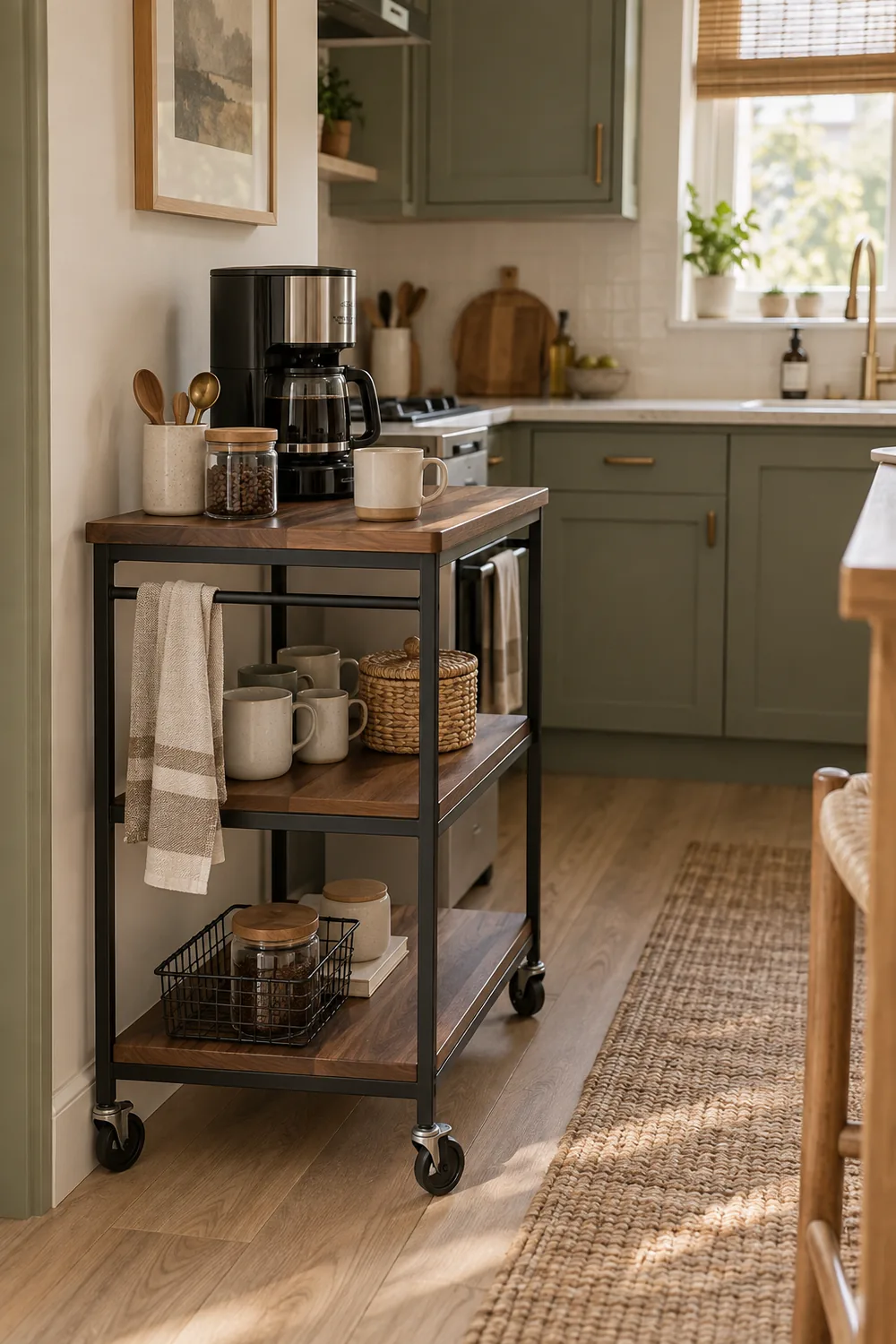
Quick Verdict
The Hencawima slim rolling coffee cart is the most balanced small-space option because it combines a work surface, concealed storage, an open basket, and lockable movement. Choose a simple utility cart for a lightweight pod or pour-over setup, a cart with a drawer for filters and tools, or a cabinet-style cart when hidden storage matters more than the smallest footprint. For layout examples rather than product comparisons, see Coffee Station on a Cart.
The Best Small-Space Coffee Carts
Affiliate disclosure: As an Amazon Associate, Inplanty may earn from qualifying purchases.

Hencawima 3-Tier Slim Rolling Coffee Cart
Best for: Small kitchens and apartments that need concealed and open storage in one narrow footprint.
Why it stands out: Combines a top work surface, enclosed cabinet, pull-out basket, and lockable casters.
Trade-off: The listed 32.7-inch height may feel low or high depending on the user and machine; measure the complete brewing position.
Check before buying: Machine footprint, door swing, basket clearance, outlet location, and safe wheel locking.
View on Amazon →
Hencawima 3-Tier Coffee Bar Cabinet
Best for: A more finished coffee-bar look with open storage and hooks.
Why it stands out: Provides a taller listed 35.9-inch work surface, basket drawer, shelving, hooks, and wheels.
Trade-off: The visual footprint is larger and the open design requires a consistent reset routine.
Check before buying: Overall width and depth, machine lid clearance, hook placement, steam and heat clearance.
View on Amazon →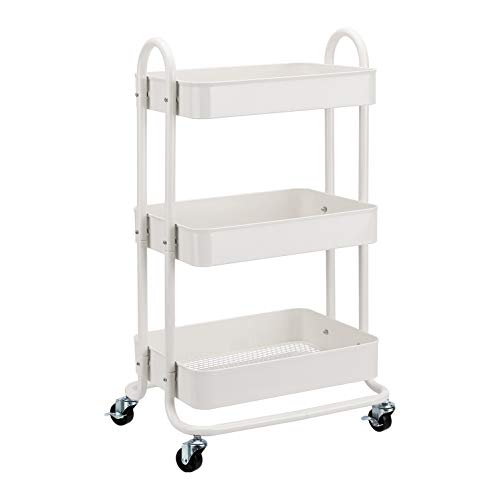
Amazon Basics 3-Tier Rolling Utility Cart
Best for: Budget pod, pour-over, tea, or accessory stations where the brewer fits safely.
Why it stands out: Simple portable tiered storage with lockable wheels and no bulky cabinetry.
Trade-off: The tray-style top may not suit every machine, and the open shelves expose all supplies.
Check before buying: Top dimensions, wheel stability, appliance instructions, cord path, and load suitability.
View on Amazon →
Finnhomy 3-Tier Rolling Kitchen Cart
Best for: Coffee setups that need a solid top plus a drawer for filters, spoons, or tools.
Why it stands out: Pairs a wood tabletop with a pull-out drawer, lower shelves, hooks, and wheels.
Trade-off: The chrome utility look is more functional than furniture-like.
Check before buying: Drawer movement, hook clearance, machine stability, total footprint, and wheel locks.
View on Amazon →
HOOBRO 29.5-Inch 3-Tier Bar Cart
Best for: A styled open coffee cart for mugs, beans, syrups, and a compatible compact brewer.
Why it stands out: Offers three tiers and wheels in a furniture-like rustic design.
Trade-off: Wine-specific holders may be wasted space for a coffee-only setup.
Check before buying: Whether holders interfere with mugs or accessories, plus top size and appliance clearance.
View on Amazon →
HOOBRO 3-Tier Coffee and Bar Cart
Best for: A multipurpose coffee-and-entertaining station with open shelves.
Why it stands out: Provides tiered storage, wheels, and furniture-style presentation.
Trade-off: Open shelves and drink-specific holders reduce hidden storage and can create visual clutter.
Check before buying: Machine footprint, useful shelf height, wheel locks, and whether specialty holders add value.
View on Amazon →
Whitmor Supreme Kitchen and Microwave Cart
Best for: Narrow wall spaces where a simple wood top and metal shelving fit the room.
Why it stands out: Its listed dimensions are 13.25 by 27.5 by 33.5 inches, making it one of the clearest measured narrow options.
Trade-off: Availability was limited at verification and the industrial style will not suit every room.
Check before buying: Machine depth, shelf spacing, movement space, shipping availability, and locking behavior.
View on Amazon →
Winsome Savannah Kitchen Cart
Best for: Readers who want the coffee cart to look more like furniture and conceal supplies.
Why it stands out: A cabinet-style espresso finish creates a more permanent coffee-station appearance.
Trade-off: It is visually and physically heavier than an open utility cart and needs more room.
Check before buying: Exact dimensions on the live listing, interior access, wheel movement, machine clearance, and assembly.
View on Amazon →Table of Contents
Quick Comparison
| Cart | Best for | Storage style | Main trade-off |
|---|---|---|---|
| Hencawima slim cart | Narrow kitchens | Cabinet, basket, tiers | Must confirm work height and door clearance |
| Hencawima coffee bar cabinet | Styled coffee bars | Open shelving, basket, hooks | Larger visual footprint |
| Amazon Basics utility cart | Budget setups | Three open trays | Limited hidden storage |
| Finnhomy cart | Filters and tools | Drawer, shelves, hooks | More utility than furniture styling |
| HOOBRO carts | Open display | Tiered shelves and holders | Some holders may not serve coffee needs |
| Whitmor cart | Very narrow spaces | Wood top and metal shelves | Limited availability at verification |
| Winsome Savannah | Concealed furniture look | Cabinet-style storage | Needs more room |
How to Choose a Coffee Cart for a Small Space
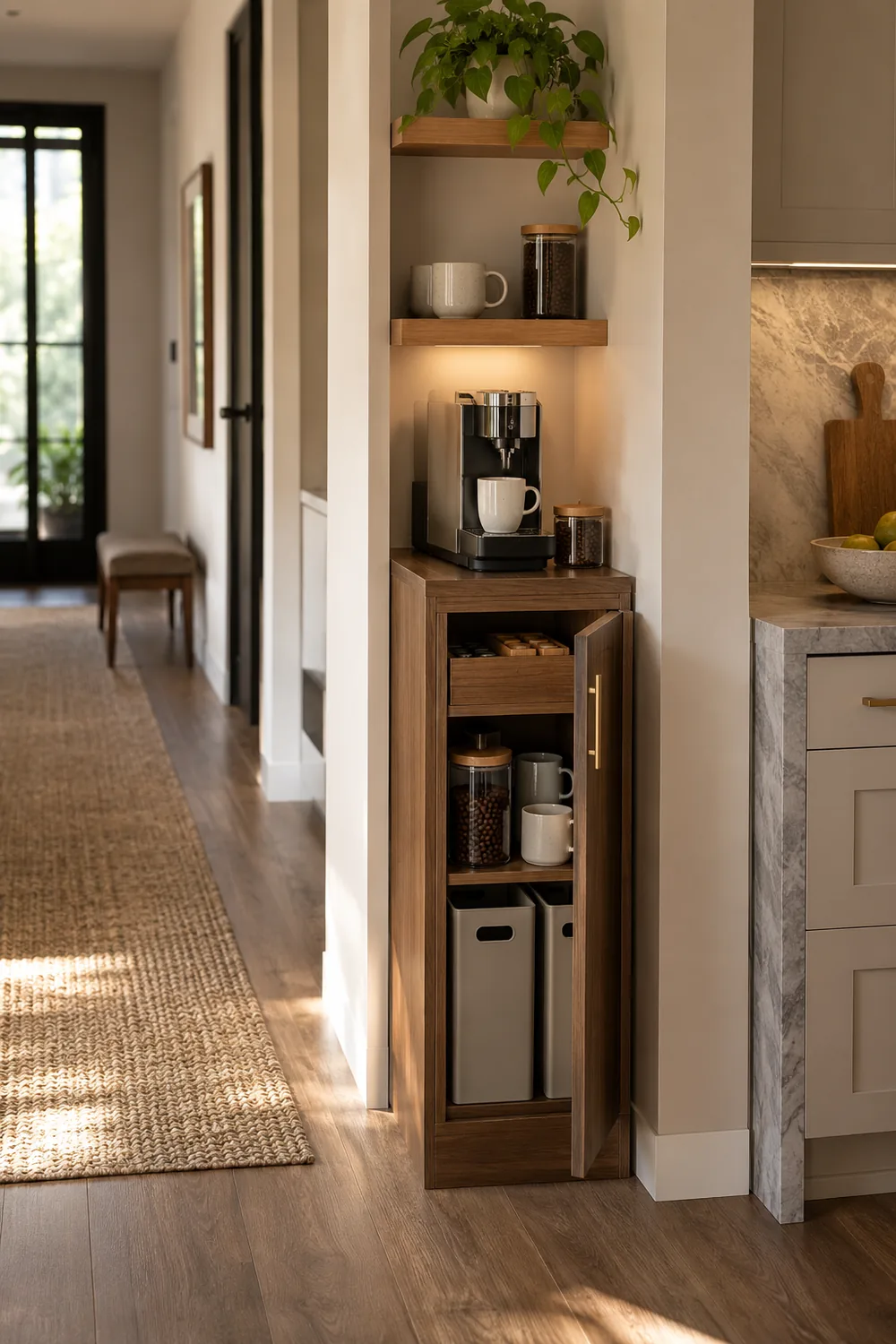
Measure the Machine
Record width, depth, height, reservoir movement, lid opening, steam-wand reach, and cord position.
Measure the Operating Zone
Include the space needed to fill water, grind, tamp, place mugs, discard waste, and wipe the cart.
Protect the Walkway
Do not let the cart block cabinet doors, appliances, seating, exits, or the main kitchen path. If the whole room is competing for storage, use How to Organize a Small Kitchen With Limited Storage before adding another piece of furniture.
Choose Useful Storage
Drawers work for filters and tools, cabinets hide backstock, and open tiers suit frequently used supplies.
Lock the Wheels
The cart should remain stationary during brewing, tamping, steaming, pouring, and machine maintenance.
Plan the Outlet
A cart is mobile, but the powered coffee station should use a safe, practical outlet and cord path.
Lock the cart during use and follow the appliance manufacturer’s requirements for ventilation, support, water, heat, steam, and electrical safety.
Which Coffee Cart Type Is Best?
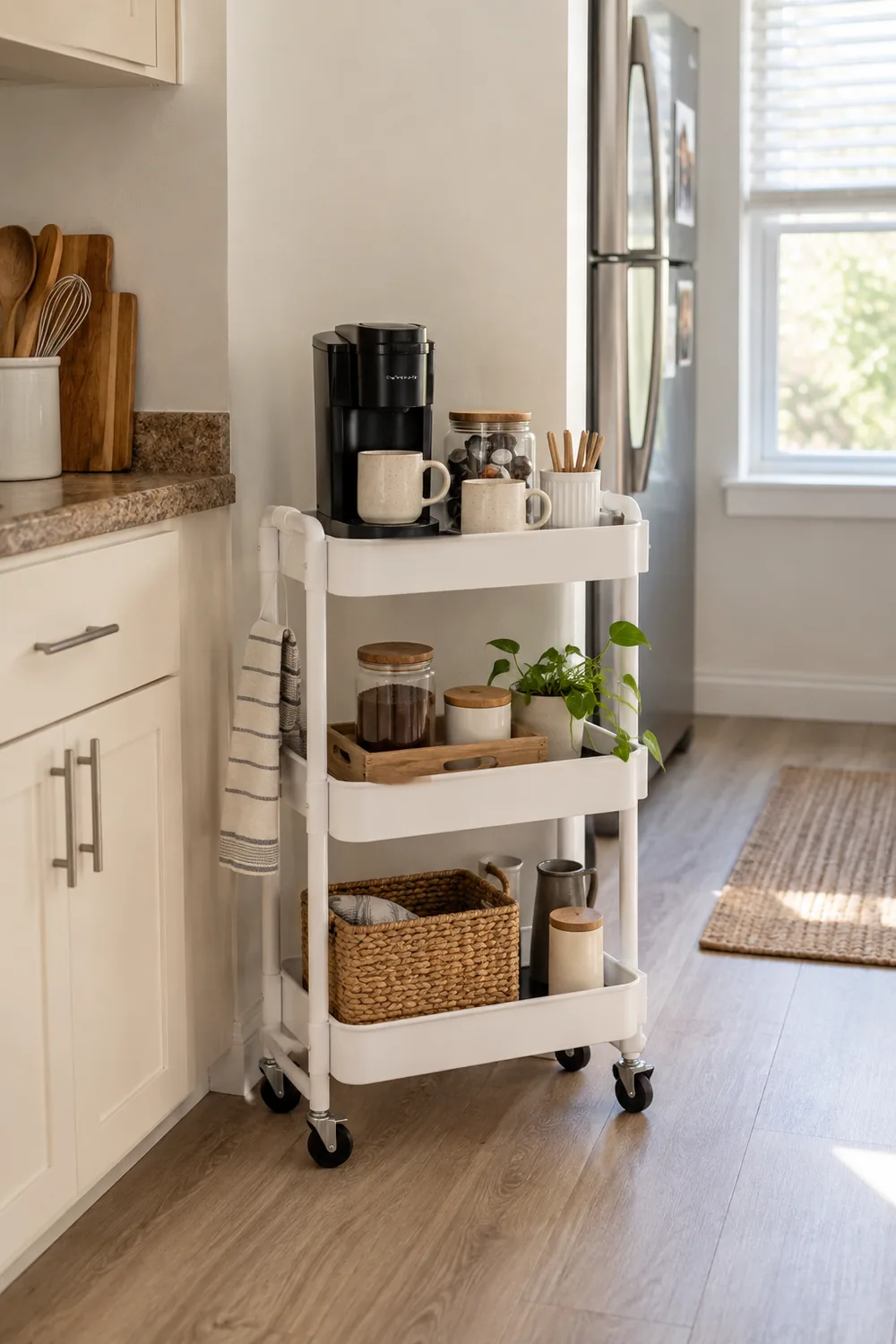
Open Utility Cart
Best for lightweight pod, pour-over, tea, or accessory setups. Everything remains visible, so use a limited active inventory.
Cart with Drawer and Shelves
Useful when small tools need concealment but daily mugs and coffee can remain accessible.
Cabinet Coffee Cart
Hides bulk pods, extra mugs, filters, and cleaning products, but usually requires a larger footprint. In a very small home, compare the cart footprint with these small-apartment storage strategies before deciding.
Bar Cart
Works for an open coffee bar, although wine racks and glass holders may not support the actual coffee workflow.
Complete Coffee Cart Setups
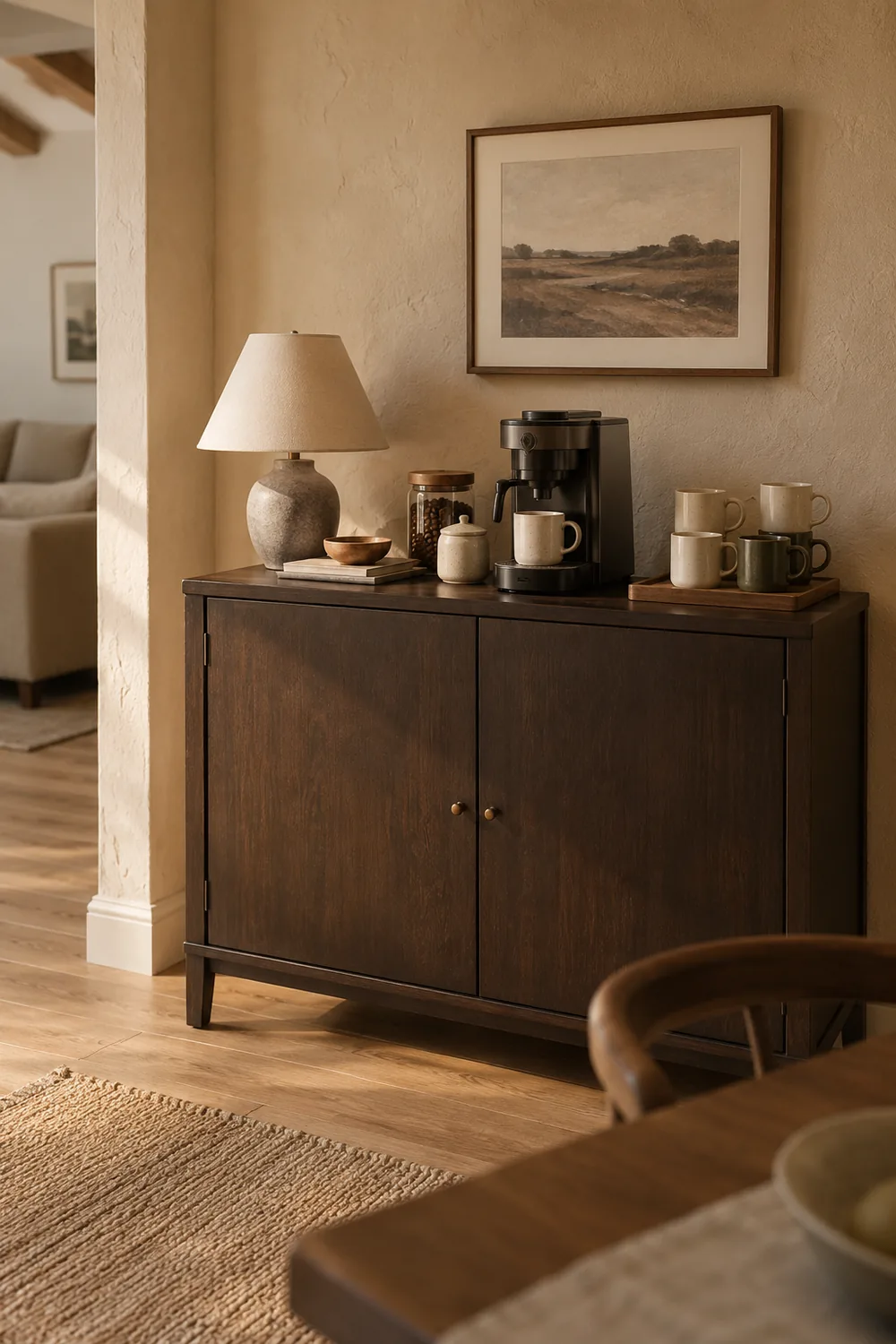
Three-Tier Utility Setup
- Compact pod brewer on top
- Active pods and mugs in middle tier
- Backstock and cleaning below
- One small waste container nearby
Best match: Amazon Basics utility cart.
Narrow Cabinet Setup
- Brewer and active coffee on top
- Filters or pods in pull-out basket
- Backstock hidden behind doors
- Hooks only for lightweight daily tools
Best match: Hencawima slim cart.
Workflow Setup
- Machine and grinder on stable top
- Drawer for dosing and tamping tools
- Lower shelf for towels and cleaning
- Knock box beside the machine
Best match: Finnhomy cart, after compatibility and stability checks.
Furniture-Look Setup
- Compact brewer on top
- Four to six mugs
- One active coffee supply
- Hidden backup storage
- Minimal decorative layer
Best match: Hencawima coffee bar cabinet or Winsome Savannah.
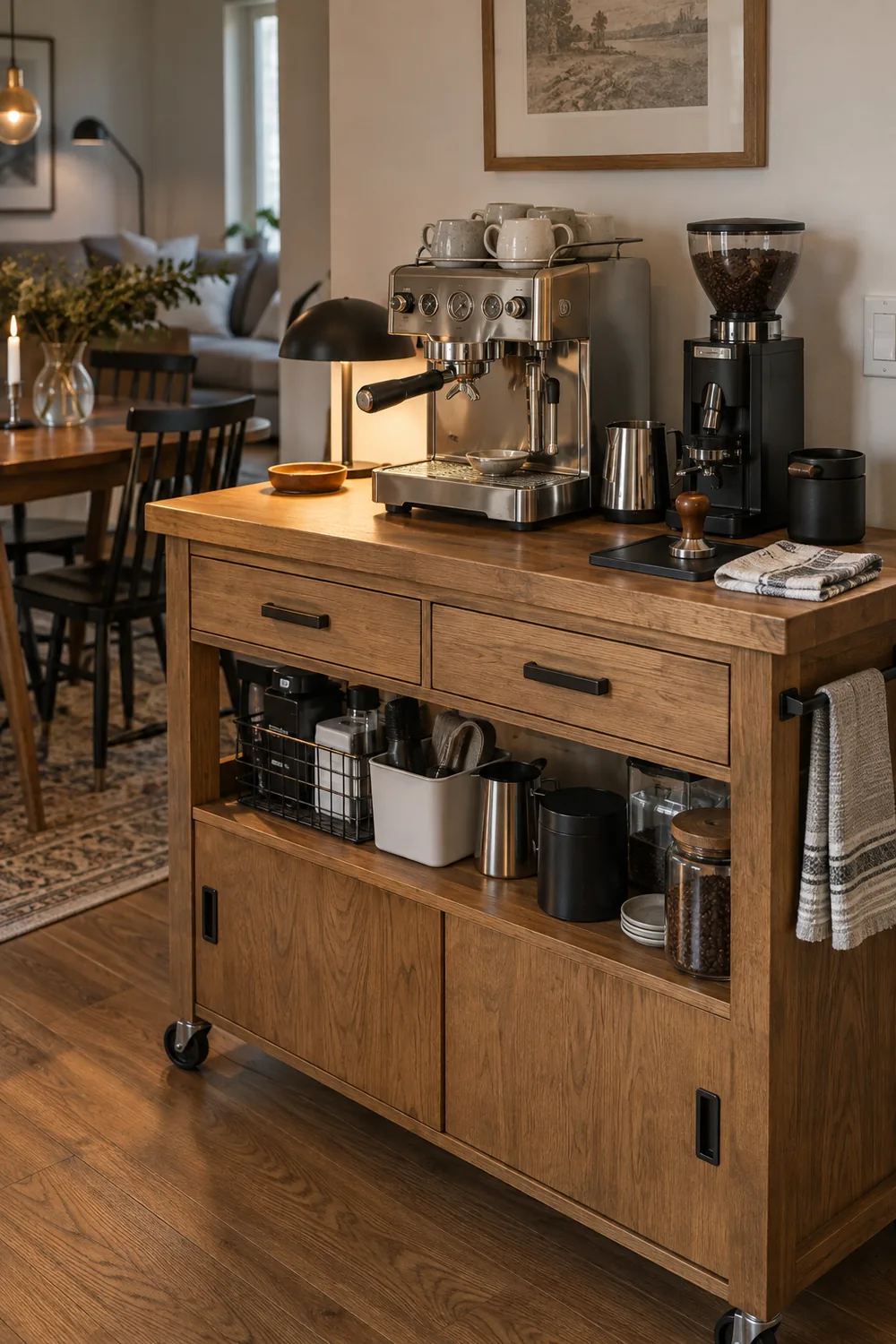
How to Measure for a Coffee Cart
Cart Footprint
Measure the available width and depth at floor level, including baseboards and door movement.
Working Height
Confirm the cart height supports comfortable brewing, grinding, tamping, and pouring.
Machine Clearance
Add the space required above and around the appliance for lids, reservoirs, steam, and ventilation.
For the full planning order, use the Coffee Station Buying Guide. For zoning after purchase, see How to Organize a Coffee Station.
Common Coffee Cart Mistakes
Choosing by Width Alone
A narrow cart can still be too shallow, too low, unstable, or unable to open the machine reservoir.
Ignoring Locked Stability
A cart that moves during tamping, pouring, or steaming is not a functional coffee surface.
Using Every Shelf for Display
Open shelves work better when they hold active supplies, while bulk refills live elsewhere.
Buying a Bar Cart for Wine Features
Wine racks and stemware holders may reduce useful coffee storage rather than improve it.
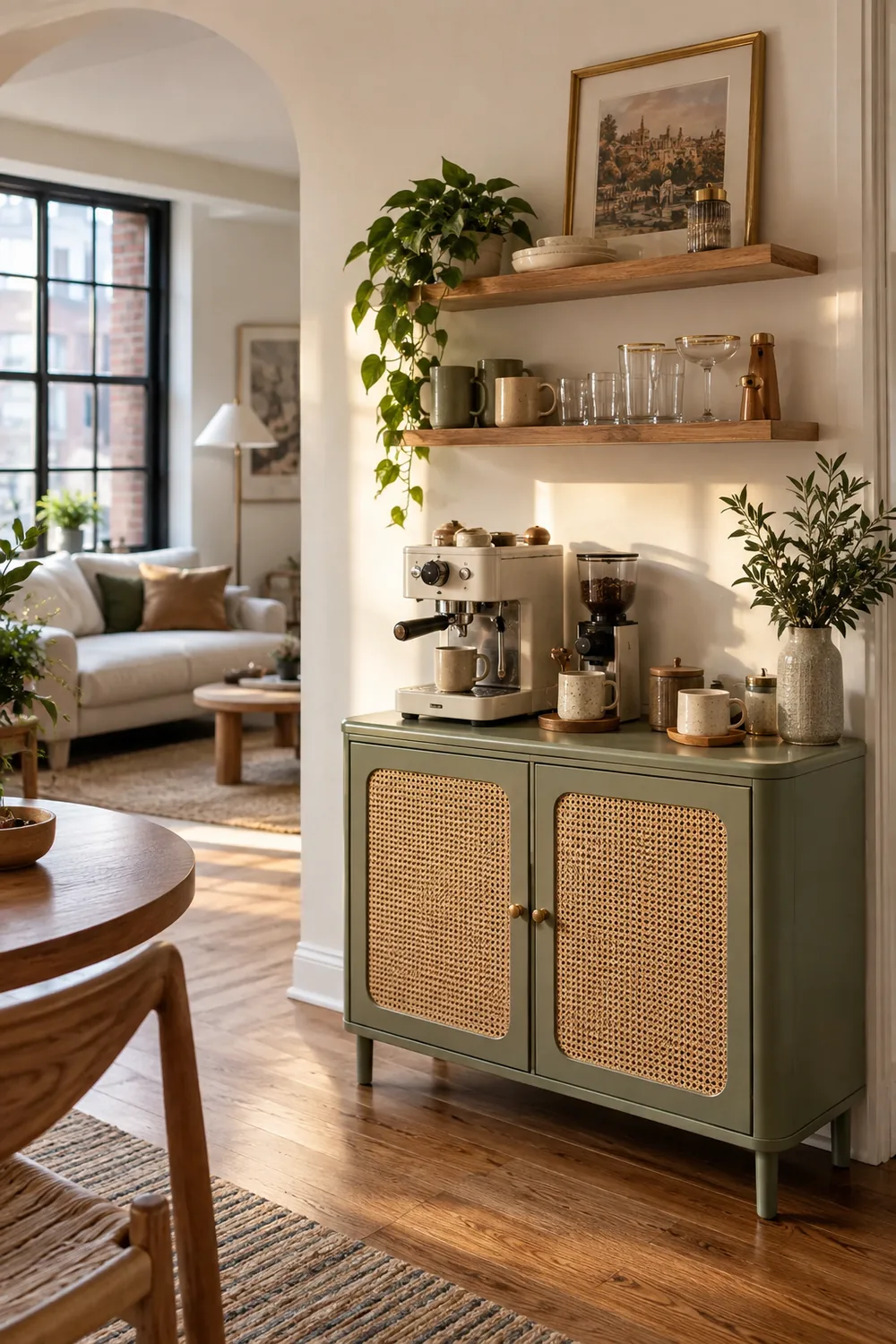
Final Recommendation
Choose the Hencawima slim cart when you need the strongest balance of narrow footprint, concealed storage, open access, and lockable mobility. Use a simple utility cart for a lower-cost pod or manual-brew station, a drawer cart for tools, or a cabinet-style option when visual calm matters more than maximum compactness.
Frequently Asked Questions
What size coffee cart is best for a small space?
The best size is the smallest cart that safely supports the machine, operating clearance, storage, and walking path. Measure the appliance and the complete brewing routine rather than using width alone.
Can an espresso machine go on a rolling cart?
It can when the cart provides compatible dimensions, stable support, locked wheels, safe electrical access, and the clearances required by the machine manufacturer.
Are utility carts good for coffee stations?
They can work well for compact pod, pour-over, tea, or accessory stations, but the top must safely support the appliance and open storage should remain limited.
Should a coffee cart have drawers or cabinets?
Drawers are useful for filters and small tools, while cabinets are better for hiding bulk coffee, pods, extra mugs, and cleaning products.