
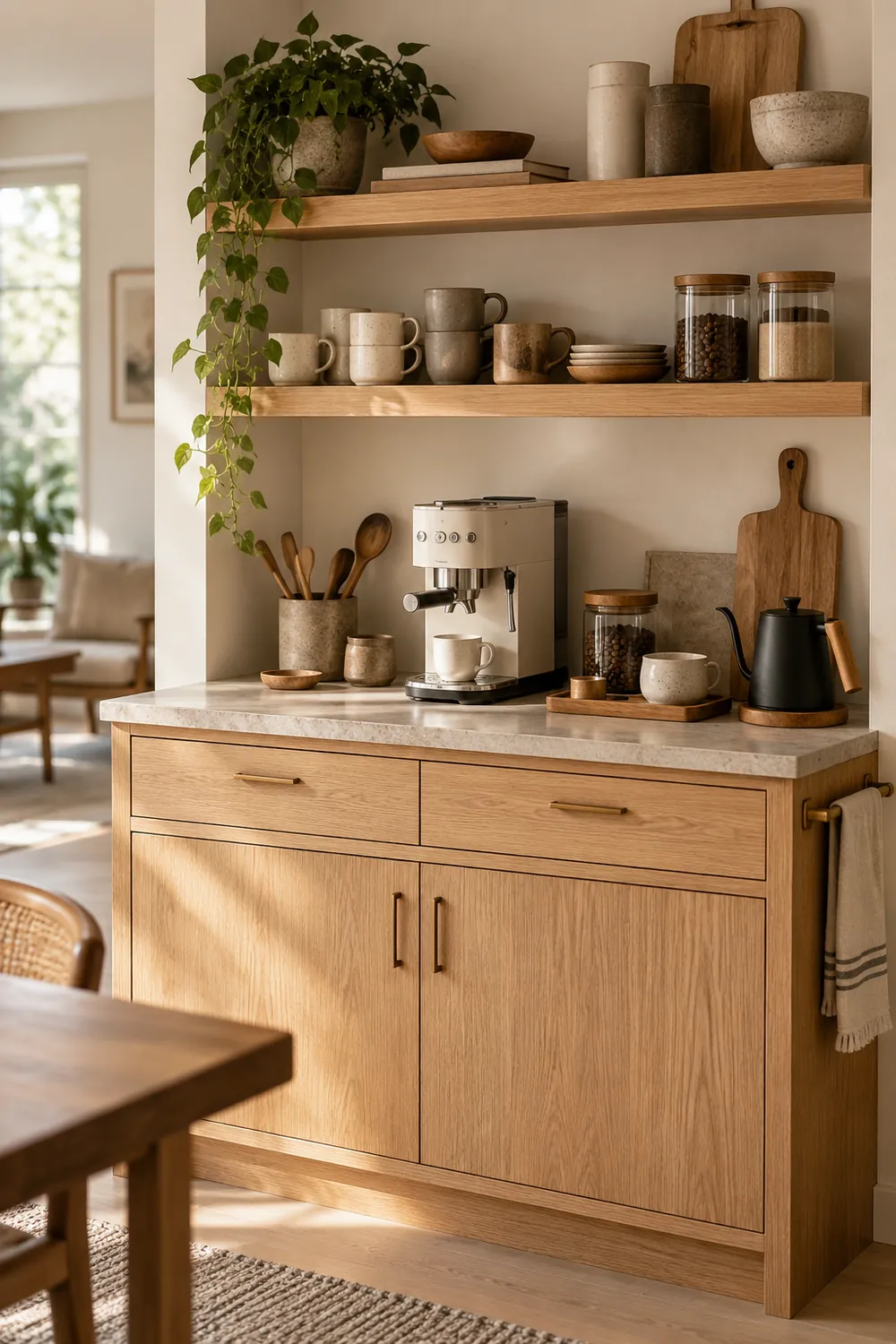
What a Complete Coffee Station Should Do
The finished station should let one person refill water, prepare coffee, brew, add milk or sweeteners, serve, discard grounds or pods, and wipe the area without moving unrelated kitchen items.
Result checklist
- Machine fits with operating clearance
- Daily tools stay within reach
- Water and waste paths are simple
- Backstock stays off the work surface
- Cords remain controlled
- Cleanup takes only a few steps
Quick Buying Advice
Choose the machine based on the drinks you make most often. Measure the full depth, height, reservoir or lid access, cup clearance, and outlet location. Add a grinder only when the brewing method benefits from one. Keep the counter limited to the brewer, active coffee, essential preparation tools, and a small mug group. Use drawers, cabinets, carts, or shelves for refills and occasional accessories.

Budget verified products

KRUPS Simply Brew Compact 5 Cup Coffee Maker: Stainless Steel Design, Pause & Brew, Keep Warm, Reusable Filter, Drip-Free Carafe
The main brewer sized for the available depth.
In_stock · checked Oct 12, 2026
View at Amazon
Zulay Kitchen Powerful Milk Frother Wand With Duracell Batteries - Ultra Fast Handheld Drink Mixer - Electric Whisk Foam Maker for Coffee, Lattes, Cappuccino & Matcha - Z1 Motor - Black
Only the grinder, kettle, or milk tools used daily.
In_stock · checked Oct 12, 2026
View at Amazon
Bestier 31" Industrial Pipe Wall Shelf with Towel Bar, Rustic Brown
Keeps mugs and supplies off the working surface.
In_stock · checked Oct 12, 2026
View at Amazon
ThreeHio Rolling Kitchen Microwave Cart, 3 Tier Microwave Table Stand with Storage, Kitchen Utility Cart on Lockable Wheels, Small Coffee Cart Shelf Rack Organizer for Living Room Office, Balcony
A compact cart, console, or shelf-supported surface.
In_stock · checked Oct 12, 2026
View at Amazon
Mr. Coffee® 5-Cup Mini Brew Switch Coffee Maker, Black
The main brewer sized for the available depth.
In_stock · checked Oct 12, 2026
View at Amazon
Amazon Basics 5 Cup Drip Coffee Maker with Glass Coffee Pot (0.8 Qt), Auto Shut-off, Auto Pause, Removable Filter Basket, Matte Black
The main brewer sized for the available depth.
In_stock · checked Oct 12, 2026
View at AmazonMid-range verified products

Elite Gourmet EHC4128 Automatic 4-Cup Drip Coffee Maker, Black
The main brewer sized for the available depth.
In_stock · checked Oct 12, 2026
View at Amazon
Milk Frothing Pitcher, 600ml (20oz) Milk Frother Cup Stainless Steel Jug Steaming Pitcher, Milk Coffee Cappuccino Latte Art Barista Steam Pitchers Milk Jug Cup with Decorating Pen
Only the grinder, kettle, or milk tools used daily.
In_stock · checked Oct 12, 2026
View at Amazon
YINMIT Coffee Cup Holder Wall Mounted, 12-Hook Mug and Shelf for Coffee Bar
Keeps mugs and supplies off the working surface.
In_stock · checked Oct 12, 2026
View at Amazon
3 Tier Slim Rolling Coffee Cart with 2-Door & Pull-Out Wire Basket Drawer, Coffee Bar Cabinet on Lockable Casters, 32.7" H Microwave Cart with Storage for Home, Kitchen, Living Room (Rustic Brown)
A compact cart, console, or shelf-supported surface.
In_stock · checked Oct 12, 2026
View at Amazon
Mr. Coffee® 5-Cup Mini Brew Switch Coffee Maker, Black
The main brewer sized for the available depth.
In_stock · checked Oct 12, 2026
View at Amazon
Amazon Basics 5 Cup Drip Coffee Maker with Glass Coffee Pot (0.8 Qt), Auto Shut-off, Auto Pause, Removable Filter Basket, Matte Black
The main brewer sized for the available depth.
In_stock · checked Oct 12, 2026
View at AmazonPremium verified products

SIMPLETASTE Milk Frother, 4-in-1 Electric Automatic Milk Steamer
Only the grinder, kettle, or milk tools used daily.
In_stock · checked Oct 12, 2026
View at Amazon
Creso hom Floating Shelves for Wall Set of 2, Wood Wall Shelf with 6 Hooks, 2 Tier Hanging Decorative Storage Shelves for Living Room Bedroom Bathroom Kitchen Office Coffee Bar, Rustic Brown
Keeps mugs and supplies off the working surface.
In_stock · checked Oct 12, 2026
View at Amazon
Homleke 3-Tier Rolling Kitchen Microwave Cart, Utility Cart
A compact cart, console, or shelf-supported surface.
In_stock · checked Oct 12, 2026
View at Amazon
Mr. Coffee® 5-Cup Mini Brew Switch Coffee Maker, Black
The main brewer sized for the available depth.
In_stock · checked Oct 12, 2026
View at Amazon
Amazon Basics 5 Cup Drip Coffee Maker with Glass Coffee Pot (0.8 Qt), Auto Shut-off, Auto Pause, Removable Filter Basket, Matte Black
The main brewer sized for the available depth.
In_stock · checked Oct 12, 2026
View at Amazon
Keurig K-Express Single Serve K-Cup Pod Coffee Maker, Black
The main brewer sized for the available depth.
In_stock · checked Oct 12, 2026
View at AmazonInplanty may earn a commission from qualifying purchases. Availability can change at the retailer.
Popular Starting Points
Start with the part that defines the setup: the brewer, the grinder when whole-bean espresso matters, or a dedicated surface when the kitchen has no usable counter space. These are verified examples already used later in this guide.
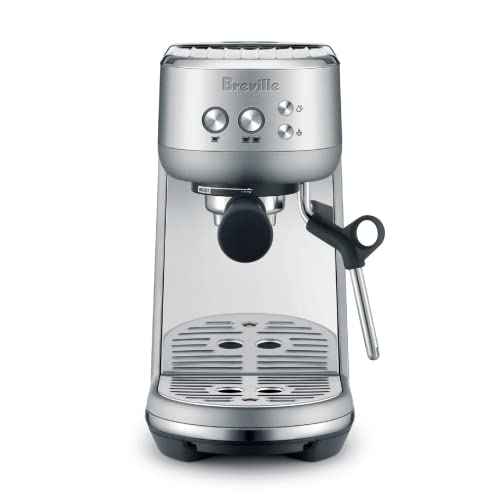
Breville Bambino Espresso Machine
Best for: A compact espresso-first station.
Trade-off: You still need room for grinding, tamping, milk and cleanup.
View on Amazon →
Baratza Encore ESP Coffee Grinder
Best for: Espresso or other whole-bean routines that need a dedicated grinder.
Trade-off: Adds footprint, height and another cleanup point.
View on Amazon →
Hencawima Slim Rolling Coffee Cart
Best for: A separate coffee surface when existing counters cannot be sacrificed.
Trade-off: Verify top dimensions, stability, wheel locks and outlet path.
View on Amazon →Table of Contents
Start With the Drinks You Actually Make
Pod Coffee
Prioritize a compact brewer, pod storage, cups, water access, and easy disposal. A grinder and espresso tools are unnecessary.
Drip Coffee
Plan for the brewer, filters, coffee storage, scoop or scale, mugs, and carafe access. Check lid clearance beneath cabinets.
Pour-Over
Plan for a kettle, brewer, filters, grinder when using whole beans, scale if desired, and a clear pouring surface.
Espresso Drinks
Allow room for the machine, grinder, portafilter workflow, tamping, milk tools, knock box, towels, water, and daily cleaning.
Cold Brew
Plan refrigerator space, concentrate storage, serving glassware, filters, and a separate preparation area if the brewer is large.
Multiple Brewing Methods
Choose one primary daily system and move secondary brewers and accessories out of prime counter space.
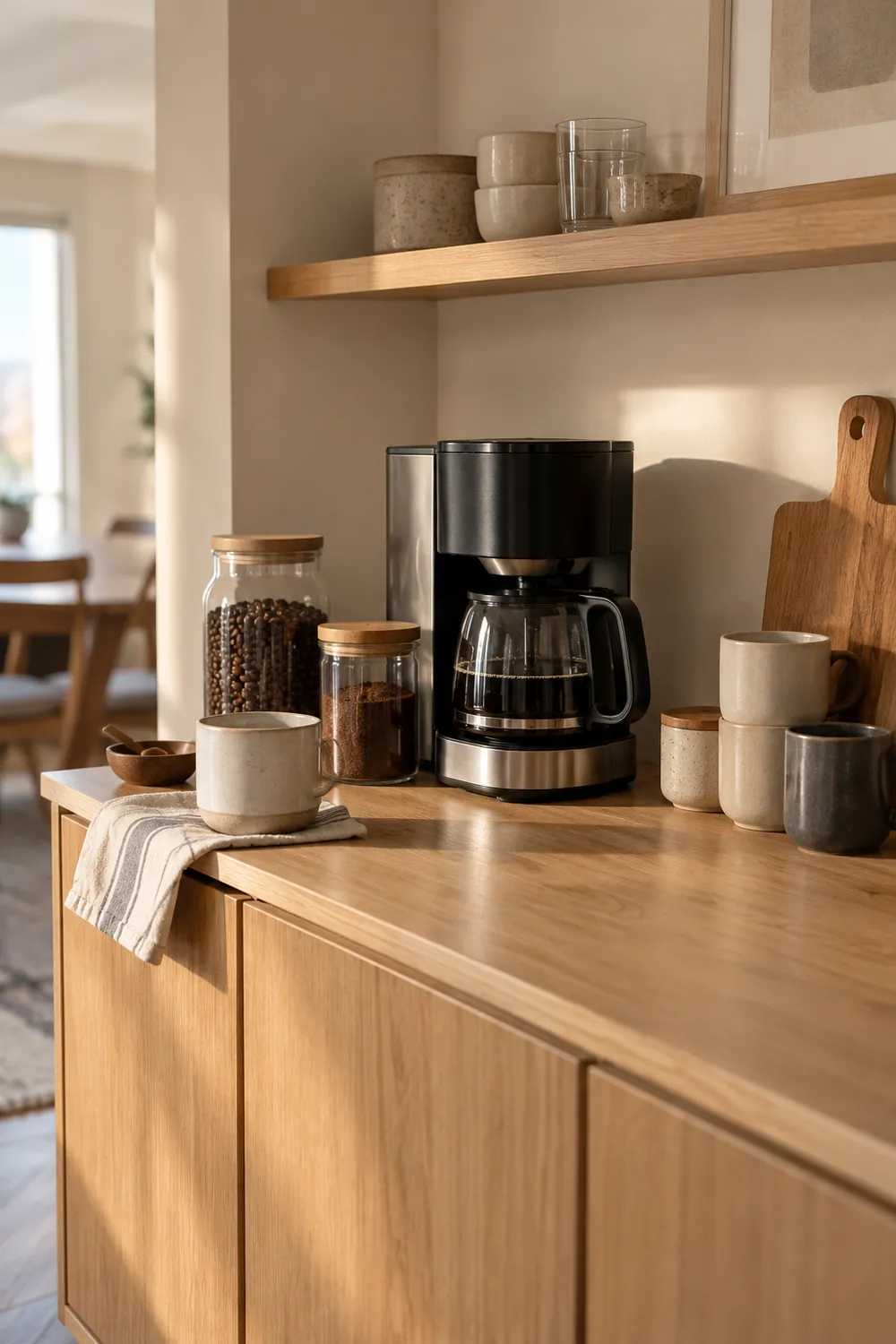 A visually distinct home built around a practical everyday coffee routine: compact drip or pour-over setup, coffee storage, mugs and clear preparation space.
Choose the Coffee Station Location
| Location | Best for | Main advantage | Main limitation |
|---|---|---|---|
| Kitchen counter | Daily brewing near water | Convenient utilities and cleanup | Uses valuable food-prep space |
| Unused kitchen corner | Compact stations | Reclaims dead space | Corner access and cabinet doors may interfere |
| Rolling cart | Renters and flexible layouts | Portable and adds storage | Needs wheel locks, stability, and cord planning |
| Freestanding cabinet | Concealed storage | Creates a complete furniture zone | Needs a larger footprint and outlet access |
| Pantry or cabinet | Hidden coffee stations | Keeps visual clutter contained | Heat, steam, depth, and door clearance matter |
| Dining room sideboard | Serving and hosting | Separates coffee from kitchen prep | Water and cleanup may be less convenient |
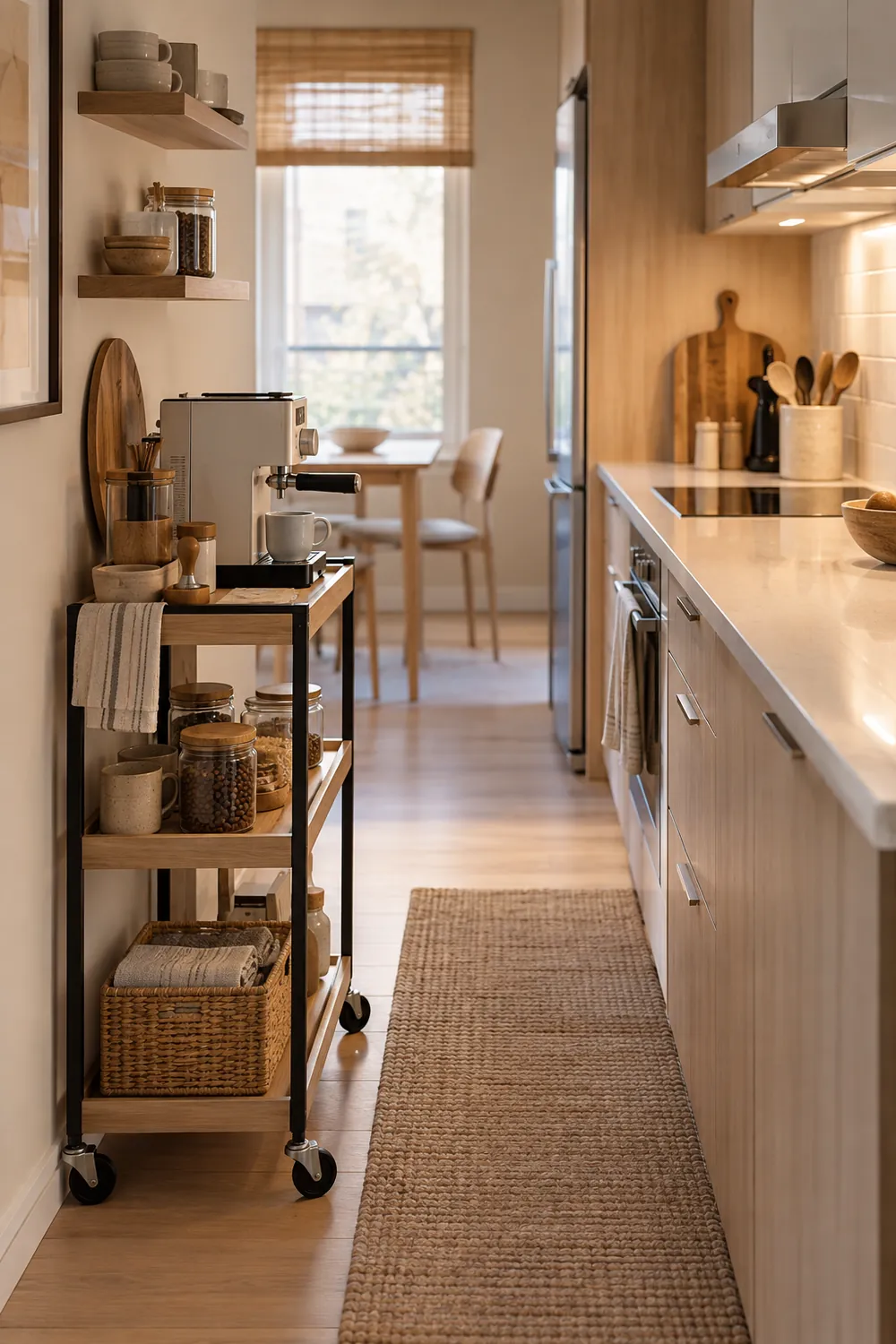 A small kitchen where a slim rolling cart or adjacent sideboard creates a dedicated coffee zone while the main countertop remains clear for food preparation.
Use an appropriate outlet and stable surface. Preserve ventilation, reservoir access, lid movement, steam clearance, cord safety, and manufacturer-required space. Keep the station away from sink splashes, cooking heat, and areas where children or pets can pull cords or contact hot equipment.
Choose the Brewing System Before the Furniture
Measure the Full Appliance Depth
Include plugs, cords, drip trays, handles, removable reservoirs, and the space needed to slide the machine forward.
Measure Operating Height
Check top lids, bean hoppers, water tanks, pod levers, steam movement, and cabinet clearance.
Check the Daily Capacity
Choose a reservoir, carafe, or pod system that suits the number of drinks made without unnecessary bulk.
Match the Cleanup Tolerance
Espresso and milk drinks require more daily maintenance than pod or simple drip systems. If espresso is the priority, use How to Set Up an Espresso Machine at Home to plan the full machine-and-grinder workflow.
Decide Whether the Station Needs a Grinder
A Grinder Is Usually Worth It For
Whole-bean espresso, pour-over, French press, and households that value adjustable grind size and fresher preparation.
A Grinder May Be Unnecessary For
Pod systems, instant coffee, pre-ground drip routines, or very small stations where the additional footprint outweighs the benefit.
The Countertop Rule
Keep only the items needed to make the most common drink on the work surface. Decorative accessories, bulk coffee, extra mugs, backup pods, syrups, and occasional brewing tools should move to nearby storage.
Choose a Safe, Functional Work Surface
Counter or Sideboard
Best when the surface is stable, washable, close to power, and deep enough for the equipment.
Rolling Coffee Cart
Best when portability matters and the cart has adequate top dimensions, load capacity, stability, and locking wheels. If there is no usable kitchen worktop at all, see How to Create a Coffee Station Without Counter Space.
Cabinet Coffee Bar
Best when doors and shelves can remain open during operation and steam, heat, cords, and water can be managed safely.
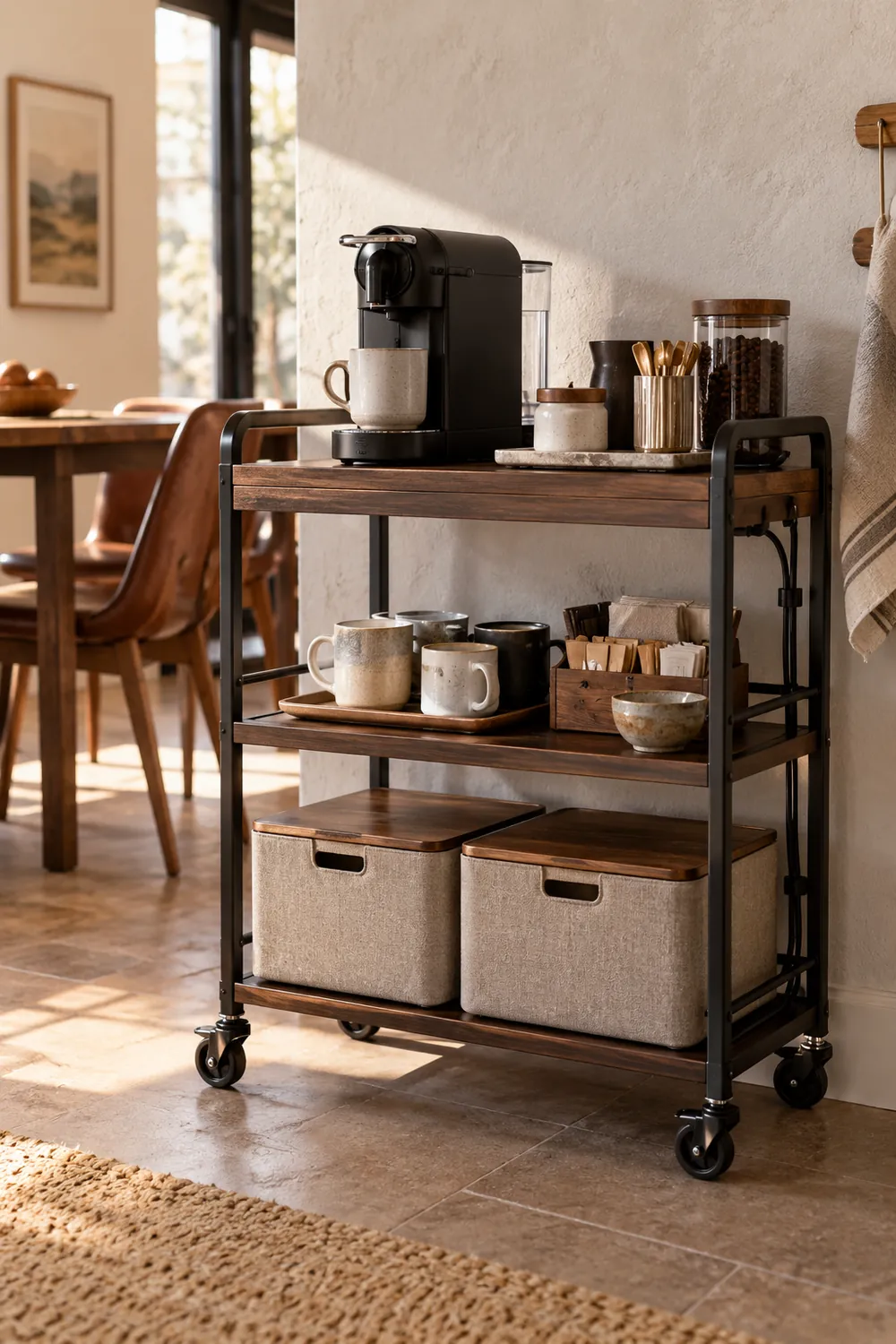 A renter-friendly coffee station on a stable slim cart with locked wheels, controlled cord path, compact brewer, concealed refills, and no drilling or permanent cabinetry.
Plan the Coffee Station Storage
Once the furniture is chosen, build clear daily-use and backstock zones. The full system is in How to Organize a Coffee Station.
Daily Coffee Zone
Current beans, grounds, or pods in the smallest practical quantity.
Mug Zone
A small active mug group close to the brewer, with extras stored elsewhere.
Preparation Zone
Filters, scoop, scale, tamper, distribution tool, or kettle accessories required by the method.
Serving Zone
Sugar, sweeteners, syrups, spoons, napkins, or stirrers used regularly.
Cleanup Zone
Towels, cleaning brush, machine-specific products, knock box, and waste handling.
Backstock Zone
Unopened coffee, pods, filters, syrups, and cleaning supplies stored away from the work surface.
Coffee Station Essentials by Brewing Method
Use this table as the buying filter, then see Coffee Station Essentials for a more detailed essentials-only checklist.
| Category | Essential when | Optional when | Buying check |
|---|---|---|---|
| Brewer | Always | Never | Dimensions, clearance, outlet, capacity, cleanup |
| Grinder | Whole-bean espresso or manual brewing | Pods or pre-ground coffee | Grind range, footprint, hopper access, cleaning |
| Coffee canister | Reusable coffee storage is needed | Coffee stays in suitable original packaging | Capacity, seal, scoop storage, shelf height |
| Pod organizer | Pods are the main brewing method | Only a few pods are kept | Pod compatibility, capacity, machine clearance |
| Knock box | Espresso pucks are discarded frequently | Espresso is rarely made | Footprint, bar stability, cleaning, waste capacity |
| Tamping mat | Espresso preparation needs surface protection | No portafilter is used | Portafilter fit, counter edge, cleanability |
| Condiment organizer | Several people use packets and disposable cups | Home station uses a few jars or drawers | Actual category count and countertop footprint |
| Cart or cabinet | No suitable work surface exists | Existing counter or sideboard works | Top size, load, stability, storage, outlet path |
What to Skip at First
Large Matching Organizer Sets
They often create categories the routine does not need and consume more surface area than expected.
Oversized Mug Displays
Keep a small active mug group near the station and store the full collection elsewhere.
Multiple Syrup Bottles
Start with the flavors used regularly before creating a café-style display.
Specialized Espresso Tools
Buy the machine-required basics first and add tools only when they solve a repeatable preparation problem.
Decorative Signs and Props
Leave enough open space for preparation and cleaning before styling the station.
Furniture Bought Before the Machine
The final appliance dimensions and operating clearance should determine the surface.
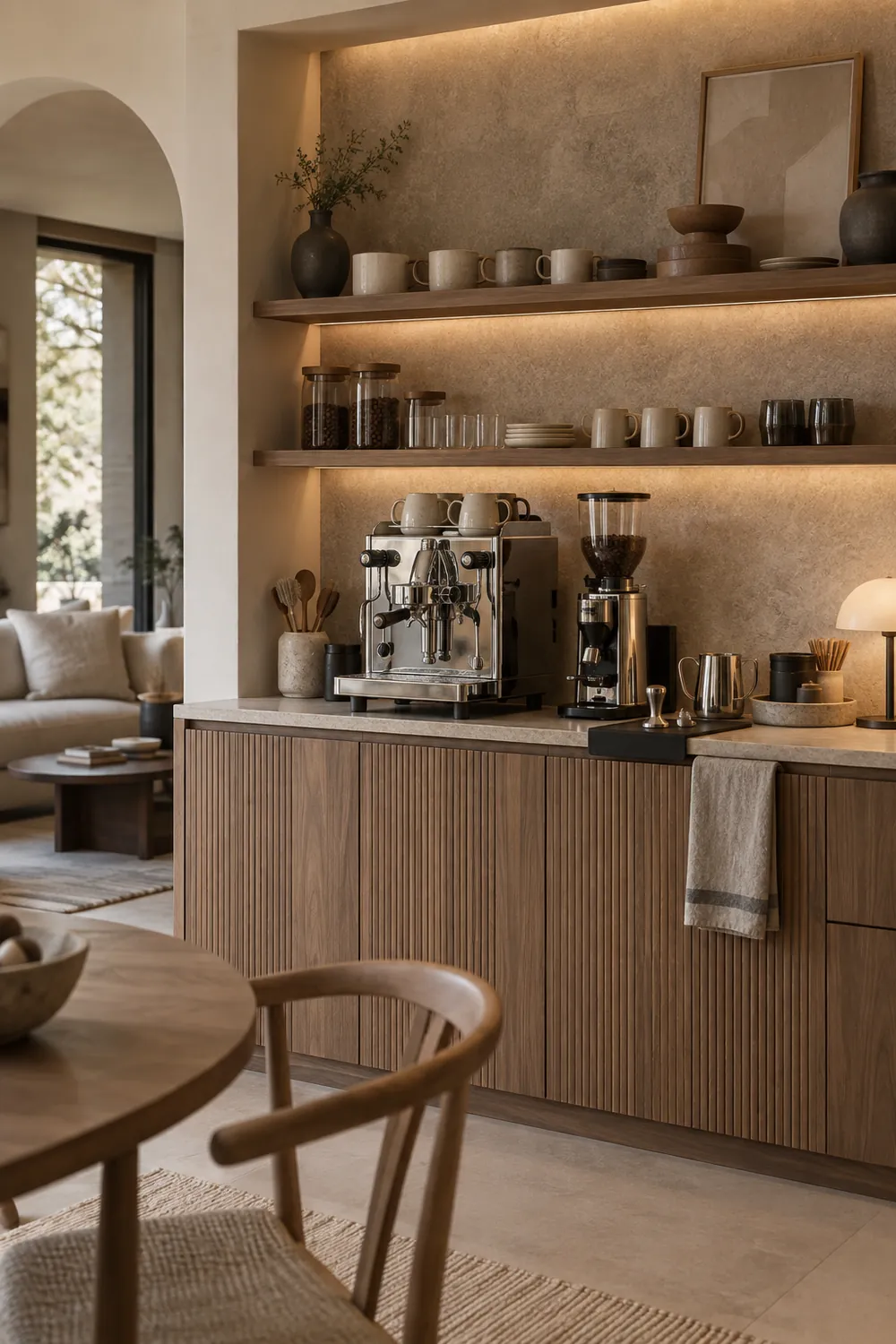 A premium but achievable espresso station with machine and grinder, dedicated tamping zone, mugs, milk tools, concealed backstock, clear counter space, and cohesive cabinetry or sideboard storage.
Three Practical Coffee Station Packages
Pod or Drip Station
Brewer, small mug group, active coffee or pods, one drawer or bin, water access, and a cleaning cloth.
Whole-Bean Coffee Station
Brewer, grinder, kettle if required, beans, filters, scale or scoop, mugs, and a small cleanup zone.
Home Espresso Station
Machine, espresso grinder, tamping area, milk tools, knock box, towels, beans, cups, and machine-care storage. If counter width is limited, compare the options in Best Espresso Machines for Small Apartments.
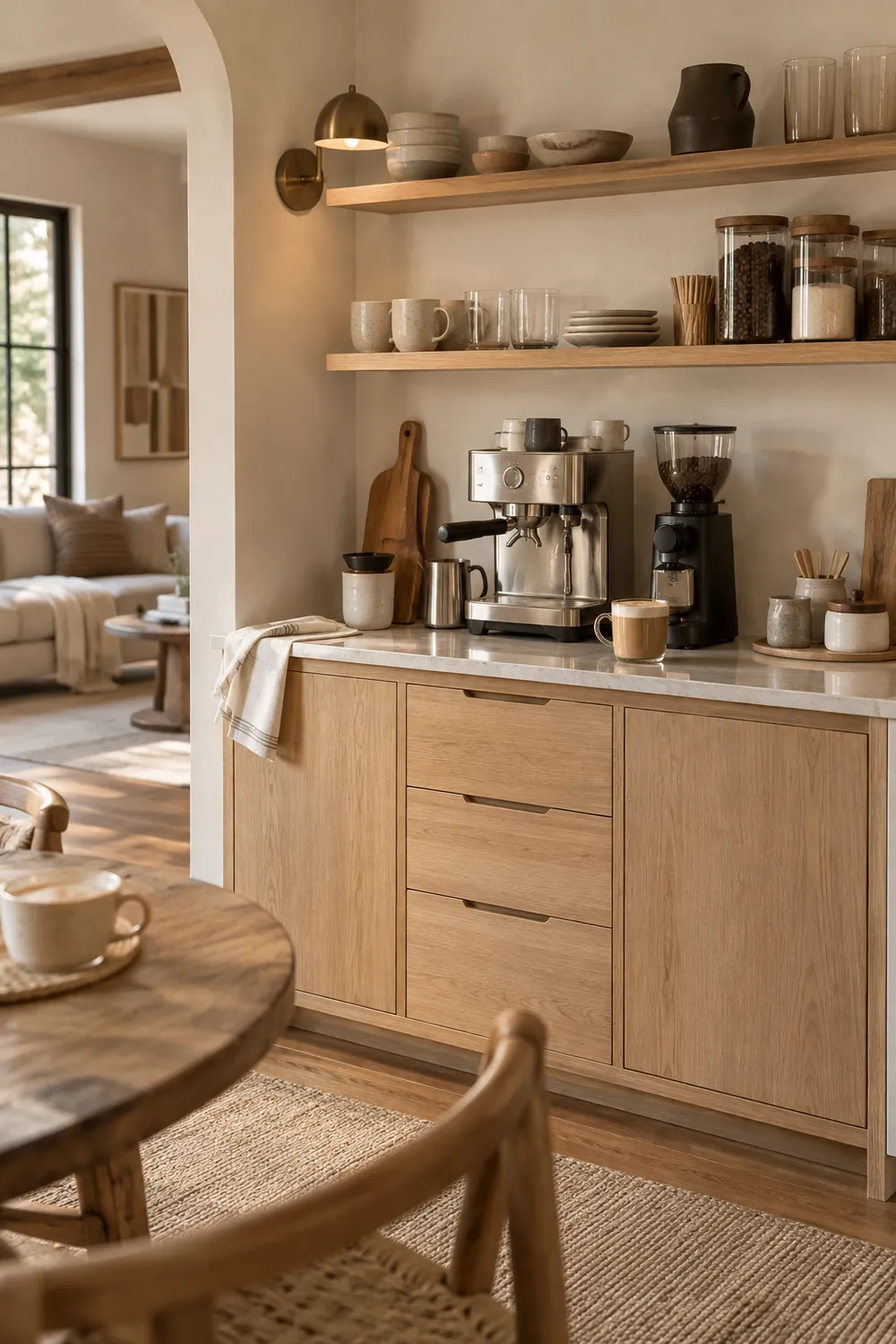 A warm editorial final reveal showing a complete coffee station in use-ready condition: uncluttered work surface, daily coffee accessible, extras concealed, clean cord management, and one finished drink.
Final Recommendation
Buy the brewing system first, the compatible grinder second, and the work surface only after measuring both. Then add coffee storage, cups, preparation tools, waste handling, and cleanup supplies in the smallest practical quantities. Use the station for several days before buying decorative or highly specialized accessories.
Verified Product Examples
These Amazon US examples illustrate different coffee-station categories. They are not one required package, and prices and availability can change.
Affiliate disclosure: As an Amazon Associate, Inplanty may earn from qualifying purchases.
Breville Bambino Espresso Machine
Why it helps: Shows how a compact espresso machine can anchor a small dedicated station.
Trade-off: A complete espresso workflow still needs grinder, tamping, milk, waste, and cleaning space.
Check: Full dimensions, water-tank access, cup clearance, steam clearance, outlet, and manufacturer instructions.
View on Amazon →
Baratza Encore ESP Coffee Grinder
Why it helps: Illustrates a dedicated grinder for a station that serves espresso and other whole-bean methods.
Trade-off: Adds counter width, hopper height, grounds cleanup, and another outlet requirement.
Check: Brewing-method compatibility, total height, adjustment access, cleaning, and footprint.
View on Amazon →
Hencawima Slim Rolling Coffee Cart
Why it helps: Combines a work surface, enclosed storage, open storage, and wheels for a room without available counter space.
Trade-off: Machine fit, top load, stability, wheel locks, cord path, and real room footprint must be checked.
Check: Top dimensions, overall depth, shelf clearance, assembly, and outlet location.
View on Amazon →
Veken Coffee Canister
Why it helps: Creates a defined active-coffee zone for beans or grounds.
Trade-off: A canister is optional when suitable original packaging already stores the coffee effectively.
Listed capacity: 16 ounces.
View on Amazon →
Nifty Rolling Coffee Pod Drawer
Why it helps: Stores compatible pods beneath a coffee machine while keeping them easy to view.
Trade-off: Raises the machine and may reduce cabinet clearance or create a larger total footprint.
Check: Pod compatibility, machine weight, drawer dimensions, cabinet height, and rolling clearance.
View on Amazon →
Ezebesta Espresso Tamping Mat
Why it helps: Defines a small preparation zone and protects a compatible counter edge during tamping.
Trade-off: It is unnecessary for coffee systems that do not use a portafilter.
Check: Portafilter shape, counter edge, mat footprint, and cleaning method.
View on Amazon →If Storage Is the Real Constraint
Frequently Asked Questions About Buying a Coffee Station
What do you need for a coffee station?
Most coffee stations need a brewing system, suitable work surface, water access, cups, coffee storage, waste and cleanup tools, and only the accessories required by the chosen brewing method.
How much space does a coffee station need?
The space must fit the full appliance depth, lid or reservoir access, cup clearance, cords, heat and ventilation requirements, and the workflow area beside the machine.
Do you need a grinder for a coffee station?
A grinder is useful for whole-bean coffee and especially important for espresso, but it is not necessary for pod systems or pre-ground coffee routines.
Is a coffee cart better than a cabinet?
A cart is more portable and renter-friendly, while a cabinet usually provides more concealed storage and a more permanent built-in appearance.
What should be stored on the coffee station counter?
Keep the brewer, grinder when used daily, current coffee, one mug group, and the smallest realistic set of preparation tools on the work surface.
What coffee station accessories are optional?
Syrup displays, large mug trees, condiment organizers, pod holders, decorative signs, knock boxes, scales, and tamping mats are optional unless they support the actual routine.
Where should a coffee station be placed?
Choose a stable surface near an appropriate outlet and water source, away from sink splashes and cooking heat, with enough space to refill, brew, steam, serve, and clean.
How do you avoid overspending on a coffee station?
Choose the brewing method first, measure the space, buy the machine and workflow essentials, then add storage and accessories only after using the station.