
How to Keep an Entryway Clutter-Free Without Constant Tidying
Stop shoes, coats, bags, mail, packages, and random household items from rebuilding near the front door by fixing the system—not by adding endless baskets.
The Finished Result
The entryway supports arrivals and departures without absorbing the rest of the home. Daily categories have fast, limited homes; temporary items have deadlines and next actions; wet gear is separated; and the space can be reset in minutes.
- Door and walkway stay clear
- Daily categories remain below capacity
- Mail and returns move forward
- Shared responsibility is visible
- Extra storage is added only for real gaps
Quick Answer
Keep an entryway clutter-free by limiting it to current daily-use items, giving shoes, coats, bags, keys, and mail separate homes, and removing temporary items before they become permanent. A short daily reset should restore the main zones, while a weekly review should handle papers, returns, seasonal gear, and overflowing storage.
Use the complete entryway organization guide for setup decisions. This page focuses on keeping a working system functional after the main storage is already in place.
Identify What Is Creating the Entryway Clutter
| Clutter source | Likely cause | First correction |
|---|---|---|
| Shoes on the floor | Storage is full, inaccessible, or missing | Reduce active pairs and simplify access |
| Coats on chairs or doors | Hooks are full, weak, or inconvenient | Limit coat rotation and improve placement |
| Bags on the floor | No dedicated bag position | Add one stable hook, shelf, or cubby |
| Mail on a console | No processing routine | Create action, recycle, and outgoing steps |
| Packages near the door | No return or delivery workflow | Assign a temporary outgoing zone |
| Children’s items everywhere | Storage is unreachable or unclear | Lower access and create personal zones |
| Random household items | The entryway is temporary overflow | Add relocation and reset rules |
Core principle
Recurring clutter is evidence about the system, not simply a failure to tidy.
Limit What Is Allowed to Stay in the Entryway
Items that usually belong
- Current daily shoes
- Current daily coats
- Active bags
- Keys and wallets
- One umbrella
- Small pet-walking supplies
- Immediate outgoing items
- Current weather accessories
Items that usually belong elsewhere
- Out-of-season coats
- Full shoe collections
- Rarely used bags
- Bulk household supplies
- Long-term donations
- Unopened packages
- Archived papers
- General household overflow
Each category needs one fixed physical boundary: one row of hooks, one cabinet, one rack, one tray, one basket, one drawer, or one section per person. When that boundary is full, reduce or relocate before adding more storage.
Create One Clear Home for Every Daily Category
Shoes, coats, bags, keys, wallets, mail, umbrellas, pet supplies, children’s belongings, returns, and outgoing items should each have one predictable primary home.
Avoid duplicate storage locations
Multiple homes for the same daily category create search problems, duplicate purchases, inconsistent use, and slower resets.
Make Daily Storage Easy to Use
Frequently used items should require few return steps. Use open hooks, peg rails, shallow shoe cabinets, open racks, assigned baskets, small trays, low child-accessible cubbies, or one dedicated bag shelf where appropriate.
Warning signs of excess friction include shoes beside the cabinet, coats draped over furniture, bags on the floor, keys on random surfaces, children leaving items below their assigned storage, cabinet doors staying open, or one person putting everything away later.
- Observe where the item is naturally dropped.
- Check whether storage is close enough.
- Reduce the number of return steps.
- Confirm the item physically fits.
- Lower or simplify access.
- Test the revised location.
Stop Shoes From Piling Up by the Door
- Limit active shoes per person.
- Separate dry and wet footwear.
- Confirm shoes physically fit the organizer.
- Keep storage near the removal point.
- Use assigned family sections.
- Move seasonal and occasional footwear elsewhere.
- Empty shoe overflow weekly.
Ask whether the rack is full, tall boots fit, the cabinet opens easily, children can reach their section, wet footwear is excluded from closed storage, and shoes are actually removed at the assigned point. Continue with how to stop shoes from piling up by the door.
Keep Coats and Bags Under Control
- Set a daily coat limit.
- Store bags separately where possible.
- Avoid layering bulky items on one hook.
- Move seasonal coats elsewhere.
- Create a wet-coat drying location.
- Assign hooks or sections.
- Confirm hardware and furniture capacity.
Important diagnosis
Coat clutter is often a capacity problem rather than a lack-of-hooks problem.
Control the Entryway Drop Zone
A useful drop zone may hold keys, wallet, sunglasses, transit cards, immediate-action mail, one outgoing reminder, and one or two daily essentials.
Move receipts, packaging, old mail, children’s papers, loose coins, tools, chargers, unrelated objects, and anything belonging in another room to their next destination quickly.
Drop-zone rule
Use a small tray, drawer, or shelf—not a large unrestricted surface. The zone should receive items briefly and direct them to the next step.
Create a Mail and Paper Flow
- Recycle junk immediately.
- Move urgent papers into one action zone.
- Place outgoing papers in one visible location.
- File retained documents elsewhere.
- Return school papers to the correct bag.
- Do not leave unopened mail in the entryway indefinitely.
Use clear categories such as action, outgoing, file, recycle or shred, and discuss. Long-term paperwork belongs elsewhere unless the entryway was specifically designed for it.
Manage Deliveries, Returns, and Outgoing Items
Retail returns, packages, library books, borrowed items, donations, repair items, reusable bags, and items for another household are all temporary categories.
Every outgoing item needs a destination, deadline, responsible person, and capacity limit. A return or donation basket without a departure schedule becomes permanent clutter.
Create Personal Zones for a Shared Entryway
Each person may need one coat hook, one bag hook, one shoe section, one small basket, one cubby, or one paper pocket. Keep the zones easy to identify, limited in capacity, matched to reach and ability, and separate from shared categories.
Use personal family entryway zones for a complete shared-household system.
Keep a Small or Narrow Entryway Clutter-Free
Prioritize safe door operation, a clear walking path, daily shoes, daily coats and bags, a minimal landing zone, and seasonal overflow elsewhere.
Avoid oversized benches, deep consoles, storage on both walls, several small organizers, unlimited coat hooks, permanent package piles, and large decorative surfaces.
See how to keep a narrow entryway clear and create a complete no-closet entryway system.
Use Open and Closed Storage Strategically
Open storage works best for
- Daily coats
- Daily bags
- Wet shoes
- Children’s broad categories
- Immediate-access items
Closed storage works best for
- Dry shoes
- Visual clutter
- Seasonal accessories
- Backstock
- Mixed small items
Best overall approach
Use open storage for a limited number of active items and closed storage for dry, visually busy categories. Do not hide overcapacity inside closed furniture.
Build a Daily Entryway Reset
- Remove trash and packaging.
- Return shoes to storage.
- Hang coats and bags.
- Return keys and wallets.
- Move mail to its next step.
- Process wet footwear or outerwear.
- Prepare outgoing essentials.
- Relocate items belonging elsewhere.
The entryway is reset when the door opens fully, the walkway is clear, daily shoes are contained, coats and bags are stored, small essentials are ready, and temporary items have a next action.
Use the daily home reset routine for the full household layer.
Add a Weekly Entryway Review
- Remove seasonal overflow.
- Empty relocation baskets.
- Process returns and donations.
- Review mail and papers.
- Restock pet or weather supplies.
- Remove extra shoes.
- Reset children’s zones.
- Check overfilled hooks and baskets.
- Prepare for upcoming weather or activities.
- Adjust storage beginning to fail.
Use the weekly home reset checklist for the broader routine.
Why the Entryway Becomes Messy Again
Common causes include too many active items, no seasonal rotation, storage too far from point of use, too many return steps, poor fit, missing wet-item storage, temporary items without deadlines, unclear household zones, inaccessible child storage, no daily reset, one-person maintenance, or clutter spilling in from other rooms.
For each repeated category, ask:
- Does it belong in the entryway?
- Does it have one permanent home?
- Does it fit physically?
- Is storage close to where it is used?
- Can the user access it?
- Is the category over capacity?
- Is a temporary-item process missing?
- Is responsibility clear?
What to Do Before Buying More Entryway Storage
- Remove items that belong elsewhere.
- Reduce seasonal and occasional inventory.
- Empty temporary baskets.
- Check whether existing storage is easy to use.
- Confirm items physically fit.
- Measure remaining capacity.
- Identify the exact unresolved category.
- Buy storage only when a real gap remains.
Buying rule
More storage will not solve excess inventory, poor placement, missing routines, unclear ownership, or temporary-item accumulation.
Review the entryway organization mistakes guide before adding more organizers.
Copy This Setup
Controlled daily system
- One small landing organizer
- One shoe zone
- One coat-and-bag zone
- One temporary outgoing basket
- One wet-footwear tray
Action-based paper flow
- Action tray
- Outgoing tray
- File-elsewhere tray
- Immediate recycling
- Weekly review
Personal and shared zones
- One coat position per person
- One or two shoe spaces each
- Shared supplies separate
- Visible outgoing category
- Shared reset responsibility
Minimal visible inventory
- One shallow storage wall
- Small landing zone
- Limited hooks
- Wet gear beyond narrowest point
- Seasonal overflow elsewhere
Common Entryway Clutter Mistakes
Step-by-Step Entryway Clutter Reset
Remove everything that does not belong
Stop the entryway from acting as whole-home overflow.
Separate daily, seasonal, outgoing, and relocate items
Give temporary categories a next action.
Reduce active shoes, coats, and bags
Protect daily capacity.
Assign one home to each daily category
Avoid overlapping locations.
Create a small drop zone
Keep it below capacity.
Add a defined outgoing area
Include deadlines and ownership.
Separate wet and dry storage
Use airflow before closed storage.
Assign personal zones where needed
Make shared responsibility visible.
Test during normal arrivals
Observe where items still land.
Add a daily reset
Restore the functional baseline.
Review temporary and overflowing categories weekly
Prevent accumulation.
Adjust systems that repeatedly fail
Repeated clutter is diagnostic information.
Which Entryway Clutter Problem Should You Fix First?
| Main problem | Fix first |
|---|---|
| Shoes cover the floor | Reduce active pairs and improve shoe access |
| Coats overflow hooks | Limit daily coats and move seasonal items |
| Bags sit on the floor | Assign one stable bag location |
| Mail covers the console | Create an immediate paper-processing flow |
| Packages remain for weeks | Add a deadline-based outgoing zone |
| Children drop everything | Lower and simplify personal storage |
| The hall feels crowded | Reduce visible inventory and furniture depth |
| Storage remains unused | Move it closer or reduce return steps |
| Closed cabinets overflow | Reduce inventory before adding containers |
| Clutter returns every day | Add a short daily reset |
Final recommendation
Fix the category that most often blocks the door, walkway, or next departure—not the smallest visual imperfection.
Products to Consider Only After Diagnosis
The strongest recommendation is not to buy more storage first. Remove seasonal and misplaced items, empty temporary containers, test current storage, and identify the exact unresolved category. Add only the product that closes that specific functional gap.

Umbra Estique Entryway Organizer
Gives keys, wallets, glasses, immediate-action mail, and a few lightweight essentials one compact home. Keep the cubby and shelf deliberately underfilled; it will not solve long-term paper storage or an unrestricted miscellaneous pile.
Verified ASIN: B09SGVHC9S
Simple Houseware Stackable Wide Letter Tray Organizer
Separates papers into practical next-action categories such as action required, outgoing, and file elsewhere. The trays require regular review and should not become permanent storage.
Verified ASIN: B07M71BF19
mDesign Woven Hyacinth Cube Baskets, 6-Pack
Creates defined zones for returns, donations, library books, reusable bags, personal accessories, or items moving elsewhere. Every basket needs one purpose, a capacity limit, a responsible person, and a deadline.
Verified ASIN: B08BG7W9CD
Ottomanson Waterproof Boot Tray
Keeps wet, snowy, or muddy footwear from spreading across the floor while it dries. Place it outside the door swing and main walking path; it is not extra permanent shoe capacity.
Verified ASIN: B09R2632SG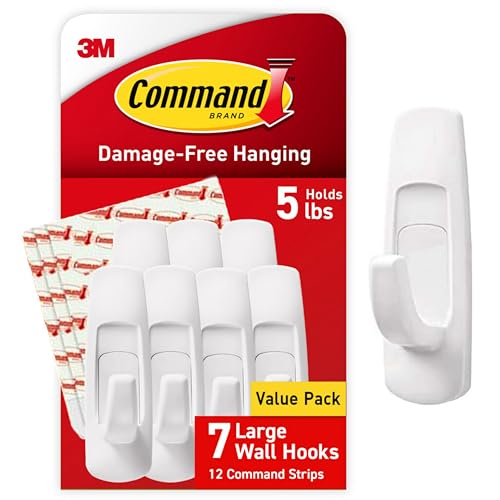
Command Large Utility Hooks, 7-Pack
Adds a defined point-of-use home when a genuine hook position is missing. Do not add hooks simply because current hooks are full. Confirm surface compatibility, installation, weight limits, and loaded projection.
Verified ASIN: B0753NHZVQ
Umbra Estique Wall-Mount Key Holder
Smaller landing zone for keys, action mail, sunglasses, and lightweight daily essentials in an extremely small or narrow entry.
Verified ASIN: B01I58T8FGAffiliate disclosure: Inplanty may earn a commission from qualifying purchases made through links on this page, at no additional cost to you.
Frequently Asked Questions
How do you keep an entryway clutter-free?
Limit it to current daily-use items, assign one fast-access home to each category, process temporary items, and use short daily and weekly resets.
Why does my entryway always become messy?
Common causes include excess active inventory, inaccessible storage, missing paper and return workflows, unclear ownership, and no reset routine.
How do I stop shoes from piling up by the door?
Limit active pairs, keep storage near the removal point, separate wet footwear, and confirm shoes fit the organizer.
How often should an entryway be reset?
Use a brief daily reset for active clutter and a weekly review for papers, returns, seasonal overflow, and failing storage.
Should I buy more storage when my entryway overflows?
Not first. Remove misplaced and seasonal items, empty temporary baskets, test existing storage, and identify the exact unresolved category.