
Narrow Entryway Storage Ideas That Do Not Block the Hall
Protect the door swing and walking path first, then create one shallow storage wall for daily shoes, coats, bags, and essential small items.
The Finished Result
The entrance has useful storage without feeling like a tunnel. Shoes fit inside one shallow zone, coats and bags stay on a limited wall rack, keys and mail use a tiny landing area, and wet or seasonal items sit outside the narrowest passage.
- Door movement remains clear
- The narrowest walking point stays usable
- Loaded storage depth is controlled
- Only essential daily functions remain
- Seasonal overflow leaves the hall
Quick Answer
In a narrow entryway, protect the door swing and walking path before adding storage. Use shallow shoe storage, wall-mounted hooks or rails, a small landing shelf, and seasonal overflow elsewhere. Measure furniture while doors and drawers are open and account for coats and bags projecting into the walkway.
Use the complete entryway organization guide for the full cluster. If the entrance also lacks built-in storage, see how to organize a narrow entryway without a closet.
Measure the Entryway Before Choosing Storage
Record total hallway width, usable wall width, every door swing, furniture depth, open-door or drawer depth, loaded coat and backpack projection, baseboards, outlets, radiators, vents, rug clearance, floor obstacles, tallest footwear, and available vertical height.
Draw the entrance shape
Include wall breaks, corners, and adjacent rooms.
Mark every door swing
Include the front door and nearby interior doors.
Mark fixed obstacles
Baseboards, radiators, outlets, vents, and trim can reduce usable depth.
Record the narrowest walking point
This becomes the circulation limit for every storage decision.
Test furniture depth
Use boxes, painter's tape, or removable floor markers before purchasing.
Add loaded and operating depth
Include coats, backpacks, open doors, drawers, shoe overhang, and seated use.
Measurement rule
Storage must be measured in use—not only while empty and closed.
Decide Which Entryway Functions Matter Most
- Safe entry and exit
- Daily shoes
- Daily coats and bags
- Keys and essential small items
- Wet-weather management
- Seating only when space truly allows
- Decoration last
A narrow entrance often works better with fewer well-chosen functions than several undersized organizers.
Use Shallow Shoe Storage
Slim closed shoe cabinet
Best when dry shoes need concealment, the entrance faces a living room, and the wall has enough width and operating clearance. Check tall-boot fit, tilt-out clearance, ventilation, and anchoring requirements.
Open ventilated rack
Best when airflow and fast access matter more than concealment. Shoes remain visible, so the rack needs a strict capacity limit.
Small boot tray
Best as a temporary wet-weather zone placed outside the narrowest walking point.
Adjacent storage
Use a nearby closet, wall around the corner, or under-bed storage for seasonal and occasional footwear.
Continue with shoe storage for a narrow entryway and compare a slim shoe cabinet and entryway bench.
Use Wall Storage for Coats and Bags
- Limit active coats.
- Separate bulky bags from coats.
- Keep hooks outside door-operating zones.
- Use different heights for different users where appropriate.
- Store seasonal coats elsewhere.
- Avoid stacking several bulky garments on one hook.
A shallow hook can create a deep obstruction
Winter coats and loaded backpacks project much farther than the empty hardware.
Add a Minimal Landing Zone
Use a shallow floating shelf, narrow console, small wall pocket, key rail, tiny drawer, or a tray on top of shoe storage for keys, wallet, mail requiring action, sunglasses, transit cards, small pet supplies, and one outgoing reminder.
Capacity rule
Keep the landing zone deliberately small so it cannot become a mixed-clutter surface.
Should a Narrow Entryway Have a Bench?
A bench may work when
- Seated shoe changes are genuinely important
- The hall remains usable while someone sits
- The bench replaces separate shoe storage
- Doors and cabinets still operate
A bench should be avoided when
- The hall is extremely narrow
- Seated use blocks circulation
- A slim cabinet stores more in less depth
- The seat would become a bag surface
Bench verdict
Do not recommend a bench simply because it is traditional entryway furniture. In many narrow halls, a slim shoe cabinet or wall-mounted system is more functional.
Use the entryway bench planning guide only when the space genuinely supports seated use.
Best Storage Layouts for Different Narrow Entryways
If you have one usable wall
Use a slim shoe cabinet, hooks above or beside it, and a small tray. Avoid placing hooks where hanging coats block the cabinet.
If two narrow walls face each other
Put primary storage on one wall only. Keep the opposite wall visually light so the entrance does not become a tunnel.
If the door sits at the end of a long hall
Place storage outside the direct door swing, use one side of the hall, and preserve the central sight line.
If the front door is beside another door
Map both swings and move storage to a nearby corner or wall section outside the overlap.
If there is no continuous wall
Use a vertical hook column, compatible over-door storage, a compact rack, or storage immediately around the corner.
If the entry opens into the living room
Use furniture-style closed shoe storage, limited coordinated hooks, a tiny landing shelf, and finishes that match the room.
Create Storage When There Is Almost No Floor Space
Prioritize wall hooks, peg rails, high shelves, wall pockets, over-door storage, vertical shoe systems, fold-down shelves, nearby closets, and storage around the corner. The best entryway system does not have to fit entirely inside the architectural foyer.
Continue with vertical storage ideas and the small-space storage guide.
Narrow Entryway Storage for Renters and Families
If you rent
Use portable slim furniture, compact coat racks, compatible over-door storage, removable hooks within stated limits, and tension systems where suitable. Removable does not mean damage-free, and tall furniture may still require anchoring. See renter-friendly narrow entryway storage.
If you have a family
Limit each person to one coat position, one bag zone, and one or two daily shoe positions. Store backpacks separately from bulky coats and seasonal items elsewhere. See how to organize a narrow family entryway.
Narrow Entryway Storage Without a Closet
- Vertical storage for daily coats and bags
- Shallow shoe storage
- Minimal landing zone
- Seasonal and occasional overflow elsewhere
Open or Closed Storage in a Narrow Hall
| Storage type | Best for | Advantage | Limitation |
|---|---|---|---|
| Wall hooks | Limited daily coats | Minimal floor use | Loaded items project outward |
| Closed shoe cabinet | Dry daily shoes | Visual calm | Needs opening clearance |
| Open shoe rack | Wet footwear | Ventilation | Visible clutter |
| Floating shelf | Keys and mail | Minimal footprint | Very limited capacity |
| Bench | Seating and shoes | Multifunctional | Often too deep |
| Wardrobe | Concealed coats | Hides visual clutter | Usually too large |
| Over-door storage | No wall or floor space | Uses neglected space | Door compatibility |
Best mixed system
Wall-mounted coat storage with strict limits, a slim closed shoe cabinet, a small wet-shoe tray, and a minimal landing shelf.
How to Make a Narrow Entryway Feel Less Crowded
- Limit visible inventory.
- Use one main storage wall.
- Choose shallow furniture.
- Keep floor edges visible.
- Use closed storage for visually noisy categories.
- Avoid several unmatched organizers.
- Match finishes to adjacent rooms.
- Leave some hooks and shelf space empty.
- Remove seasonal items.
Store Wet Shoes and Coats Without Blocking the Hall
Use a small boot tray, washable mat, temporary drying hooks, ventilated rack, or an adjacent area just beyond the narrowest entry section. Protect walls and flooring, allow umbrellas to drain, and move dry items into closed storage later.
Do not crowd damp items
Wet shoes and coats need airflow and should not move immediately into closed storage.
Measure Loaded Storage Depth
| Storage element | Empty measurement | Loaded measurement |
|---|---|---|
| Wall hook | Hardware projection | Coat or bag projection |
| Shoe cabinet | Closed depth | Open drawer or door depth |
| Bench | Furniture depth | Seated leg and movement space |
| Coat tree | Base footprint | Full coat spread |
| Shoe rack | Rack depth | Shoe overhang |
| Wall shelf | Shelf depth | Item projection and head clearance |
Test layouts with boxes, painter's tape, or removable floor markers before purchasing furniture.
Step-by-Step Narrow Entryway Plan
Empty the entrance
See the true architectural boundary.
Mark doors and obstacles
Include every moving and fixed element.
Measure the narrowest walking point
Protect circulation first.
Choose the most important function
Shoes, coats, or daily essentials.
Limit active inventory
Move seasonal items elsewhere.
Choose one shallow primary piece
Avoid several small organizers.
Add wall storage carefully
Measure loaded coat and bag depth.
Create a minimal landing zone
Store only essential small items.
Add wet-weather storage
Place it outside the narrowest passage.
Test normal arrivals and departures
Open every door and drawer.
Remove obstructions
Any organizer that makes movement difficult fails.
Copy This Setup
One shallow storage wall
- Slim closed shoe cabinet
- Limited fold-away hooks
- Very small landing organizer
- Wet footwear beyond narrowest point
- Seasonal overflow elsewhere
Vertical-only setup
- Wall hook rail
- Wall pocket or key holder
- Storage around the corner
- Boot tray in adjacent area
- Strict daily inventory
Strict personal limits
- One hook per person
- One or two shoe spaces each
- Backpacks separated
- Shared items elsewhere
- Daily reset
Seating only when justified
- Shallow bench replaces shoe storage
- Seated legroom tested
- Door operation confirmed
- Walkway remains usable
- No bag-pile surface
Common Narrow Entryway Storage Mistakes
Review more narrow entryway storage mistakes and keep a narrow entryway clutter-free.
Which Narrow Entryway Setup Should You Choose?
| Reader situation | Best starting setup |
|---|---|
| Extremely narrow hall | Wall hooks and a slim shoe cabinet |
| Almost no floor space | Vertical and over-door storage |
| Need seating | Shallow bench only when seated clearance exists |
| Family with children | Individual hooks and strict shoe limits |
| Rental apartment | Portable slim furniture and removable accessories |
| Heavy winter coats | Secure wall rack with seasonal overflow |
| Door opens into living room | Closed furniture-style shoe storage |
| Frequent wet footwear | Small boot tray and ventilated storage |
| No continuous wall | Compact rack and nearby overflow |
| Strong visual-clutter concern | One closed unit and limited visible hooks |
Final recommendation
Use one shallow storage wall with a slim shoe cabinet, limited hooks for daily coats and bags, and a small landing shelf while moving seasonal overflow outside the entrance.
Recommended Narrow Entryway Products
Introduce products only after testing closed and loaded dimensions with tape, boxes, or temporary floor markers.
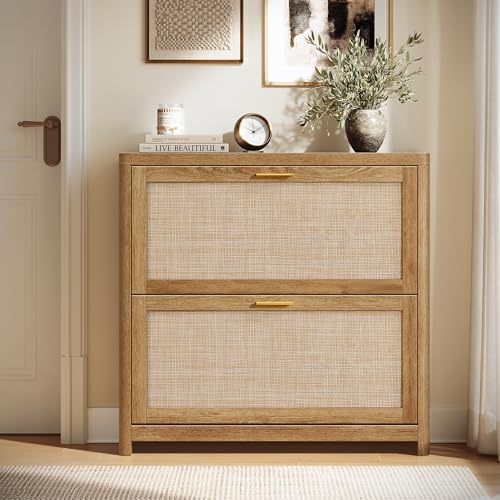
VASAGLE ELLAN Slim Shoe Storage Cabinet
Uses one narrow storage wall to conceal dry daily footwear without the depth of a conventional bench. Measure closed depth, open-drawer depth, door swing, baseboards, longest shoe, remaining walking path, and anchoring requirements.
Verified ASIN: B0GTV6DTTZ
Umbra Flip Wall-Mounted 8-Hook Coat Rack
Provides fold-away wall hooks that use no floor space. Measure coats and bags while hanging, and verify wall construction, mounting instructions, manufacturer load guidance, and loaded projection.
Verified ASIN: B01I58TDFG
Umbra Estique Entryway Organizer
Combines a shallow shelf, small cubby, and hooks for keys, mail requiring action, wallets, glasses, and essential daily items. Keep the unit deliberately underfilled.
Verified ASIN: B09SGVHC9S
Ottomanson Waterproof Boot Tray
Creates a contained temporary area for wet, muddy, or snowy footwear before it moves into dry storage. Place it outside the narrowest walking point and confirm its loaded footprint.
Verified ASIN: B09R2632SG
Umbra Estique Wall-Mount Key Holder
Smaller alternative for keys, mail, sunglasses, and lightweight essentials when even a combined shelf organizer projects too far.
Verified ASIN: B01I58T8FG
Ottomanson 15 × 30-Inch Waterproof Boot Tray
Lower-cost contained wet-shoe zone for entrances where damp footwear would otherwise occupy the walking path.
Verified ASIN: B09QMQZJBR
VASAGLE Farmhouse Narrow Shoe Cabinet With Two Flip Drawers
Larger-capacity closed shoe storage for households that have already limited active footwear. Verify open-drawer clearance, furniture depth, anchoring requirements, footwear dimensions, and remaining circulation.
Verified ASIN: B0GSVFSJ51
VASAGLE Shoe Bench With Six Compartments
Possible only when seated shoe changes are essential and the hall genuinely has enough depth. Test the furniture footprint, seated legroom, door operation, and remaining walkway first.
Verified ASIN: B0F3C6HKQSAffiliate disclosure: Inplanty may earn a commission from qualifying purchases made through links on this page, at no additional cost to you.
Frequently Asked Questions
What is the best storage for a narrow entryway?
For most narrow entries, use one shallow storage wall with a slim shoe cabinet, limited wall hooks, a small landing shelf, and wet-footwear storage outside the narrowest passage.
How do you organize a very narrow hallway entrance?
Measure door movement and loaded depth, limit daily inventory, choose one shallow primary storage piece, and move seasonal overflow elsewhere.
Can you put a bench in a narrow entryway?
Only when the hall has enough depth for the bench, seated legroom, door operation, and uninterrupted circulation.
How do you measure furniture for a narrow hallway?
Measure closed and operating depth, door swing, narrowest walking point, baseboards, outlets, and the projection of coats, bags, shoes, and seated use.
Should a narrow entryway use open or closed storage?
Use open access for a few daily items and wet footwear, and closed storage for dry shoes and visually busy categories.