
How to Store Coats Without a Coat Closet in a Small Entryway
Choose a coat-storage method based on active coat quantity, available wall or floor space, climate, installation limits, and how much visible outerwear your entryway can handle.
The Finished Result
Only the coats needed for current routines stay near the entrance. They hang from one secure, easy-to-reset system, wet garments can dry with airflow, accessories have their own contained zone, and seasonal outerwear is stored elsewhere.
- Daily coats are accessible
- Loaded depth stays clear of traffic
- Wet and dry garments are separated
- Accessories do not overwhelm hooks
- Seasonal overflow leaves the entryway
Quick Answer
Store coats without a coat closet by keeping only current daily coats near the entrance, choosing one storage method that matches the available wall or floor space, and moving seasonal or occasional outerwear elsewhere. Hooks work best for a small daily rotation, freestanding racks work when drilling is not possible, and wardrobes work when concealed storage matters most.
For the complete no-closet entryway system, see how to organize an entire entryway without a closet. For the broader cluster, use the complete entryway organization guide.
First, Decide Which Coats Belong Near the Door
Separate daily jackets, school or work coats, dog-walking outerwear, rain jackets, heavy winter coats, children’s coats, guest coats, formal coats, and out-of-season garments.
Keep near the entrance
- One main daily coat per person
- One current weather-specific layer when needed
- Children’s active school coats
- One dog-walking or rain layer
- Limited guest capacity
Store elsewhere
- Out-of-season outerwear
- Formal or rarely used coats
- Duplicate jackets
- Guest coats not currently needed
- Special-occasion garments
Key principle
A no-closet entryway should not store every coat owned by the household.
Count the Coat Capacity You Actually Need
Use this as a planning tool:
Working capacity
Household members × active coats per person + weather-specific outerwear = approximate entryway capacity.
Adjust for coat weight, children, bags sharing hooks, winter bulk, guest needs, and wet-weather garments. One hook does not always equal one practical coat position because bulky coats overlap and project into circulation.
Choose the Best Coat Storage Method
| Method | Best for | Main advantage | Main drawback |
|---|---|---|---|
| Wall hooks | Small daily rotation | Minimal floor use | Visible and limited |
| Peg rail or wall rack | Families and several items | Consolidated wall storage | Requires strong installation |
| Coat tree | Renters and small households | Portable | Limited capacity |
| Garment rack | Several coats without drilling | Flexible and higher capacity | Uses floor space |
| Hall tree | Combined coat and shoe storage | Multifunctional | Often too deep |
| Wardrobe | Concealed storage | Visual calm | Largest footprint |
| Over-door rack | Minimal available space | No floor use | Door compatibility issues |
Wall Hooks
Best for narrow entryways, small daily rotations, families needing assigned hooks, and readers who want fast access. Avoid them when many heavy coats would overload the wall or project into a narrow walkway.
Peg Rail or Wall-Mounted Coat Rack
Best for several daily coats and a unified look. Check wall construction, hardware, installation strength, and loaded depth before use.
Freestanding Coat Tree
Best for renters, temporary layouts, small households, and homes without suitable wall space. Treat it as limited-capacity storage and check stability around children or pets.
Freestanding Garment Rack
Best when drilling is not possible and the room has more usable floor width than wall space. Measure with full-length coats hanging and avoid using the rack as permission to keep every coat active.
Hall Tree or Combined Entryway Unit
Best for wider entrances needing coats, shoes, and seating in one zone. Avoid it in narrow halls where the depth blocks circulation. Compare a shoe cabinet and entryway bench when lower storage is part of the decision.
Freestanding Wardrobe or Armoire
Best for living-room-facing entrances and readers who value concealed storage. Avoid it when there is insufficient width, depth, ventilation, door clearance, or secure placement.
Over-the-Door Storage
Best for lightweight jackets and compatible interior doors. Confirm the door gap, hinge operation, hardware, and stated load. Do not assume every system works on a front door.
Best overall decision
Use hooks or a compact wall rack for a limited daily rotation, a freestanding rack when drilling is not possible, and a wardrobe only when visual calm is worth the additional floor space.
How to Store Coats in a Narrow Entryway
- Use shallow wall-mounted storage.
- Limit the number of hooks.
- Place hooks parallel to traffic.
- Keep storage outside the door swing.
- Move bags to a separate zone when coats are bulky.
- Store seasonal outerwear elsewhere.
Measure the hallway with coats hanging, not only with empty hardware installed. See coat storage for a narrow entryway.
How to Hide Coats Without a Closet
Use a freestanding wardrobe, armoire, closed hall unit, curtain-fronted zone, storage around a nearby corner, or a small visible daily hook row with concealed overflow elsewhere.
Do not conceal unsafe piles
A decorative screen or curtain should not block circulation or hide unstable, damp, or overflowing storage.
How to Store Wet Coats
- Use open airflow and spacing between garments.
- Separate wet and dry coats.
- Protect nearby walls and flooring.
- Keep umbrellas and rain gear in a controlled zone.
- Move coats into closed storage only after they are fully dry.
Wet-coat rule
Wet coats should dry in an open, ventilated position before moving into closed storage.
How to Store Heavy Winter Coats
Use weight-rated hardware, secure wall attachment, wider spacing, stronger freestanding units, limited active rotation, and separate accessory storage. Follow manufacturer specifications and match hardware to the wall type rather than estimating a safe load.
Where to Store Seasonal Coats
Use a bedroom closet, wardrobe in another room, guest-room closet, high closet shelf, protected seasonal bin, or appropriate under-bed storage. Clean and fully dry coats first, follow care labels, label storage, and keep transitional jackets accessible.
Continue with the closet organization guide, small closet guide, or under-bed storage guide.
Coat Storage for Renters and Families
If you rent
Choose freestanding coat trees, garment racks, compatible over-door storage, portable hall trees, or removable systems within stated limits. Distinguish no-drill from removable, low-damage, repairable, and landlord-approved installation. See renter-friendly coat storage.
If you have children
Use assigned hooks at accessible heights, separate backpacks, broad personal zones, contained accessories, and strong installation. See family coat and backpack storage and how to organize a home with kids.
Where to Store Hats, Gloves, and Scarves
Use small labelled baskets, shallow drawers, assigned bins, a shelf above hooks, bench compartments, or individual family sections. Separate daily accessories, backups, out-of-season items, and wet items awaiting drying.
Avoid one oversized mixed basket
It quickly becomes difficult to search, too heavy, and overfilled.
How Many Coats Should Stay Near the Door?
For most homes, keep one main daily coat per person, one additional weather-specific layer when needed, and limited guest capacity. Adjust for climate, work or school needs, storage size, and whether bags share the same hooks.
Measurements and Safety Checks
| Storage type | Measure before choosing | Main risk |
|---|---|---|
| Wall hooks | Loaded depth and wall strength | Hallway obstruction or hardware failure |
| Coat tree | Loaded footprint and stability | Tipping |
| Garment rack | Width, depth, and full coat load | Excess floor use |
| Hall tree | Total depth and seating clearance | Blocking circulation |
| Wardrobe | Door clearance and ventilation | Crowding and trapped moisture |
| Over-door rack | Door gap, hardware, and load | Door interference |
Also check door swing, coat length, children’s reach, pet access, nearby heating sources, moisture exposure, and floor-level obstruction.
How to Keep Coat Storage From Looking Cluttered
- Limit the daily coat quantity.
- Assign hooks or zones.
- Store bags separately.
- Move seasonal items elsewhere.
- Contain accessories.
- Avoid layering several bulky coats on one hook.
- Leave some empty capacity.
- Use concealed storage when the entrance faces a living area.
Step-by-Step Coat Storage Plan
Gather all coats and jackets
See the full category before choosing hardware.
Separate daily, occasional, seasonal, and remove
Protect prime entryway capacity.
Count the active coats
Include weather-specific garments and children’s coats.
Measure wall and floor space
Include door swing and loaded coat depth.
Choose one primary method
Hooks, wall rack, coat tree, garment rack, hall tree, or wardrobe.
Create accessory storage
Keep hats, gloves, and scarves separate.
Assign seasonal overflow elsewhere
Do not force the entire coat collection into the entryway.
Test during daily use
Observe crowding, drying, stability, and access.
Remove excess
Anything that repeatedly exceeds capacity leaves the zone.
Add the coat zone to the daily reset
Return active items and clear temporary overflow.
Copy This Setup
Secure wall rack
- Limited daily coat rotation
- Separate accessory baskets
- Wet-coat airflow
- Bags stored separately
- Seasonal overflow elsewhere
Portable storage
- Freestanding coat tree
- Small active rotation
- Garment rack only if width allows
- No heavy overloading
- Moveable accessory bins
Assigned zones
- Adult and child hook heights
- Backpacks separated
- Broad accessory baskets
- Current-season limits
- Weekly overflow review
Concealed system
- Wardrobe if measurements allow
- Limited visible hooks
- Dry coats only inside
- Contained accessories
- Clear operating space
Common Coat Storage Mistakes
Which Coat Storage Setup Should You Choose?
| Reader situation | Best starting setup |
|---|---|
| Very narrow hallway | Limited wall hooks or slim peg rail |
| Rental apartment | Freestanding coat tree or garment rack |
| Family with children | Assigned hooks at different heights |
| Heavy winter climate | Strong wall rack plus seasonal overflow |
| Door opens into living room | Closed wardrobe or limited coordinated hooks |
| Almost no wall space | Freestanding rack or compatible over-door storage |
| Need coats and shoes together | Hall tree if depth allows |
| Wet climate | Open drying zone plus separate dry storage |
Final recommendation
For most small entryways without a coat closet, keep a limited daily coat rotation on securely installed hooks or a compact wall rack, store seasonal outerwear elsewhere, and use open airflow for wet coats before moving them into concealed storage.
Recommended Coat Storage Products
Choose products only after confirming active coat quantity, wall or floor space, loaded depth, installation limits, ventilation, and circulation.

Umbra Flip Wall-Mounted 8-Hook Coat Rack
Consolidates a limited daily coat rotation into one wall-mounted zone while keeping unused hooks folded away. Check wall construction, installation strength, manufacturer load guidance, and loaded coat projection.
Verified ASIN: B01I58TDFG
VASAGLE Solid Wood Freestanding Coat Rack
Portable, no-drill access for a small daily rotation of coats, hats, and bags. Treat it as limited-capacity storage and check loaded footprint, stability, and placement around children or pets.
Verified ASIN: B085N2BBY8
Simple Houseware Heavy-Duty Garment Rack
Holds several coats on hangers when drilling is not possible and more floor width than wall space is available. Measure with full-length coats hanging and avoid using it as unlimited storage.
Verified ASIN: B085791ZHF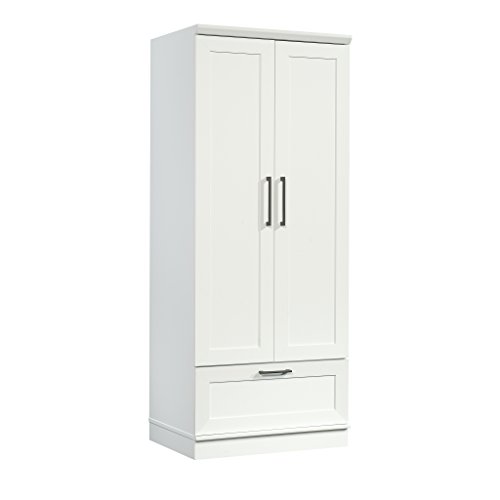
Sauder HomePlus Wardrobe Cabinet
Replaces part of a missing coat closet by hiding coats and accessories behind closed doors. Check width, depth, operating clearance, ventilation, stability, anchoring requirements, and manufacturer instructions.
Verified ASIN: B079YZRV3J
mDesign Woven Hyacinth Cube Baskets, 6-Pack
Separates hats, gloves, scarves, and seasonal accessories into broad household or individual categories. Avoid one oversized mixed basket and check loaded weight and accessibility.
Verified ASIN: B08BG7W9CD
VASAGLE Solid Wood Coat Rack, Caramel Brown
Lower-cost portable coat tree for a limited number of daily jackets, hats, and bags. It should not be treated as high-capacity winter-coat storage.
Verified ASIN: B07P85V7PL
Sauder HomePlus Wardrobe Cabinet, Sienna Oak
Full-height concealed coat and accessory storage for readers wanting the closest practical substitute for a built-in coat closet. Confirm footprint, door clearance, ventilation, floor conditions, anchoring requirements, and remaining circulation.
Verified ASIN: B005EFX2UGAffiliate disclosure: Inplanty may earn a commission from qualifying purchases made through links on this page, at no additional cost to you.
Frequently Asked Questions
Where do you put coats when you do not have a coat closet?
Use a limited hook row, wall rack, coat tree, garment rack, or wardrobe for active coats and store seasonal outerwear elsewhere.
What is the best coat storage for a small entryway?
For most small entries, securely installed wall hooks or a compact wall rack provide the best balance of access and floor-space efficiency.
How many coats should stay by the front door?
Usually one main daily coat per person, one extra weather-specific layer when needed, and limited guest capacity.
How do renters store coats without drilling?
Use a stable coat tree, garment rack, compatible over-door system, or portable hall unit within the product’s stated limits.
Where should wet coats be stored?
Dry them in an open, ventilated position before moving them into closed storage.