
How to Organize Your Home With Kids Without Doing Everything Yourself
Build simple, reachable, capacity-limited systems children can understand, use imperfectly, and help reset throughout the home.
The Finished Result
A family home does not need perfect bins or showroom rooms. It needs backpacks off the floor, toys returning to broad categories, clothing children can reach, shared supplies with one official home, and routines that do not depend on one adult correcting everything.
- Personal zones are easy to identify
- Children can reach daily storage
- Categories stay broad
- Capacity limits control overflow
- Resets are short and shared
Quick Answer
Organize a home with kids by giving each major category a clear, reachable storage zone, keeping categories broad, limiting how much is available at once, and creating short reset routines children can complete. The system should be easy to use imperfectly rather than dependent on one adult maintaining it exactly.
Use this page as the family-specific companion to how to organize your home. The overall method stays the same, but storage height, category complexity, ownership, capacity, and reset responsibility change when several children and adults share the same spaces.
Broader categories
Use the simplest grouping that still helps children find and return items.
Lower access
Storage works only when children can safely reach and operate it.
Shared resets
Every system should identify what children can reasonably maintain.
Why Home Organization Changes When You Have Kids
Family systems must handle rapidly changing clothing sizes, school and activity schedules, toys moving between rooms, different reach heights, frequent transitions, and belongings used by several people.
Adult-only systems often fail
They may be too detailed, too high, too slow to reset, too dependent on memory, or too rigid for changing family needs.
Start With the Family’s Biggest Clutter Patterns
| Repeating problem | Likely system needed |
|---|---|
| Backpacks on the floor | Assigned reachable hooks or cubbies |
| Shoes across the entryway | Personal shoe zones with capacity limits |
| Papers cover the counter | One incoming-paper point and review routine |
| Toys move into every room | Portable categories and return baskets |
| Children cannot find clothes | Simplified drawers and broad categories |
| Dirty laundry stays on floors | Reachable hampers near changing areas |
| Sports gear is never ready | Dedicated activity zone near the exit |
Prioritize daily transitions before decorative or low-use storage. Readers who need a smaller start should use the overwhelmed home organization method.
Give Every Child a Personal Zone
A personal zone might include one entryway hook, shoe section, backpack space, bathroom basket, laundry hamper, toy bin, or bedside container.
Personal zones should be
- Easy to reach
- Clearly defined
- Large enough for the category
- Small enough to limit accumulation
- Consistent across routines
Keep some categories shared
Art supplies, books, games, family tools, and activity supplies may work better in common storage when every child uses the same items.
Make Storage Easy for Children to Use
| Usually easier | Often harder |
|---|---|
| Open bins | Heavy lids |
| Low hooks | High shelves |
| Shallow baskets | Deep baskets |
| Picture labels | Detailed written labels |
| Broad categories | Micro-categories |
| Lightweight containers | Stacked containers behind others |
One-step return rule
Children are more likely to use a system when returning an item takes one simple action.
Use Broad Categories Instead of Detailed Sorting
Start with categories such as building toys, vehicles, dolls and figures, art supplies, books, games, outdoor toys, dress-up clothes, and sports gear. Add detail only when a category is too large, items become damaged, or the child already sorts naturally that way.
Limit How Much Is Available at One Time
Use toy rotation, seasonal clothing rotation, book rotation, and visible capacity limits. When storage is full, remove outgrown items, donate unused belongings, rotate items out, or reevaluate duplicates instead of automatically buying a larger organizer.
Build Family Systems Room by Room
Entryway
Give each child a reachable hook, backpack location, shoe allowance, and current-accessory zone. Use entryway storage for families for the complete setup.
Toys
Use open access for everyday toys and closed storage for overflow, sets, and visually busy categories. Portable bins help toys return from shared rooms.
Clothing
Keep current sizes active, use broad drawer categories, and avoid folding systems young children cannot maintain. Continue with how to organize a kids closet.
School and homework
Create one paper entry point, separate action papers, give devices and chargers a home, and review sentimental schoolwork periodically.
Kitchen and pantry
Group approved snacks, water bottles, cups, lunch containers, and simple daily items in safe accessible zones. See the pantry organization guide.
Bathroom
Use personal baskets, assigned drawers, low hooks, and separate backup storage. Keep medicines and unsafe products out of reach. See the bathroom organization guide.
Laundry
Use reachable hampers and broad sorting categories. Children can help with dirty-clothes collection, matching socks, and broad drawer returns. See the laundry room organization guide.
Small homes
Control both storage location and active quantity. Use vertical space, rotation, concealed storage, and strict limits. Continue with the small-space storage guide.
Use Return Baskets for Items That Move Between Rooms
Use a limited number of baskets for upstairs, downstairs, children’s rooms, shared toys, or school items. Each basket needs a clear destination and an emptying schedule. It should never become permanent storage.
Decide What Children Should Organize by Ability
Younger children
Return toys to broad bins, place shoes in a zone, hang a light bag, put dirty clothes in a hamper, and return books.
School-age children
Manage backpacks, broad clothing categories, school supplies, simple laundry sorting, and personal-zone resets.
Older children
Maintain personal storage, review belongings, manage activity equipment, and participate in family decluttering.
Responsibility should increase gradually and match the child’s actual ability, not only age.
Create Daily and Weekly Family Resets
Daily reset
Return shoes, coats, backpacks, toys, dirty clothing, snack items, papers, and anything in return baskets. Keep the sequence short and consistent. Use the daily home reset routine.
Weekly reset
Empty return baskets, review papers, reset activity bags, refill approved snack zones, remove outgrown clothing, review donations, and check seasonal gear. Use the weekly home reset checklist.
What to Do When Children Do Not Use the System
- Observe where the child naturally leaves the item.
- Move storage closer where practical.
- Simplify the category.
- Reduce the number of return steps.
- Reduce category volume.
- Clarify ownership and responsibility.
- Test the revised system.
Treat failure as useful evidence
Storage may be too high, too heavy, too detailed, too far away, or already full.
Copy This Setup
Portable and compact
- Low hooks near the door
- One rolling cart for shared supplies
- Foldable cubes for rotating categories
- Strict toy limits
- One return basket
One-step returns
- Open low toy bins
- Picture labels
- Reachable hamper
- Broad clothing drawers
- Five-minute reset
Personal transition zones
- Assigned hooks and backpack spots
- One paper inbox
- Rolling homework cart
- Simple laundry sorting
- Weekly backpack reset
Open daily, closed overflow
- Open bins for current toys
- Fabric cubes for visual calm
- Portable return basket
- Toy rotation elsewhere
- Clear capacity per bin
Common Family Home Organization Mistakes
Review more home organization mistakes to avoid before expanding the system.
A Step-by-Step Family Home Organization Plan
Identify three daily clutter patterns
Start where family routines break down most.
Choose one family zone
Entryway, toy area, clothing, school, bathroom, or laundry.
Remove outgrown and broken items
Reduce before adding storage.
Group broad categories
Use the simplest categories children understand.
Assign personal and shared zones
Clarify ownership and common storage.
Move storage within safe reach
Reduce weight, height, and return steps.
Set visible capacity limits
When storage is full, rotate or remove.
Add selective labels
Use labels only when they improve consistency.
Create a short reset
Assign tasks children can realistically complete.
Test for one week
Simplify anything children cannot use.
Final recommendation
The best family organization system is not the most detailed. It is the system the household can reset consistently with minimal adult correction.
Recommended Family Organization Products
These products support low reach, open access, broad categories, personal zones, portable storage, simple laundry participation, and systems children can reset with minimal correction.

Delta Children MySize 9-Bin Plastic Toy Organizer
Low, open storage for broad toy categories. Visible removable bins support one-step returns and clear capacity limits.
Verified ASIN: B076MR918B
LIFTATAPA Self-Adhesive Kids Coat Hooks, 5-Pack
Reachable personal zones for lightweight backpacks, hats, towels, and clothing when installed at a child-appropriate height and within stated load limits.
Verified ASIN: B0FHWMCK9N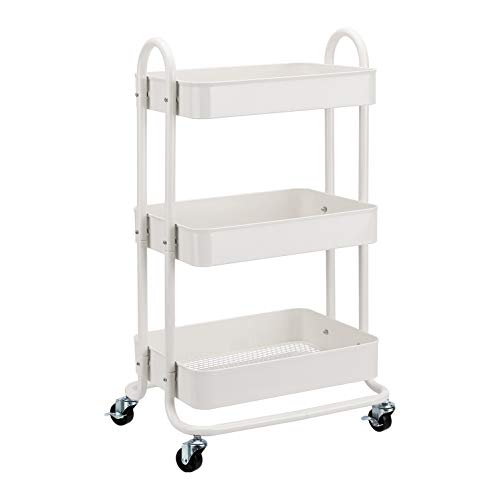
Amazon Basics 3-Tier Rolling Utility Cart
Portable storage for art supplies, homework materials, approved snacks, bathroom items, or activity supplies used across shared rooms.
Verified ASIN: B07TY1RFH5
Simple Houseware Heavy-Duty 3-Bag Laundry Sorter
Simple family laundry zones that let children participate without requiring detailed clothing organization.
Verified ASIN: B093BGPPCR
mDesign Foldable Fabric Storage Cubes, 4-Pack
Lightweight storage for toys, clothing, books, school supplies, or personal cubbies. The cubes collapse when categories rotate.
Verified ASIN: B07YF4QWTX
Command Mixed Designer Hooks, 10-Pack
Low-cost personal hooks for lightweight child belongings and small family drop zones without permanent installation.
Verified ASIN: B0F29Z3FNP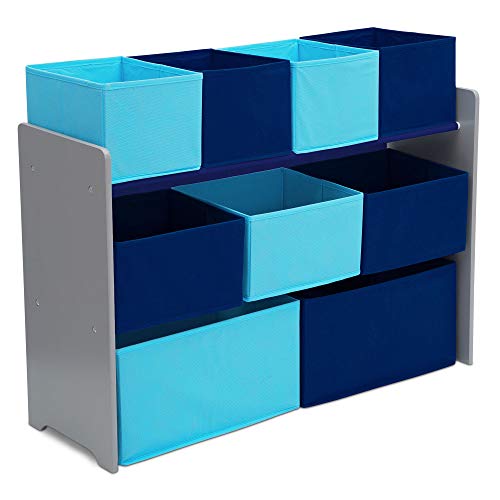
Delta Children Deluxe Multi-Bin Toy Organizer
Larger mixed-bin system for families needing more visible toy capacity while preserving broad categories and child-level access.
Verified ASIN: B074PY2ZGSAffiliate disclosure: Inplanty may earn a commission from qualifying purchases made through links on this page, at no additional cost to you.
Frequently Asked Questions
How do you keep a home organized with kids?
Use broad categories, reachable storage, clear personal zones, capacity limits, and short shared resets.
How can children help organize the house?
Children can return toys, hang light bags, put laundry in hampers, reset personal zones, and help with simple category returns according to ability.
How do you organize toys without a playroom?
Use portable bins, active toy limits, broad categories, and a mixed open-and-closed storage system inside bedrooms or shared rooms.
Should each child have separate storage?
Use personal zones for frequently used belongings and shared storage for common categories such as books, games, and art supplies.
Why do kids not use organization systems?
The storage may be too high, heavy, detailed, far from where items are used, overfilled, or require too many steps.