
Home Organization Mistakes That Make Clutter Come Back
Diagnose whether the real problem is excess inventory, poor placement, limited capacity, inconvenient access, complicated categories, or missing maintenance—before buying more organizers.
The Finished Result
Your home does not need more containers. It needs systems that fit the category, location, household, and routine. The goal is to stop repeated overflow, reduce reset time, and make storage easy enough that people actually use it.
- Daily items are easy to return
- Categories fit their assigned capacity
- Storage matches real behavior
- Household members understand the system
- New products solve verified gaps only
Quick Answer
The most common home organization mistakes are buying storage before decluttering, trying to store too much, ignoring measurements, placing items far from where they are used, and creating systems that are too complicated to reset. Fix inventory, location, capacity, and access problems before adding more organizers.
Why Home Organization Systems Fail
Most failed systems have one or more structural problems: the category is too large, the location is inconvenient, the organizer is the wrong size, the process requires too many steps, or nobody knows who maintains it.
Use this framework instead of assuming the solution is more effort or more storage. The whole-home organization method explains the correct order for rebuilding categories and storage.
The Most Common Home Organization Mistakes
1. Buying Organizers Before Decluttering
New containers are immediately full, old and new organizers coexist, and categories are split across multiple locations.
2. Trying to Store Too Much in One Space
Drawers do not close, shelves require constant rearranging, and overflow spreads into nearby rooms.
3. Moving Clutter Instead of Organizing It
One room improves while another gets worse, miscellaneous boxes multiply, and stored items become difficult to find.
4. Ignoring How the Household Uses the Space
Shoes sit beside the cabinet, mail piles up away from the paper station, and laundry misses the hamper.
5. Using Storage That Requires Too Many Steps
Items stay outside containers, lids remain open, and daily belongings collect on surfaces.
6. Creating Too Many Categories
Labels become highly specific, similar items are mixed anyway, and one person maintains the entire system.
7. Ignoring Measurements and Clearance
Doors cannot open fully, furniture narrows walkways, bins fit the shelf but not the items, and hooks project into circulation.
8. Choosing Appearance Over Function
Matching containers hide inventory, open shelves need constant styling, and the system looks good only after a reset.
9. Using Open Storage for Everything
The room feels visually busy, mixed categories stay exposed, and imperfect resets look worse than they function.
10. Hiding Everything in Closed Storage
Items are forgotten, duplicates increase, cabinets become overcrowded, and daily belongings remain outside storage.
11. Using Prime Storage for Rarely Used Items
Daily items are hard to reach while seasonal or backup products occupy eye-level shelves.
12. Forgetting Loaded Capacity
Hooks fit but coats block the hallway, baskets become too heavy, and shelves sag when containers are full.
13. Ignoring Children, Pets, or Accessibility
Storage is unreachable, containers are too heavy, walkways become unsafe, and users need help with routine access.
Use the family organization guide for child-accessible systems.
14. Creating a System Only One Person Understands
One person answers every storage question, performs every reset, and keeps the system working through constant correction.
15. Failing to Set Capacity Limits
Storage continually expands, new baskets appear beside old ones, and categories fill every available surface.
16. Treating Temporary Storage as Permanent
Relocation baskets, donations, returns, repairs, and mail remain full without deadlines or responsible owners.
17. Organizing Without a Maintenance Routine
Rooms look organized briefly, papers accumulate, categories mix, and returns never leave.
18. Trying to Organize Too Much at Once
Several rooms are emptied, sorting piles remain overnight, and the project stops before restoration.
Use the overwhelmed organization method or the room-by-room plan.
19. Copying a System Without Evaluating It
The setup fits another home but not the reader’s layout, category volume, lease, climate, or household habits.
20. Adding More Storage Without Fixing the System
Storage furniture grows, circulation shrinks, similar items live in several places, and unused organizers accumulate.
How to Fix a Home Organization System That Is Not Working
Identify the repeated clutter
Focus on the most frequent failure, not the most visually dramatic one.
Confirm the category
Decide what the item is and which other items belong with it.
Check whether it belongs in that room
Keep the category near its true point of use.
Reduce excess inventory
Remove duplicates, unused items, and seasonal overflow.
Check the assigned location
Observe where the item is naturally left and how many return steps are required.
Measure capacity and clearance
Check the space, operating depth, walkway, reach, and largest item.
Simplify the return process
Reduce lids, doors, stacking, and category detail for frequent items.
Clarify ownership
Make the system understandable and maintainable by all relevant users.
Test the adjustment
Use the revised system for at least one week.
Add storage only if a real gap remains
Buy after diagnosis, decluttering, placement, testing, and measurement.
| Symptom | Likely cause | First correction |
|---|---|---|
| Items sit beside organizer | Access is inconvenient | Move or simplify storage |
| Container always overflows | Category exceeds capacity | Reduce or rotate inventory |
| Family ignores labels | Categories are unclear | Simplify names and zones |
| Daily items stay visible | Storage takes too many steps | Use faster access |
| Closed cabinet becomes chaotic | Hidden categories lack structure | Add broad internal zones |
| Reset takes too long | System is overcomplicated | Reduce steps and categories |
| New organizers remain unused | Storage was purchased too early | Reassess the actual need |
Which Organization Mistake Should You Fix First?
| Main problem | Fix first |
|---|---|
| Storage constantly overflows | Reduce inventory and set capacity |
| Items pile beside storage | Improve access and location |
| Household members ignore the system | Simplify categories and ownership |
| Home looks tidy but items are lost | Improve hidden-storage visibility |
| Daily reset takes too long | Reduce steps and move storage closer |
| New organizers do not help | Stop buying and reassess categories |
| One room improves while another worsens | Stop relocating unresolved clutter |
| Small home feels crowded | Reduce deep furniture and excess inventory |
| Children cannot maintain storage | Lower access and broaden categories |
| Clutter returns every week | Add daily and weekly maintenance |
Final recommendation
Fix the most frequently repeated failure—not the most visually obvious imperfection.
Copy This Diagnosis
Inventory-first correction
- Empty only the category
- Remove duplicates and seasonal items
- Set a visible boundary
- Test current storage
- Buy only if the reduced category still does not fit
Access-first correction
- Observe the real drop point
- Move storage closer
- Reduce return steps
- Use open or one-step access
- Test for one week
Shared-system correction
- Broaden categories
- Use understandable labels
- Lower or simplify access
- Clarify ownership
- Ask another user to complete the reset
Measurement-first decision
- Confirm the category belongs there
- Reduce inventory
- Measure space and largest item
- Check operating clearance
- Verify that new storage improves access
Products to Consider Only After Diagnosis
This is a diagnosis-first, shopping-second page. Use products only after identifying whether the failure comes from inventory volume, poor placement, missing measurements, excessive steps, unclear categories, or absent maintenance.

STANLEY PowerLock II 25-Foot Tape Measure
Prevents one of the page’s central mistakes: buying organizers without checking width, depth, height, operating clearance, door swing, walkway space, and the largest item that must fit.
Verified ASIN: B00QXDKQP2
IRIS USA 4-Pack 13-Quart Clear Storage Bins with Lids
Visible, capacity-limited storage for categories that have already been decluttered and measured. Best for backstock, household supplies, seasonal accessories, paperwork, and contained categories. Avoid using it for unsorted or over-capacity categories.
Verified ASIN: B0F6FT397Y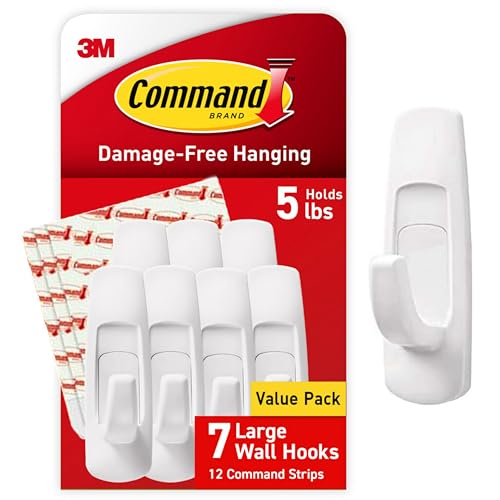
Command Large Utility Hooks, 7-Pack
Tests one-step storage for lightweight bags, accessories, cleaning tools, and frequently used belongings. Avoid when loaded items would obstruct circulation or exceed installation and weight requirements.
Verified ASIN: B0753NHZVQ
Brother P-Touch PTD220 Label Maker
Clarifies broad shared categories inside closed storage. Best for backstock, seasonal storage, family zones, and temporary categories with deadlines. Avoid using labels to preserve excessive micro-categories.
Verified ASIN: B0B1L3BL1G
mDesign Woven Hyacinth Cube Baskets, 6-Pack
Closed-look storage for broad, visually mixed categories in open cubbies and shared rooms. Avoid when contents must remain visible, loaded baskets become too heavy, or the category has not been reduced.
Verified ASIN: B08BG7W9CD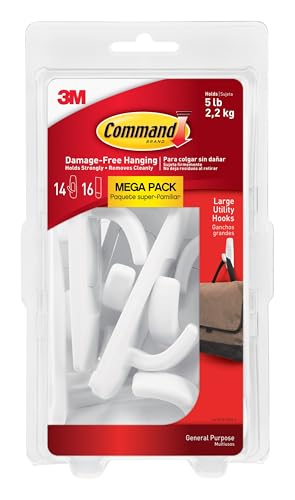
Command Large Utility Hooks, 14-Pack
Low-cost way to test faster point-of-use storage across several rooms before adding cabinets or storage furniture.
Verified ASIN: B018IZAL6G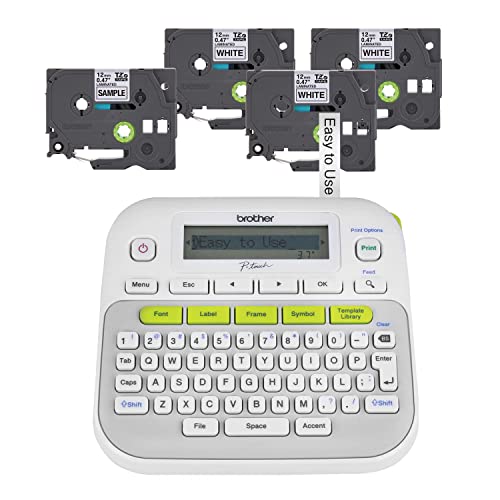
Brother P-Touch PTD210 Label Maker Bundle with Four Label Tapes
Broader labeling package for an established whole-home system with shared categories, seasonal storage, backstock, and defined temporary zones.
Verified ASIN: B09QXZ7ZRDAffiliate disclosure: Inplanty may earn a commission from qualifying purchases made through links on this page, at no additional cost to you. Product availability can change.
Frequently Asked Questions
What are the most common home organization mistakes?
Buying storage too early, storing too much, ignoring measurements, using inconvenient locations, creating too many categories, and skipping maintenance.
Why does my house become cluttered again after organizing?
The category may exceed capacity, storage may be hard to access, responsibility may be unclear, or the system may lack a reset routine.
Should I buy storage containers before decluttering?
No. Declutter, group, assign a location, measure, and test the system before buying permanent organizers.
How do I know whether I need more storage or fewer belongings?
Reduce duplicates, remove unused items, separate seasonal belongings, and test the existing location first.
Why do items pile up beside their storage containers?
The storage may be too far away, difficult to open, too full, or require too many return steps.