
How to Create Pantry Zones That Match Your Household
Create pantry zones by grouping food according to how your household uses it, then assigning the most frequently used categories to the easiest shelves. Keep active food separate from backstock, use broad zones such as breakfast, snacks, meal staples, baking, and beverages, and give every zone a clear capacity boundary so groceries can be returned quickly.
The Finished Result
The pantry reflects how the household actually eats. Breakfast and snacks are easy to return, dinner staples stay visible, baking supplies do not consume daily space, backstock remains separate, and every zone has a flexible but clear capacity boundary.
- Zones follow routines, not decoration
- Daily food receives prime shelf access
- Active inventory and backstock are separate
- Labels and bins support the system
- Grocery unloading becomes predictable
Quick Answer
Create pantry zones by listing the household’s main food routines, separating daily, weekly, and occasional categories, and choosing broad zones that match normal use. Put breakfast, snacks, lunch supplies, and active cooking staples on the easiest shelves; keep heavy categories low and lightweight occasional items high. Give each zone one physical boundary, leave flexible grocery capacity, and add bins or labels only when they reduce confusion.
Use the Kitchen Organization Guide for the broader kitchen system. This page focuses on category architecture after the pantry structure and capacity are understood.
Understand What a Pantry Zone Is
A pantry zone is a defined shelf, shelf section, drawer, bin, turntable, row, door section, or storage area assigned to one broad food function.
Breakfast
Cereal, oats, bars, spreads, and related morning food.
Snacks
One controlled boundary for bars, crackers, fruit cups, and snack bags.
Dinner staples
Pasta, rice, grains, cans, sauces, and meal bases.
Baking
Flour, sugar, leavening, chocolate, extracts, and mixes.
Beverages
Tea, coffee backstock, drink mixes, filters, and bottled products.
Backstock
Unopened replacements and controlled bulk inventory.
A zone is a functional boundary
It does not automatically require a container, label, separate shelf, matching packaging, or custom storage.
Why Pantry Zones Work
- Food is easier to find.
- Groceries return to the same places.
- Open products stay visible.
- Duplicate purchases become easier to prevent.
- Overfilled categories become obvious.
- Household members can share responsibility.
- Daily reset decisions decrease.
Normal-life test
A zone should make ordinary cooking and grocery unloading easier—not only look orderly immediately after setup.
Audit Household Food Routines
Start with how food is used
- What is eaten for breakfast?
- What is packed for lunch?
- Which snacks are used daily?
- Which ingredients support weeknight meals?
- Is baking frequent or occasional?
- Which beverages are stored?
- Do children use the pantry independently?
- Is dietary separation needed?
- How often are groceries purchased?
- How much backstock is realistic?
Routine principle
Pantry zones should reflect actual household behavior rather than generic labels copied from another home.
List only the food functions that really occur
Possible functions include breakfast, lunch, snacks, dinner preparation, baking, beverages, quick meals, special diets, children’s food, backstock, entertaining, and pet food where appropriate.
Separate daily, weekly, and occasional categories
Daily
Breakfast, snacks, lunch supplies, cooking staples, and open food.
Weekly
Baking, canned food, pasta, grains, beverages, and quick meals.
Occasional
Entertaining, seasonal baking, specialty ingredients, and bulk backstock.
Frequency should determine both shelf position and zone size.
Choose the Right Pantry-Zone Model
Organize by food type
Best for: frequent cooks, large inventories, and readers who think in ingredients.
Examples: grains, pasta, cans, snacks, baking, beverages, condiments.
Trade-off: one meal may require items from several zones.
Organize by meal or routine
Best for: families, busy homes, lunch packing, and shared pantry use.
Examples: breakfast, lunch, snacks, dinner, baking, beverages.
Trade-off: shared ingredients may not fit one routine cleanly.
Organize by frequency
Best for: small pantries and households where speed matters more than detailed classification.
Examples: daily, weekly, occasional, backstock.
Trade-off: mixed categories may need clear labels.
Organize by household member
Best for: shared homes, dietary separation, school lunch, or child access.
Trade-off: personal zones can duplicate shared staples and consume capacity.
Recommended default
Most households work best with a hybrid system: routine zones for breakfast, lunch, and snacks; food-type zones for dinner staples and baking; frequency-based shelf placement; and one separate backstock area.
Build the Core Pantry Zones
Breakfast Zone
Possible contents include cereal, oats, breakfast bars, spreads, bread-related items, coffee or tea supplies where appropriate, and children’s breakfast food. Keep active breakfast food at eye or waist level and unopened duplicates in backstock.
Snack Zone
Use one physical boundary for snack bags, bars, crackers, fruit cups, nuts, and packaged snacks. Separate active snacks from multipack backstock and do not allow snacks to consume all prime storage.
See How to Organize Snacks once published.
Lunch-Packing Zone
Group shelf-stable lunch components, lunch snacks, wraps or bags, napkins, and reusable accessories that support one repeatable routine. Do not turn the pantry into a general school-supply area.
Dinner Staples Zone
Group pasta, rice, grains, beans, canned tomatoes, sauces, meal bases, and quick dinner ingredients. This zone should be broad enough to support several meals without creating excessive subgroups.
Canned and Jarred Food Zone
Use only as many subgroups as the inventory justifies. A small collection may need one visible zone rather than separate bins for tomatoes, beans, soups, vegetables, and sauces.
Baking Zone
Group flour, sugar, leavening, chocolate, extracts, mixes, and active ingredients. Keep seasonal decorating supplies separate and heavy staples at an accessible height.
See How to Organize Baking Supplies once published.
Beverage Zone
Group tea, coffee backstock, drink mixes, filters, sweeteners, and bottled beverages where appropriate. Keep heavy beverages low and do not sacrifice meal-staple storage unless beverage use justifies it.
Quick-Meal Zone
Use one limited area for soup, noodles, shelf-stable meals, meal kits, convenience ingredients, and emergency dinner staples.
Special-Diet or Allergy-Aware Zone
Use a clearly separated section when organizational separation is necessary. Preserve original packaging where ingredient and allergen information matters.
Backstock Zone
Use one limited zone for unopened replacements, bulk packages, extra cans, refill packets, seasonal staples, and additional beverages.
Backstock is support—not a second pantry
Keep quantities based on realistic consumption, review backstock before shopping, and avoid several hidden backstock locations.
Assign Zones to the Right Shelves
| Position | Best zones | Avoid |
|---|---|---|
| Eye level | Breakfast, active snacks, lunch supplies, cooking staples, open food | Unopened duplicates and rare ingredients |
| Waist level | Grains, pasta, canned food, baking staples, meal components | Unstable heavy stacks |
| High shelves | Seasonal baking, entertaining, lightweight backstock, paper goods | Heavy food, daily items, child-access categories |
| Low shelves | Beverages, bulk containers, appliances, heavy backstock | Loose products that block cleaning |
| Pantry door | Lightweight packets, tea, wraps, small snacks | Heavy food or the primary pantry inventory |
Placement rule
Frequency, weight, and safe access should determine shelf position—not visual symmetry.
Use the Pantry Shelf Spacing Guide once published when shelf height prevents correct zone placement.
Give Every Zone a Capacity Boundary
A zone boundary may be one shelf, half a shelf, one bin, one turntable, one drawer, one row, or one door section.
The boundary controls inventory
When a zone is full, use existing food, avoid buying more, reduce duplicates, move limited backstock, or reassess the category.
Size zones according to normal consumption
- Household size
- Shopping frequency
- Meal habits
- Children
- Dietary needs
- Cooking frequency
- Bulk buying
- Available refrigerator and freezer storage
Zone size should reflect normal use between shopping trips—not the largest possible inventory.
Leave flexible capacity
- One flexible shelf section
- Space for incoming groceries
- Room for seasonal changes
- Capacity for a new ingredient
- Open space around frequently used items
Do not pack zones completely
A fully packed zone is difficult to scan, unload, and reset.
Decide Whether a Zone Needs an Organizer
Handled bins
Best for snacks, packets, breakfast bars, baking supplies, and lightweight backstock that benefits from removal as one group. Avoid heavy or excessively long bins.
Turntables
Best for sauces, oils, condiments, small jars, and baking extracts. Avoid boxes, bags, and categories where circular storage wastes too much capacity.
Shelf risers
Best for cans, jars, short containers, and small boxes. A riser improves visibility but does not define the zone.
Labels
Useful when several people use the pantry, adjacent zones look similar, bins hide labels, or children help unload groceries.
Stackable containers
Use selectively when decanting improves freshness, pouring, stackability, fit, or quantity visibility.
No organizer
A shelf can be a complete zone when food stays visible, categories are broad, labels face forward, and inventory is controlled.
Container principle
A purchased organizer is not required to make a zone official.
Adapt Zones to the Pantry Type
Small pantry
Use fewer broad zones, combined categories, limited backstock, one flexible area, and minimal containers.
Deep pantry
Keep active food in front, backstock at the rear, use removable rear groups, and avoid loose small items behind.
Pantry with no shelves
Choose infrastructure, plan shelf heights, assign shelf functions, then create zones after the structure is stable.
Large walk-in pantry
Use more zones only when routines justify them. A larger pantry should not automatically create more categories and more backstock.
Pantry cabinet
Use one function per shelf, active food at eye level, limited door storage, and pull-outs only when depth requires them.
Adapt Zones to Household Needs
Families
Use breakfast, lunch packing, snacks, dinner staples, baking, beverages, and backstock with broad labels and shared unloading rules.
One person or a couple
Use fewer zones, smaller active inventory, minimal backstock, flexible shelf space, and limited bulk food.
Frequent cooks
Prioritize dinner staples, grains, cans, baking, spices, and meal ingredients while limiting snack dominance.
Busy households
Prioritize breakfast, lunch, quick meals, snacks, dinner staples, and backstock. Routine speed may matter more than perfect classification.
Children
Create approved child-access zones only where food, weight, packaging, and supervision needs make access appropriate.
Shared homes
Separate shared staples and individual food where needed, but do not let personal zones consume all communal capacity.
Make Grocery Unloading Work by Zone
A successful zone system makes the destination for breakfast food, snacks, pasta, baking ingredients, heavy beverages, and unopened replacements obvious.
Refrigerate and freeze appropriate items
Protect food conditions first.
Check active pantry zones
See what is already open or low.
Move older products forward
Keep active inventory visible.
Add new active food
Place it in the correct broad zone.
Move duplicates to backstock
Keep them out of prime storage.
Remove empty packaging
Restore visible capacity.
Update the shopping list
Record true gaps where useful.
Clear the staging area
Finish the unloading cycle.
Complexity test
If grocery unloading requires repeated decisions, the pantry zones are too detailed or unclear.
Label Pantry Zones Only When Labels Help
Labels are useful when
- Several people use the pantry
- Shelves contain adjacent zones
- Bins hide individual packages
- Children help unload groceries
- Backstock is separate
- The pantry is large
Labels may be unnecessary when
- The pantry is small
- Products remain visible
- One shelf has one obvious function
- Categories are intuitive
- Only one or two people use the pantry
Use broad labels such as Breakfast, Lunch, Snacks, Baking, Dinner, Beverages, and Backstock. Avoid decorative phrases or narrow categories no one follows.
Label rule
Labels should reduce confusion—not decorate an already obvious system.
Maintain and Adjust Pantry Zones
Weekly reset
- Return misplaced food.
- Face labels forward.
- Close open packages.
- Bring older food forward.
- Remove empty packaging.
- Reset snacks and breakfast.
- Correct overflow.
- Review active versus backstock quantities.
- Wipe visible spills.
Monthly review
- Is one zone always overflowing?
- Is another mostly empty?
- Has the household routine changed?
- Are duplicate purchases common?
- Is backstock too large?
- Are containers hiding food?
- Are zones too detailed?
- Does grocery unloading feel natural?
Combine zones that are too small
Possible combinations include breakfast and snacks, grains and pasta, cans and jars, baking and dessert supplies, tea and beverages, or lunch and quick meals.
Split zones that consistently overflow
Split a category when products serve different routines, one category hides another, weight or package shape differs, or unloading becomes confusing.
Zones are adjustable
Combine, split, and resize categories when household routines change.
How to Create Pantry Zones Step by Step
List the household’s main food routines
Start with real use.
Gather the pantry inventory
See the complete category mix.
Remove expired, damaged, unwanted, and excessive food
Reduce before zoning.
Separate active food from backstock
Protect prime access.
Identify daily, weekly, and occasional categories
Rank by frequency.
Choose food-type, routine, frequency, or hybrid zoning
Use a model the household understands.
Create broad core zones
Avoid unnecessary micro-categories.
Assign prime shelves to daily categories
Use the easiest access for repeated routines.
Keep heavy categories low and occasional categories high
Let weight and access guide placement.
Give every zone a capacity boundary
One shelf, section, row, bin, drawer, or turntable.
Add organizers only where they improve use
Do not treat containers as the system.
Leave flexible grocery space
Preserve incoming capacity.
Test grocery unloading
Every item should have an obvious destination.
Use the pantry normally for one week
Observe friction.
Combine, split, or resize zones
Make the system match real habits.
Use the Pantry Organization Checklist once published for the complete implementation sequence.
Pantry Zoning Mistakes
Copying someone else’s categories
The zones do not match household routines.
Creating too many micro-zones
Grocery unloading becomes slow.
Treating every zone as a bin
Containers waste space and hide food.
Organizing only by food type
Meal routines remain inconvenient.
Organizing only by household member
Shared staples become duplicated.
Putting backstock in prime space
Daily food becomes difficult to reach.
Letting snacks take over
Meal ingredients lose accessible storage.
Ignoring shelf position
Heavy and daily categories are assigned poorly.
Making labels more important than contents
The pantry looks organized but functions badly.
Failing to set capacity limits
Zones expand into neighboring areas.
Leaving no flexible space
Incoming groceries create overflow.
Using different logic on every shelf
Household members cannot predict where food belongs.
Use Pantry Organization Mistakes once published.
Which Pantry-Zone System Should You Use?
| Reader situation | Best starting model |
|---|---|
| Frequent cook | Food-type zones plus frequency placement |
| Busy family | Meal and routine zones |
| Small pantry | Broad frequency-based zones |
| Several household members | Hybrid system with clear labels |
| Children use pantry independently | Routine zones with controlled access |
| Large ingredient inventory | Food-type zones |
| Many convenience foods | Breakfast, lunch, snack, and quick-meal zones |
| Deep pantry | Front active zones and rear backstock |
| Minimal household | Few broad flexible zones |
| Dietary separation needed | Clearly defined dedicated section |
| Grocery unloading feels confusing | Simplify to routine-based zones |
| Too many nearly empty categories | Combine related zones |
| One category always overflows | Split or resize it |
Final recommendation
Use a hybrid pantry system with routine-based zones for breakfast, snacks, and lunch; food-type zones for meal staples and baking; frequency-based shelf placement; and one separate backstock area.
Verified Product Examples
Establish household routines, shelf placement, active-versus-backstock separation, and physical capacity boundaries before choosing any organizer.

iDesign Pantry Bin with Handles, Clear
Creates one physical boundary for a broad lightweight zone such as breakfast, snacks, baking, or limited backstock. Check shelf depth, usable width, normal package size, handle clearance, and loaded weight.
Verified ASIN: B0D6NLBLH1
Talented Kitchen Pantry Labels for Containers — 144 Matte Vinyl Stickers
Useful when several household members use the pantry or adjacent zones are unclear. Labels should support a working system rather than replace one.
Verified ASIN: B08KRRTXCR
Copco 12-Inch Non-Skid Lazy Susan Turntable Organizer
Creates one accessible bottle zone for oils, sauces, condiments, jars, or extracts. Confirm shelf depth, turning clearance, height, and bottle stability.
Verified ASIN: B07PNRVW9Z
Simple Houseware Expandable Stackable Kitchen Counter Shelf Organizer
Creates visible layers inside a canned-food, jar, breakfast, or dinner-staples zone. It supports visibility but does not define the category boundary itself.
Verified ASIN: B07NPWHJ9B
mDesign Plastic 4-Section Food Packet Organizer
Separates seasoning packets, drink mixes, snack pouches, or lunch components inside one broader zone. Use only when all four sections reflect real household routines.
Verified ASIN: B07RD2LKRW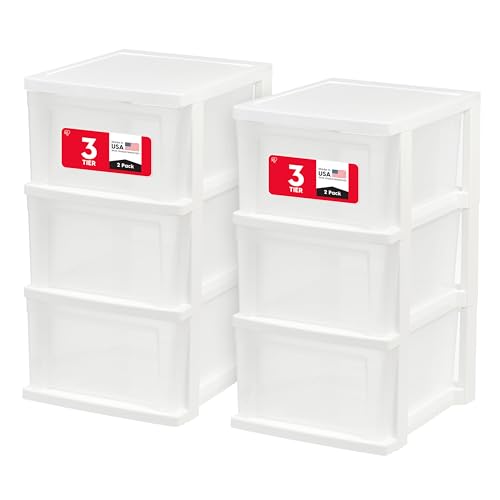
IRIS USA 3-Drawer Slim Narrow Storage Organizer, 2-Pack
Creates layers for small snacks, tea, baking decorations, lunch supplies, or specialty food. Confirm total dimensions, drawer extension, door clearance, package height, and category weight.
Verified ASIN: B0D4G6JGDN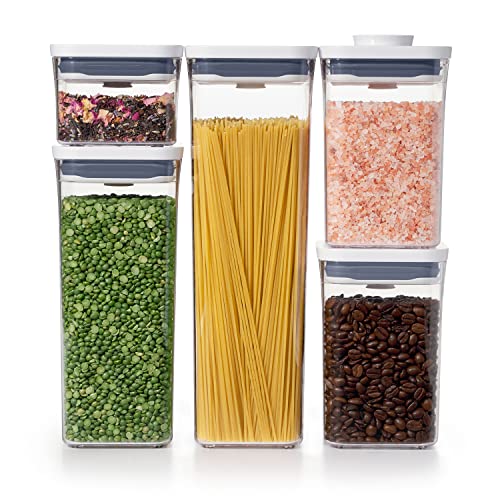
OXO Good Grips 5-Piece POP Container Set
Creates stackable storage for selected dry staples where original packaging is difficult to use, pour, or fit. Matching containers are not required to create effective pantry zones.
Verified ASIN: B07TD9QT97Recommended combination
Use shelves or shelf sections as the main zones, add one handled bin for a loose removable category, broad labels only when needed, one turntable for bottles, one riser for short products, and packet or drawer organizers only for genuinely small loose items.
Affiliate disclosure: Inplanty may earn a commission from qualifying purchases made through links on this page, at no additional cost to you.
Frequently Asked Questions
What are the best pantry zones?
For many households, the most useful zones are breakfast, snacks, lunch, dinner staples, baking, beverages, and one separate backstock area.
How many pantry zones should you have?
Use only enough broad zones to match real routines. Small pantries may need four or five combined zones, while larger pantries may support more.
Should a pantry be organized by food type or meal?
Most pantries work best with a hybrid system using routine zones for breakfast, lunch, and snacks, food-type zones for staples and baking, and frequency-based shelf placement.
Where should snacks go in a pantry?
Keep active snacks on an accessible shelf within one clear capacity boundary, with multipack or unopened replacements in backstock.
What should go on eye-level pantry shelves?
Use eye-level shelves for daily breakfast food, active snacks, lunch supplies, cooking staples, and open food.
How should pantry backstock be organized?
Keep unopened replacements in one limited secondary zone, separate from active food, and review it before shopping.
Does every pantry zone need a bin?
No. A shelf, shelf section, row, drawer, turntable, or door area can define a zone without a purchased container.
How do you create pantry zones in a small pantry?
Use fewer broad zones, combine related categories, prioritize daily food, limit backstock, and preserve one flexible area.
How do you create zones on deep pantry shelves?
Keep active food visible at the front, place controlled backstock at the rear, and use removable rear groups instead of loose small items.
What pantry zones work best for families?
Breakfast, lunch packing, snacks, dinner staples, baking, beverages, and backstock usually support family routines well.
Should children have their own pantry zone?
Only when a controlled child-access zone solves a real routine and the food, packaging, weight, and supervision requirements make it appropriate.
How should pantry zones be labeled?
Use broad, clear labels such as Breakfast, Lunch, Snacks, Baking, Dinner, Beverages, and Backstock only where labels reduce confusion.
How do pantry zones make grocery unloading easier?
Every item receives an obvious destination, active food is placed first, duplicates move to backstock, and fewer decisions are required.
How often should pantry zones be changed?
Review them monthly and combine, split, or resize zones whenever household routines, shopping habits, or category sizes change.