
How to Organize a Pantry With No Shelves or Built-In Storage
Measure the empty interior, door opening, walls, and the food or appliances the pantry must hold. Choose permanent adjustable shelving when installation is permitted, or use a stable freestanding shelf, modular drawers, or rolling storage for a renter-friendly solution. Keep heavy items low, daily food at eye or waist level, and preserve enough clearance to remove products and clean the pantry.
The Finished Result
The empty enclosure becomes a stable, cleanable, and practical pantry. The main structure fits through the opening, shelf heights match real package sizes, heavy inventory stays low, daily food is accessible, and bins or risers are added only after the storage framework works.
- Infrastructure comes before containers
- Permanent and renter-friendly paths are separated
- Loads, anchoring, and floor stability are considered
- Door, cleaning, and removal clearance stay open
- Broad food zones are added after structure
Quick Answer
Organize a pantry with no shelves by measuring the enclosure and its opening, deciding what inventory it must support, and selecting stable infrastructure before buying bins. Adjustable wall-mounted shelves offer long-term flexibility where installation is permitted. Renters can use a correctly sized freestanding shelving unit, modular drawers, or one-function rolling storage. Keep heavy items low, daily food accessible, and enough open space to remove products and clean the pantry.
Use the Kitchen Organization Guide for the broader kitchen pathway. Use how to organize a kitchen without a pantry when no pantry enclosure exists.
Diagnose the Empty-Pantry Problem
Completely empty closet
Needs a full vertical storage framework and a clear access path.
One high shelf
Needs usable storage beneath it without forcing food onto the floor.
Hanging rod but no shelves
May require removal or coexistence planning before storage is added.
Deep cabinet shell
Needs opening measurements and internal shelf or drawer planning.
Narrow recessed alcove
Needs shallow storage that preserves the doorway and reach.
Former broom or utility closet
Needs contamination, moisture, and suitability checks before food storage.
Existing conditions control the solution
The walls, floor, opening, door movement, and permitted alterations matter as much as the pantry’s total dimensions.
Confirm the Space Is Suitable for Food
- Check moisture, water staining, and odors.
- Check heat, direct sunlight, and ventilation.
- Look for pest evidence.
- Remove cleaning chemicals and incompatible household supplies.
- Identify plumbing, electrical equipment, outlets, or fixtures.
- Inspect the floor and door closure.
Do not convert every utility closet automatically
Correct moisture, heat, contamination, or equipment conflicts before storing food. Some enclosures may remain unsuitable.
Decide What the Pantry Must Store
Food categories
- Active food
- Backstock
- Cans and jars
- Grains and pasta
- Snacks and breakfast supplies
- Baking ingredients
- Beverages
Other categories
- Small appliances
- Paper goods
- Pet food where appropriate
- Entertaining supplies
- Large stable containers
Separate daily, weekly, and occasional inventory. Identify heavy items, tall packages, appliances, and non-food categories before planning shelf heights.
Inventory comes before shelving
Do not design the infrastructure until you know what the pantry must hold.
Measure the Empty Interior and Opening
Measure the enclosure
- Interior width, depth, and height
- Door width, height, and swing
- Trim and baseboards
- Wall irregularities
- Floor slope
- Ceiling obstructions
- Outlets and light fixtures
- Existing rods or brackets
- Standing and reaching space
Measure the approach
- Hallway or kitchen approach
- Turning clearance
- Stairs or corners
- Flat-pack versus assembled dimensions
- Doorway clearance after assembly
Use the narrowest usable point
A shelving unit can fit inside the pantry but still be impossible to move through the opening after assembly.
Measure the Items to Be Stored
- Tallest bottle and cereal box
- Largest appliance
- Beverage dimensions
- Bulk-paper package size
- Can and jar dimensions
- Pet-food container where relevant
- Bin dimensions
- Weight of heavy categories
Shelf spacing should reflect actual inventory rather than equal decorative gaps.
Choose Permanent or Portable Storage
Permanent Adjustable Shelving
Best for: homeowners, long-term pantry use, irregular package sizes, and enclosures with suitable walls and structure.
Advantages
- Flexible shelf heights
- Efficient use of vertical space
- Customized fit
- Built-in appearance
Limitations
- Installation and fastener requirements
- Possible wall repair
- Not always rental-friendly
- Incorrect installation can be unsafe
Follow the shelving manufacturer’s requirements and use qualified assistance where necessary. This guide does not replace structural installation instructions.
Fixed Shelving
Fixed shelves are simple and stable when properly installed, but poor spacing decisions become permanent. Adjustable shelving is generally more flexible unless categories are unlikely to change.
Freestanding Shelving Unit
Best for: renters, temporary setups, rectangular spaces, and readers avoiding wall installation.
Advantages
- Portable
- Fast to set up
- Minimal wall alteration
- Available in several sizes
Limitations
- Uses floor space
- May block the doorway
- Can leave unusable side gaps
- Tall units may require anchoring
- Floor must be stable and level
Freestanding does not mean anchoring is optional
Follow the manufacturer’s stability and anchoring instructions.
Modular Stackable Shelves
Useful for gradual expansion and awkward spaces, but do not stack beyond the designed configuration or use a lightweight system for heavy food.
Modular Drawer Units
Useful for packets, snacks, tea, baking decorations, and lightweight backstock. Tall products and heavy canned-food categories may not suit the drawers.
Rolling Cart
Best for one defined function such as baking, beverages, breakfast, or a small appliance station. It needs a permanent parking position and must not block the pantry entrance.
Tension-Based Shelving
Potentially suitable for lightweight temporary categories on compatible surfaces, but it should not be the default for cans, beverages, appliances, or other heavy pantry inventory.
Plan the Shelf Layout
| Storage level | Best categories |
|---|---|
| High | Lightweight backstock, seasonal supplies, paper goods, occasional serving items |
| Eye level | Daily food, open packages, breakfast, snacks, frequent ingredients |
| Waist level | Cans, grains, pasta, baking ingredients, meal staples |
| Low | Heavy beverages, appliances, bulk packages, large stable containers |
| Floor | Only suitable heavy or stable categories that remain removable and do not block cleaning |
Avoid equal shelf spacing
Several appropriately spaced shelves usually provide more usable capacity than a few large equal gaps. Plan around short cans, medium boxes, tall bottles, appliances, bins, and hand-access clearance.
Use the Pantry Shelf Spacing Guide when it is published.
Include removal clearance
Leave enough room to grip containers, lift bins, tilt bottles, read labels, pull food forward, clean the shelf, and remove appliances.
Fitting is not enough
The household must also be able to remove and return the item comfortably.
Preserve a clear access path
- Keep the doorway clear.
- Avoid shelves deeper than necessary.
- Preserve standing and reaching space.
- Avoid narrow gaps that trap food.
- Keep floor items within defined boundaries.
- Confirm the door closes.
Choose the Best Shelf Depth
Very deep shelves can create hidden food, several loose rows, heavy bins, and expired backstock. More physical depth does not always create more usable storage.
Deeper lower shelves
May suit appliances, large baskets, beverages, bulk paper goods, or large backstock when every item remains independently removable.
Shallower upper shelves
Improve label visibility, one-row storage, reach, and category scanning.
Vary depth where possible
Shelf depth may change by height and category rather than remaining identical throughout the pantry.
See how to organize a deep pantry when rear access is the main problem.
Use the Pantry Door Carefully
Door-mounted storage can hold lightweight packets, small snacks, wraps, tea, and small bottles. It preserves shelf space but adds weight, reduces internal clearance, and may collide with shelves.
Plan shelf and door depth together
Test the organizer fully loaded and closed.
Skip door storage when
- The pantry uses folding or sliding doors.
- Shelves already reach near the door.
- Hinges or trim interfere.
- Products strike shelves.
- The door is unsuitable for the load.
- The pantry already has enough storage.
Organize the Pantry Floor Safely
Possible floor categories include heavy beverages, large appliances, pet-food containers where appropriate, bulk paper goods, stable baskets, and large sealed backstock.
Consider moisture, pest exposure, cleaning access, spills, child and pet access, package instructions, and lifting ability.
One appliance zone
Stable, low, and independently accessible.
One beverage zone
Heavy products kept within a defined capacity.
One bulk zone
Large sealed items that do not block corners or cleaning.
Floor rule
Use zones instead of loose products, and preserve enough clearance to sweep, inspect, and remove everything.
Create Pantry Zones After the Structure Exists
Use broad breakfast, snack, lunch, dinner, grains and pasta, canned food, baking, beverage, backstock, and appliance zones.
Structure first, zones second
The physical system should support broad household routines rather than excessive micro-categories.
Use How to Create Pantry Zones once the storage framework is installed.
Keep active food separate from backstock
Active food belongs on eye-level and waist-level shelves or in the easiest drawers. Backstock can use high, low, or one limited secondary area.
Do not build new shelving only to fill prime space with unopened duplicates.
How to Organize a Pantry With No Shelves Step by Step
Empty and inspect the enclosure
Confirm the pantry can safely support food storage.
Decide what it must hold
Separate daily food, backstock, heavy items, and appliances.
Measure the interior and opening
Include door movement, trim, baseboards, approach, and turning clearance.
Measure real products
Use the tallest, widest, heaviest, and most frequently handled items.
Confirm installation restrictions
Check ownership, lease, wall, floor, and manufacturer requirements.
Choose the main infrastructure
Adjustable shelves, fixed shelves, a freestanding unit, modular storage, or one cart.
Plan depth and spacing
Use real package sizes and removal clearance.
Keep heavy items low
Protect stability and access.
Place daily food at eye or waist level
Assign prime storage by frequency.
Preserve access and cleaning clearance
Keep the doorway, corners, and floor usable.
Add door storage only when compatible
Test full loaded closure.
Create broad pantry zones
Add categories after the structure works.
Add bins, risers, or drawers selectively
Use them only for remaining access problems.
Leave room for groceries
Preserve incoming capacity.
Test stability and normal use
Confirm the system works while fully loaded.
Pantry-With-No-Shelves Organization Mistakes
Buying shelving before measuring the door
The unit cannot enter the pantry.
Choosing shelves that are too deep
Food disappears in several rows.
Using lightweight shelves for heavy food
The system may bend or become unstable.
Assuming no anchoring is needed
Tall freestanding units may still require secure installation.
Using tension shelves for heavy inventory
The load may exceed intended use.
Creating equal shelf gaps
Vertical capacity is wasted.
Filling the floor with loose products
Access and cleaning become difficult.
Adding door storage without clearance testing
The door no longer closes.
Keeping chemicals in a converted pantry
The storage functions may be incompatible.
Installing before planning categories
The shelf spacing does not match the inventory.
Adding too many modular units
Frames and gaps reduce usable capacity.
Ignoring removal space
Products fit but cannot be lifted out.
Use Pantry Organization Mistakes once published.
Which No-Shelf Pantry Solution Should You Choose?
| Reader situation | Best starting solution |
|---|---|
| Homeowner needing long-term storage | Adjustable wall-mounted shelving |
| Fixed category needs | Properly planned fixed shelves |
| Rental pantry | Freestanding shelving unit |
| Very small pantry | Narrow modular shelf system |
| Lightweight packets and snacks | Modular drawer units |
| Flexible temporary pantry | One-function rolling cart |
| Only one high shelf | Freestanding storage beneath it |
| Narrow door opening | Flat-pack or modular storage assembled inside |
| Heavy cans and beverages | Strong low shelving |
| Deep pantry | Shallower upper shelves and deeper lower zones |
| Limited budget | Reused stable shelving plus selective organizers |
| No installation permitted | Portable freestanding and compatible door storage |
| Unsuitable walls or floor | Reassess the pantry location before loading it |
Final recommendation
Measure the enclosure and inventory first, then choose adjustable permanent shelving for long-term flexibility or a stable freestanding system when installation is restricted. Keep heavy items low, daily food accessible, and enough room to remove products and clean the pantry.
Verified Product Examples
Build the safe storage framework first. Add drawers, carts, door storage, risers, or bins only after the main structure fits the enclosure and opening.

Amazon Basics 5-Shelf Multipurpose Adjustable Steel Garage Shelving Unit, Storage Rack for Kitchen, 200 lbs Per Shelf, Easy Assembly, 13.4"D x 23.2"W x 60"H, Black
Converts an empty rectangular enclosure into adjustable vertical storage. Best for renters and temporary conversions where the floor is level and the unit fits through the opening. Follow the manufacturer’s stability and anchoring instructions.
Verified ASIN: B09W2X5Y8F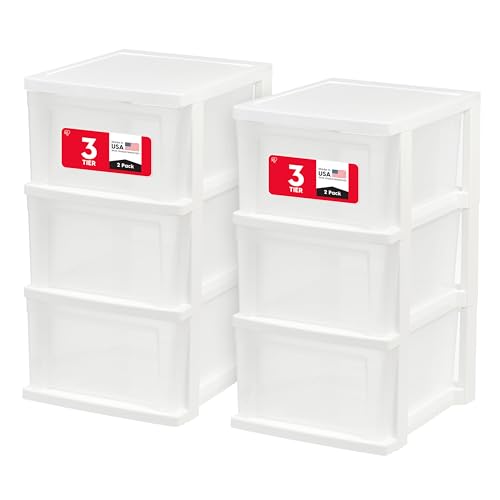
IRIS USA 3-Drawer Slim Narrow Storage Organizer, 2-Pack, White/Clear
Creates portable enclosed layers for packets, snacks, tea, baking decorations, or lightweight backstock. Confirm footprint, drawer extension, door closure, package height, and loaded weight.
Verified ASIN: B0D4G6JGDN
Amazon Basics 3-Tier Rolling Utility or Kitchen Cart
Creates low-commitment portable storage for baking, beverages, breakfast, or one appliance category. It should not replace a full shelf system when the pantry must hold the entire household food inventory.
Verified ASIN: B07V126F2D
ClosetMaid 97535 Wall or Door Adjustable 8-Basket Organizer
Adds vertical storage for lightweight packets, wraps, tea, snacks, and small bottles. Verify door construction, hinge strength, basket projection, shelf depth, mounting requirements, and loaded closure.
Verified ASIN: B01DNYRUWA
Simple Houseware Expandable Stackable Kitchen Counter Shelf Organizer, White, Metal Top, 11.25"L x 7.9"W x 5.4"H
Adds a second level for cans, jars, or short boxes after the main structure exists. It is an organizer, not a replacement for safe pantry infrastructure.
Verified ASIN: B07NPWHJ9B
iDesign Pantry Bin with Handles, Clear
Creates one removable category zone for snacks, breakfast supplies, baking ingredients, or lightweight backstock after shelves are installed. Keep the loaded bin easy to lift.
Verified ASIN: B0D6NLBLH1
Amazon Basics 5-Shelf Adjustable Heavy Duty Steel Wire Storage Shelves, 36" x 14" x 72", Black
Creates a larger adjustable framework for food, appliances, beverages, and backstock. Use only in a wider pantry with adequate door, assembly, standing, cleaning, and stability clearance.
Verified ASIN: B018YLFJX4Recommended combination
Start with one correctly sized freestanding shelving unit, add one modular drawer unit for small categories, use a cart only when it has one function and parking position, add door storage only after loaded-closure testing, and introduce risers or bins only after the main framework works.
Affiliate disclosure: Inplanty may earn a commission from qualifying purchases made through links on this page, at no additional cost to you.
Frequently Asked Questions
How do you organize a pantry with no shelves?
Measure the enclosure and inventory, choose stable permanent or portable storage, keep heavy items low, place daily food at eye or waist level, and preserve removal and cleaning clearance.
What can I use instead of built-in pantry shelves?
Use a correctly sized freestanding shelving unit, modular shelves, portable drawers, a one-function cart, or compatible door storage according to load and access needs.
Can a freestanding shelf be used inside a pantry?
Yes when it fits through the opening, stands on a level surface, follows manufacturer stability instructions, and leaves room for the door and normal access.
How do renters add storage to an empty pantry?
Use portable freestanding shelving, modular drawers, carts, or compatible door storage while respecting lease, load, surface, and anchoring requirements.
Are tension shelves safe for pantry food?
They may suit lightweight temporary storage when designed for the span and surfaces, but should not be the default for heavy cans, beverages, or appliances.
How many shelves should a pantry have?
Enough appropriately spaced levels to support the real inventory while preserving hand clearance, cleaning access, and an open area for incoming groceries.
How far apart should pantry shelves be?
Spacing should reflect actual cans, boxes, bottles, appliances, bins, and removal clearance rather than identical gaps.
How deep should pantry shelves be?
Depth should match the category. Shallow upper shelves improve visibility, while deeper lower shelves may suit appliances and large stable items.
What should be stored on the pantry floor?
Only suitable heavy or stable categories that remain protected, removable, and easy to clean around.
Can you convert a broom closet into a pantry?
Only after removing incompatible chemicals and checking moisture, heat, ventilation, pests, equipment, and general food-storage suitability.
How do you organize a pantry with one high shelf?
Use the existing shelf for lightweight occasional items and add a stable freestanding or properly installed system beneath it.
Can over-the-door storage work in a pantry?
Yes when the door, hinges, shelf depth, product load, and fully loaded closure remain compatible.
Should pantry shelves be fixed or adjustable?
Adjustable shelves are generally more flexible; fixed shelves work when the categories and required spacing are unlikely to change.
How do you keep freestanding pantry shelves stable?
Use the unit on a suitable level floor, distribute loads correctly, and follow all manufacturer assembly, stability, and anchoring instructions.