The Finished Kitchen Organization System
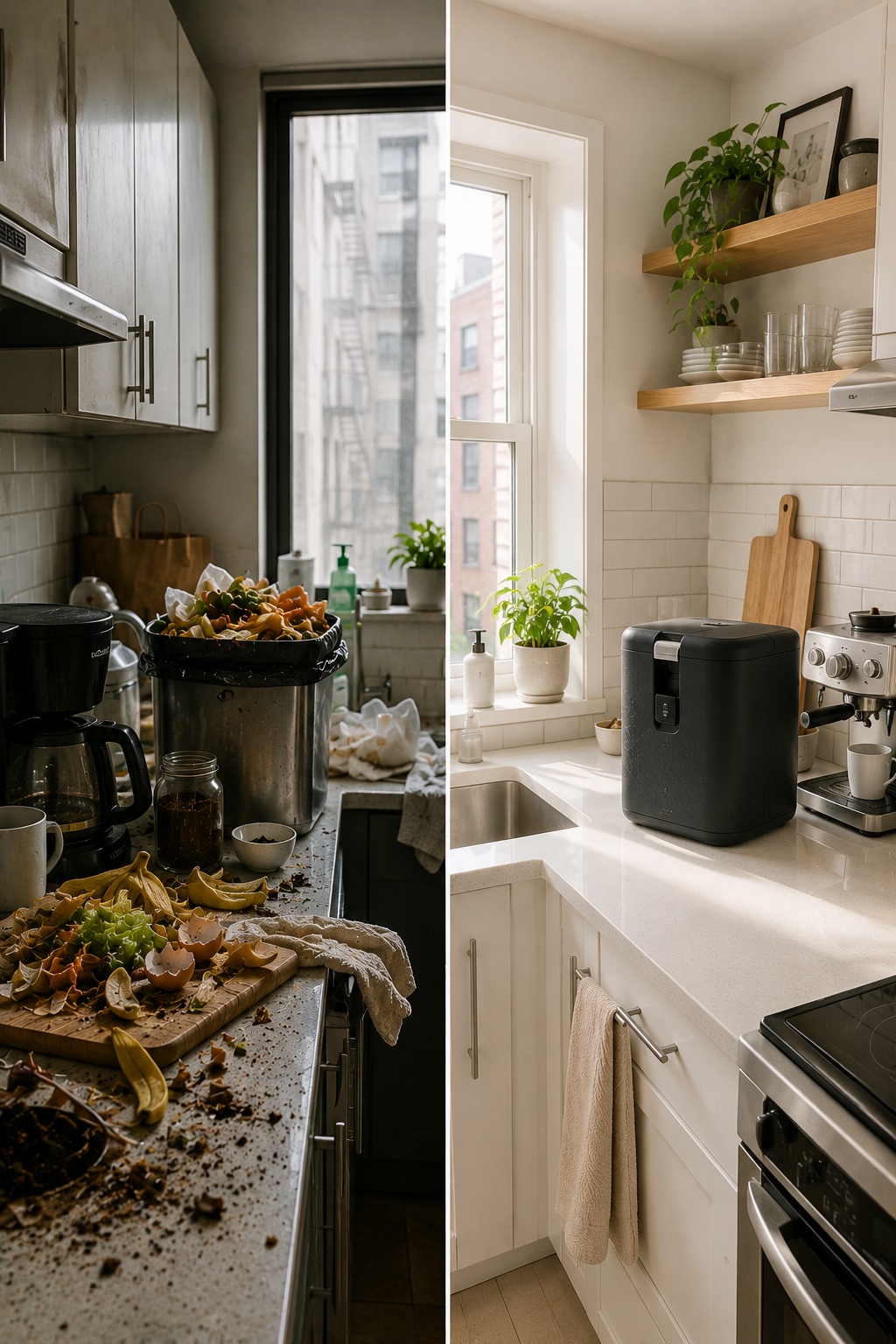
The goal is not a kitchen full of organizers. The finished kitchen has a clear place for food, cookware, utensils, cleaning supplies, and daily appliances; the main preparation surface stays usable; frequently used items sit close to the activity they support; and the system is simple enough to reset after normal cooking.
- Daily items are easy to reach and easy to return
- Preparation space stays clear enough to cook
- Food, cookware, utensils, and cleaning supplies have defined zones
- Awkward cabinets and drawers use access-based solutions
- The kitchen can be reset without a long organizing routine
Quick Answer
Organize a kitchen by fixing the biggest source of daily friction first. Remove items that do not belong, separate daily from occasional inventory, create preparation, cooking, dishwashing, food-storage, beverage, and cleaning zones, then measure before adding organizers. Use the pathways below when a specific cabinet, drawer, pantry, counter, layout, or household need requires a deeper solution.
For whole-home planning, return to the complete home organization guide.
Build the Kitchen System Before You Buy Organizers
1. Define the failure
Is the problem lack of capacity, poor access, a bad location, too much inventory, or a maintenance habit that keeps pushing items back onto counters?
2. Protect the workflow
Keep preparation, cooking, dishwashing, food storage, beverages, and cleaning close to the activities they support without blocking doors or circulation.
3. Match storage to frequency
Daily items get prime access. Weekly items can sit slightly farther away. Occasional and seasonal pieces should not consume the easiest kitchen storage.
4. Measure the real space
Measure usable interior width, depth, height, openings, hinges, pipes, handles, appliance clearance, and the largest item the storage must hold.
5. Choose the simplest access method
Use bins, risers, dividers, pull-outs, vertical racks, carts, or freestanding storage only when the format solves a specific measured problem.
6. Test a normal week
Cook, unload groceries, wash dishes, make drinks, and reset the room. Repeated friction tells you what still needs to move or change.
Start Here: What Is Your Main Kitchen Problem?
Choose a Kitchen Guide by Storage Area
Cabinets
Ask whether the cabinet is too deep, a blind corner, hiding food, stacking cookware, or blocking daily items.
Drawers
Check whether the drawer is shallow or deep, has one clear function, fits the stored tools, and remains below capacity.
Counters
Decide which appliances deserve permanent space, whether food storage is full, whether drying is oversized, and whether papers are collecting.
Under the Sink
Inspect for leaks, blocked valves, excessive product backstock, unsafe access, and storage that cannot be removed quickly.
Pantry and Food Storage
Use the no-pantry guide for missing food storage. If you already have a pantry, continue with the Pantry Organization Guide.
Walls and Vertical Storage
Use vertical storage only after considering installation permission, wall strength, heat, grease, visual clutter, reach, cleaning, and appliance interference.
Find the Right Guide for Your Kitchen Layout
Very Small Kitchen
Prioritize inventory reduction, one preparation surface, activity zones, limited appliances, and storage outside the room where appropriate.
Build a small-kitchen system →No Pantry
Create one primary food zone, controlled backstock, a grocery-unloading flow, and a measured pantry alternative.
Create no-pantry storage →Deep Cabinets
Use front and back zones, removable groups, pull-outs for access, risers for height, and turntables only where rotation helps.
Fix deep storage →Corner Cabinets
Identify the cabinet type, opening, hidden zone, best category, and safest access method before buying hardware.
Organize corner cabinets →Galley or Narrow Kitchen
Protect walkways, avoid unnecessary floor furniture, keep one preparation zone, and limit wall and counter clutter.
Protect narrow counters →Open-Plan Kitchen
Use closed storage for visually noisy categories, limit counter appliances, and control beverage and household drop zones.
Compare open and closed storage →Rental Kitchen
Use portable storage, internal cabinet organizers, freestanding furniture, and reversible systems within lease and anchoring limits.
Organize a rental kitchen →Organize the Kitchen for Your Household
Family Kitchen
Prioritize lunch and snack zones, water-bottle storage, broad categories, child-safe access, shared resets, and limited duplicates.
One Person or a Couple
Avoid oversized cookware sets, large backstock, excess serving pieces, multiple beverage appliances, and family-sized command centers.
Frequent Cook
Protect preparation space, daily cookware access, knife and utensil placement, ingredient visibility, and fast cleanup.
Occasional Cook
Use a smaller inventory, multipurpose tools, concealed storage, fewer permanent appliances, and simple food storage.
Household With Children
Secure knives, chemicals, and heavy cookware; create suitable child-accessible zones; use simple labels; and share responsibility.
The Core Kitchen Organization System
Identify the main kitchen problem
Choose the failing zone before the product.
Remove items that do not belong
Do not organize whole-home overflow inside the kitchen.
Separate daily, weekly, and occasional inventory
Rank access by real use.
Measure storage and stored items
Include openings, handles, hinges, movement, and weight.
Create activity zones
Preparation, cooking, dishwashing, food, beverages, and cleaning.
Assign prime storage by frequency
Daily items receive the easiest access.
Protect food-preparation space
Counter space is operational space.
Add organizers only where access fails
Use the simplest method that solves the measured problem.
Test normal cooking and cleanup
Observe repeated friction.
Add daily and weekly maintenance
Maintain the functional baseline.
Use the Kitchen Organization Checklist when you are ready for the complete implementation sequence.
Organize the Kitchen by Activity
Food Preparation
Supports cutting, mixing, ingredient preparation, and nearby food-storage supplies.
Cooking
Supports cookware, utensils, spices, potholders, and frequent ingredients.
Dishwashing
Supports the sink, dishwasher, dish soap, cloths, drying, waste, and recycling supplies.
Food Storage
Supports active pantry food, backstock, grocery unloading, snacks, and baking ingredients.
Beverages
Supports coffee or tea, daily appliances, mugs, and a limited number of accessories.
Cleaning
Supports kitchen cleaners, cloths, gloves, trash supplies, and safe removable storage.
Which Kitchen Storage Method Solves Your Problem?
| Method | Best for | Main advantage | Main limitation |
|---|---|---|---|
| Shelf riser | Short jars, cans, dishes | Uses vertical space | Does not solve deep access |
| Pull-out shelf | Deep lower cabinets | Brings back items forward | Cost and installation |
| Turntable | Bottles and jars | Rotational access | Circular space loss |
| Handled bin | Lightweight categories | Removes one group | Contents may be hidden |
| Adjustable divider | Drawers and broad categories | Flexible zoning | May shift |
| Peg drawer system | Dishes and cookware | Prevents movement | Needs compatible deep drawer |
| Vertical rack | Pans, trays, lids | Independent removal | Needs height and strength |
| Rolling cart | Flexible pantry or appliance storage | Portable | Uses floor space |
| Freestanding pantry | No-pantry kitchens | Consolidates food | Large footprint |
| Wall rail or rack | Frequently used tools or pans | Frees cabinets | Visual clutter and installation |
Method principle
Choose the method by the access problem it solves, then open the supporting guide for measurements, trade-offs, and category-specific use.
Find a Guide by Category
Implement and Maintain the Kitchen System
Kitchen Organization Checklist
Use the checklist when you are ready to declutter, measure, create zones, assign storage, test the kitchen, and add maintenance.
Open the implementation checklist →Daily Reset
Put food away, reset dishes, return cookware and utensils, clear the preparation surface, remove non-kitchen items, and reset beverages.
Use the daily home reset routine →Weekly Review
Remove counter creep, review food, reset drawers, check cookware, review appliances, and correct overflowing categories.
Use the weekly home reset checklist →Counter Maintenance
Use the dedicated counter guide when appliances, groceries, dishes, mail, or household items repeatedly return to work surfaces.
Keep counters clutter-free →Solve Common Kitchen Organization Problems
| Recurring problem | Best pathway |
|---|---|
| Counters remain covered | Counter guide + small-kitchen guide |
| Food does not fit | No-pantry guide + Pantry guide |
| Items disappear in cabinets | Deep cabinets + corner cabinets |
| Drawers will not close | Drawer guide + mistakes guide |
| Pots and lids collapse | Pots and pans guide |
| Spices are duplicated | Spice guide |
| Cleaning supplies block plumbing | Under-sink guide |
| Appliances remain everywhere | Counter guide + deep cabinets |
| The kitchen becomes messy again | Mistakes guide + checklist |
Common System Failures
- Buying organizers before decluttering.
- Filling every available surface.
- Ignoring appliance clearance.
- Storing daily items in inaccessible locations.
- Using too many micro-categories.
- Keeping excessive backstock.
- Skipping reset routines.
Use Kitchen Organization Mistakes for the full diagnostic framework.
Which Kitchen Organization Guide Should You Read?
| Reader problem | Best guide |
|---|---|
| Whole kitchen is too small | How to Organize a Small Kitchen |
| No pantry | How to Organize a Kitchen Without a Pantry |
| Deep cabinets hide items | How to Organize Deep Kitchen Cabinets |
| Corner cabinet is inaccessible | How to Organize Corner Cabinets |
| Under-sink cabinet is chaotic | How to Organize Under the Kitchen Sink |
| Drawers are overcrowded | How to Organize Kitchen Drawers |
| Pots and lids are difficult to store | How to Organize Pots and Pans |
| Spices are hard to find | How to Organize Spices |
| Counters stay cluttered | How to Keep Kitchen Counters Clutter-Free |
| Ready to organize everything | Kitchen Organization Checklist |
| Existing system is failing | Kitchen Organization Mistakes |
| Existing pantry is disorganized | Pantry Organization Guide |
| Rental restrictions | Rental Kitchen Organization Ideas |
Frequently Asked Questions About Kitchen Organization
Where should I start when organizing a kitchen?
Start with the zone causing the most friction, remove items that do not belong, and use the focused guide for that problem.
How do you organize a small kitchen?
Reduce inventory, create activity zones, assign prime storage by frequency, protect one preparation surface, and move occasional items elsewhere.
How do you organize a kitchen without a pantry?
Create one primary food zone, separate active food from backstock, and add measured freestanding storage only if existing cabinets remain insufficient.
What should be stored in deep kitchen cabinets?
Deep cabinets work best for large items or removable category groups, not loose small objects that disappear at the back.
What is the best way to organize corner cabinets?
Identify the cabinet geometry first, then assign an appropriate category and use an access method that fits the opening and hidden zone.
What should be stored under the kitchen sink?
Keep only essential sink, dishwashing, waste, and kitchen-cleaning supplies in removable storage that preserves plumbing access.
How should kitchen drawers be assigned?
Give each drawer one primary function and choose organizers only after reducing duplicates and measuring the interior and stored items.
What is the best way to organize pots and pans?
Keep heavy daily cookware low, use shallow stacks or vertical slots, and separate lids when independent access improves.
Where should spices be stored?
Choose one dry, visible location near the cooking workflow but protected from excessive heat, steam, moisture, and direct light.
What should stay on kitchen counters?
Only genuinely daily appliances and a few functional items that belong to defined zones without eliminating essential preparation space.
How should kitchen storage be organized by zone?
Use food-preparation, cooking, dishwashing, food-storage, beverage, and cleaning zones based on the activities performed there.
Which kitchen organizers are actually useful?
Useful organizers solve a measured access problem after decluttering, such as a pull-out for depth, a riser for height, or a divider for a defined drawer category.
How do renters organize a kitchen?
Use portable and internal storage within lease, surface, load, and anchoring requirements, without assuming removable means damage-free.
How do you keep a kitchen organized after decluttering?
Use short daily resets, weekly reviews, controlled capacity, and correct any storage problem that repeatedly pushes items into the wrong zone.