
How to Organize Under the Kitchen Sink Around Pipes and Plumbing
Inspect the cabinet first, keep only essential sink and kitchen-cleaning supplies, use removable moisture-resistant zones around the plumbing, and preserve direct access to valves, pipes, filters, and disposal equipment.
The Finished Result
The cabinet supports dishwashing, waste, and kitchen cleaning without becoming household overflow. Daily supplies come forward easily, backstock stays limited, plumbing remains visible, and storage can be removed quickly during a leak or repair.
- Leak and moisture risks are checked first
- Daily products are separated from backstock
- Plumbing access stays clear
- Storage is removable and moisture-resistant
- Children and pets are considered
Quick Answer
Organize under the kitchen sink by first checking for leaks, removing products that do not belong there, and measuring around the pipes, disposal, and filters. Keep only frequently used sink and cleaning supplies in removable, moisture-resistant zones, and leave plumbing connections accessible for inspection and repairs.
For the complete kitchen system, use how to organize a small kitchen. For general cabinet-depth problems, see how to organize deep kitchen cabinets.
Inspect the Cabinet Before Organizing
- Remove every item.
- Discard empty packaging.
- Separate expired, damaged, or unused products.
- Move unrelated items elsewhere.
- Check the cabinet floor and walls.
- Inspect visible pipes, valves, hoses, disposal equipment, and filters.
- Clean and dry the cabinet.
Inspection rule
Do not install organizers until the cabinet has been inspected while empty.
Check for Leaks, Moisture, and Damage
- Active dripping or water stains
- Swollen material, mold, mildew, or musty odors
- Corroded fittings or damp containers
- Disposal, dishwasher-hose, or filter leaks
- Condensation or pest evidence
Active moisture comes before organization
Address unresolved leaks before storing supplies. Significant plumbing problems may require a qualified professional.
Identify Permanent Plumbing and Equipment
Account for drainpipes, supply lines, shutoff valves, garbage disposal, dishwasher connections, filtration equipment, faucet hoses, outlets, sink-bowl depth, and support brackets. Storage must not pull hoses, block valves, press against pipes, or prevent inspection and repair.
Decide What Belongs Under the Kitchen Sink
Usually appropriate
- Dish soap and dishwasher detergent
- Sponges, scrubbers, cloths, and gloves
- Sink and counter cleaners
- Trash and recycling bags
- Small brushes
- One compact cleaning caddy
Usually better elsewhere
- Food and pet food
- Medicines, vitamins, and supplements
- Paper or cardboard backstock
- Heat- or moisture-sensitive items
- Unrelated household chemicals
- Heavy items blocking plumbing
- Large amounts of duplicate backstock
Function rule
The under-sink cabinet should primarily support sink, dishwashing, waste, and kitchen-cleaning tasks.
Separate Daily Supplies From Backstock
Daily products such as dish soap, detergent, the main spray, gloves, sponges, and trash bags deserve the easiest access. Keep one active product where practical and move unopened duplicates elsewhere when they crowd the cabinet.
Store Cleaning Products Safely
Follow each product’s label for storage, temperature, ventilation, child-safety, separation, and original-container requirements.
Keep cleaners in original containers
Do not transfer household cleaners into decorative, unlabeled, food, or beverage containers.
Plan for Children and Pets
- Use compatible child-resistant cabinet access.
- Relocate especially hazardous products when practical.
- Keep pods, tablets, and concentrated products secured.
- Do not mix pet supplies with cleaning chemicals.
Safety boundary
A cabinet lock does not replace correct storage, original containers, label compliance, or reducing unnecessary hazardous inventory.
For broader planning, see how to organize a home with kids.
Measure the Usable Space Around Plumbing
Measure the cabinet
- Interior width, depth, and height
- Door opening and hinge clearance
- Height beneath the sink bowl
- Pipe and valve positions
- Disposal and filter footprints
- Distance from equipment to each wall
Measure products and organizers
- Tallest bottle and widest refill
- Spray-handle projection
- Caddy height
- Drawer extension and pull-out width
- Shelf leg positions
- Turntable diameter
- Door-organizer depth
Critical distinction
The cabinet may be wide overall but have only small usable sections around its equipment.
Test the door closed
A door organizer may fit the door yet strike pipes, bottles, shelves, or equipment inside.
Create Functional Storage Zones
Daily dishwashing zone
Dish soap, detergent, sponges, scrubbers, gloves, and sink brush in the most accessible front section.
Kitchen-cleaning zone
Counter cleaner, degreaser, sink cleaner, cloths, and small brushes in one removable caddy or pull-out.
Waste-supply zone
Trash bags, recycling bags, compost liners, and limited bin-cleaning supplies.
Limited backstock zone
Contained, easy to remove, away from vulnerable connections, and intentionally capped.
Mandatory plumbing-access zone
Shutoff valves, connections, disposal, filter cartridges, dishwasher hose, and the floor beneath vulnerable points must remain reachable. Storage in front should lift out in one step.
Choose the Right Storage Method
Removable Cleaning Caddies
Best for daily products, renters, multi-zone cleaning, and fast plumbing access. Keep them light enough to carry and short enough to clear the sink bowl.
Pull-Out Organizers
Best for deep cabinets and daily bottles. Narrow independent pull-outs usually adapt better than one full-width unit when plumbing divides the cabinet.
Adjustable Pipe-Friendly Shelves
Useful where vertical space exists, but legs can conflict with valves and the upper level can reduce bottle height.
Stackable Drawers
Useful for dry lightweight supplies. Do not close damp cloths or sponges inside drawers before drying.
Turntables
Useful for similarly sized bottles in one uninterrupted side zone. Avoid them when circular storage wastes needed rectangular space or hoses block rotation.
Door-Mounted Storage
Best for lightweight brushes, gloves, cloths, and small bag rolls. Test the closed door and respect hinge and load limits.
Tension Rods
Optional, not a default solution. Use only when the rod remains stable, products are lightweight, and plumbing access stays clear.
Leak Trays and Waterproof Mats
A removable, non-absorbent, correctly fitted tray can simplify cleanup and reveal minor spills.
A tray is not a plumbing repair
It does not prevent or fix a leak and should not conceal recurring moisture.
No-Purchase Method
A functional cabinet may need no organizer when only a few daily supplies remain, categories are grouped by task, backstock has moved elsewhere, and plumbing is directly accessible.
Organize Around Specific Equipment
Garbage disposal
Use narrow side zones, keep the center below the disposal clear, and preserve electrical, hose, drain, and service access.
Water-filter system
Leave cartridge-removal clearance, tubing and shutoff access, and avoid fixed shelving that blocks service.
Pull-out trash bins
Prioritize clear bin movement, bag storage, and easy cleaning. Do not hide additional clutter behind the bins.
Very deep sink bowl
Use low bins, short pull-outs, compact caddies, side zones, or door storage. Relocate tall backstock.
If the sink sits in a corner, see how to organize corner cabinets.
Prevent Clutter From Returning
Set one physical boundary per category
Use one caddy, pull-out, drawer, door basket, or refill bin. When full, use active products, skip another duplicate, relocate backstock, or remove what is no longer used.
Use one active product at a time
Where practical, keep one dish soap, one main counter cleaner, one detergent package, one sponge set, and one active refill.
Complete a monthly check
- Look for moisture and staining.
- Inspect visible pipes and the cabinet floor.
- Remove empty bottles and duplicates.
- Clean storage containers.
- Remove damp cloths.
- Confirm plumbing access.
- Check child-safety hardware.
Respond quickly to leaks or spills
- Remove products and storage.
- Stop using the area if needed.
- Address the plumbing issue.
- Dry and inspect the cabinet.
- Discard damaged products where appropriate.
- Return storage only when dry and usable.
How to Organize Under the Kitchen Sink Step by Step
Empty the cabinet
Expose the plumbing and cabinet floor.
Remove damaged, empty, expired, and unrelated items
Reduce before organizing.
Inspect for leaks and moisture
Resolve problems before storage returns.
Identify pipes, valves, hoses, and equipment
Preserve service access.
Separate daily products from backstock
Protect prime access.
Measure the usable side zones
Include door opening and movement.
Create dishwashing, cleaning, waste, and backstock zones
Keep functions broad.
Preserve one-step plumbing access
Do not block vulnerable connections.
Add only fitting removable storage
Choose the method by actual constraints.
Test doors, hoses, valves, and organizers
Confirm full operation.
Add child-resistant access where needed
Do not rely on the lock alone.
Review monthly
Check moisture, overflow, and access.
Common Under-Sink Organization Mistakes
Organizing before checking leaks
Storage can conceal moisture and damage.
Filling every gap around pipes
Inspection and repair access disappears.
Storing too much backstock
Daily supplies become inaccessible.
Using absorbent storage
Cardboard and fabric are easily damaged.
Installing one full-width shelf
Irregular plumbing may make it unusable.
Using a tension rod by default
The rod may slip or obstruct access.
Skipping closed-door testing
Door storage can strike equipment.
Decanting cleaners
Warnings and identification are lost.
Blocking shutoff valves
Emergency access becomes slower.
Treating a mat as a repair
The plumbing issue remains unresolved.
Which Storage Method Should You Choose?
| Situation | Best starting method |
|---|---|
| A few daily supplies | Small removable caddy |
| Deep cabinet | Narrow pull-out organizer |
| Plumbing divides the cabinet | Two independent side zones |
| Limited vertical space | Low bins or short drawers |
| Several similar bottles | Turntable where clearance permits |
| Small brushes and gloves | Lightweight door storage |
| Rental kitchen | Portable caddies, drawers, and shelves |
| Leak concern | Removable non-absorbent tray |
| Children or pets | Secure storage and child-resistant access |
| Disposal occupies center | Narrow side bins |
| No organizer fits | Reduce inventory and use task zones |
Final recommendation
Keep only daily sink and kitchen-cleaning supplies, group them in removable moisture-resistant zones, preserve direct plumbing access, and move excess backstock elsewhere.
Verified Product Examples
Inspect, reduce, and measure before buying. Use only the product that solves the cabinet’s actual access, visibility, moisture, or household-safety gap.
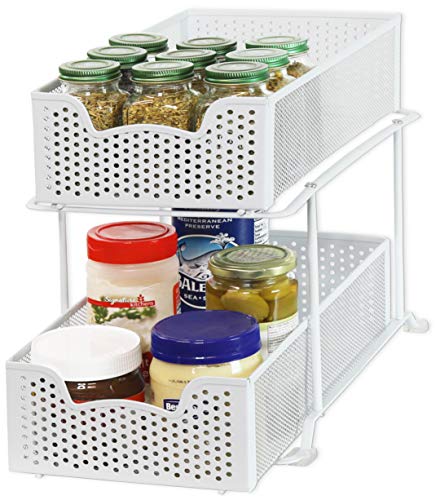
Simple Houseware 2 Tier Sliding Cabinet Basket Organizer Drawer, White
Creates two accessible levels for daily cleaning supplies while bringing back items forward. Best for one clear rectangular side. Check opening, extension, sink bowl, hinges, pipes, disposal, and bottle height.
Verified ASIN: B07Q51ZGQB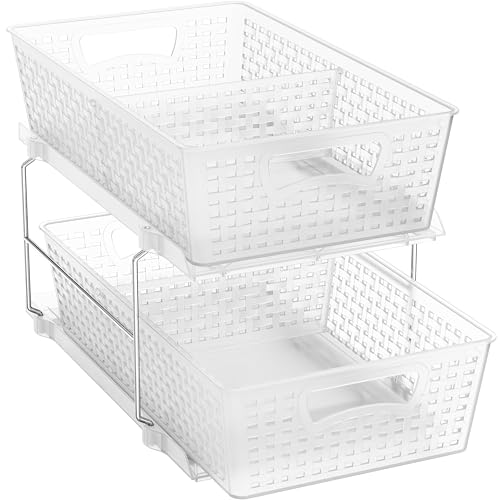
Simple Houseware 2 Tier Pull-Out Sliding Drawer Under Sink Storage, Clear
Visible pull-out storage for bottles, sponges, trash bags, and lightweight refills. Confirm both tiers clear the sink bowl, pipes, and door.
Verified ASIN: B0BJNMQQH8
YouCopia SinkSuite Under Sink Turntable with Adjustable Dividers
Brings similar bottles forward without permanent installation. Use only in an unobstructed side zone and confirm hoses, handles, walls, and pipes do not block rotation.
Verified ASIN: B08B1TX1CQ
Copco Under-Sink Pantry and Cabinet Organizer, 18-Inch
For grouped bottles in a wide uninterrupted floor zone. Verify clearance around the disposal, filter, pipes, hinges, walls, and cabinet depth.
Verified ASIN: B07CDYGX6L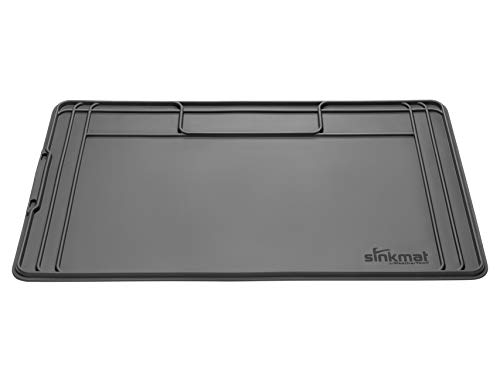
WeatherTech SinkMat Waterproof Under Sink Liner Mat
A removable molded barrier for minor spills and easier cleanup. Measure around walls, penetrations, and fixed equipment. It does not prevent or repair leaks.
Verified ASIN: B07HMQ1FDL
Safety 1st Cabinet Slide Lock
For compatible paired handles. Confirm handle design and spacing. A lock does not replace correct storage or relocation of especially hazardous products.
Verified ASIN: B07875DCPN
Winisok Waterproof Under Sink Mat
Lower-cost removable surface protection for minor spills. It must fit correctly and should never hide recurring moisture.
Verified ASIN: B0CSPKSCP2Recommended combination
Use one narrow pull-out on the clearest side, one removable daily caddy or open zone, one properly fitted leak mat, and a cabinet lock only when household safety requires it. Do not fill both sides automatically.
Affiliate disclosure: Inplanty may earn a commission from qualifying purchases made through links on this page, at no additional cost to you.
Frequently Asked Questions
What is the best way to organize under the kitchen sink?
Inspect for leaks first, keep only essential supplies, measure around plumbing, use removable moisture-resistant zones, and preserve valve and service access.
What should be stored under a kitchen sink?
Daily dishwashing supplies, kitchen-cleaning products, trash bags, gloves, cloths, and one compact caddy are usually most useful.
What should not be stored there?
Food, medicines, moisture-sensitive paper goods, unrelated chemical backstock, and anything that blocks plumbing or could be damaged by a leak.
How do you organize around pipes?
Measure usable zones on each side, use independent removable storage, and leave valves and connections directly reachable.
Are pull-out organizers good under a sink?
Yes when a narrow pull-out fits a clear side zone and can extend without hitting pipes, hinges, filters, or the sink bowl.
Can you use a tension rod?
Only when it remains stable, supports lightweight items, and does not obstruct plumbing or cabinet access.
Should cleaning products stay in original containers?
Yes. Original containers preserve identity, directions, warnings, closures, and emergency information.
How do you protect the cabinet from leaks?
Use a fitted non-absorbent removable mat for minor spills, inspect regularly, and repair any active leak before storing products.
How do you organize around a garbage disposal?
Keep the center below the disposal clear, use narrow side zones, and preserve hose, electrical, drain, and service access.
How often should the cabinet be checked?
A quick monthly visual and moisture check is practical, with immediate inspection after odor, staining, dampness, or plumbing work.