
Buy for your routine first, then for capacity
The best electric kitchen composter is the one that has a permanent home, accepts the amount of food waste your household produces, and is easy enough to use every day. If finding a permanent home is the harder part, how to add storage to a small apartment before increasing the appliance count.
A compact countertop model makes the most sense when space is tight. The same placement logic applies to other permanent countertop zones, such as the layouts in coffee station ideas for small kitchens, where keeping one clear working surface matters more than displaying every appliance. If the appliance is competing with prep space, start by reviewing how to how to organize a small kitchen before giving it a permanent home. Larger microorganism-based systems suit households that cook frequently and want a more continuous process. Garden-focused buyers can justify a larger machine when output handling and utility-space placement are realistic.
The most important buying question is not “Which has the most features?” It is “Where will this live, and what trade-off am I willing to accept?” The same principle applies to broader kitchen organization: assign the zone first, then choose what belongs in it.
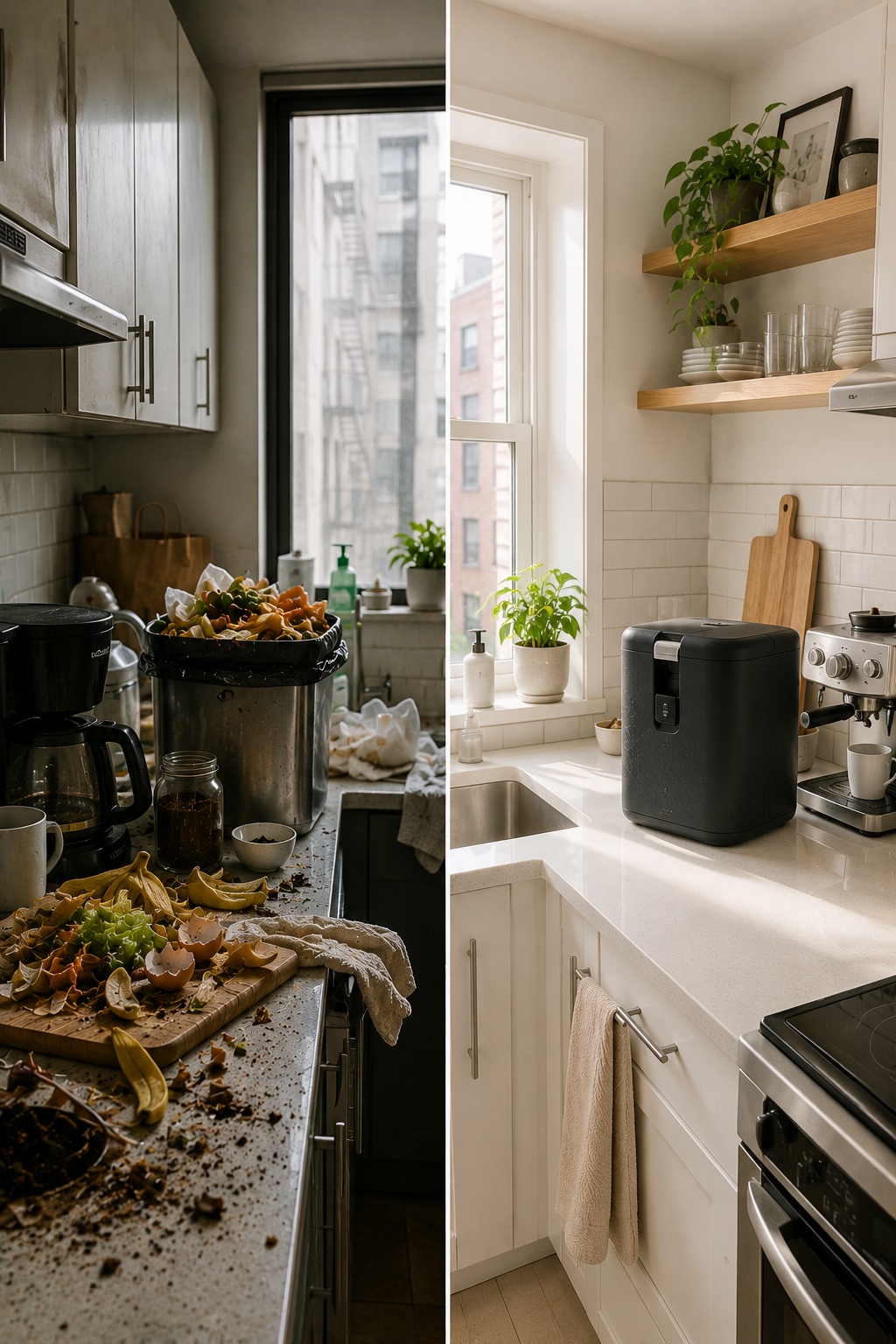
From food-scrap clutter to a cleaner cooking routine
Before
- Wet food scraps sitting in the trash
- Peels, grounds, and leftovers collecting during prep
- More frequent garbage trips
- Persistent odor around the waste zone
- No clear place for food scraps while cooking
After
- Food scraps have an immediate destination
- Prep surfaces stay easier to reset
- Less wet organic material sits in the trash
- The waste routine becomes more controlled and easier to fold into a daily home reset
- The appliance has a defined permanent home, supported by the same zone-based thinking used in the Kitchen Organization Guide
The hidden trade-offs matter more than the headline specs
Placement footprint
Measure width, depth, lid-opening clearance, bucket removal, and the distance to an outlet—not only the body dimensions. In especially tight kitchens, how to use vertical storage can help move unrelated items off the same surface before you decide whether the appliance truly fits.
Processing style
Some machines primarily dry and reduce scraps; others use biological decomposition. The output and routine are not the same.
Daily food-waste volume
A small household may prefer batch processing. Frequent cooks may benefit more from a larger continuous system.
Maintenance tolerance
Filters, cleaning, additives, bucket handling, and output management can matter more over time than one extra feature. If those supplies need to live nearby, use a defined storage zone rather than letting them spread across the room; how to create pantry zones is a useful model for that kind of grouping.
Which of these 3 electric kitchen composters fits your home?
| Product | Best for | Key advantage | What you give up | Placement | Shop |
|---|---|---|---|---|---|
| FoodCycler Eco 5 | Apartments and small kitchens | Most countertop-oriented option in this group | Still consumes meaningful counter or dedicated-surface space; see counter-clutter strategies if that is already your main kitchen problem | Countertop or dedicated surface | View on Amazon |
| Reencle Prime | Families and frequent cooks | Better fit for higher daily volume and continuous use | Larger footprint and greater commitment than a compact batch machine | Dedicated kitchen or pantry position; a well-planned pantry organization system can make a larger unit easier to live with | View on Amazon |
| GEME PRO 19L | Gardeners and large households | Large-capacity, garden-oriented use case | Largest footprint and highest ownership commitment | Utility room, pantry, garage, or dedicated floor area; if pantry depth is the constraint, see how to organize a deep pantry | View on Amazon |
Prices, sellers, and availability can change. Check the retailer for current listing details before purchasing.
Choose the model that solves your actual kitchen problem
FoodCycler Eco 5
Best when your biggest problem is food-scrap odor and clutter but you do not have room for a large floor-standing system. The Eco 5 is the most countertop-oriented option in this group, which makes it easier to integrate into a compact routine.
- Compact relative to the larger systems here
- Easy to keep close to food prep
- Simple fit for smaller households
- Still requires dedicated counter or surface space
- Batch-style routines may not suit heavy daily volume
- Measure lid clearance before buying

Best for buyers prioritizing compact placement and a straightforward food-waste reduction routine.
Verified Amazon product image in source material.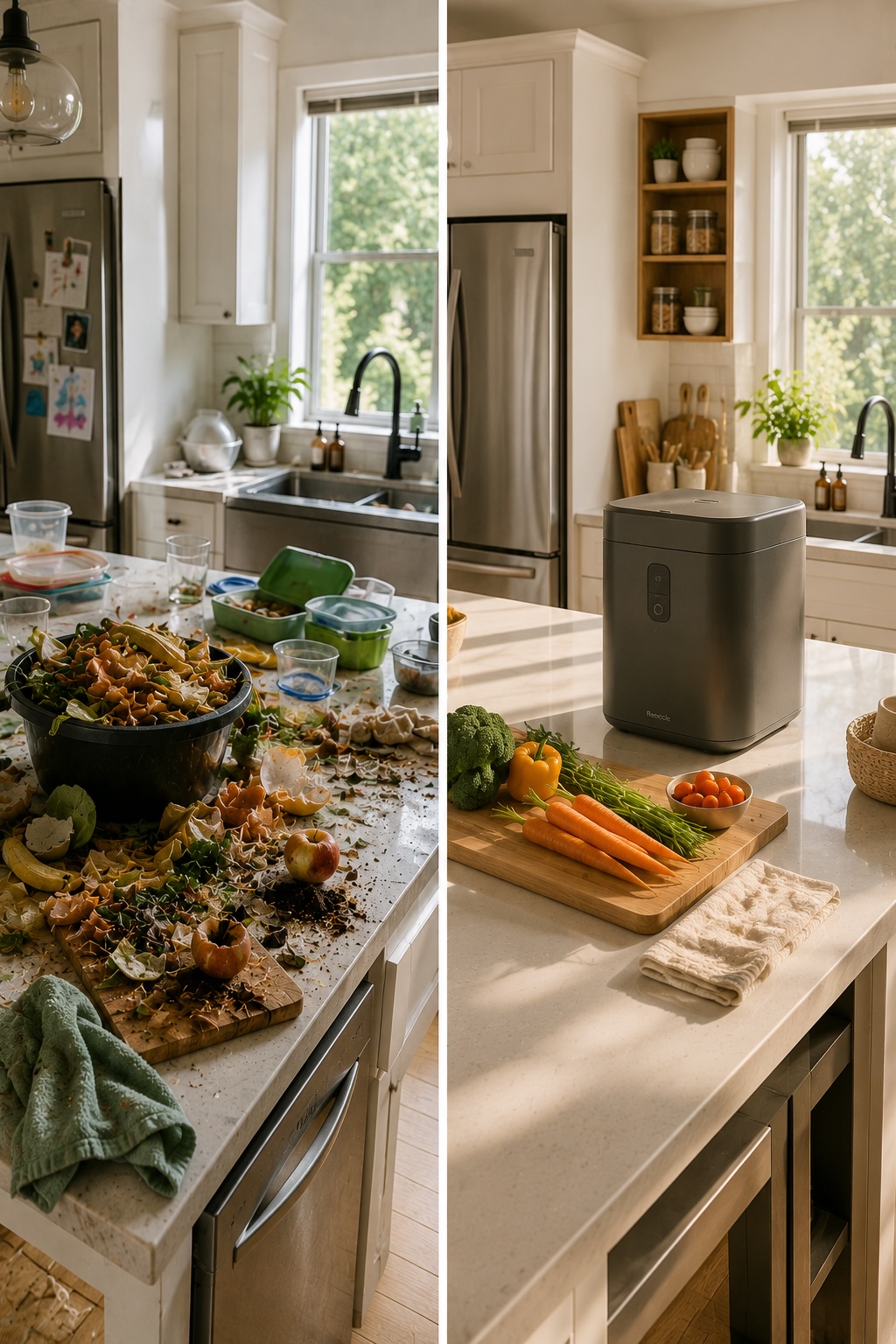
Reencle Prime
Best when your household cooks often and food scraps appear throughout the day. Its microorganism-based decomposition approach better suits a higher-volume, more continuous routine than a compact countertop batch appliance.
- Better aligned with frequent daily input
- Supports a more continuous waste routine
- Strong fit for a dedicated kitchen or pantry zone
- Larger than countertop-oriented units
- Needs a permanent location
- Requires willingness to maintain a biological system

Best for higher-volume households that want a continuous microorganism-based decomposition routine.
Verified Amazon product image in source material.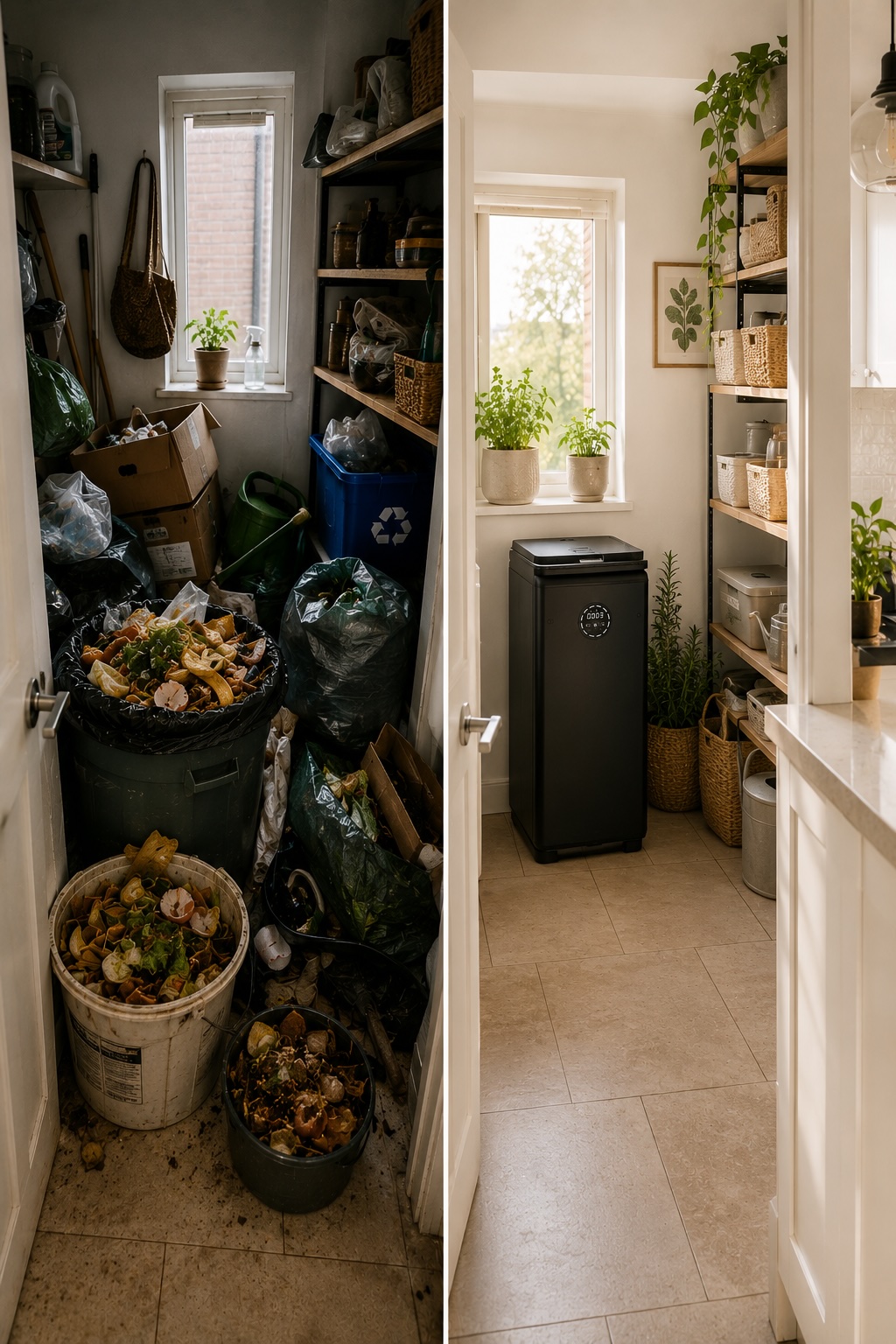
GEME PRO 19L
Best for buyers who care more about capacity and garden-oriented use than compactness. This is the most specialized option in the group and makes sense only when you have the space and are comfortable with a larger ownership commitment.
- Large-capacity design
- Fits high-volume households
- Strong match for garden-focused routines
- Largest footprint in this guide
- Needs dedicated utility or floor space
- Higher commitment than compact alternatives

Best for buyers who prioritize capacity and garden use over a small footprint.
Verified Amazon product image in source material.Affiliate disclosure: As an Amazon Associate, Inplanty may earn from qualifying purchases.
Not every countertop “composter” produces finished compost
Some electric kitchen composters are better described as food recyclers: they heat, dry, grind, and reduce food scraps into a smaller processed material. That can make food waste easier to manage indoors, but the output is not automatically mature, garden-ready compost.
Other systems use biological decomposition with microorganisms. Those products have a different daily routine and different maintenance needs. The important buying question is not the label on the box—it is how the machine processes food waste and what the manufacturer says to do with the output.
Which one should you buy?
Choose FoodCycler Eco 5 when space is the problem
You want a compact, dedicated food-scrap solution near the prep area and your daily volume does not justify a large continuous system.
See FoodCycler Eco 5Choose Reencle Prime when volume is the problem
You cook frequently, generate scraps throughout the day, and have a permanent location for a larger microorganism-based system.
See Reencle PrimeChoose GEME PRO 19L when garden use is the priority
You have utility space, higher volume, and are willing to trade compactness for a more specialized garden-oriented setup.
See GEME PRO 19L3 Real-Kitchen Setup Ideas
Small-Apartment Setup
For limited counters and low-to-moderate daily food-waste volume.
- FoodCycler Eco 5
- Dedicated counter or cart surface
- Clear lid-opening space
- Easy path to sink/outlet
Family Cooking Setup
For households generating scraps throughout the day.
- Reencle Prime
- Permanent pantry or kitchen position
- Enough clearance for normal servicing
- Routine suited to continuous use
Garden-Focused Setup
For larger households with utility space and a garden-oriented routine.
- GEME PRO 19L
- Utility-room, pantry, or garage placement
- Space for output handling
- Higher-capacity ownership routine
Electric kitchen composters make sense for some homes—not all
Worth it if
- You cook regularly and generate noticeable food waste
- Odor and wet trash are recurring kitchen problems
- You can give the appliance a permanent home
- You will actually maintain the machine as required
Probably skip it if
- Your household produces very little food waste
- You do not have a practical place to keep the appliance
- You do not want another appliance to clean or maintain
- You expect every model to produce finished garden compost automatically
Frequently Asked Questions
What is the best electric kitchen composter for a small apartment?
A compact countertop-oriented unit is usually the easiest fit because it needs less permanent floor space and can stay close to the food-prep area. Measure counter depth and lid clearance before buying.
What is the difference between an electric composter and a food recycler?
Some machines mainly heat, dry, and reduce food scraps, while others use biological decomposition. The category names are often used loosely, so check the specific processing method and recommended use of the output.
Do electric kitchen composters make finished compost?
Not always. Some units create a reduced or pre-compost-style material rather than finished compost. Follow the manufacturer's instructions for curing, mixing, disposal, or further composting.
Are electric kitchen composters worth it?
They make the most sense for homes that cook often, generate noticeable food waste, care about odor control, and have a practical permanent location for the machine.
Which model is best for a family?
In this lineup, Reencle Prime is the better family fit when food scraps are generated throughout the day and you have a dedicated kitchen or pantry location for a larger microorganism-based system.
What should I measure before buying?
Measure width, depth, lid-opening height, door and cabinet clearance, bucket-removal space, ventilation needs, and the distance to an electrical outlet.
📚 Related Guides
More practical Inplanty guides for small kitchens, appliance placement, pantry planning, and everyday organization.