
How to Organize a Small Pantry So Everything Stays Visible
Reduce the inventory to realistic capacity, separate active food from backstock, assign shelves by frequency and weight, and add organizers only when they improve visibility without consuming valuable shelf space.
The Finished Result
The pantry holds the food the household actually uses, daily categories remain easy to scan, backstock stays limited, groceries have room to enter, and organizers support the shelf instead of replacing it with a collection of containers.
- Active food stays visible
- Backstock remains controlled
- Daily access requires fewer steps
- Open capacity absorbs groceries
- Organizers solve measured problems
Quick Answer
Organize a small pantry by removing expired and unnecessary food, separating active items from backstock, and giving each shelf a broad category. Keep frequently used food between eye and waist level, use high or low shelves for lighter occasional items, and add bins, risers, or turntables only when they improve visibility without reducing useful capacity.
Use the Kitchen Organization Guide for the broader kitchen system. This page is for an existing small pantry; use the no-pantry guide when no pantry exists.
Diagnose the Small-Pantry Problem
| Symptom | Likely cause | First correction |
|---|---|---|
| Food falls out | Inventory exceeds capacity | Reduce active food and backstock |
| Groceries fit nowhere | No incoming capacity | Leave flexible open space |
| Older food is forgotten | Poor visibility | Bring active food forward |
| Shelves waste height | Spacing is too tall | Adjust shelves or add a riser |
| Bins hide food | Overcontainment | Use fewer, broader zones |
Capacity comes first
A small pantry cannot support unlimited inventory. Organizers do not replace realistic purchasing and backstock limits.
Reduce Inventory Before Organizing
- Work one shelf at a time.
- Remove expired, stale, damaged, or unwanted food.
- Group duplicates.
- Separate active food from backstock.
- Set one clear backstock boundary.
Create Broad Pantry Zones
Breakfast
Cereal, oats, spreads, bars, and beverages used together.
Snacks
One visible, limited zone rather than several scattered baskets.
Cooking staples
Grains, pasta, cans, jars, sauces, and daily ingredients.
Baking
Active ingredients together; seasonal extras farther away.
Beverages
Heavy items low and stable; bulk quantities controlled.
Backstock
Unopened duplicates within one fixed physical limit.
Assign Shelves by Frequency and Weight
| Level | Best use |
|---|---|
| Eye level | Daily food, open packages, breakfast, snacks |
| Waist level | Cooking staples, cans, grains, pasta |
| High shelves | Lightweight occasional items and limited backstock |
| Low shelves | Heavy stable beverages or bulk packages where conditions permit |
Open space is functional capacity
A pantry packed to 100% cannot absorb a normal grocery trip.
Measure Before Buying
Measure the pantry
- Shelf width, depth, height
- Door opening and hinges
- Adjustable shelf positions
- Reach and walkway clearance
Measure normal packages
- Tallest bottle
- Cereal and snack boxes
- Can diameter
- Jar height
- Bulk and refill packages
Choose the Simplest Useful Method
Shelf risers
For wasted height and short packages; not for excess inventory.
Handled bins
For lightweight removable categories; keep them moderate in size.
Turntables
For bottles and jars in deep corners, not bags and boxes.
Can organizers
Only for a large, consistent can inventory.
Door and under-shelf storage
Only after full closure and clearance testing.
No-organizer method
Valid when visibility, category boundaries, and inventory limits already work.
Use Original Packaging or Decant Selectively
Keep original packaging when instructions, allergens, dates, or flexible package sizes matter. Decant only where freshness, pouring, stacking, or fit improves enough to justify the transfer and refill routine.
Create Grocery and Maintenance Routines
Bring older food forward
Use active inventory before opening duplicates.
Place active food first
Protect prime shelf access.
Move duplicates to backstock
Keep them inside one boundary.
Remove packaging and reset weekly
Preserve visibility and open capacity.
Verified Product Examples
Choose the storage problem first. Then check dimensions, package shape, loaded weight, reach, door movement, and whether the organizer can pass through the pantry opening.

Simple Houseware Expandable Stackable Kitchen Counter Shelf Organizer, White, Metal Top, 11.25"L x 7.9"W x 5.4"H
Creates a second visible level for cans, jars, and short pantry packages. Best where vertical space is wasted; it does not solve excess inventory or severe depth access.
Verified ASIN: B07NPWHJ9B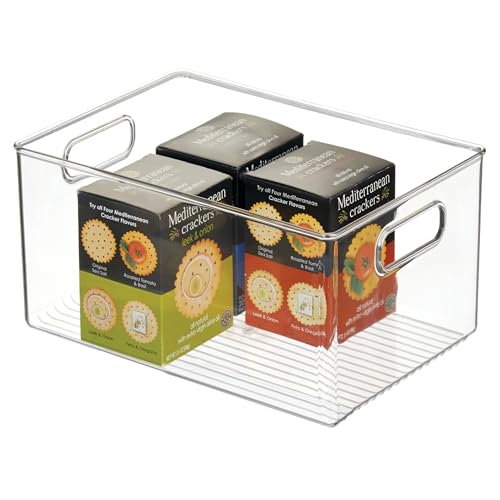
iDesign Plastic Pantry Storage Bin, Clear
Creates one removable category zone for lightweight snacks, breakfast items, packets, or baking supplies. Keep the loaded bin easy to lift.
Verified ASIN: B00L6H8J3Q
Copco Non-Skid Turntable, 2-Tier, 12-Inch
Brings sauces, oils, jars, and bottles forward in a deep corner. Circular storage trades some rectangular capacity for access.
Verified ASIN: B0036OQWT0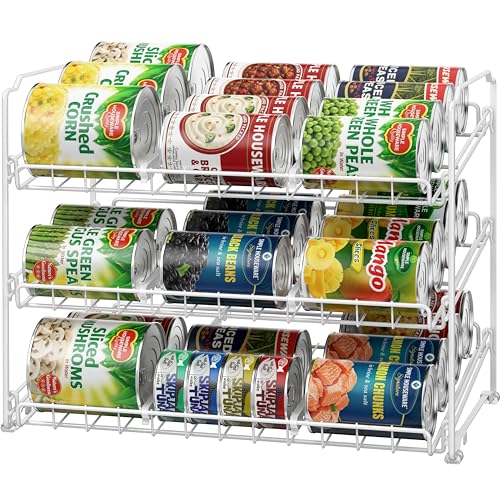
Simple Houseware 3-Tier Stackable Can Organizer Rack
Useful only for a substantial, consistent can inventory. A shelf riser is usually more flexible for a small mixed collection.
Verified ASIN: B07JD3WNWR
Simple Houseware 6PK Under Shelf Basket
Uses limited shelf gaps for lightweight flat packages. Check shelf thickness, clearance below, door movement, and loaded weight.
Verified ASIN: B0BTGJV9Y6
ClosetMaid Wall or Door Adjustable 8-Basket Organizer
Adds vertical storage for lightweight categories. Verify door construction, hinges, shelf positions, projection, and loaded closure.
Verified ASIN: B01DNYRUWA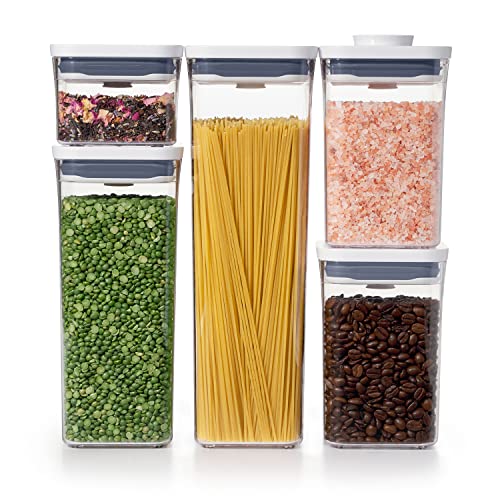
OXO Good Grips 5-Piece POP Container Set
Best for selected dry staples where transfer improves freshness, pouring, fit, or visibility. It is not a reason to decant every pantry item.
Verified ASIN: B07TD9QT97Affiliate disclosure: Inplanty may earn a commission from qualifying purchases made through links on this page, at no additional cost to you.
Frequently Asked Questions
What is the best way to organize a small pantry?
Reduce excess food, separate active food from backstock, use broad zones, and add organizers only where visibility or access improves.
How do you maximize space in a small pantry?
Use shelf height efficiently, limit backstock, preserve open grocery capacity, and choose compact organizers that fit normal package sizes.
Should pantry food be decanted?
Only when it improves freshness, pouring, fit, or visibility without losing important package information.
How much backstock should a small pantry hold?
Only the amount that fits one defined boundary without blocking active food or grocery unloading.
How do you keep a small pantry organized?
Use a grocery-unloading routine, weekly resets, monthly capacity reviews, and visible broad categories.
Are pantry bins worth it?
Yes for lightweight categories that need to move together, but oversized bins can hide food and waste width.
Can the pantry door be used for storage?
Yes only when hinges, door construction, loaded weight, shelf positions, and full closure remain compatible.
What should go on each shelf?
Daily food at eye level, cooking staples around waist level, light occasional items high, and heavy stable items low.