
How to Organize Spices So You Can Find Every Jar Quickly
Gather the full inventory, choose one dry and visible location, arrange labels for the way the jars are viewed, keep daily spices easiest to reach, and store refills separately from active containers.
The Finished Result
Every active jar is visible, labels face the correct direction, daily seasonings sit closest to the cooking workflow, packets and refills remain separate, and the system helps prevent duplicate purchases instead of creating decorative maintenance.
- One official primary spice location
- Daily, occasional, and refill categories are separated
- Storage avoids unsuitable heat and moisture
- Labels match the viewing direction
- Matching jars remain optional
Quick Answer
Organize spices by gathering every jar and packet, removing duplicates or unusable items, and choosing one primary storage location away from excessive heat, steam, moisture, and direct light. Arrange jars so labels remain visible, keep frequently used spices easiest to reach, and store refills separately from active containers.
For the broader kitchen system, see how to organize a small kitchen, how to organize a kitchen without a pantry, and how to organize kitchen drawers.
Gather and Audit the Complete Spice Inventory
Collect individual spices, dried herbs, blends, salts, pepper, baking spices, packets, refill bags, whole spices, specialty seasonings, and duplicates from every drawer, cabinet, counter, and pantry shelf.
Remove what should not return
- Empty jars
- Unidentified spices
- Damaged or moisture-affected packaging
- Products with contamination concerns
- Blends no one uses
- Excess duplicates
- Refill packets without an active use plan
Avoid rigid universal freshness rules
Use package guidance, labeling, sensory quality, and appropriate food-safety judgment. Do not combine products when identity, ingredients, allergens, age, or quality are uncertain.
Resolve duplicates
Keep one active container, one clearly labeled refill when justified, and remove unnecessary extras. If duplicates recur, add the spice to a quick inventory list.
Separate Everyday, Occasional, and Refill Spices
Everyday spices
Salt, pepper, garlic powder, paprika, common herbs, and frequently used blends deserve the easiest access.
Occasional spices
Seasonal baking spices, specialty cuisines, whole spices, and rare blends can use secondary positions.
Refills and backstock
Keep refill bags, unopened duplicates, and bulk spices separate from active jars where practical.
One primary system
Keeping the collection together improves visibility and grocery checks. Any second zone should have a clear function, such as baking or beverage spices.
Prime-storage rule
Prime spice storage should support actual cooking habits rather than treating every jar equally.
Choose a Suitable Spice Storage Location
The ideal location is easy to access while cooking, dry, protected from strong direct light, away from excessive heat and steam, large enough for active inventory, and easy to scan.
| Location | Best for | Main caution |
|---|---|---|
| Shallow drawer | Top-down visibility | Jar height and drawer capacity |
| Upper cabinet | Front labels and tiered rows | Depth and overhead access |
| Narrow cabinet | Pull-out storage | Installation and exact compatibility |
| Pantry shelf | Large collections | Distance from cooking and hidden refills |
| Wall rack | Small active collection | Light, dust, grease, and installation |
| Cabinet door | Lightweight jars | Closure, hinges, and interior collision |
Should spices be near the stove?
They may be near the cooking zone when the location remains protected from excessive heat, steam, grease, and direct moisture. Convenient does not mean directly above or beside the strongest exposure.
Should spices stay on the counter?
Counter storage works only for a small active collection that stays away from unsuitable conditions and does not consume needed preparation space. See how to keep kitchen counters clutter-free.
Measure Before Choosing an Organizer
Measure the space
- Drawer width, depth, and height
- Cabinet width and depth
- Shelf spacing
- Door opening
- Hinge clearance
- Wall width
- Door-organizer clearance
- Pull-out extension
Measure the containers
- Jar height and diameter
- Lid width
- Tallest bottle
- Packet and refill dimensions
- Label location
- Number of active jars
Usable-opening principle
The organizer must fit the opening and movement path—not only the drawer or shelf interior.
Match labels to the viewing direction
- Drawer: lid or angled front labels
- Cabinet shelf: front labels
- Pull-out: side or front labels
- Turntable: front-facing labels where practical
Choose the Right Spice Storage Method
Spice drawer
Best for compatible jars and top-down visibility. Check jar height, drawer height, insert footprint, and whether the drawer is better used for another daily category.
Tiered shelf
Raises rear jars in an upper cabinet. It solves visibility better than severe depth access.
Turntable
Works with mixed jar sizes and deep cabinets. It improves rotational access but can waste rectangular shelf capacity.
Pull-out rack
Best for narrow or deep compatible cabinetry when frequent full visibility justifies cost and installation.
Cabinet-door rack
Uses door space for lightweight jars. Test the fully loaded door while closing and respect hardware limits.
Wall rack
Useful for a small active collection where wall conditions, light, grease, dust, reach, and installation are acceptable.
Small bins
Best for refill packets, baking spices, and specialty blends. Avoid burying daily jars inside opaque or overloaded bins.
No-organizer method
A small collection may need only one visible row, forward-facing labels, and separate refill storage.
Organizer rule
Do not add an organizer that reduces visibility or usable capacity.
Original Containers vs Matching Spice Jars
Potential benefits of matching jars
- Consistent dimensions
- Better fit in drawer inserts
- Clear lid or front labels
- Reduced visual variation
Potential drawbacks
- Extra transfer work
- Lost date, ingredient, or allergen information
- Packages may not fit one jar
- Refills remain elsewhere
- Similar spices can be confused
Decanting verdict
Use matching jars only when they improve fit, visibility, pouring, or consistency enough to justify the maintenance.
When transferring, preserve the spice name, blend ingredients where relevant, allergen information, useful date information, and specialty instructions. Never create unidentified jars.
Choose an Organization Method
Alphabetical
Predictable for large shared collections, but frequently used spices may end up far apart and new jars can require shifting.
By cooking category
Use broad groups such as everyday savory, herbs, baking, spicy seasonings, blends, whole spices, salts, and specialty cuisine. Keep categories understandable to every cook.
By frequency
Put daily spices in the easiest zone, weekly spices in secondary positions, occasional spices farther back or above, and refills elsewhere.
Hybrid
For many kitchens, keep daily spices in one prime group, alphabetize or categorize the remainder, separate baking spices, and keep refills elsewhere.
Best-system rule
The best system is the one every household cook can understand and reset.
Organize Every Spice Format
Standard jars
Use one visible layer where possible, front- or lid-facing labels, limited duplicates, and tiered or angled storage only when several rows are necessary.
Large bottles and bulk containers
Store them separately from small jars, refill one active jar when appropriate, and keep bulk packages from dominating prime spice space.
Packets and sachets
Use a small upright bin, narrow drawer section, or labeled handled container. Keep labels visible and review packet inventory regularly.
Whole spices
Use clearly labeled containers, separate from powders when useful, and store according to frequency.
Homemade blends
Label the blend name, ingredients where helpful, date prepared, intended use, and allergen information where relevant.
Refill rule
Refill storage should not become a second hidden spice collection.
Best Setup by Reader Situation
Small kitchen
Choose one primary location, keep daily spices near cooking, limit active jars, move refills elsewhere, and minimize counter storage.
No pantry
Use one drawer, cabinet shelf, narrow pull-out, compatible door rack, or limited wall rack with controlled refill storage.
Deep cabinet
Use a turntable, pull-out, front-positioned tiered shelf, or handled refill bin. Never leave loose jars in a blind back zone.
Renter
Use drawer inserts, freestanding tiered shelves, turntables, portable bins, and nonpermanent systems that still clear doors and hinges.
Family
Use clear labels, one understandable system, broad categories, and duplicate controls.
Frequent cook
Keep daily spices in prime storage near the workflow, maintain strong label visibility, and review refills regularly.
Prevent Duplicate Purchases and Maintain the System
Create one official inventory
Use visible storage, a phone note, cabinet-door list, simple spreadsheet, shopping app, or current photo—whichever is quick enough to check before shopping.
Keep active jars separate from refills
Aim for one active jar per spice, one refill zone, and no multiple open refill bags where avoidable.
Check before buying
- Is the spice already present?
- Is there an unopened refill?
- Is the active jar genuinely low?
- Is it needed for a planned recipe?
- Does the household actually use it?
Regular review
- Face labels forward.
- Wipe spills.
- Remove empty or unidentified jars.
- Review refill quantities.
- Update the inventory.
- Review unused blends.
- Confirm the location remains dry and suitable.
How to Organize Spices Step by Step
Gather every jar, packet, blend, and refill
See the complete inventory.
Remove empty, damaged, unidentified, and unwanted items
Reduce before organizing.
Identify duplicates
Keep one active container and limited backstock.
Separate active, occasional, and refill spices
Rank access by use.
Choose one primary location
Stop scattering jars.
Check heat, steam, moisture, and light
Protect storage conditions.
Measure the space and containers
Include usable openings and jar height.
Choose one storage format
Drawer, shelf, turntable, pull-out, rack, bin, or no organizer.
Orient labels for the viewing direction
Make identification immediate.
Choose alphabetical, category, frequency, or hybrid order
Use a system the household understands.
Store refills separately
Prevent hidden duplicate inventory.
Label transferred and homemade spices clearly
Preserve important information.
Test daily cooking access
Confirm the system supports real use.
Create a quick inventory method
Support grocery decisions.
Review regularly
Maintain visibility and conditions.
Spice Organization Mistakes
Buying matching jars before measuring
The jars may not fit the drawer or shelf.
Decanting every spice
The system creates unnecessary work and information loss.
Storing spices beside heat or steam
Convenience overrides suitable conditions.
Using a deep cabinet without access
Jars disappear at the back.
Alphabetizing without prioritizing daily use
Frequent seasonings remain inconvenient.
Hiding refill bags behind active jars
Duplicate purchases increase.
Using too many small bins
Labels disappear and access slows.
Leaving packets in a loose pile
They become torn, forgotten, or duplicated.
Skipping lid labels in a drawer
Jars look identical from above.
Using door storage without closure testing
The organizer collides with shelves or jars.
Keeping unidentified spices
The collection remains unusable.
Filling every slot
New jars disrupt the system immediately.
Which Spice Storage Method Should You Choose?
| Reader situation | Best starting method |
|---|---|
| Shallow drawer near cooking | Spice-drawer insert |
| Upper cabinet with several rows | Tiered shelf |
| Deep cabinet | Turntable or pull-out |
| Narrow unused cabinet | Pull-out spice rack |
| Limited shelf space | Door rack if clearance permits |
| Small visible collection | Wall or counter rack in a suitable location |
| Refill packets | Labeled handled bin |
| Mixed jar sizes | Turntable or flexible shelf zones |
| Uniform jars | Drawer insert or tiered rack |
| Rental kitchen | Portable drawer, shelf, or turntable system |
| Very small collection | One visible row without an organizer |
| Large shared collection | Alphabetical system plus daily-use zone |
Final recommendation
Keep spices in one dry, visible location near the cooking workflow, place daily seasonings in the easiest positions, arrange labels for the viewing direction, and store refills separately from active jars.
Verified Product Examples
Choose the storage format first. Then verify drawer height, jar height, shelf clearance, turning space, door movement, label direction, and installation compatibility.

YouCopia SpiceLiner Adjustable Spice Drawer Liner
Creates angled drawer storage so labels remain visible from above without requiring matching jars. Best for shallow or medium-depth drawers near the cooking zone.
Verified ASIN: B0979ML1GL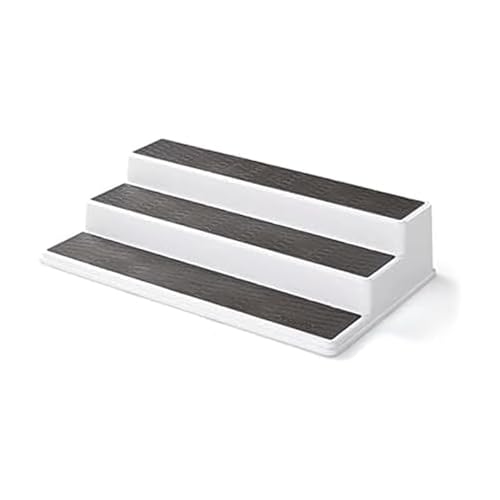
Copco 3-Tier Spice Rack Organizer for Cabinet
Raises rear jars so front-facing labels remain easier to see. Best for relatively shallow cabinets with enough vertical clearance. It improves visibility more than severe depth access.
Verified ASIN: B0036OQU56
YouCopia MagicTrack Spice Turntable
Uses rotating access for mixed jar sizes in a cabinet or pantry. Best when reaching the back is the main problem. Confirm cabinet width, depth, height, turning clearance, and jar stability.
Verified ASIN: B0FQXT71VZ
mDesign Plastic 4-Section Food Packet Organizer
Keeps seasoning packets, refill sachets, and pouches upright and separated. Use it as a secondary refill zone rather than hiding daily jars.
Verified ASIN: B07RD2LKRW
Rev-A-Shelf Pullout Kitchen Cabinet Organizer
Creates narrow full-extension storage for jars and small bottles. Best only when compatible cabinetry, exact measurements, and frequent use justify permanent installation and lost interior width.
Verified ASIN: B004N7B7XA
Talented Kitchen Spice Labels Stickers
Adds consistent identification to transferred jars or lid-facing drawer systems. Labels do not justify decanting every spice, and important original information should not be lost.
Verified ASIN: B0859ML2RG
Rev-A-Shelf Pullout Organizer With Soft-Close
Premium full-extension narrow cabinet storage for frequent cooks with compatible cabinetry and a substantial active spice collection. It is a cabinetry-level investment, not a default solution.
Verified ASIN: B00VI78SVMRecommended combination
Use the SpiceLiner for a compatible drawer, the tiered rack for an upper cabinet, the turntable only when depth is the main failure, one packet organizer for refills, and labels only when transferred jars genuinely improve fit or visibility.
Affiliate disclosure: Inplanty may earn a commission from qualifying purchases made through links on this page, at no additional cost to you.
Frequently Asked Questions
What is the best way to organize spices?
Gather the full inventory, choose one dry and visible location, keep daily spices easiest to reach, orient labels for the viewing direction, and separate refills.
Should spices be organized alphabetically?
Alphabetical order works well for large shared collections, but a hybrid system with a daily-use zone is often faster.
Is a spice drawer better than a spice cabinet?
A drawer is better for top-down visibility when jars fit. A cabinet is better when front labels remain visible and shelf access is practical.
Where should spices be stored?
Choose a dry, visible location near the cooking workflow but away from excessive heat, steam, moisture, grease, and direct light.
Should spices be stored near the stove?
They may be near the cooking zone when protected from excessive heat and steam, but not necessarily directly above or beside them.
Are matching spice jars worth it?
Only when they improve fit, visibility, pouring, or consistency enough to justify the transfer and labeling work.
How do you organize spices in a deep cabinet?
Use a turntable, pull-out, or front-positioned tiered shelf and keep refill packets in a separate removable bin.
How do you organize spice packets?
Store them upright in a labeled packet organizer, narrow drawer section, or handled bin where labels remain visible.
What works best in a small kitchen?
Use one compact primary location, keep daily jars in prime positions, and move refills out of the active zone.
Can spices be stored on the counter?
Yes for a small active collection when the rack avoids unsuitable conditions and does not reduce needed preparation space.
How do you organize spice refills?
Keep one clearly labeled refill zone separate from active jars and avoid opening several refills at once.
How do you stop buying duplicate spices?
Use one official location, keep labels visible, separate active jars from refills, and check inventory before shopping.
Should labels go on the lid or front?
Use lid labels for top-down drawer viewing and front labels for shelves. The label direction should match the viewing direction.
How often should spices be reorganized?
Use a regular review to face labels forward, remove empty or unidentified jars, check refills, and confirm the storage remains suitable.