
How to Organize Laundry Supplies Safely and Clearly
Organize laundry supplies by separating active products from backstock, grouping stain treatment and machine-care products by task, and keeping tools in one removable zone. Measure shelves, cabinets, carts, and door clearance before adding bins or drawers.
What the Organized Supply System Should Do
The finished system should keep the current laundry routine within safe reach, separate products by task, preserve label information, make spills easy to clean, and prevent backstock from crowding the washer, dryer, shelves, or floor.
Result checklist
- Active products stay visible
- Labels remain readable
- Backstock stays separate
- Stain tools stay together
- Spills remain easy to clean
- Household access is controlled
Quick Answer
Keep the current detergent, stain treatment, dryer products, mesh bags, and small machine-care tools in prime storage. Move bulk refills elsewhere. Use one removable caddy for stain treatment, one bin for laundry tools, and one measured shelf or pull-out for active products. Keep products in original labeled packaging unless the manufacturer explicitly permits another container.
Table of Contents
Why Laundry Supplies Become Disorganized
| Symptom | Likely cause | First correction |
|---|---|---|
| Detergent covers the machine top | No active supply zone | Create one nearby shelf, bin, or pull-out |
| Several stain products are duplicated | No task-based grouping | Keep only the products actually used |
| Backstock fills every shelf | Active and reserve products are mixed | Move unopened extras to secondary storage |
| Mesh bags and tools disappear | Small accessories have no boundary | Use one removable tool bin |
| Labels are hidden | Products are decanted or stacked too deeply | Keep original packaging visible |
| Spills are hard to clean | Containers sit loose across several surfaces | Use removable washable zones |
Audit the Complete Laundry-Supply Inventory
Current Products
Current detergent, stain treatment, dryer products, machine cleaner, and products used most weeks.
Laundry Accessories
Mesh bags, brushes, measuring tools, lint tools, delicates clips, garment bags, and small repair accessories.
Backstock
Unopened refills, duplicate stain products, spare dryer supplies, and bulk packages awaiting use.
Reduce Before Organizing
Remove empty packaging, dried or damaged products, duplicates no longer needed, unknown tools, and bulk supplies that do not belong in prime laundry storage.
The Laundry-Supply Capacity Rule
Prime storage should hold the active routine and a small working reserve. Bulk packages and multiple unopened duplicates should replenish the laundry area from secondary storage instead of occupying it permanently.
Create Functional Laundry-Supply Zones
Detergent Zone
Current detergent and the measuring tool or cap that belongs with it.
Stain-Treatment Zone
Active stain products, one small brush, and a temporary pretreat tray.
Dryer Zone
Dryer sheets, balls, or other products used according to their instructions.
Machine-Care Zone
Products and tools used for washer, dryer, lint, gasket, or dispenser maintenance.
Accessory Zone
Mesh bags, garment bags, clips, and small tools grouped in one removable bin.
Backstock Zone
Unopened supplies stored outside prime laundry space and used to replenish active products.
Measure the Storage Before Adding Organizers
Shelf or Cabinet
Measure usable width, depth, height, door opening, hinge clearance, product height, and safe reach.
Pull-Out or Caddy
Measure the clear opening, drawer path, handle projection, wheel path, and removal clearance.
Machine-Side Storage
Check appliance surface compatibility, ventilation, controls, vibration, and whether the organizer affects service access.
Wall or Door Storage
Check mounting surface, door swing, loaded projection, product weight, and nearby hoses or appliances.
Compare Laundry-Supply Storage Methods
| Storage method | Best for | Main advantage | Main limitation |
|---|---|---|---|
| Handled bin | One supply category | Easy to remove and clean | Deep bins hide small products |
| Rolling caddy | Active products in a narrow cabinet | Brings supplies forward | Needs clear wheel and removal path |
| Sliding drawer | Deep shelf or cabinet | Improves access | Requires full extension clearance |
| Small lidded container | Compatible accessories or approved decanting | Creates a clear boundary | May remove original-label information |
| Mesh-bag set | Delicates and small garments | Groups wash-specific items | Unused sizes create clutter |
| Wall grippers | Brooms, brushes, or handled tools | Uses vertical space | Surface and load compatibility matter |
Original packaging preserves dosage, hazard, storage, and identification information. Use household-appropriate access controls, especially for concentrated detergents, pods, stain removers, and other laundry chemicals.
Active Supplies vs Backstock
Active Laundry Supplies
The current detergent, stain treatment, dryer products, mesh bags, and small machine-care kit used regularly.
Secondary Backstock
Bulk detergent, unopened refills, extra stain products, spare dryer supplies, and duplicate accessories awaiting use.
How to Organize Laundry Supplies Step by Step
Gather every laundry product and tool
Include supplies stored in closets, garages, bathrooms, and utility areas.
Remove empties and unused products
Discard or relocate supplies according to local and product guidance.
Separate active products from backstock
Prime storage should support the current routine.
Group products by task
Create detergent, stain, dryer, machine-care, and accessory zones.
Measure shelves and openings
Check product height, container depth, door clearance, and safe reach.
Choose one organizer per problem
Use a bin, caddy, drawer, or wall holder only where it improves access.
Keep labels visible
Avoid hiding dosage, hazard, and product-identification information.
Return only active products
Move bulk reserve supplies elsewhere.
Test the complete laundry routine
Reach, use, return, and clean every supply zone.
Review monthly
Remove empties, clean spills, and reduce duplicate backstock.
Laundry-Supply Organization Mistakes
Decanting without checking instructions
Important dosage, hazard, and identification information may be lost.
Keeping every refill near the washer
Backstock takes over the space needed for active products.
Using deep opaque bins
Small products, leaks, and duplicates become difficult to see.
Mixing stain treatment with general storage
Pretreat products and tools become harder to find when needed.
Storing products out of safe reach
Heavy or hazardous supplies become difficult to retrieve or control.
Allowing spills to remain
Sticky residue damages shelves and makes labels harder to read.
Which Laundry-Supply Method Should You Use?
| Reader situation | Best starting method |
|---|---|
| Active products sit loose on a shelf | One shallow handled bin |
| Supplies disappear in a deep cabinet | Rolling caddy or sliding drawer |
| Stain products are scattered | One removable pretreat caddy |
| Mesh bags and tools are mixed | One accessory bin with broad categories |
| Backstock fills prime storage | Move unopened extras to secondary storage |
| Handled tools lean in a corner | Measured wall grippers or a vertical tool zone |
| Products are hard to identify | Keep original packaging visible |
| Spills damage shelves | Use removable washable organizers |
Final Recommendation
For most laundry areas, keep one active detergent, one stain-treatment group, one dryer-product group, and one small accessory bin near the machines. Move bulk backstock elsewhere, preserve original labels, and use removable organizers that make spills and empty packaging easy to see.
Verified Product Examples
These Amazon US examples were verified for current availability. They solve different storage problems and are not one universal package.
Affiliate disclosure: As an Amazon Associate, Inplanty may earn from qualifying purchases.

YouCopia RollOut Storage Caddy
Why it helps: Brings active detergent, stain treatment, or machine-care products forward in a deep cabinet.
Trade-off: It needs a clear wheel and removal path.
Listed width: 8 inches.
Check on Amazon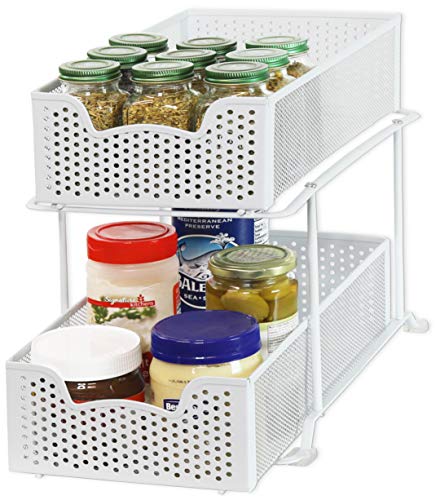
Simple Houseware 2-Tier Sliding Basket Organizer
Why it helps: Adds pull-out vertical storage for grouped active supplies.
Trade-off: It requires enough height, width, and full-extension clearance.
Check: Shelf opening, product height, drawer path, and loaded stability.
Check on Amazon
mDesign Narrow Handled Storage Bin
Why it helps: Creates a removable category for stain products, mesh bags, or machine-care tools.
Trade-off: The product was available in limited stock at verification.
Check: Shelf depth, handle clearance, and category size.
Check on Amazon
7-Piece Mesh Laundry Bag Set
Why it helps: Keeps delicates and small garment categories together through washing.
Trade-off: A large set may create unused sizes and extra storage.
Check: Garment categories, zipper instructions, machine guidance, and the number of sizes actually needed.
Check on Amazon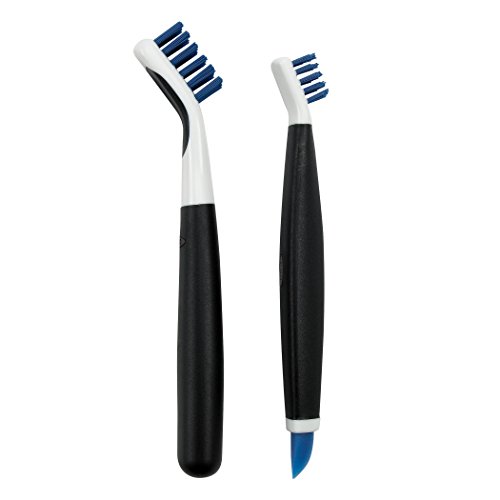
OXO Good Grips Deep Clean Brush Set
Why it helps: Keeps small brushes available for compatible gasket, dispenser, crevice, or laundry-area cleaning tasks.
Trade-off: Use only where the appliance or surface care instructions permit.
Check: Appliance manual, brush material, and cleaning method.
Check on Amazon
Command Large Broom Grippers
Why it helps: Moves compatible handled tools off the floor.
Trade-off: Surface preparation, load limits, tool diameter, and removal instructions matter.
Check: Wall finish, tool weight, handle size, and nearby appliance clearance.
Check on AmazonFrequently Asked Questions About Laundry-Supply Organization
What is the best way to organize laundry supplies?
Separate active products from backstock, group stain treatment and machine-care products by task, keep tools in one removable zone, and store products according to their labels and household safety needs.
Should laundry detergent be stored in its original container?
Yes, unless the manufacturer explicitly permits another container. Original packaging preserves dosage, hazard, storage, and product-identification information.
How should laundry pods be stored?
Follow the product label and household-safety requirements. Keep them in their original packaging unless the manufacturer explicitly permits another container.
What laundry supplies should stay near the washer?
Keep the current detergent, stain treatment, dryer products, mesh bags, and a small machine-care kit near the washer, while moving bulk backstock elsewhere.
How do you organize stain removers?
Group active stain products together with one small brush or tool and a temporary pretreat tray. Remove duplicates and products no longer used.
How much laundry backstock should be kept?
Keep a realistic reserve based on household use and available storage. Prime laundry-room storage should not be filled with multiple unopened duplicates.
How should laundry tools be organized?
Keep mesh bags, lint tools, brushes, measuring tools, and repair accessories in one removable caddy or bin near the task where they are used.
How do you keep laundry supplies organized?
Return products after each load, remove empty packaging weekly, clean spills promptly, and review backstock monthly.