Jul 28, 2026
How to Use Vertical Storage Without Making a Room Feel Crowded
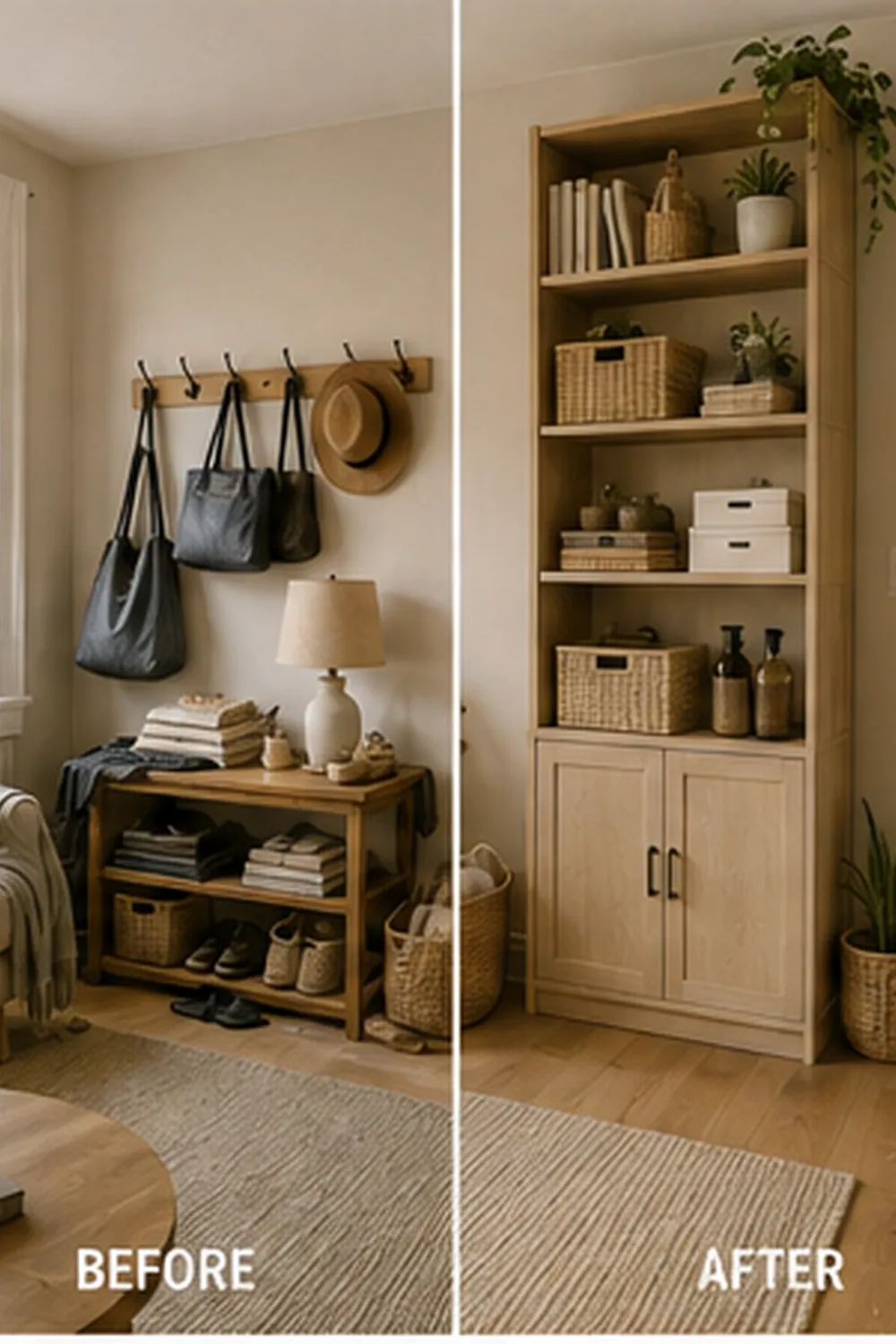
The finished system should increase capacity without blocking movement, darkening windows, covering vents, or making every wall feel busy. For a…
Read the guide
Explore by space
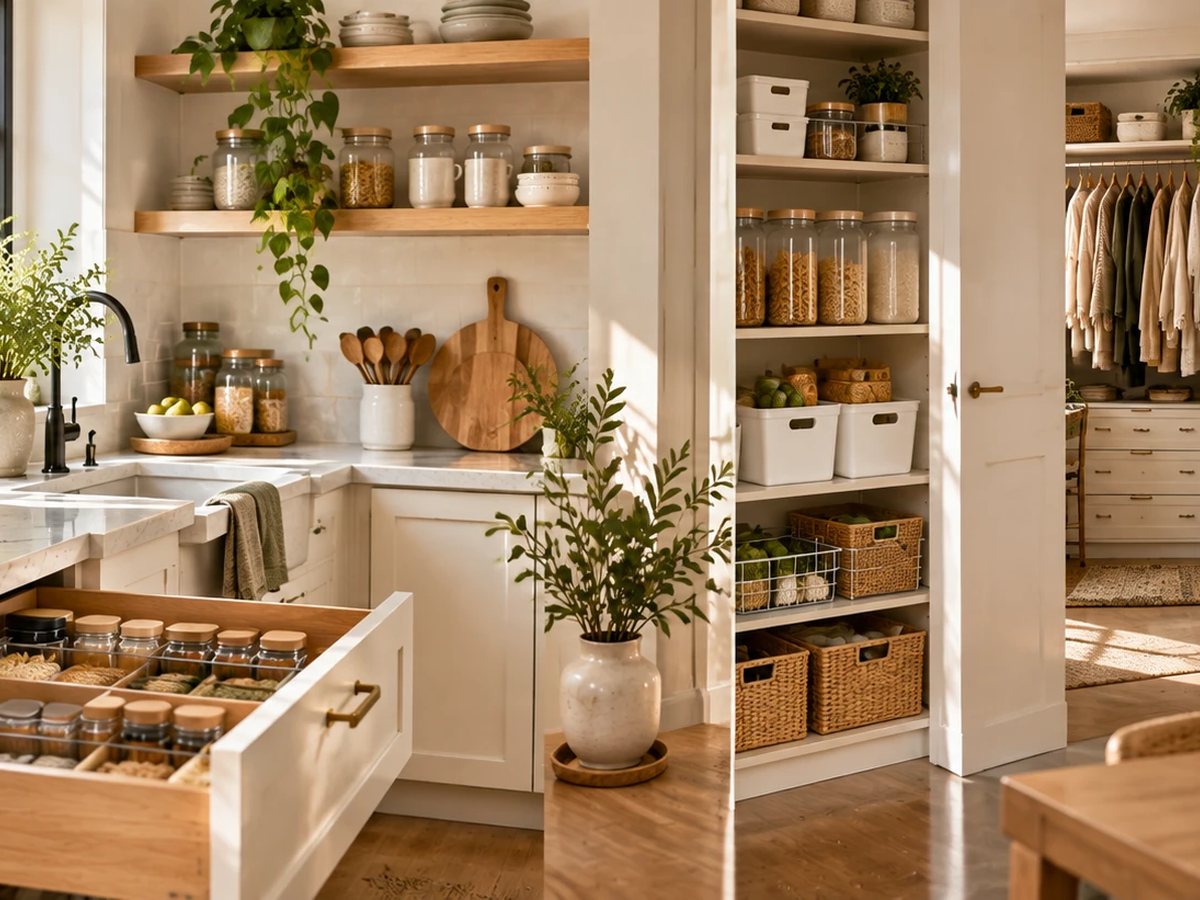
Find smart home organization ideas for every room in your house. From pantry organization and closet storage to mudroom solutions and decluttering tips, discover practical ways to create a more organized, functional, and stress-free home.
Practical inspiration
Jul 28, 2026
The finished system should increase capacity without blocking movement, darkening windows, covering vents, or making every wall feel busy. For a…
Read the guide
Jul 28, 2026
Add storage by using the apartment’s existing hidden, vertical, narrow, portable, and multipurpose capacity before adding large furniture. Measu…
Read the guideJul 28, 2026
This laundry guide is part of the Complete Home Organization Guide. Use it to move between laundry, kitchen, pantry, closet, entryway, and other…
Read the guide
Jul 28, 2026
Organize laundry supplies by separating active products from backstock, grouping stain treatment and machine-care products by task, and keeping …
Read the guide
Jul 28, 2026
Organize a laundry closet by planning around the washer, dryer, closet doors, ventilation, hoses, valves, and service access before adding shelv…
Read the guide
Jul 28, 2026
Organize a small laundry room by planning the complete workflow—collect, sort, pretreat, wash, dry, fold, and remove—before adding shelves, cart…
Read the guideJul 28, 2026
Organizing more than the bathroom? Start with the Complete Home Organization Guide.
Read the guideJul 28, 2026
Use this checklist to organize the bathroom in the correct order: reduce inventory, separate daily products from backstock, clear the counter, o…
Read the guide
Jul 28, 2026
Organize hair tools by separating daily dryers and styling tools from occasional equipment, creating a safe cooling zone, measuring drawers and …
Read the guide
Jul 28, 2026
Organize a medicine cabinet by checking which products are suitable for bathroom storage, keeping daily items at eye level, adjusting shelves to…
Read the guide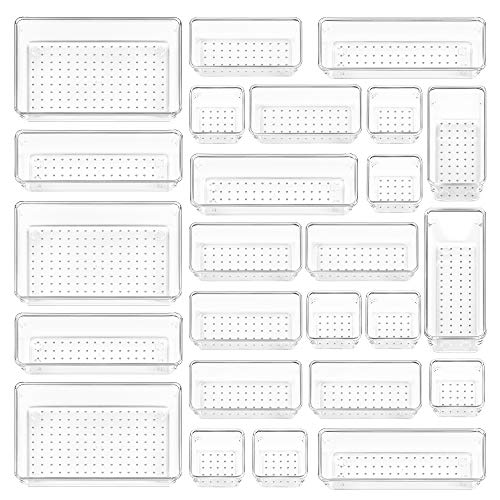
Jul 28, 2026
Organize a bathroom vanity by separating the countertop, drawers, cabinets, under-sink area, hair tools, daily products, and backstock into dist…
Read the guide
Jul 28, 2026
Organize under the bathroom sink by treating pipes, valves, and leak access as permanent no-storage zones. Keep only a limited working supply in…
Read the guide
Jul 28, 2026
Organize a small bathroom by reducing what lives in the room, separating daily items from backstock, and assigning clear sink, shower, toilet, t…
Read the guideJul 27, 2026
For the whole home, return to the Complete Home Organization Guide.
Read the guide
Jul 27, 2026
Organize shoes in a closet by reducing the collection to realistic capacity, keeping current-season daily pairs in one visible zone, and moving …
Read the guide
Jul 27, 2026
Organize a reach-in closet by planning from the doorway inward. Measure the opening, separate long and short hanging sections, keep daily clothi…
Read the guide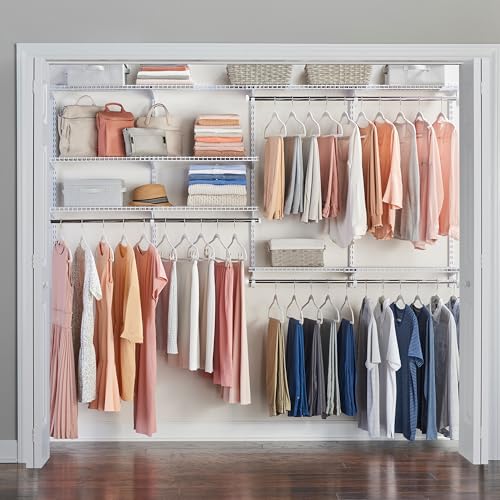
Jul 27, 2026
Organize a walk-in closet by reducing the wardrobe to realistic capacity, measuring every wall and walkway, and assigning each section a clear f…
Read the guide
Jul 27, 2026
Organize a small closet by removing clothing and accessories you no longer use, separating daily and seasonal items, and assigning each area a c…
Read the guideJul 27, 2026
For broader kitchen storage, use the Kitchen Organization Guide. For the whole home, return to the Complete Home Organization Guide.
Read the guideJul 27, 2026
Pantry shelves should not all be spaced equally. Measure the tallest item in each planned category, add enough clearance to grip and remove it c…
Read the guide