
How to Store Seasonal Clothes
Free up prime closet space by rotating the current season forward and moving clean, dry off-season clothing into simple secondary storage that is easy to reverse later.
Quick Answer
Store seasonal clothes by first removing anything you no longer wear, then cleaning and fully drying the outgoing season. Keep current-season clothes in the easiest drawers and closet sections, and move off-season folded clothes into under-bed or upper-shelf storage. Keep garments that should remain hanging on a secondary rod or in suitable garment covers.
What a Good Seasonal Clothing System Should Look Like
Your everyday closet should contain mostly what you can wear in the current season. Bulky off-season sweaters, coats, and warm-weather pieces should stop competing with the clothes you reach for every week.
You should also know where the outgoing season lives. One under-bed zone, one upper-shelf zone, or one secondary hanging section is easier to reverse than several random bags scattered around the home.
Success checklist
- Current-season clothes occupy prime space.
- Off-season clothes are clean and dry.
- Folded and hanging garments are stored appropriately.
- Containers are easy to identify.
- The next seasonal rotation is simple.
Table of Contents
Edit the Wardrobe Before You Pack It Away
Take the outgoing season out of the closet and sort it into keep, repair or clean, and remove. Seasonal rotation is the wrong time to spend storage space on clothes you already know you will not wear again.
Clean and fully dry the clothes you are keeping according to their care labels. Then separate folded items, hanging items, bulky soft items, and transitional pieces that should remain accessible for changing weather.
If the entire closet is overcrowded, use the Closet Organization Guide. If the closet itself is very small, How to Organize a Small Closet can help decide what deserves the easiest zones.
8 Ways to Store Seasonal Clothes
Use under-bed space for folded clothes
Off-season shirts, pants, sweaters, and other suitable folded garments can move under the bed when the containers fit the available clearance.
Use upper closet shelves for low-frequency storage
The hardest-to-reach shelves are better for the outgoing season than for clothes you wear every week.
Keep structured pieces hanging when appropriate
Coats, jackets, dresses, and other garments that should remain hanging can move to a secondary rod or grouped hanging section.
Compress only suitable soft items
Vacuum bags can save room with appropriate compressible textiles, but not every garment should be stored under compression.
Keep transitional clothing accessible
A few light jackets, layers, or weather-dependent pieces can stay in prime storage instead of rotating every item at once.
Group by season and clothing type
Keep winter sweaters separate from summer dresses and outerwear so you can retrieve one category without unpacking everything.
Make stored clothes identifiable
Use clear windows, clear covers, or simple labels so you know what is inside without opening every container.
Leave expansion room
Do not pack every bin and closet shelf to maximum capacity. Seasonal storage is easier to reverse when containers close comfortably and categories stay readable.
For under-bed storage specifically, use How to Store Things Under the Bed. If you are rotating more than clothing, How to Add Storage to a Small Apartment can help find secondary zones elsewhere in the home.
Need Seasonal Clothing Storage?
Match the organizer to the clothing type and storage location.
Compression bags
Clear garment covers
Under-bed containers
Lidded clothing bins
Best Storage Method by Clothing Type
| Clothing type | Best storage approach | What to check |
|---|---|---|
| Folded everyday clothes | Under-bed bin or upper-shelf container | Container fit and garment care |
| Bulky soft textiles | Compression only when suitable | Fabric guidance and compression suitability |
| Coats and jackets | Secondary hanging zone | Garment length and closet depth |
| Dresses and structured garments | Hanging storage when care requires | Support, wrinkles, and garment length |
| Transitional layers | Keep partly accessible | Do not rotate too early |
| Accessories | Small labeled bin | Avoid mixing multiple seasons together |
How to Store Seasonal Clothes Step by Step
Pull Out the Outgoing Season
Gather the clothes that will no longer be part of the daily wardrobe for the next few months.
Declutter Before Storing
Remove clothes you no longer wear, items that no longer fit your needs, and pieces that are too damaged to justify storage.
Clean and Fully Dry Everything
Follow care labels and never seal damp clothing into seasonal storage.
Separate Folded, Hanging, and Bulky Items
Different clothing types need different storage instead of one universal bag or bin.
Choose the Secondary Storage Zones
Use under-bed space, top closet shelves, or secondary hanging space before adding more furniture.
Label or Use Visible Containers
Make each category easy to identify so you can retrieve one item without opening every container.
Bring the Current Season Forward
Once off-season clothes move out, give current pieces the easiest drawers, rods, and shelves.
Three Seasonal Clothing Setups
Existing Bins + Closet Rotation
Ideal for: A closet with enough upper-shelf space.
Layout: Current clothes at eye level, off-season folded clothes in existing labeled bins above, transitional pieces kept accessible.
Relevant product: None required if current containers fit well.
Why it works: Better placement can free prime closet space without buying anything.
Under-Bed Seasonal Zone
Ideal for: A small closet with usable bed clearance.
Layout: Folded off-season clothes under the bed, hanging garments on a secondary rod, current season in the closet.
Relevant products: Budding Joy under-bed containers and Perber garment covers.
Why it works: It moves the outgoing season out of prime closet space without adding visible furniture.
Compression + Shelf Bins
Ideal for: A wardrobe with bulky suitable soft items plus folded seasonal basics.
Layout: Suitable bulky textiles compressed according to care guidance, folded basics in labeled shelf bins, current season left easy to reach.
Relevant products: Cozy Essential vacuum bags and Lifewit lidded clothes bins.
Why it works: Different garment types get storage that matches their needs instead of one oversized catch-all container.
4 Verified Products for Seasonal Clothing Storage
These products solve different storage problems. Choose the option that matches the garment type and measured space rather than using every system at once.
Affiliate disclosure: As an Amazon Associate, Inplanty may earn from qualifying purchases.
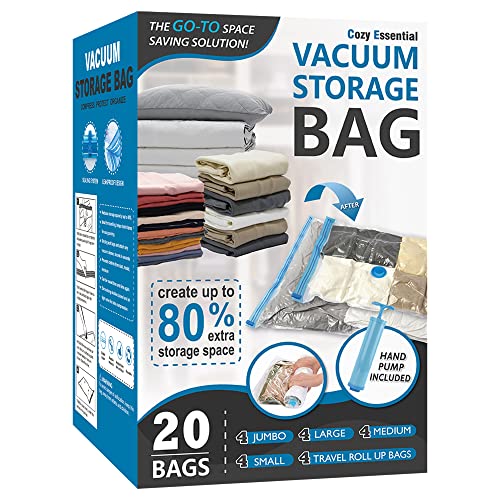
Cozy Essential Vacuum Storage Bags, 20 Combo
Problem it solves: Bulky off-season clothes, sweaters, or soft textiles consuming too much closet or under-bed space.
Best for: Compressible soft items that can be stored this way according to the garment and storage-bag instructions.
Why it works: Compression can reduce the volume of suitable soft goods so they take up less secondary storage space.
What to check before buying: Do not compress items that should not be stored under pressure; follow textile-care guidance and the bag manufacturer's instructions.
Check on Amazon
Perber 40" All Clear Garment Bags for Hanging Clothes, 12 Pack
Problem it solves: Off-season coats, jackets, shirts, or dresses mixing into the active hanging wardrobe.
Best for: Closets with enough rod space to keep selected off-season garments hanging.
Why it works: Clear covers separate stored garments while keeping the contents visible without opening every bag.
What to check before buying: Confirm garment length, closet depth, and whether the fabric should be stored hanging.
Check on Amazon
Budding Joy 90L Under Bed Storage Containers, 4 Pack
Problem it solves: Off-season folded clothes occupying the easiest dresser and closet space.
Best for: Beds with enough measured clearance for low-frequency clothing storage.
Why it works: Under-bed containers shift the outgoing season into hidden secondary storage without adding another visible furniture piece.
What to check before buying: Measure clear height, width, and depth beneath the bed before buying.
Check on Amazon
Lifewit 6 Pack Clothes Storage Bins with Lids
Problem it solves: Folded off-season clothing spreading across upper closet shelves.
Best for: Closet shelves where sweaters, tops, accessories, or bedding need clear category boundaries.
Why it works: Lidded bins with viewing windows help separate seasonal categories while keeping contents identifiable.
What to check before buying: Measure shelf width, depth, and height and avoid overfilling each bin.
Check on AmazonCommon Seasonal Clothing Storage Mistakes
Storing clothes you already know you will not wear
Seasonal storage should protect useful clothing, not postpone decluttering.
Packing clothes before they are clean and dry
Prepare garments according to their care instructions before long-term storage.
Compressing every garment
Compression is a tool for suitable soft items, not a universal storage method.
Using prime closet space for the off-season
The easiest drawers and shelves should serve what you wear now.
Mixing several seasons into one container
Retrieval gets harder when summer, winter, and transitional pieces share the same bin.
Buying containers before measuring
Under-bed height and closet-shelf dimensions should determine the organizer, not the other way around.
Final Seasonal Clothes Checklist
- Off-season clothes are edited before storage.
- Every garment is clean and fully dry.
- Folded, hanging, and compressible items are separated appropriately.
- Current-season clothes occupy the easiest closet and drawer space.
- Stored categories can be identified without unpacking everything.
- Under-bed and shelf containers fit the measured space.
- The whole system can reverse easily at the next seasonal change.
Frequently Asked Questions
What is the best way to store seasonal clothes?
Keep current-season clothes in the easiest closet and drawer space, then move clean, dry off-season clothing into labeled secondary storage such as under-bed containers, upper closet shelves, or appropriate garment bags.
Should seasonal clothes be stored in vacuum bags?
Vacuum bags can work for suitable compressible soft items, but they are not appropriate for every fabric or garment. Follow textile-care guidance and the storage-bag instructions.
Where should I store seasonal clothes in a small apartment?
Start with under-bed space, top closet shelves, secondary hanging space, and other low-frequency storage zones before adding more furniture.
Should clothes be washed before seasonal storage?
Store garments clean and fully dry according to their care instructions so stains, moisture, or odors are not sealed into long-term storage.
Is it better to hang or fold seasonal clothes?
Use the garment's care needs as the guide. Some pieces store better folded while structured or wrinkle-prone garments may be better kept hanging.
How do I stop seasonal clothes from taking over my closet?
Rotate the current season forward, move the outgoing season to secondary storage, and keep only transitional pieces in the prime closet zone.