
How to Organize a Medicine Cabinet Safely and Clearly
Organize a medicine cabinet by checking which products are suitable for bathroom storage, keeping daily items at eye level, adjusting shelves to real bottle heights, and using only a few narrow bins or trays that preserve visibility and door clearance.
What the Organized Cabinet Should Do
The finished cabinet should make daily tooth care, skincare, grooming, or first-aid items easy to find without stacking products in front of one another. The door should close fully, shelves should match product heights, and every stored item should suit the cabinet's humidity, temperature, access, and household-safety conditions.
Result checklist
- Daily items stay visible
- Shelves match product heights
- Door closes without collision
- Small items stay contained
- Shared zones stay distinct
- Unsuitable products move elsewhere
Quick Answer
Empty the cabinet, clean the shelves, and check every product's storage instructions. Move out medications or products that should avoid bathroom heat, humidity, or easy child access. Keep daily-use products at eye level, occasional items higher, and first-aid supplies together. Adjust shelves before buying organizers, then use only narrow bins, a small riser, or a compact turntable where the door can still close safely.
Table of Contents
First Decide What Belongs in the Medicine Cabinet
The name of the cabinet does not mean every medication or personal-care product should be stored there. Bathroom temperature, steam, humidity, sunlight, accessibility, and household needs matter.
| Item type | Possible cabinet role | Check first |
|---|---|---|
| Daily dental products | Eye-level daily zone | Ventilation, container cleanliness, door depth |
| Daily skincare | Morning or evening zone | Product instructions for heat, light, and humidity |
| Medications | Only when appropriate | Label storage instructions, child access, temperature, and moisture |
| First-aid supplies | One clearly identified kit or bin | Household access, expiration review, product instructions |
| Sharp grooming tools | Contained occasional zone | Safe access and stable placement |
| Backstock | Usually secondary storage | Whether duplicates displace daily items |
Follow the label, pharmacist, or manufacturer instructions for every medication and health product. Use a different secure, dry, and temperature-appropriate location when required. Organization advice does not replace medical or pharmaceutical guidance.
Audit the Complete Cabinet Inventory
Remove every item and group it by use, not by package shape. Include products stored on the vanity or in another drawer if they are part of the same daily routine.
Active Routine
Tooth care, current skincare, shaving products, contact-lens supplies if suitable, and items used most days.
Secondary Products
Special treatments, minor first-aid supplies, grooming tools, travel sizes, and less-frequent items.
Move or Remove
Expired products where applicable, empties, duplicates, unsuitable medications, oversized bottles, and items that belong elsewhere.
Reduce Before Organizing
Remove empty packaging, products no longer used, expired products where applicable, damaged tools, duplicate samples, and any item whose storage instructions conflict with bathroom conditions.
The Medicine-Cabinet Capacity Rule
The cabinet should hold the active routine and a limited number of suitable occasional items. Bulk refills, large bottles, and products requiring controlled storage should live elsewhere.
Measure the Medicine Cabinet Before Buying Organizers
Interior Width and Depth
Measure each shelf from side to side and from the back wall to the inside of the closed door. Include hinges, magnetic catches, mirror backing, and door-mounted hardware.
Shelf Height
Measure the tallest current product in each category, then add removal clearance. Adjust shelf pins before adding risers or bins.
Door Movement
Check whether bottles, bins, toothbrushes, or organizers project into the door path. Test full closure with the tallest product in place.
Safe Reach
Keep daily products where users can retrieve them without unstable reaching. Place lighter occasional items higher and avoid heavy or breakable items near the edge.
Create Functional Medicine-Cabinet Zones
Eye-Level Daily Zone
Tooth care, current skincare, and products used every morning or evening.
Upper Occasional Zone
Lightweight products used weekly or less often, provided the shelf remains safe and accessible.
Dental Zone
Toothpaste, floss, replacement heads, and small compatible accessories stored together.
Skincare Zone
Current morning and evening products, separated from backups and special treatments.
First-Aid Zone
One clearly marked kit or bin for appropriate supplies, reviewed regularly.
Shared or Personal Zones
Use left-right or upper-lower boundaries for multiple users and keep shared items separate.
Compare Medicine-Cabinet Organizer Types
| Organizer | Best for | Main advantage | Main limitation |
|---|---|---|---|
| Small handled bin | Dental, first aid, or one routine | Removes as one group | Deep bins may hide products |
| Compact turntable | Bottles on a wider shelf | Improves access | Needs rotation and door clearance |
| Shelf riser | Short products on a tall shelf | Uses vertical space | May be too deep or tall for a shallow cabinet |
| Shallow tray | Small loose items | Creates a clear boundary | Too many trays create clutter |
| Toothbrush organizer | Dental items on a suitable shelf or counter | Keeps brushes contained | May not fit inside a shallow cabinet |
| Labeled first-aid kit | Minor first-aid supplies | Easy to identify and relocate | Must suit household access and storage conditions |
Adapt the Medicine Cabinet to the Household
Shared Cabinet
Assign each person one daily shelf section or narrow bin and keep shared dental or first-aid products in a clearly defined common zone.
Shallow Cabinet
Prioritize slim bottles, narrow bins, and shelf-height adjustments. Move bulky backups and oversized tools elsewhere.
Home With Children
Use storage and access controls appropriate to the household. Do not rely on shelf height alone for items that require secure storage.
Cabinet Without Adjustable Shelves
Use a small riser only when depth and door clearance permit, or relocate tall and short categories to more suitable storage.
How to Organize a Medicine Cabinet Step by Step
Empty the cabinet completely
Remove every item so shelf depth, condition, and door clearance are visible.
Check product storage instructions
Move medications or products that should avoid heat, humidity, light, or easy access.
Remove expired, empty, and unused items
Follow local guidance for safe disposal where applicable.
Clean and dry the cabinet
Use methods suitable for the cabinet material and allow shelves to dry fully.
Measure shelf depth and product heights
Check the usable depth with the door closed, not only the open cabinet.
Adjust shelves first
Match shelf spacing to daily products before adding organizers.
Create broad routine zones
Separate dental, skincare, first aid, and personal sections.
Add one organizer only where needed
Use a narrow bin, tray, riser, or turntable to solve a specific access problem.
Test door closure and removal
Confirm every product can be removed without knocking another item forward.
Keep backstock elsewhere
Restock the cabinet rather than storing bulk duplicates inside it.
Review monthly
Remove empties, wipe shelves, check dates where relevant, and correct overflow.
Medicine-Cabinet Organization Mistakes
Storing every medication in the bathroom
Humidity, heat, access, or label instructions may make the location unsuitable.
Using deep bins in a shallow cabinet
Products project into the door path or become difficult to see.
Stacking products in front of one another
Daily items become hidden and bottles fall when the door opens.
Ignoring shelf adjustment
Vertical space is wasted while organizers add unnecessary bulk.
Keeping bulk refills inside
Prime daily storage becomes crowded with unopened extras.
Using shelf height as the only safety measure
Items that require secure storage may remain accessible.
Which Medicine-Cabinet Method Should You Use?
| Reader situation | Best starting method |
|---|---|
| Daily items are mixed | Create eye-level routine zones |
| Short products waste shelf height | Adjust the shelf or add a shallow riser |
| Small supplies disappear | Use one narrow removable bin |
| Bottles are hard to reach | Use a compact turntable if width and depth allow |
| First-aid supplies are scattered | Use one clearly identified kit |
| Two people share the cabinet | Create separate personal zones |
| The door will not close | Reduce product depth and remove bulky organizers |
| Medications need controlled storage | Relocate them according to label or professional guidance |
Final Recommendation
For most medicine cabinets, keep only suitable daily-use products at eye level, place lightweight occasional items higher, group first-aid supplies clearly, and move bulk refills or humidity-sensitive products elsewhere. Adjust shelves before adding organizers, and use the smallest bin, riser, tray, or turntable that solves the access problem without blocking the door.
Verified Product Examples
These Amazon US examples were verified on July 28, 2026. They are optional tools for specific measured cabinet problems—not a universal package.
Affiliate disclosure: As an Amazon Associate, Inplanty may earn from qualifying purchases.

mDesign Narrow Handled Storage Bin
Why it helps: Creates one removable dental, skincare, or first-aid category.
Trade-off: The bin is useful only when its listed depth fits the cabinet and the door closes fully.
Listed size: 10 × 4 × 3 inches.
Verified ASIN: B01CBXNNOS
Check on Amazon
iDesign 9-Inch Lazy Susan Turntable
Why it helps: Rotates bottles into view on a wider shelf.
Trade-off: Many medicine cabinets are too shallow or narrow for a nine-inch turntable.
Listed size: 9 × 9 × 1.5 inches.
Verified ASIN: B003M6AS5G
Check on Amazon
Simple Houseware Expandable Shelf Organizer
Why it helps: Uses vertical space when a shelf cannot be adjusted.
Trade-off: The audited product is relatively deep and may not fit a typical recessed medicine cabinet.
Listed size: 11.25 × 7.9 × 5.4 inches.
Verified ASIN: B07NPWHJ9B
Check on Amazon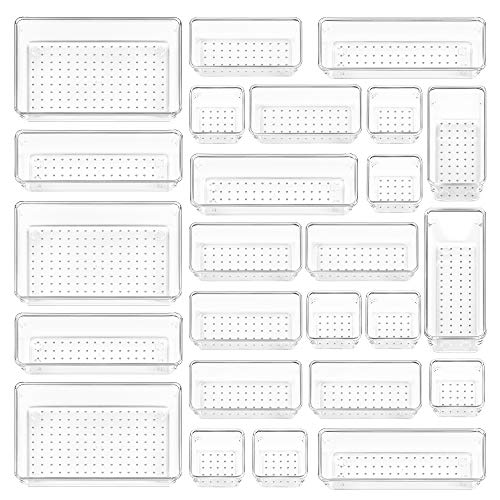
Vtopmart 25-Piece Clear Organizer Set
Why it helps: Provides shallow trays for small dental, grooming, or first-aid supplies.
Trade-off: A large set can create too many tiny categories and is likely better shared across several drawers or rooms.
Check: Shelf depth, tray height, and the number of categories actually needed.
Verified ASIN: B08KXKVT4K
Check on Amazon
OXO Good Grips Toothbrush Organizer
Why it helps: Keeps toothbrushes contained in one defined dental zone.
Trade-off: It is primarily a countertop organizer and may be too deep or tall for a shallow medicine cabinet.
Check: Product height, shelf depth, ventilation, cleaning access, and door closure.
Verified ASIN: B003M8GMUO
Check on Amazon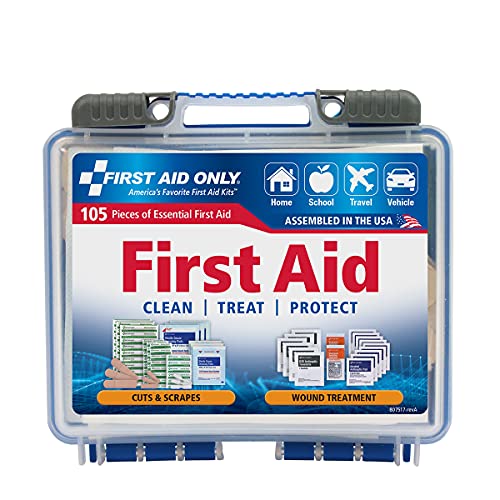
First Aid Only 105-Piece On-the-Go Kit
Why it helps: Keeps basic first-aid supplies together in one portable kit.
Trade-off: Cabinet suitability depends on humidity, household access, dimensions, and the storage requirements of the kit contents.
Check: Cabinet size, product instructions, expiration review, and household safety needs.
Verified ASIN: B09G6CLSSX
Check on AmazonFrequently Asked Questions About Medicine-Cabinet Organization
What is the best way to organize a medicine cabinet?
Keep only suitable daily-use items in the cabinet, group products by routine, adjust shelves to actual bottle heights, and move medications or products that should avoid bathroom heat and humidity to a more appropriate location.
Should medicine be stored in a bathroom medicine cabinet?
Not always. Bathrooms can be warm and humid. Follow each product's storage instructions and use a different secure location when the label calls for cool, dry, temperature-controlled, or child-restricted storage.
What should go on each medicine cabinet shelf?
Keep daily items at eye level, lighter occasional items higher, and taller products on shelves with enough headroom. Avoid placing heavy or fragile products where they can fall when the door opens.
How do you organize a shallow medicine cabinet?
Use narrow containers, broad routine zones, and adjusted shelf spacing. Avoid bulky organizers and large bottles that prevent the door from closing.
How do you keep small medicine cabinet items from getting lost?
Use one small removable bin or tray for each broad category, such as dental care, first aid, or daily skincare, rather than many tiny compartments.
How should first-aid supplies be organized?
Keep them together in one clearly identified kit or bin, check expiration dates regularly, and store the kit in a location appropriate for the household and product instructions.
How do two people share a medicine cabinet?
Assign separate left-right or upper-lower daily zones and keep shared categories such as dental supplies or first aid in clearly defined common sections.
How often should a medicine cabinet be reviewed?
Reset it monthly and perform a deeper review several times a year to remove empty packaging, expired products where applicable, and items that no longer belong there.