
Entryway Storage for Families That Children Can Actually Use
Create personal and shared zones for shoes, coats, backpacks, school papers, sports gear, and daily essentials without making one adult responsible for every reset.
The Finished Result
Every family member has a simple place for daily shoes, outerwear, and bags. Shared items have separate storage, papers move to clear next steps, wet gear dries outside closed cabinets, and the entire entryway can be reset without one person doing everything.
- Personal zones are easy to identify
- Children can reach daily storage
- Shoes and bags stay off the floor
- Paper and activity gear have workflows
- Seasonal overflow leaves the entryway
Quick Answer
A family entryway works best when each person has a simple personal zone for daily shoes, outerwear, and bags, while shared items such as umbrellas, pet supplies, and outgoing packages have separate storage. Keep categories broad, storage within reach, and seasonal overflow outside the entryway.
For the broader cluster, use the complete entryway organization guide. For whole-home systems, see how to organize a home with kids.
Start With the Family’s Daily Entryway Inventory
Count daily coats, shoes, backpacks, lunch bags, work bags, sports bags, school papers, keys, wallets, umbrellas, seasonal accessories, pet supplies, carriers, deliveries, and returns.
Personal daily items
Daily coat, backpack or work bag, one or two shoe pairs, and one small accessory category.
Shared daily items
Umbrellas, pet supplies, reusable bags, family keys, weather supplies, and one outgoing zone.
Seasonal items
Inactive coats, boots, sports gear, hats, gloves, and accessories that do not belong in prime storage.
Temporary items
Returns, library books, deliveries, permission slips, borrowed items, and outgoing packages with deadlines.
Capacity principle
The family entryway should support daily departures and arrivals—not store every household item connected to outdoor life.
Calculate How Much Family Entryway Storage You Need
Plan around the number and age of household members, daily shoes and coats, bag count, sports schedules, wet-weather gear, seasonal accessories, pets, and guest needs.
Simple per-person framework
One primary coat position, one bag position, one or two daily shoe positions, and one small accessory zone where necessary.
Shared categories should stay separate. Do not assign unlimited space to each person; visible limits are what keep the system usable.
Create Personal Zones for Each Family Member
A personal zone may include one or two hooks, one shoe section, one bag location, one small basket, one cubby, or one paper pocket.
Easy to identify
Use names, initials, colors, simple picture labels, or consistent positions.
Easy to reach
Match storage to safe reach, bag weight, drawer resistance, and container weight.
Easy to reset
Daily belongings should return in one or two actions without rearranging other categories.
Create Shared Entryway Zones
Use separate, limited zones for umbrellas, pet supplies, reusable bags, family keys, weather accessories, outgoing returns, and guest items. Avoid one large miscellaneous family basket.
Store Family Coats Without Overloading the Entryway
- Assign one main coat position per person.
- Use different safe hook heights where appropriate.
- Separate backpacks from heavy coats.
- Use a wall rail when several positions are needed.
- Use closed storage when the entry faces a living room.
- Dry wet coats before moving them into concealed storage.
- Store seasonal and occasional coats elsewhere.
Organize Family Shoes by the Front Door
Give each person a defined shoe capacity. Use labelled cubbies, shelf sections, closed cabinet compartments, bench storage, baskets, or an open rack with a separate boot tray.
Avoid one deep family shoe basket
It makes pairs difficult to retrieve and reset, especially for children.
Keep only current daily shoes in the entryway. Use the family shoe organization guide and compare a shoe cabinet and entryway bench.
Create Backpack, School-Bag, and Paper Storage
Store bags near where they are emptied and prepared. Account for loaded weight, child reach, lunch-bag separation, sports bags, device needs, paper flow, and next-day preparation.
The bag system works when
- Children know where bags go
- Bags are not left on the floor
- Lunch containers move to the kitchen
- Papers move to their next zone
- Bags are ready before departure
Simple paper flow
- Papers leave the backpack.
- Action papers move to one visible tray.
- Return papers go back into the correct bag.
- Unneeded papers leave quickly.
- Long-term storage happens elsewhere.
A paper organizer is not the routine
Trays only work when the family reviews them consistently.
Store Sports and Activity Gear
Use one bag per active activity, a clearly assigned basket or hook, and nearby garage or closet storage for off-season equipment. The entryway should hold only upcoming gear, uniforms, water bottles, and current accessories.
Create a Controlled Family Drop Zone
Use a narrow console, shallow shelf, drawer, small trays, wall pockets, or labelled compartments for adult keys, wallets, mail, sunglasses, transit cards, receipts, returns, and pet-walking supplies.
Do not use the drop zone as miscellaneous storage
It should support daily transitions and paper processing, not collect unresolved household items.
Design Storage Around Children’s Reach
Consider child height, age and ability, container weight, hook size, drawer resistance, lid difficulty, visual labels, coat and backpack weight, safety, and growth over time.
Low hooks, open cubbies, lightweight baskets, broad categories, picture labels, shallow shelves, and easy-slide bins usually support greater independence than heavy lids or deep mixed containers.
Child-access principle
A child should be able to return daily belongings with minimal adult help where safe.
Entryway Storage for Different Family Situations
If you have young children
Use low hooks, lightweight baskets, broad categories, easy-clean shoe storage, picture labels, and minimal active inventory. Avoid tall unstable units and heavy lids.
If you have school-age children
Add backpack hooks, paper trays, lunch-bag locations, shoe zones, activity bags, and personal reset responsibilities.
If you have teenagers
Plan for larger bags, device and charger zones, sports or work gear, personal keys, clear capacity limits, and greater weekly-reset responsibility.
If your family lives in a small apartment
Use vertical storage, narrow furniture, strict personal limits, seasonal rotation, portable systems, and closed storage for visual calm. Continue with the small-space storage guide.
If you rent
Use freestanding benches, portable coat racks, modular cubbies, and compatible removable systems. See renter-friendly family entryway storage.
If the entryway is very narrow
Use hooks instead of deep furniture, a slim shoe cabinet, small assigned sections, storage parallel to the wall, and overflow elsewhere. See family storage for a narrow entryway.
Open or Closed Storage for a Family Entryway
| Storage type | Best for | Main advantage | Main drawback |
|---|---|---|---|
| Open hooks | Daily coats and bags | Fast access | Visible clutter |
| Open cubbies | Children and broad categories | Easy reset | Needs capacity control |
| Closed shoe cabinet | Visible living areas | Visual calm | Less ventilation |
| Bench baskets | Flexible family zones | Easy assignment | Uses more depth |
| Closed wardrobe | Concealed outerwear | Hides mixed items | Large footprint |
| Wall pockets | School papers | Easy separation | Can overload |
Best overall approach
Use open, reachable storage for daily personal items, closed storage for dry overflow, and separate open airflow for wet shoes and coats.
Organize Wet Shoes, Coats, and Weather Gear
- Use boot trays or washable mats.
- Provide temporary drying hooks.
- Separate wet gloves and snow gear.
- Protect floors and walls.
- Keep towels near pet or winter-gear zones.
- Move items into closed storage only after drying.
Moisture rule
Wet items should dry before entering closed cabinets or baskets.
Plan for Seasonal Changes
- Remove inactive seasonal items.
- Bring current items into accessible storage.
- Review sizes and condition.
- Reduce duplicates.
- Reassign personal capacity.
- Store overflow elsewhere.
Do not let every season remain active simultaneously.
Make the Family Entryway Easy to Reset
A fast reset returns shoes, coats, backpacks, papers, lunch bags, sports gear, wet items, and outgoing categories to their next location.
- Use one or two steps per item.
- Keep categories broad.
- Make storage reachable.
- Show ownership clearly.
- Leave available capacity.
- Use consistent locations.
- Share responsibility.
Add the zone to the daily home reset routine and review overflow during the weekly home reset.
When Children Do Not Use the System
- Observe where the item is naturally left.
- Move storage closer where practical.
- Lower or simplify access.
- Reduce category volume.
- Broaden categories.
- Clarify ownership.
- Test the revised system.
Measurements and Safety Checks
| Measure or check | Why it matters |
|---|---|
| Door swing and walkway | Prevents blocked exits and trip hazards |
| Bench and cabinet depth | Protects seated-use and operating clearance |
| Hook projection | Shows the true loaded width of coats and bags |
| Backpack loaded depth | Prevents bags from narrowing circulation |
| Shoe and boot size | Confirms real compartment capacity |
| Child and adult reach | Supports safe independent use |
| Baseboards and outlets | Prevents poor furniture fit |
| Furniture stability | Identifies anchoring and climbing risks |
Follow manufacturer instructions and match hardware to the wall type. Do not estimate unsupported loads.
Copy This Setup
Capacity-limited family zone
- Closed shoe bench
- Individual coat-and-bag hooks
- Visible paper trays
- Separate boot tray
- Seasonal overflow elsewhere
Low-access setup
- Low hooks
- Open cubbies
- Picture labels
- Lightweight baskets
- Adult storage above
Arrival-to-departure setup
- Backpack hooks
- Lunch-bag return zone
- Action-paper trays
- Assigned shoes
- Activity bags by schedule
Vertical and closed setup
- Slim shoe storage
- Wall hooks
- Portable baskets
- Minimal visible inventory
- Overflow around the corner
Common Family Entryway Organization Mistakes
Review more family entryway organization mistakes.
Step-by-Step Family Entryway Organization Plan
List every category entering the home
Include coats, shoes, bags, papers, activities, and shared supplies.
Separate personal, shared, seasonal, and outgoing items
Do not mix ownership types.
Remove inactive and outgrown items
Protect daily capacity.
Calculate daily capacity per person
Use visible limits.
Measure the entryway
Check walls, floor, door swing, walkways, and loaded depth.
Assign one personal zone to each person
Keep it reachable and consistent.
Create separate shared zones
Umbrellas, pet supplies, keys, and outgoing items.
Add a wet-weather area
Separate damp items from closed storage.
Create a paper and outgoing flow
Give every temporary item a next step.
Test for one week
Observe where belongings still collect.
Simplify anything children cannot reset
Reduce height, weight, steps, or category detail.
Add daily and weekly maintenance
Share the workload across the household.
Which Family Entryway Setup Should You Choose?
| Family situation | Best starting setup |
|---|---|
| Narrow hallway | Individual hooks and slim closed shoe storage |
| Young children | Low hooks, open cubbies, labelled baskets |
| School-age children | Backpack hooks, shoe zones, paper trays |
| Teenagers with sports gear | Larger bag hooks and activity-specific storage |
| Rental family | Freestanding bench, modular cubbies, portable coat storage |
| Door opens into living room | Furniture-style closed storage with limited visible hooks |
| Wet or snowy climate | Boot trays, drying hooks, seasonal overflow |
| No coat closet | Four-zone system with overflow elsewhere |
| Small apartment | Vertical storage and strict personal capacity |
| Strong clutter problem | One personal zone per person plus a daily reset |
Final recommendation
Give each person one simple coat-and-bag zone and one limited shoe zone, keep shared items separate, and move seasonal or activity overflow outside the entryway.
Recommended Family Entryway Products
Products should follow the family inventory, capacity plan, measurements, and safety checks—not determine the organization structure.

VASAGLE Shoe Storage Bench With Cushion
Creates defined family shoe sections and a practical place for children and adults to sit while changing footwear. Best for wider entryways needing closed dry-shoe storage. Confirm bench depth, door operation, seating clearance, walkway width, footwear size, and stability requirements.
Verified ASIN: B0GC26Q46L
Umbra Flip Wall-Mounted 8-Hook Coat Rack
Creates a consolidated row of individual hanging positions for a limited daily coat or bag rotation. Do not overload hooks with heavy backpacks and winter coats together. Verify wall type, installation, load guidance, and loaded projection.
Verified ASIN: B01I58TDFG
Simple Houseware Stackable Wide Letter Tray Organizer
Separates action papers, documents returning to school, and papers awaiting filing or discussion. Best near where backpacks are emptied. It requires a consistent review routine and should not become long-term paper storage.
Verified ASIN: B07M71BF19
Ottomanson Waterproof Boot Tray
Defines a separate place for wet, snowy, or muddy family footwear while it dries outside closed storage. Keep the loaded tray clear of the door swing, shared exit, and main walking path.
Verified ASIN: B09R2632SG
Brother P-Touch PTD220 Label Maker
Identifies family shoe sections, paper categories, activity bins, shared supplies, and outgoing zones. Use broad, recognizable labels rather than preserving an overly complicated system.
Verified ASIN: B0B1L3BL1G
VASAGLE Compact Shoe Storage Bench With Cushion
More compact seated shoe-storage option for a smaller family entryway. Confirm its dimensions still leave enough circulation and seated-use space.
Verified ASIN: B0F29FZQ4H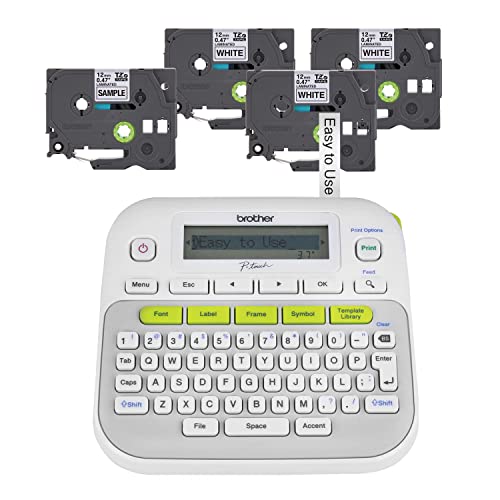
Brother P-Touch PTD210 Label Maker Bundle With Four Tapes
Expanded labeling package for a larger family system with personal cubbies, school-paper zones, sports gear, seasonal bins, and outgoing categories.
Verified ASIN: B09QXZ7ZRDAffiliate disclosure: Inplanty may earn a commission from qualifying purchases made through links on this page, at no additional cost to you.
Frequently Asked Questions
How do you organize an entryway for a family?
Give each person one simple personal zone for daily shoes, outerwear, and bags, and keep shared items in separate limited zones.
What should each child have in an entryway zone?
One coat position, one bag location, one limited shoe section, and one small accessory area where necessary.
How do you store family backpacks by the front door?
Use individual hooks, cubbies, bench compartments, or a bag rack near where backpacks are emptied and prepared.
How many shoes should each family member keep in the entryway?
Usually one or two current daily pairs, with seasonal and occasional footwear stored elsewhere.
How do you keep a family entryway clutter-free?
Use visible capacity limits, one or two return steps per item, a daily reset, and a weekly review of papers, outgoing items, and seasonal overflow.