
How to Organize Snacks So They Stay Visible and Contained
Organize snacks by gathering the complete inventory, removing expired and unwanted items, and creating one defined snack zone. Keep active snacks visible and easy to reach, store unopened multipacks separately as backstock, and divide categories only when the household’s lunch, school, dietary, or child-access routines require it.
The Finished Result
Active snacks stay easy to see, multipack backstock is controlled, pantry and refrigerator snacks form one coordinated system, lunch packing requires fewer decisions, and the category cannot expand beyond its assigned physical boundary.
- One visible active snack zone
- One limited backstock zone
- Lunch and refrigerator zones only when needed
- Child access follows household rules
- Restocking replaces constant rearranging
Quick Answer
Gather snacks from every pantry, cabinet, drawer, refrigerator, lunch area, and backstock location. Remove stale, expired, damaged, unwanted, and excessive products. Keep the snacks intended for current use in one visible active zone, place unopened multipacks in a separate limited backstock area, and add secondary lunch or refrigerator zones only when they support a real routine.
See how to create pantry zones for the full pantry category architecture and the Kitchen Organization Guide for the broader kitchen pathway.
Audit the Complete Snack Inventory
Gather snacks stored in pantry shelves, kitchen cabinets, drawers, counter baskets, the refrigerator, freezer, lunch-preparation areas, school or work bags, delivery boxes, and backstock storage.
Packets and bars
Bars, fruit snacks, pouches, individual crackers, and lunch add-ons.
Bags and boxes
Chips, pretzels, popcorn, crackers, cereal snacks, and family-size packages.
Refrigerated snacks
Yogurt, cheese, prepared fruit, chilled pouches, and other products stored according to package guidance.
Homemade snacks
Prepared food with clear identification and appropriate storage.
Specialty snacks
Dietary-specific, allergy-aware, travel, school, or work snacks.
Multipack backstock
Unopened boxes, bulk packages, and replacements.
Remove snacks that should not return
- Expired products
- Stale open bags
- Damaged packaging
- Products no one likes
- Unwanted flavors from multipacks
- Duplicate open packages
- Excess promotional purchases
- Items stored contrary to package guidance
- Unidentified homemade food
Do not design around unwanted inventory
The new snack system should reflect what the household will realistically eat.
Identify why the category grew
Common causes include bulk purchasing, school-lunch shopping, hidden multipacks, snacks stored in several places, several household members buying separately, too much variety, and new products purchased before older ones are used.
Separate Active Snacks From Backstock
Active snacks
Open, intended for current use, needed for lunch packing, likely to be eaten before the next grocery trip, or part of a normal household routine.
Snack backstock
Unopened multipacks, replacement boxes, bulk bags, extra lunch snacks, seasonal products, and unopened duplicates.
Prime-space rule
Active snacks receive the easiest access. Backstock replenishes the active zone rather than competing with it.
Set a strict backstock boundary
Use one shelf, one handled bin, one upper or rear zone, one secondary location, or one unopened replacement per active product.
When the backstock boundary is full
Use existing snacks before buying more. Do not solve excess multipacks by adding another storage zone.
Choose the Primary Snack-Zone Location
The primary zone should be easy to scan, near lunch or meal preparation, appropriate for intended users, easy to restock, separate from unsuitable household products, and small enough to preserve space for meal ingredients.
| Location | Best for | Main caution |
|---|---|---|
| Pantry shelf | Visible active snacks | Do not let snacks dominate prime shelving |
| Pantry drawer | Bars, pouches, and packets | Check height and top-down visibility |
| Kitchen cabinet | No-pantry kitchens | Preserve meal-storage capacity |
| Kitchen drawer | Small active inventory | The drawer may be needed for another function |
| Refrigerator zone | Chilled snacks | Preserve airflow and visibility |
| Rolling cart | Temporary or no-pantry routine | Needs one purpose and fixed parking |
Should all snacks stay together?
Keeping shelf-stable snacks together usually improves grocery checks, lunch packing, and capacity control. Separate areas may be justified for refrigerated snacks, allergy-aware food, school lunch, child-approved snacks, adult-only items, or bulk backstock.
Every location needs a purpose
Do not scatter snacks wherever empty space appears.
Should snacks stay on the counter?
A small defined basket may work when the food suits room-temperature storage and the category does not consume preparation space. Several baskets, multipack overflow, or mixed food storage usually creates clutter.
Choose the Snack Organization Model
By type
Bars, crackers, chips, nuts, dried fruit, sweet snacks, savory snacks, and pouches.
Best for: large inventories where people choose by product type.
Risk: too many categories.
By routine
School snacks, work snacks, after-school, lunch packing, travel, and family movie snacks.
Best for: repeated household routines.
Risk: duplicate products in several zones.
By household member
Children, adults, individual household members, or dietary-specific sections.
Best for: real access or dietary separation.
Risk: personal zones consume communal capacity.
By frequency
Daily, weekly, occasional, and backstock.
Best for: small pantries and minimal inventories.
Risk: mixed products may need clear labels.
Recommended default
Use one active snack zone, a separate lunch section only when needed, dietary separation only where necessary, one limited backstock zone, and one corresponding refrigerator area for chilled snacks.
Choose the Right Snack Organizer
Open-front bins
Best for frequently used bars, pouches, small bags, and lunch snacks. They support visibility and fast restocking but can spill forward or consume shelf width.
Handled bins
Best for lightweight backstock or a removable deep-shelf category. Tall sides can hide small products and loaded bins can become difficult to lift.
Packet organizers
Best for a substantial inventory of similarly sized bars and pouches. Fixed sections may create unnecessary micro-categories.
Drawer dividers
Best for shallow snack drawers with bars, flat packets, and lunch supplies. No verified matched drawer-divider ASIN was available for this article.
Stackable bins or drawers
Best when vertical storage matters. Lower layers can become less visible, and large snack bags may not fit.
Refrigerator bins
Best for a coordinated chilled-snack area. Avoid overfilling, blocking airflow, or hiding older products.
Rolling cart
Best only when no suitable shelf, cabinet, or drawer exists. The cart needs one function, a safe parking place, and a fixed capacity.
No-organizer method
A visible shelf or drawer may need no purchased organizer when the inventory is small and active snacks remain separate from backstock.
Organizer rule
Containers should solve visibility or containment—not merely make the snack area look styled.
Organize Different Snack Formats
Snack bags
- Store upright where possible.
- Keep open bags visible.
- Use package closures.
- Separate family-size and individual bags.
- Avoid crushing bags behind boxes.
Bars and flat packets
- File vertically.
- Keep wrappers visible.
- Group lunch and active-use bars.
- Keep unopened boxes in backstock.
- Avoid opening several boxes at once.
Multipack boxes
- Place a practical active quantity in the visible zone.
- Keep the remaining multipack in backstock.
- Restock only when the active quantity is low.
- Remove empty outer packaging.
Do not display the full bulk package automatically
The active snack zone should hold what the household will use soon—not the entire warehouse quantity.
Large family-size packages
Keep one open package visible, store it upright where practical, avoid decanting unless closure or access improves, and keep replacement bags in backstock.
Homemade snacks
Use an appropriate labeled container and storage location. Include the item name, preparation date where useful, relevant ingredients, and household dietary information. Follow authoritative food-storage guidance rather than relying on universal duration claims.
Refrigerated snacks
Create one clear zone, keep older products forward, use suitable containers, preserve airflow, and review the area during lunch packing and weekly resets.
Create a Child-Accessible Snack Zone Carefully
Consider age, household rules, package-opening ability, allergies, choking concerns, portion expectations, storage requirements, and adult-supervision needs.
Independent access is not universal
Do not assume every snack or every child should have unrestricted access.
Approved active snacks
Possible categories include household-approved bars, crackers, pouches, fruit cups, refrigerated snacks, and lunch items.
Keep separate or inaccessible where appropriate
- Fragile glass
- Heavy packages
- Adult-only products
- Food requiring preparation
- Allergy-sensitive items
- Food unsuitable for independent access
Use simple labels and one active boundary
Labels may include School, After School, Lunch, Refrigerator Snacks, or Ask First. Adults can manage backstock while children choose only from the active area.
See how to organize a home with kids for the broader family system.
Organize Snacks for School, Work, and Travel
Create a lunch-packing section
Group bars, crackers, pouches, napkins, reusable bags or containers, and shelf-stable lunch additions that support one repeatable packing routine.
Separate grab-and-go from home snacks
Grab-and-go snacks may require portable portions or durable containers. Home snacks may use family-size packages, reusable portions, or refrigerated food. Organizing by use can reduce unnecessary individual packaging.
Create a weekly packing routine
- Review the week’s schedule.
- Check active snack inventory.
- Refill approved lunch items.
- Prepare reusable portions where appropriate.
- Move older snacks forward.
- Avoid opening duplicate multipacks.
- Add true gaps to the shopping list.
Adapt the Snack System
Small pantry
Use one combined active zone, minimal backstock, broad categories, vertical filing, and limited bins.
Deep shelves
Keep active snacks in front, multipack backstock at the rear, and use removable rear groups rather than loose packets.
Pantry cabinet
Use one shelf or drawer, front-facing packages, limited door storage, and no oversized bins.
No pantry
Use one cabinet, drawer, fixed cart zone, freestanding pantry, or refrigerator area.
Families
Prioritize lunch and after-school routines, broad categories, limited active inventory, adult-controlled backstock, and shared restocking.
One person or a couple
Use less variety, minimal backstock, combined sweet and savory storage, and flexible shelf capacity.
Shared homes
Use shared staples, personal zones only where needed, clear boundaries, and shopping communication.
Dietary separation
Use clearly defined sections, preserve original packaging where information matters, and keep labels readable.
Prevent Snack Overbuying
Create one official inventory
Use the visible active zone, one backstock bin, a phone list, grocery app, photo before shopping, or household note.
Check before buying
- Is there an open package?
- Is there an unopened replacement?
- Does the household still eat it?
- Is it needed for a specific routine?
- Does it fit the active or backstock boundary?
- Is it replacing something or adding another variety?
Variety has a storage cost
When space is tight, fewer simultaneous choices may work better than more containers.
Restock and Maintain the Snack Zone
Weekly reset
- Remove empty packaging.
- Close open bags.
- Bring older snacks forward.
- Refill active bins from backstock.
- Return misplaced products.
- Review lunch needs.
- Check refrigerated snacks.
- Add true gaps to the shopping list.
- Wipe crumbs and spills.
Monthly capacity review
- Is one category always overflowing?
- Are snacks consuming too much pantry space?
- Are multipacks being used?
- Are individual packages creating clutter?
- Does backstock fit its boundary?
- Are organizers hiding food?
Overflow rule
Change the inventory or buying pattern before adding more storage.
How to Organize Snacks Step by Step
Gather snacks from every location
See the complete inventory.
Remove expired, stale, unwanted, and damaged products
Reduce before organizing.
Group snacks by type and routine
Understand how the household uses them.
Separate active snacks from backstock
Protect visibility.
Choose one primary snack zone
Stop scattering the category.
Add refrigerator or lunch zones only when needed
Every extra location needs a clear purpose.
Choose a type, routine, person, frequency, or hybrid model
Use the simplest understandable structure.
Set a physical capacity boundary
One shelf, drawer, bin, row, or cart level.
Keep active snacks visible
Use the easiest access for current inventory.
Store multipacks in backstock
Restock instead of displaying everything.
Add organizers only where access improves
Do not create decorative excess.
Establish child-access rules where relevant
Match the system to the household.
Create lunch or grab-and-go storage if needed
Support one repeatable routine.
Build a weekly restocking routine
Refill active storage from backstock.
Review shopping and capacity monthly
Reduce overflow at the source.
Snack Organization Mistakes
Emptying every multipack into active storage
The zone immediately becomes overfilled.
Creating too many categories
Restocking becomes slow.
Hiding snacks in tall bins
Products are forgotten.
Giving snacks too much prime space
Meal ingredients become difficult to store.
Mixing active snacks and backstock
Duplicate packages are opened.
Creating unrestricted child access
The system may not match household needs.
Organizing only by person
Shared snacks become duplicated.
Keeping snacks in several locations
Inventory becomes difficult to check.
Using a cart as overflow
The cart becomes miscellaneous food storage.
Ignoring refrigerator snacks
The household maintains disconnected systems.
Buying before reviewing multipacks
Backstock grows unnecessarily.
Organizing for appearance
Matching bins hide quantities and labels.
Use Pantry Organization Mistakes once published for broader troubleshooting.
Which Snack Organization Method Should You Choose?
| Reader situation | Best starting method |
|---|---|
| Small active inventory | One visible shelf without containers |
| Many bars and packets | Open-front bin or vertical organizer |
| Deep pantry | Front active zone and rear backstock bin |
| School-lunch routine | Dedicated lunch-packing section |
| Children choose snacks | Controlled child-access zone |
| Several dietary needs | Clearly separated labeled sections |
| Multipack shopping | Active bin plus separate backstock |
| Small pantry | One combined snack zone |
| No pantry | Cabinet, drawer, or fixed cart zone |
| Refrigerated snacks | One visible refrigerator bin or shelf section |
| Shared home | Shared staples plus limited personal sections |
| Frequent travel | Grab-and-go zone |
| Snack area always overflows | Reduce variety and backstock |
Final recommendation
Keep one visible active snack zone, store unopened multipacks separately, organize around the household’s main routines, and limit the category to the space it can realistically occupy.
Verified Product Examples
Choose the active-versus-backstock system first. Then measure shelf width, depth, package height, stacking clearance, loaded weight, child access, and refrigerator airflow before buying.

iDesign Stackable Open-Front Storage Bins, Set of 3, Clear
Creates visible active storage for bars, pouches, crackers, or small bags. Use no more than a few broad groups such as lunch, grab-and-go, and home snacks.
Verified ASIN: B0DQLTDWQ1
iDesign Pantry Bin with Handles, Clear
Holds unopened multipacks, refill snacks, or one removable lightweight backstock category. Tall sides may hide small products and a full bin can become difficult to lift.
Verified ASIN: B0D6NLBLH1
mDesign Plastic 4-Section Food Packet Organizer
Files bars, fruit snacks, pouches, or lunch add-ons vertically. Use only when the inventory is substantial enough for the fixed sections to reflect real routines.
Verified ASIN: B07RD2LKRW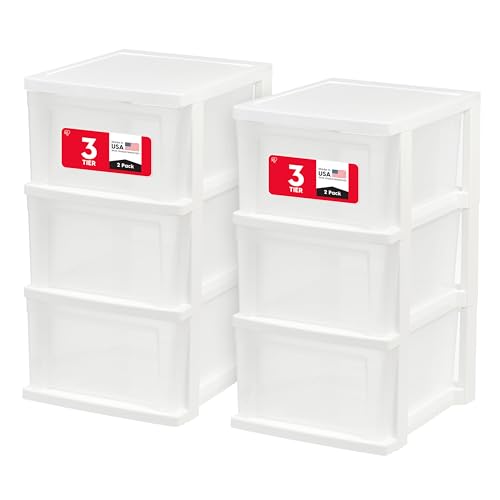
IRIS USA 3-Drawer Slim Narrow Storage Organizer, 2-Pack
Creates layers for small snacks, lunch supplies, or specialty categories. Drawer fronts can hide inventory, and large bags or boxes will not fit.
Verified ASIN: B0D4G6JGDN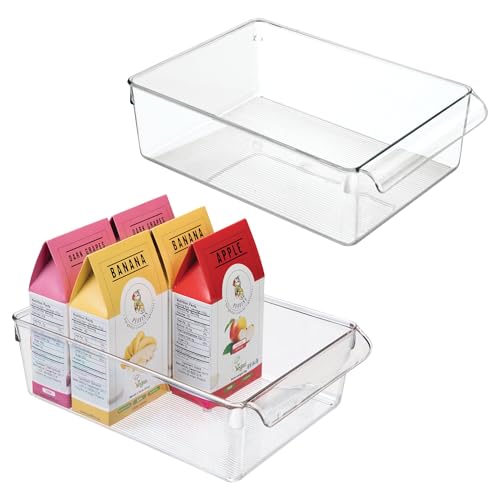
iDesign Fridge Storage Bin with Handle, Set of 2, Clear
Creates one coordinated chilled-snack zone. Check refrigerator shelf dimensions, airflow, container height, and normal chilled-snack volume.
Verified ASIN: B0DV6WFFYC
Talented Kitchen Pantry Labels for Containers — 144 Matte Vinyl Stickers
Useful in a family pantry or shared home when several people restock Snacks, Lunch, Backstock, or Refrigerator Snacks. Labels should not create more categories.
Verified ASIN: B08KRRTXCR
iDesign Stackable Clear Plastic Bin
Low-cost contained storage for one small active snack category. The bin should represent one broad function rather than general overflow.
Verified ASIN: B00CS8DT00
YouCopia ShelfBin Stacking Pantry Bins, 2-Pack
Creates two compact snack zones while using shelf height. Stacking may reduce visibility into the lower bin and encourage too much active inventory.
Verified ASIN: B0C79K8S52
Amazon Basics 3-Tier Rolling Utility or Kitchen Cart
Creates a portable snack or lunch station only when no suitable cabinet, drawer, or pantry shelf exists. Check footprint, wheels, parking, child access, and nearby doors or appliances.
Verified ASIN: B07V126F2DRecommended combination
Use one or two open-front bins for active snacks, one handled bin for multipack backstock, a packet organizer only when bars and pouches are a major category, one refrigerator bin for chilled snacks, and labels only when several people need restocking guidance.
Affiliate disclosure: Inplanty may earn a commission from qualifying purchases made through links on this page, at no additional cost to you.
Frequently Asked Questions
What is the best way to organize snacks?
Create one visible active zone, keep unopened multipacks in separate backstock, and organize around the household’s main routines.
How do you organize snacks in a pantry?
Use one shelf, drawer, or defined section for active snacks and one limited secondary zone for unopened replacements.
Should snacks be stored in bins?
Only when bins improve visibility or containment. A visible shelf may need no organizer.
How do you organize snack bags and packets?
Store bags upright, file bars and packets vertically, keep open products visible, and place unopened boxes in backstock.
How should snack multipacks be stored?
Keep a practical active quantity in the snack zone and store the unopened remainder in backstock.
How do you create a snack zone for children?
Use one controlled area at an appropriate height for approved foods, with adult-managed backstock and access rules.
Should all snacks be stored together?
Most shelf-stable snacks should share one primary system, while refrigerated, dietary-specific, lunch, or adult-only items may need separate purposeful locations.
How do you organize snacks in a small pantry?
Use one combined active zone, minimal backstock, broad categories, vertical filing, and very few bins.
How do you organize snacks on deep shelves?
Keep active snacks at the front and unopened multipack backstock in one removable rear bin.
How do you organize school and lunch snacks?
Create one repeatable lunch-packing section and refill it from backstock during a weekly routine.
Where should refrigerated snacks be stored?
Use one visible refrigerator shelf section or bin that preserves airflow and keeps older products easy to see.
How much snack backstock should you keep?
Only the amount that fits one defined secondary boundary and reflects normal consumption before the next shopping trip.
How do you stop buying duplicate snacks?
Keep active snacks visible, use one backstock zone, and check both before shopping.
How do you keep a snack zone organized?
Reset it weekly, remove empty packages, move older snacks forward, refill active storage from backstock, and review capacity monthly.