
How to Organize Baking Supplies Without Losing Ingredients
Organize baking supplies by gathering every ingredient and tool, removing expired or duplicate products, and creating one primary baking zone. Keep frequently used flour, sugar, leavening, and extracts accessible, store heavy ingredients at a safe height, and move seasonal decorations and specialty supplies into a secondary labeled section.
The Finished Result
Everyday baking staples stay easy to lift and measure, small bottles and decorations remain visible, seasonal supplies no longer consume prime space, duplicate packages are controlled, and containers support the workflow instead of turning the pantry into a decorative display.
- Core ingredients stay together
- Heavy items remain accessible
- Seasonal supplies move to secondary storage
- Small bottles and tools stay visible
- Decanting is selective, not universal
Quick Answer
Gather all baking ingredients, tools, decorations, mixes, and refills. Remove expired, damaged, unwanted, or unidentified products. Keep everyday staples together in one accessible zone, place heavy flour and sugar at a comfortable lifting height, separate seasonal supplies, and use bins, drawers, turntables, risers, or containers only when they solve a real access or visibility problem.
Use the Pantry Organization Guide for the broader pantry system and How to Create Pantry Zones to place the baking category inside the full pantry.
Audit the Baking Inventory
Gather baking items from the pantry, cabinets, drawers, refrigerator, freezer, counter canisters, baking cart, dining-room storage, holiday storage, and backstock.
Core ingredients
Flour, sugar, baking powder, baking soda, salt, cocoa, cornstarch, and sweeteners.
Mix-ins
Chocolate, nuts, dried fruit, coconut, candy pieces, and baking chips.
Flavorings
Extracts, food coloring, gels, and small flavor bottles.
Decorating supplies
Sprinkles, piping tips, bags, candles, toppers, and seasonal pieces.
Mixes and liners
Cake, brownie, muffin, and bread mixes plus parchment, liners, and mats.
Tools
Measuring cups, spoons, spatulas, whisks, scrapers, and small accessories.
Remove supplies that should not return
- Expired or stale ingredients
- Damaged packages
- Unidentified powders
- Moisture-affected ingredients
- Unused decorations
- Duplicate open packages
- Empty containers
- Broken tools
- Old seasonal products
Do not combine uncertain products
Keep products separate when age, identity, ingredients, allergens, or package information are unclear.
Correct duplicate open packages
Keep one active package where practical, move unopened replacements to backstock, combine only when identification remains clear, and track products that are frequently duplicated.
Separate Everyday, Occasional, and Seasonal Supplies
Everyday staples
Frequently used flour, sugar, leavening, cocoa, vanilla, chocolate chips, liners, and measuring tools.
Occasional supplies
Rare extracts, specialty molds, decorating tools, large specialty ingredients, and candy-making supplies.
Seasonal supplies
Holiday sprinkles, cookie cutters, decorations, molds, and celebration-specific items.
Prime-space rule
Seasonal and specialty supplies should not occupy the easiest pantry shelves all year.
Create one labeled seasonal zone on a high shelf, in a removable bin, in dining-room storage, or in a deep rear section. Review it before and after each major baking season.
Choose the Primary Baking Zone
The primary zone should be near preparation where practical, easy to scan, appropriate for heavy products, protected from unsuitable conditions, and large enough for active ingredients without absorbing the entire pantry.
| Location | Best for | Main caution |
|---|---|---|
| Pantry shelf | Core dry ingredients | Heavy items must remain accessible |
| Pantry cabinet | One compact baking zone | Check depth and door clearance |
| Kitchen cabinet | No-pantry kitchens | Preserve meal-storage capacity |
| Deep drawer | Heavy containers and top-down access | Check load and height |
| Rolling cart | Frequent baking with fixed parking | Can become general overflow |
| Combination system | Ingredients in pantry, tools in drawer | Keep the routine coherent |
Should ingredients and tools stay together?
Keep small tools near ingredients when that reduces setup steps. Store pans, bulky equipment, or large tools elsewhere when they consume too much food-storage capacity.
Use How to Organize Kitchen Drawers for measuring tools and How to Organize Pots and Pans for sheet pans, tins, and racks.
Should baking supplies stay on the counter?
One or two frequently used ingredients may stay out when counter space remains functional. Several decorative canisters, refill bags, or rarely used appliances usually create clutter.
Create Practical Baking Subzones
Core ingredients
Flour, sugar, brown sugar, leavening, cocoa, salt, and cornstarch.
Flavorings and extracts
Keep small bottles upright, labeled, and visible in one compact area.
Mix-ins
Seal open chocolate, nuts, dried fruit, coconut, and chips. Separate active and refill packages.
Decorating supplies
Use small visible groups for sprinkles, food coloring, piping tools, gels, and toppers without excessive micro-categories.
Baking mixes
Face labels forward, keep older boxes in front, and limit stock to the assigned boundary.
Paper and liners
Use a drawer, narrow bin, vertical section, or compatible door rack.
Store Heavy Ingredients at an Accessible Height
Keep flour, sugar, and other heavy containers on a waist-level shelf, low cabinet shelf, deep drawer, or stable cart level. Avoid high overhead storage, weak organizers, unstable stacks, and deep rear shelves that require awkward lifting.
Heavy-item principle
The container must be easy to grip, lift, scoop from, and return.
Use containers only when function improves
Potential benefits
- Better closure
- Easier scooping
- Improved stacking
- Quantity visibility
- Protection from damaged packaging
Potential drawbacks
- Transfer work
- Information loss
- Refill bags remain elsewhere
- Containers become heavy
- One full bag may not fit
Selective-decanting verdict
Decant flour, sugar, or other ingredients only when closure, access, pouring, measuring, or shelf fit improves enough to justify maintenance.
Preserve product identity, ingredients, allergen information, usage details, date or batch information where useful, and package guidance. Never store unidentified powders.
Organize Small Baking Supplies
Sprinkles and decorations
Separate everyday and seasonal use, keep jars upright, and use one shallow drawer or bin.
Piping tips and tools
Use one divided box, shallow organizer, labeled container, or project caddy.
Measuring cups and spoons
Keep the full set together in a drawer, compatible hook, caddy, or utensil bin.
Cookie cutters
Keep everyday cutters active and seasonal cutters in one bounded secondary container.
Liners and mats
Use vertical, drawer, narrow-cabinet, or baking-pan storage according to product shape.
Choose the Right Baking Organizer
Handled bins
Best for mixes, lightweight mix-ins, decorations, or seasonal supplies. Avoid loading them with heavy flour, sugar, or glass bottles.
Stackable drawers
Best for sprinkles, piping accessories, food coloring, and small packets. Tall bottles may not fit and fronts may hide inventory.
Turntables
Best for extracts, flavorings, gels, and small bottles. Avoid bags, boxes, and large containers.
Shelf risers
Best for leavening, cocoa, small jars, and short boxes when labels are hidden.
Baking caddy
Useful for one routine or project, not the entire baking inventory. No sufficiently matched verified baking-caddy product was available for this page.
Rolling cart
Use only when it solves a clear workflow or storage problem and has a permanent parking location.
No-organizer method
A visible one-row shelf may be easier to maintain than a highly compartmentalized system.
Adapt the System to the Pantry Type
Small pantry
Keep everyday ingredients only, minimize specialty stock, combine subzones, and move seasonal supplies elsewhere.
Deep pantry
Keep active ingredients in front and seasonal or refill supplies in removable rear groups.
Pantry with no shelves
Add stable infrastructure first, plan shelf height around heavy ingredients, and then create one baking zone.
No pantry
Use a kitchen cabinet, deep drawer, measured cart, freestanding pantry, or one controlled shelf.
Adapt the System to Baking Frequency
Frequent bakers
Give core ingredients prime storage, keep measuring tools nearby, track inventory, and limit seasonal clutter.
Occasional bakers
Use a smaller active inventory, multipurpose ingredients, one compact bin, and little permanent counter space.
Seasonal bakers
Maintain a small everyday core plus one labeled holiday zone with pre- and post-season reviews.
Families who bake together
Use stable placement, approved accessible tools, clear labels, safe separation, and easy cleanup rules.
Shared homes
Keep shared staples visible, separate specialty ingredients where needed, and communicate before buying duplicates.
Prevent Duplicate Baking Purchases
Track only products that are frequently duplicated, such as flour, sugar, leavening, vanilla, chocolate chips, sprinkles, mixes, and liners. Use a visible shelf, phone note, grocery app, or seasonal checklist.
- Check for an active package.
- Check for an unopened replacement.
- Confirm the recipe requires the specialty ingredient.
- Ask whether the remainder will be used.
- Confirm the item fits the baking zone.
- Use substitutes already on hand where appropriate.
Maintain the Baking Zone
Monthly reset
- Return ingredients and tools.
- Close packages.
- Wipe spills.
- Review flour and sugar quantities.
- Check duplicate open products.
- Face labels forward.
- Move older products forward.
- Update the shopping list.
Seasonal review
Before the season, inspect decorations, cutters, specialty ingredients, and tools. After the season, remove empty or unwanted products, clean tools, return supplies to secondary storage, and reduce the active zone.
Storage follows current habits
Resize the zone when baking frequency, household size, dietary needs, equipment, or seasonal inventory changes.
How to Organize Baking Supplies Step by Step
Gather ingredients, tools, decorations, and refills
See the full category.
Remove expired, damaged, unwanted, and unidentified items
Reduce before organizing.
Identify duplicate open packages
Keep one active package where practical.
Separate everyday, occasional, and seasonal supplies
Protect prime space.
Choose one primary baking zone
Stop scattering the category.
Place heavy ingredients at an accessible height
Make lifting and return comfortable.
Create broad subzones
Staples, flavorings, mix-ins, decorating, and mixes.
Decide which tools belong nearby
Keep pans and bulky equipment elsewhere when necessary.
Store seasonal supplies separately
Use one bounded secondary zone.
Measure shelves, containers, and packages
Check height, depth, loaded weight, and full-package volume.
Add organizers only where access improves
Choose bins, drawers, turntables, or risers selectively.
Decant selectively
Preserve important product information.
Create one inventory-check method
Prevent duplicate purchases.
Add monthly and seasonal resets
Maintain visibility and capacity.
Adjust to actual baking frequency
Do not organize for aspirational habits.
Baking-Supply Organization Mistakes
Decanting every ingredient
Creates unnecessary maintenance and information loss.
Storing flour and sugar too high
Lifting becomes difficult.
Mixing seasonal and daily supplies
Prime storage becomes crowded.
Keeping several open packages
Ingredients become duplicated or forgotten.
Creating too many categories
Restocking becomes slow.
Hiding extracts and sprinkles
Small items disappear.
Buying containers before measuring
Full ingredient packages do not fit.
Storing every tool in the pantry
Food-storage capacity is reduced.
Keeping specialty pans in prime space
Everyday ingredients lose access.
Using a cart without parking
The cart becomes mobile clutter.
Organizing for appearance
Matching containers replace inventory control.
Ignoring actual baking frequency
The system supports an aspirational routine.
Which Baking-Supply Organization Method Should You Choose?
| Reader situation | Best starting method |
|---|---|
| Frequent baker | Dedicated pantry shelf plus nearby tool drawer |
| Occasional baker | One compact baking bin |
| Heavy flour and sugar | Low or waist-level stable shelf |
| Many extracts and bottles | Small turntable |
| Many sprinkles and decorations | Shallow drawer or modular organizer |
| Deep pantry | Front active ingredients and rear seasonal bin |
| Small pantry | Core ingredients plus off-season storage |
| No pantry | Cabinet, measured cart, or freestanding pantry zone |
| Seasonal baker | Everyday core plus labeled holiday bin |
| Several open packages | One-active-package rule |
| Matching containers waste space | Keep useful original packaging |
| Category always overflows | Reduce specialty and seasonal inventory |
Final recommendation
Keep everyday staples together in one accessible zone, store heavy ingredients low, separate seasonal decorating supplies, and use containers only when they improve closure, visibility, or shelf fit.
Verified Product Examples
Choose the baking workflow first. Then verify shelf height, loaded weight, ingredient-package volume, bottle stability, and whether important package information can remain available.
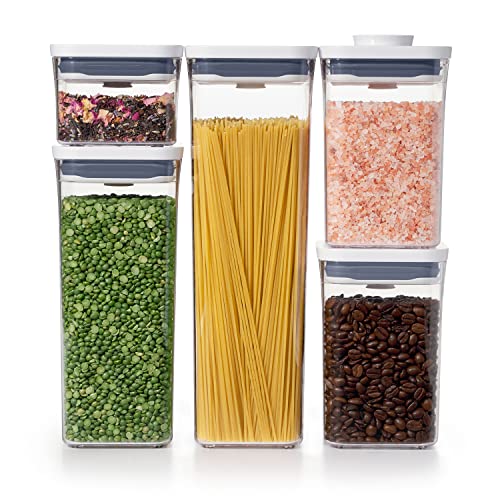
OXO Good Grips 5-Piece POP Container Set
Creates stackable storage for selected everyday dry staples when original packaging is difficult to close, scoop from, or fit efficiently. Confirm capacity, shelf height, loaded weight, and whether one full package fits.
Verified ASIN: B07TD9QT97
iDesign Pantry Bin with Handles, Clear
Creates one removable group for baking mixes, lightweight mix-ins, liners, decorations, or seasonal ingredients. Avoid loading it with heavy flour, sugar, or multiple glass bottles.
Verified ASIN: B0D6NLBLH1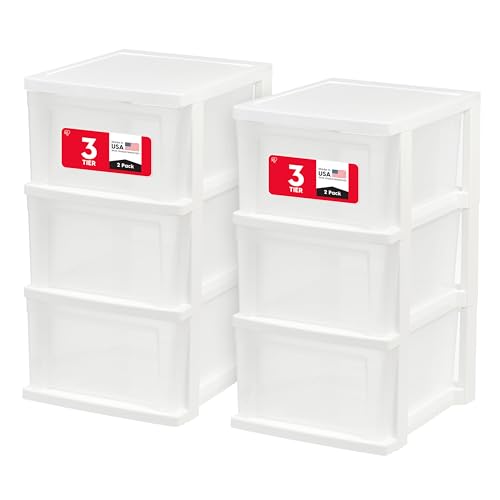
IRIS USA 3-Drawer Slim Narrow Storage Organizer, 2-Pack
Separates sprinkles, piping accessories, food coloring, liners, and small packets. Confirm dimensions, drawer extension, package height, and category weight.
Verified ASIN: B0D4G6JGDN
Copco 12-Inch Non-Skid Lazy Susan Turntable Organizer
Creates rotational access for extracts, food coloring, flavor bottles, decorating gels, and small jars. Check shelf depth, rotation clearance, height, and bottle stability.
Verified ASIN: B07PNRVW9Z
Simple Houseware Expandable Stackable Kitchen Counter Shelf Organizer
Raises baking powder, baking soda, cocoa, small jars, or boxed mixes so labels remain visible. It improves height use but does not solve excessive shelf depth.
Verified ASIN: B07NPWHJ9B
Talented Kitchen Pantry Labels for Containers — 144 Matte Vinyl Stickers
Useful for transferred ingredients or broad groups such as Baking, Decorating, Mixes, or Seasonal Supplies. Labels should not replace product identity, allergen, usage, or date information.
Verified ASIN: B08KRRTXCR
OXO Good Grips 5 Piece Matte POP Container Set — Matte Black
Creates a coordinated premium system for selected high-use dry staples. The visual upgrade does not eliminate transfer work, refill storage, labeling, or filled-container weight.
Verified ASIN: B0GS3RS3ZR
Amazon Basics 3-Tier Rolling Utility or Kitchen Cart
Creates a movable baking station only when pantry or cabinet capacity is insufficient and a permanent parking place exists. Check footprint, wheels, appliance weight, and nearby doors or cabinets.
Verified ASIN: B07V126F2DRecommended combination
Keep core ingredients together on one accessible shelf, use OXO containers selectively for high-use dry staples, one handled bin for lightweight seasonal supplies, one turntable for extracts, one riser for short ingredients, and small drawers only when decorating accessories genuinely need containment.
Affiliate disclosure: Inplanty may earn a commission from qualifying purchases made through links on this page, at no additional cost to you.
Frequently Asked Questions
What is the best way to organize baking supplies?
Keep everyday staples together in one accessible zone, store heavy ingredients low, separate seasonal supplies, and add organizers only where visibility or access improves.
Where should baking ingredients be stored?
Use a pantry shelf, cabinet, deep drawer, or measured cart location that is easy to scan and appropriate for the weight and storage needs of the ingredients.
Should flour and sugar be decanted?
Only when the container improves closure, scooping, quantity visibility, or shelf fit enough to justify transfer work and information preservation.
How do you organize baking supplies in a small pantry?
Keep only everyday ingredients in prime storage, minimize backstock, combine subzones, and move seasonal supplies elsewhere.
How do you organize cake-decorating supplies?
Use one shallow drawer, modular organizer, or removable bin with a few broad groups rather than a compartment for every item.
How should sprinkles and food coloring be stored?
Keep jars and bottles upright, visible, and separated into everyday and seasonal supplies.
How do you organize baking supplies on deep shelves?
Keep active ingredients at the front and place lightweight seasonal or refill supplies in removable rear groups.
Should baking tools stay with ingredients?
Keep small tools nearby when it reduces setup steps, but store pans and bulky equipment elsewhere when they consume pantry capacity.
Where should heavy flour containers be stored?
Use a stable low or waist-level shelf, deep drawer, or appropriate cart level that allows comfortable lifting.
How do you organize seasonal baking supplies?
Use one clearly labeled secondary zone that is easy to remove and reviewed before and after the season.
How do you stop buying duplicate baking ingredients?
Keep one active package where practical, store one controlled refill separately, and check both before shopping.
Can a rolling cart work as a baking station?
Yes when it solves a real storage or workflow problem, has a fixed parking place, and does not block circulation or cabinets.
How do you organize baking supplies without a pantry?
Use one cabinet, deep drawer, measured cart, freestanding pantry cabinet, or controlled shelf near the preparation area.
How often should a baking zone be reviewed?
Reset it monthly and complete an additional review before and after major baking seasons.