
How to Organize Your Home and Create Systems That Last
A practical whole-home system for decluttering, assigning permanent homes, choosing storage, and keeping every room easier to reset.
The Finished Result
An organized home is not a house full of matching containers. It is a home where daily-use items are easy to reach, shared categories have one official location, surfaces stay mostly clear, seasonal items are out of the way, and everyone knows how to reset the space.
- Fewer items competing for storage
- Clear homes for shared household categories
- Storage chosen after measuring
- Simple systems children and adults can use
- Daily and weekly resets that prevent backsliding
Quick Answer
Organize your home by working through one defined area at a time: remove what does not belong, group similar items, decide where each category should live, measure the available space, and add storage only after the system is clear. Finish with a short daily and weekly reset so clutter does not immediately return.
The easiest way to make organization harder is to start with containers. Storage products can improve a clear system, but they cannot decide what belongs in your home, where it should live, or how much of it you can realistically maintain.
Use this page as the practical starting point beneath the complete home organization guide. It explains the sequence; the linked room and situation guides provide deeper implementation help.
Reduce first
Do not build storage around items your household no longer needs.
Follow real routines
Store items where people naturally use and return them.
Test before expanding
Live with one completed system before buying more organizers.
Start by Defining What “Organized” Means for Your Home
If your home looks reasonably tidy but mornings remain chaotic, the problem is not appearance. Organization should remove friction from real routines.
Look for repeated problems
- Items that are constantly lost
- Surfaces that attract miscellaneous belongings
- Rooms that take too long to reset
- Storage areas that are always overfilled
- Tasks made harder by poor placement
Ignore false standards
An organized home does not need to be minimalist, perfectly styled, fully labelled, or free of visible possessions. It needs systems that support the people living there.
Choose the Best Way to Organize Your Home
Organize room by room
Best for: visible progress, one or two major problem rooms, or readers who become overwhelmed by large categories.
Works because: boundaries are clear and completion comes faster.
Watch for: duplicates remaining scattered across rooms.
Organize by category
Best for: clothing, paperwork, cleaning supplies, toys, tools, and other categories stored in several places.
Works because: you see the full quantity and can eliminate duplicates.
Watch for: temporary mess and decision fatigue.
Best method for most households
Use a hybrid approach: work inside one room or zone, gather related items from nearby areas, organize that category, then move to the next zone. Readers who want a strict room sequence should use the room-by-room home organization plan.
Make a Whole-Home Organization Plan
Begin where disorganization interferes with daily life. Decorative shelves and low-use cupboards can wait.
| Problem | Best starting point |
|---|---|
| Mornings feel chaotic | Entryway, kitchen, bathroom |
| Counters are always covered | Kitchen zones and drop zones |
| Items are difficult to find | Category storage and selective labels |
| Closets are overfilled | Decluttering and seasonal rotation |
| Children’s items spread everywhere | Accessible family zones |
| Cleaning takes too long | Cleaning-supply placement and reset systems |
Declutter Before You Organize
Organization cannot permanently solve excessive inventory. Sort items into keep, relocate, donate or sell, recycle, discard, repair, and a very small decide-later category with a deadline.
Ask better questions
Do we use this? Would we know where to look for it? Do we own a duplicate? Is it worth the space it occupies? Does it belong in this room?
Do not relocate the problem
Moving unwanted items into another room makes one space look cleaner without making the home more organized.
Group Similar Items Before Choosing Storage
Gather categories such as batteries, pet supplies, reusable bags, household tools, school supplies, and cleaning refills. Each category needs one primary home, a defined capacity, and a clear reason for being stored there.
Duplicate locations are justified only when point-of-use access saves meaningful time—for example, one cleaning cloth zone in the kitchen and another in an upstairs bathroom.
Assign Every Category a Permanent Home
| Use frequency | Best storage position |
|---|---|
| Daily | Prime, easy-reach space near point of use |
| Weekly | Accessible but not prime storage |
| Occasional | Higher, deeper, or secondary storage |
| Seasonal | Labelled overflow storage |
Store coffee supplies near the coffee setup, pet leashes near the exit, towels near the bathroom, and food containers near food preparation. Point-of-use storage should reduce travel and searching, not multiply duplicates in every room.
Measure Before Buying Organizers
Measure width, depth, height, door swing, drawer clearance, shelf spacing, reach height, walkways, baseboards, outlets, pipes, hinges, ventilation, and the largest item in the category.
Measure the items too
An organizer can fit inside a cabinet while failing to hold the products, tools, paperwork, or linens intended for it.
Choose Storage Based on Access, Not Appearance
| Storage type | Best for | Main drawback |
|---|---|---|
| Open shelves | Frequently used items | Visible clutter |
| Closed cabinets | Visual calm and mixed items | Items may be forgotten |
| Drawers | Small and medium categories | Can become mixed without dividers |
| Baskets | Flexible family storage | Contents may pile together |
| Clear containers | Supplies and inventory | Can look visually busy |
| Opaque containers | Seasonal or unattractive items | Labels may be necessary |
| Hooks | Bags, tools, coats, accessories | Loaded items project into space |
| Vertical storage | Small homes and unused walls | Reach and installation matter |
Organize High-Traffic Areas First
Entryway
Create homes for shoes, coats, bags, keys, and mail. Use the entryway organization guide for the full transition-zone system.
Kitchen
Clear counters, group tools by task, and move daily-use items into easy-reach zones. Continue with the kitchen organization guide.
Pantry
Group food categories, improve visibility, and prevent duplicate purchases. See the pantry organization guide.
Closets
Reduce clothing, rotate seasons, and reserve prime space for current use. See the closet organization guide.
Bathroom
Separate daily products from backups, towels, hair tools, and medicine. Use the bathroom organization guide.
Laundry area
Create clear supply, sorting, drying, and lost-item zones. Continue with the laundry room organization guide.
Create Systems for Shared Household Items
Mail, paperwork, chargers, tools, cleaning supplies, medicine, children’s supplies, pet items, reusable bags, returns, and donations often travel between rooms. Give each category one official location so nobody has to guess.
What Makes a Home Feel Organized?
A home is functionally organized when important items can be found predictably, daily-use belongings are easy to access, work surfaces remain usable, and most categories can be reset without a large cleanup.
Signs the system works
- Belongings have predictable locations
- Storage is not packed beyond capacity
- Walkways and doors stay clear
- Household members can return items without guessing
- Seasonal items do not occupy prime storage
What organization does not require
- Minimalism
- Matching containers
- Labels in every room
- Perfectly clear surfaces
- Showroom-level styling
Create Organization Around Daily Routines
Observe how the household enters and leaves, where shoes and bags are dropped, where mail enters, where food is prepared, where laundry changes hands, and where devices are charged. Storage should follow those natural transitions whenever practical.
Use natural drop points as evidence
If items are repeatedly left beside an organizer, the storage may be too far away, too complicated, or positioned around furniture rather than behavior.
Set Capacity Limits Before Storage Overflows
Every shoe cabinet, pantry bin, toy shelf, linen shelf, paper inbox, hook rail, and clothing rod has a functional limit.
Remove expired, broken, or unused items
Reduce the category before changing storage.
Return misplaced items
Confirm that the category itself is truly overflowing.
Reduce duplicates
Keep the best or most useful version.
Move seasonal items
Protect prime storage for current use.
Review the permanent location
Only then decide whether a larger location is justified.
Test Organization Systems Before Buying More Storage
- Declutter the category.
- Assign a temporary location.
- Use existing baskets or containers.
- Test the system for one to two weeks.
- Observe where items still collect.
- Adjust the location or category.
- Measure only after the system works.
- Purchase permanent storage only if needed.
Test first, buy second
A trial period reveals whether the location, category size, and access method actually work for the household.
Make Every System Easy to Reset
A reset-friendly system uses broad categories, few steps, visible ownership, accessible daily storage, and enough empty capacity for normal use.
Easy-reset design
- One or two actions to return an item
- Broad categories
- Daily items in prime locations
- Storage that is not overfilled
- Instructions more than one person understands
Signs the system is too complicated
- Items sit beside the organizer
- Containers must be moved to reach others
- Several doors or lids must be opened
- Only one person knows the categories
- The system works only after a major cleanup
Balance Open and Closed Storage
Use open storage for
- Frequently used items
- Children’s broad categories
- Items needing airflow
- Categories forgotten when hidden
Use closed storage for
- Visually mixed belongings
- Backstock and seasonal items
- Personal items
- Shared living spaces where visual calm matters
Best overall approach
Use open storage for immediate access and closed storage for overflow, backups, and visually distracting categories.
How to Know Whether Your Home Is Organized
- Important items can be found predictably.
- Daily-use belongings are accessible.
- Storage zones have clear purposes.
- Most items can be returned quickly.
- Surfaces support their intended functions.
- Walkways and doors remain clear.
- Overflow has defined locations.
- Household members understand the main systems.
- Clutter does not require complete reorganization every week.
A home can be organized while still showing signs of normal daily life.
Organize Your Home by Reader Situation
Best for beginners
Start with one high-friction zone, avoid whole-house container purchases, and complete one small system before expanding.
Best when you feel overwhelmed
Use tiny boundaries, remove obvious trash and relocations, and stop before decision fatigue becomes severe. Follow the dedicated guide for organizing when you feel overwhelmed.
Best for families
Assign personal zones, use low and accessible storage, simplify categories, and make resets shared. See how to organize a home with kids.
Best for renters
Prefer portable bins, freestanding furniture, removable hooks, and systems that can move to a future home.
Best for small homes
Reduce inventory first, use vertical space and multifunctional furniture, and apply strict capacity limits. The small-space storage guide provides deeper solutions.
Best for many belongings
Organize by category, set quantity limits, create overflow rules, and never hide unsorted items in containers.
Create Daily and Weekly Resets
Daily reset
Return misplaced items, clear primary surfaces, reset the entryway and kitchen, remove trash, and prepare high-use areas for tomorrow. Build a repeatable daily home reset routine.
Weekly reset
Empty collection points, review paperwork, restock supplies, return items to correct rooms, check inventory, and move donations out. Use the weekly home reset checklist.
Copy This Setup
Choose one complete setup that matches your household instead of combining random organizers from every room.
Portable, visible, low-footprint
- Clear lidded bins for supplies and overflow
- Removable hooks at point of use
- One divided drawer for small essentials
- Seasonal rotation outside prime storage
- One ten-minute weekly reset
Assigned zones everyone can use
- Low baskets for children
- One labelled location for shared supplies
- Defined paper and school drop zone
- Clear capacity limits per category
- Shared evening reset
Flexible and damage-conscious
- Freestanding bins and baskets
- Removable utility hooks
- No permanent built-ins unless approved
- Portable category storage
- Systems that move with you
Reduce first, then build upward
- Strict category limits
- Vertical and over-door storage
- Closed baskets in visible rooms
- Large bins only for true seasonal overflow
- No duplicated categories without daily need
Common Home Organization Mistakes
For a deeper diagnostic, review the full guide to home organization mistakes to avoid.
A Step-by-Step Whole-Home Organization Plan
List daily problems
Identify where time, access, and clutter create the most friction.
Rank rooms and zones
Prioritize impact, visibility, safety, and frequently lost items.
Select one manageable area
Use a drawer, cabinet, corner, or single room rather than the whole house.
Remove and sort
Declutter, relocate, repair, donate, recycle, and discard.
Group similar items
See the full quantity before deciding on storage.
Assign permanent homes
Choose locations based on use frequency and household routines.
Measure the space and items
Confirm dimensions, clearance, reach, and category capacity.
Choose storage methods
Select open, closed, clear, opaque, drawer, basket, or vertical storage.
Return items by frequency
Daily items get prime space; seasonal items move to overflow.
Label selectively
Use labels where they improve consistency for more than one person.
Test for one week
Notice what is difficult to reach, return, or understand.
Add the reset
Place the system inside the daily or weekly maintenance routine.
Which Home Organization Method Is Best?
| Reader situation | Best starting approach |
|---|---|
| Entire home feels disorganized | Start with high-friction daily zones |
| One room causes most problems | Organize that room completely |
| Duplicate items are everywhere | Organize by category |
| Reader feels overwhelmed | Use very small zones and short sessions |
| Family cannot maintain systems | Simplify categories and assign zones |
| Small home lacks storage | Reduce inventory, then use vertical storage |
| Surfaces collect clutter | Create point-of-use homes and drop zones |
| Home becomes messy immediately | Build daily and weekly resets |
Final recommendation
Start with one high-impact room, organize related categories within that room, create permanent storage based on real routines, and test the system before buying more organizers.
Recommended Home Organization Products
These products support storage after decluttering, category grouping, point-of-use access, vertical storage, labeling, and seasonal overflow. They should improve a finished system—not replace the planning work.

IRIS USA 6-Pack 13-Quart Clear Storage Bins with Lids
Flexible category storage that can be tested in closets, utility areas, offices, bathrooms, and household-supply zones before investing in permanent systems.
Verified ASIN: B00CQGTGZQ
YouCopia DrawerFit Sliding Drawer Tray
Adjustable category separation for kitchen, bathroom, office, or utility drawers after the drawer contents and required capacity are established.
Verified ASIN: B0CG7VCWCX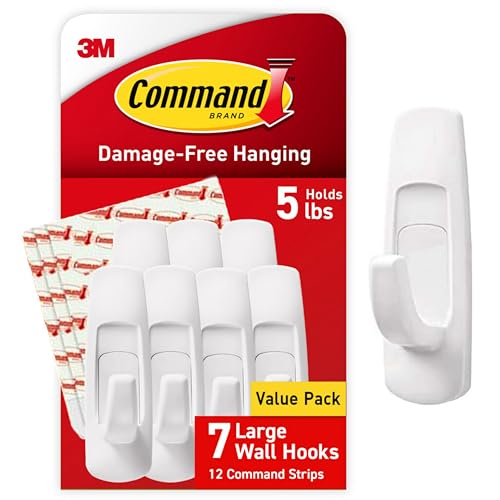
Command Large Utility Hooks, 7-Pack
Point-of-use storage for bags, accessories, cleaning tools, and frequently used belongings. Useful for testing storage near natural household drop points.
Verified ASIN: B0753NHZVQ
Brother P-Touch PTD220 Label Maker
Identifies shared household categories, seasonal storage, backstock, and overflow locations when labels make systems easier for multiple household members to reset.
Verified ASIN: B0B1L3BL1G
mDesign Woven Hyacinth Cube Baskets, 6-Pack
Closed-look storage for visually mixed categories in living rooms, bedrooms, bathrooms, laundry rooms, nurseries, or open cubby systems.
Verified ASIN: B08BG7W9CD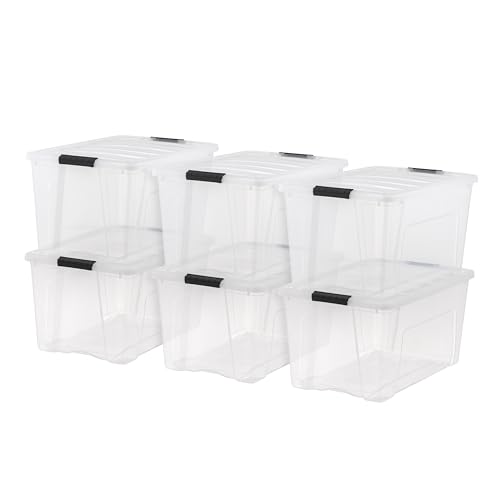
IRIS USA 6-Pack 72-Quart Clear Storage Bins with Lids
Large-capacity storage for seasonal clothing, bedding, decor, and infrequently used household categories after inventory has been reduced and a permanent overflow location has been defined.
Verified ASIN: B0F1J1LHD6Affiliate disclosure: Inplanty may earn a commission from qualifying purchases made through links on this page, at no additional cost to you. Product availability can change; check the retailer for current details.
Frequently Asked Questions
Where should I start when organizing my home?
Start with one high-friction area that affects daily life, such as the entryway, kitchen counter, bathroom, or a shared drop zone.
Should I organize room by room or by category?
Most households do best with a hybrid method: work inside one room, gather related nearby items, organize the category, then move on.
How long does it take to organize an entire house?
It depends on inventory, household size, available time, and how many decisions are required. Treat the project as a series of completed systems rather than one uninterrupted event.
Should I declutter before buying storage containers?
Yes. Declutter and measure first so you know what must be stored, where it belongs, and which dimensions will work.
How do I keep my home organized after decluttering?
Give every category one official home, set capacity limits, and use short daily and weekly resets.
Why does my home become cluttered again so quickly?
Common causes include too much inventory, unclear storage locations, systems that do not match real habits, and no reset routine.