Quick Answer
Start with Syngonium Pink Splash, Monstera siltepecana, or Philodendron Painted Lady if you want an unusual plant without beginning with the most demanding collector species. Choose Alocasia Dragon Scale for compact dramatic texture, Florida Ghost for changing leaf color, Philodendron melanochrysum for velvet foliage, or Aglaonema pictum Tricolor when the unusual pattern matters more than beginner-level ease.
Availability and price can change quickly, so this guide focuses on which plant fits which reader rather than fixed price claims.
On This Page
Choose the rare plant by the look you actually want
Best beginner-friendly rare plant
Syngonium Pink Splash — fast-growing, visually unusual, and easier to propagate than many collector aroids.
Best compact statement plant
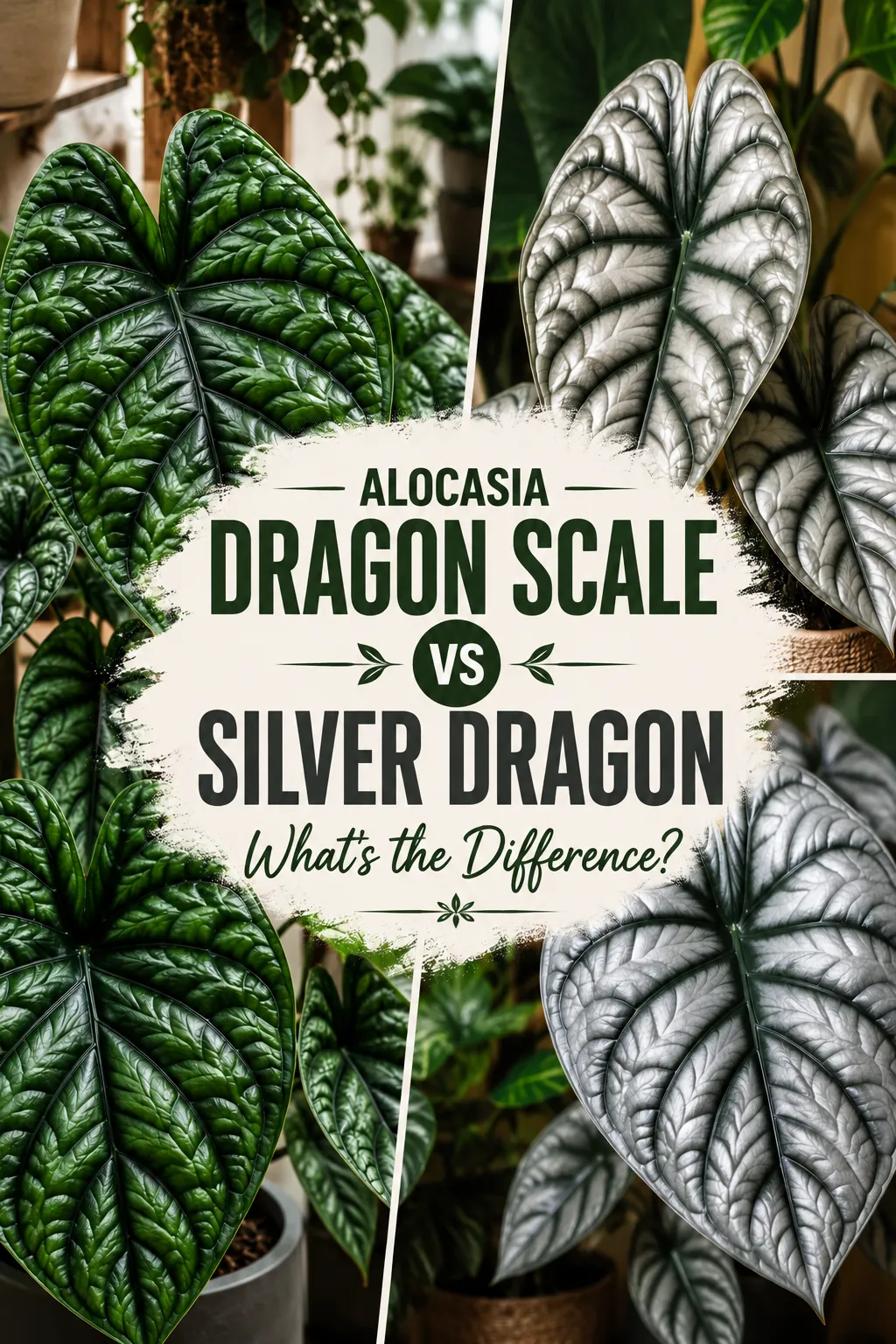
Alocasia Dragon Scale — dramatic texture without requiring a huge climbing footprint.
Best velvet foliage
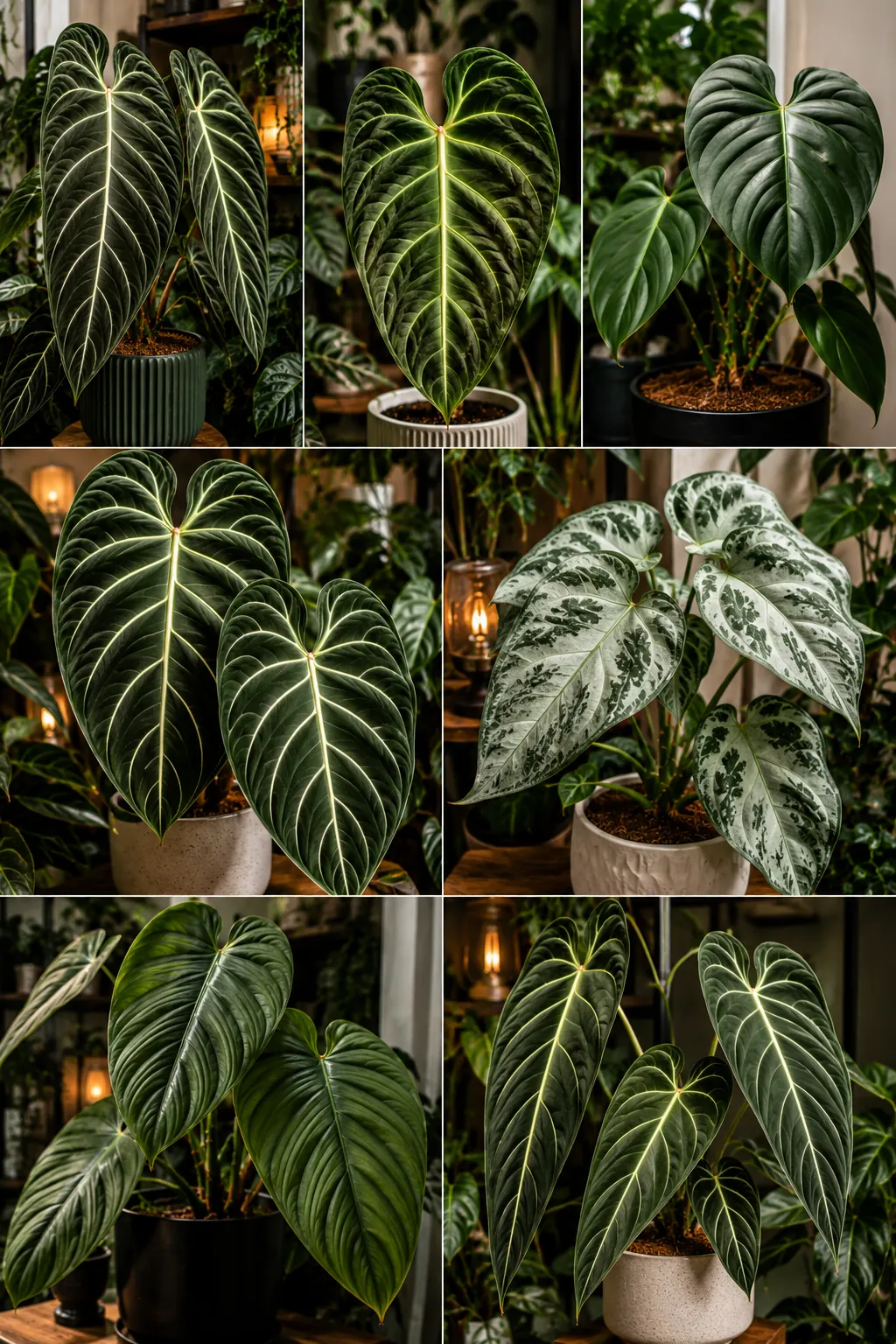
Philodendron melanochrysum — one of the strongest choices if mature dark velvet leaves are the goal.
Best pale new growth
Philodendron Florida Ghost — new foliage can emerge very pale before maturing greener.
Best climbing texture
Rhaphidophora cryptantha — shingling foliage becomes the design feature when grown on a flat support.
Best camouflage pattern
Aglaonema pictum Tricolor — a collector choice for foliage pattern rather than easy-care simplicity.
13 affordable rare houseplants at a glance
Which one is actually worth adding to your collection?
Philodendron Painted Lady
What makes it special: Pink stems and mottled lime-to-green foliage.
Difficulty: Moderate.
A colorful collector Philodendron without jumping straight to the most difficult velvet-leaf species.
Alocasia Cuprea 'Red Secret'
What makes it special: Glossy copper, red, and purple-toned leaves.
Difficulty: Moderate.
A dramatic jewel Alocasia for readers who want unusual foliage in a relatively compact plant.
Philodendron Florida Ghost
What makes it special: New growth can emerge pale and mature greener.
Difficulty: Moderate.
A high-impact Philodendron whose changing leaf color is the main attraction.
Philodendron atabapoense
What makes it special: Long narrow leaves with burgundy-toned undersides.
Difficulty: Moderate.
A strong choice for collectors who like architectural foliage more than variegation.
Syngonium 'Pink Splash'
What makes it special: Arrow-shaped leaves with irregular pink splashes.
Difficulty: Easier.
One of the most approachable choices here because Syngoniums tend to grow and propagate readily.
Philodendron melanochrysum
What makes it special: Dark, velvety leaves with contrasting veins.
Difficulty: More demanding.
Worth choosing for dramatic mature foliage, but not the first plant on this list for a complete beginner.
Rhaphidophora cryptantha
What makes it special: Shingling leaves that lie close to a support.
Difficulty: Moderate.
Ideal for readers who want a vertical feature plant rather than a conventional trailing vine.
Monstera siltepecana
What makes it special: Silver-patterned juvenile foliage.
Difficulty: Easier.
A good bridge between common houseplants and more unusual collector plants.
Philodendron 'Cream Splash'
What makes it special: Green foliage with cream and yellow variegation.
Difficulty: Moderate.
A decorative vining Philodendron for readers who want variegation without moving into the highest-priced collector plants.
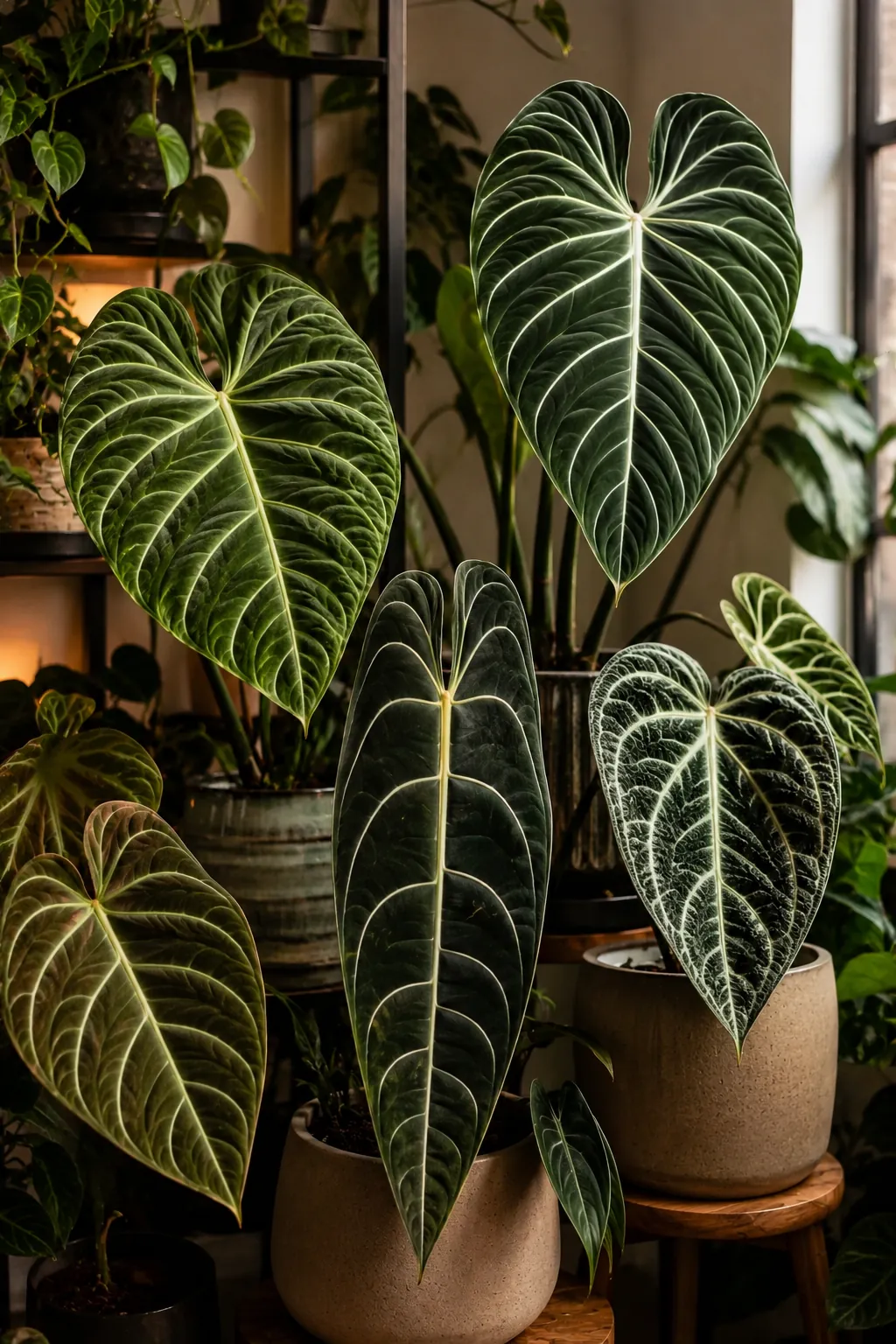
Anthurium forgetii
What makes it special: Velvety round-to-oval leaves without a deep sinus.
Difficulty: More demanding.
A collector Anthurium with a distinctive leaf silhouette and strong display value.
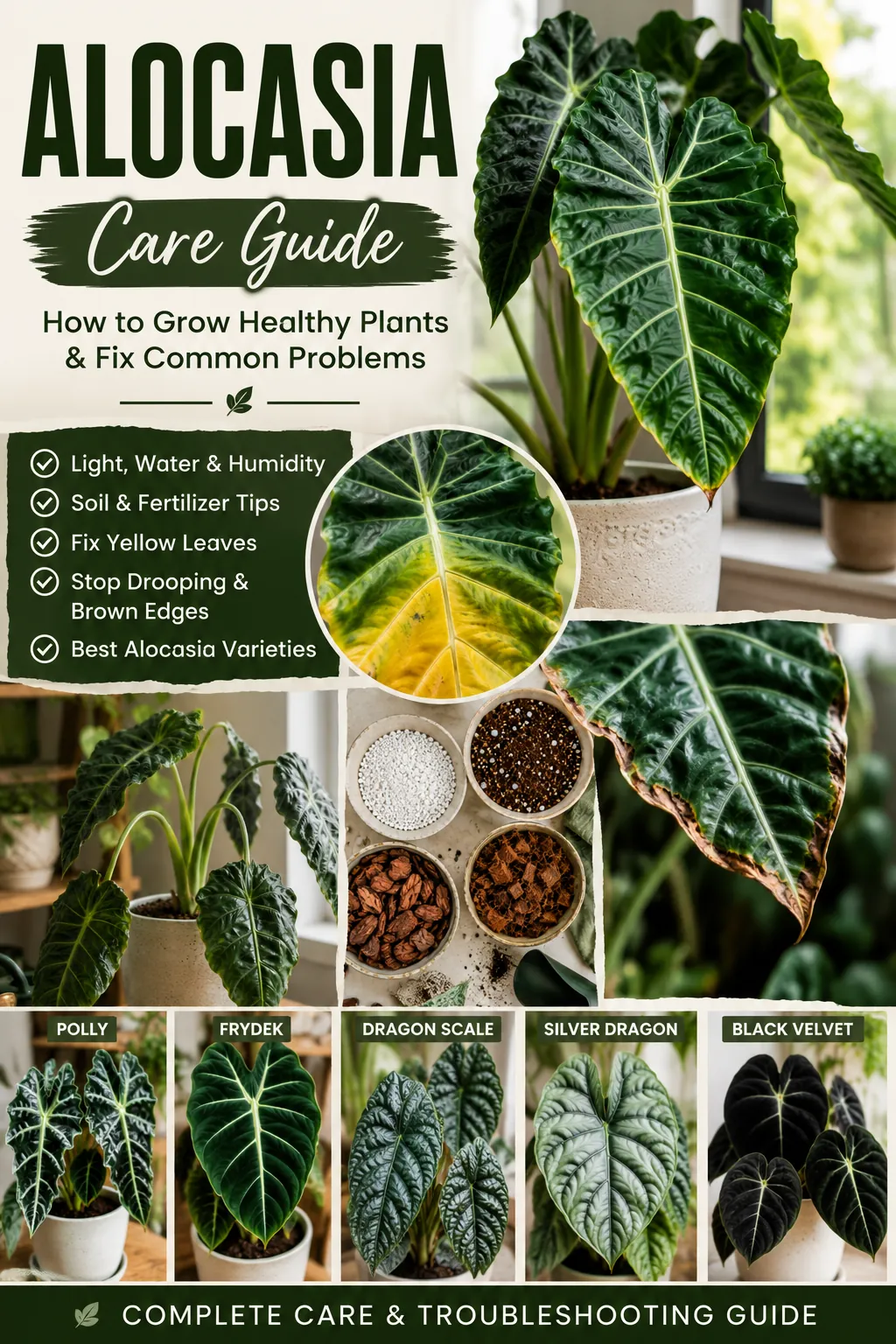
Alocasia 'Dragon Scale'
What makes it special: Deeply textured green foliage.
Difficulty: Moderate.
One of the strongest choices for dramatic texture in a compact indoor display.
Philodendron billietiae
What makes it special: Long leaves with bright orange-toned petioles.
Difficulty: Moderate.
A bold architectural Philodendron that becomes more impressive as it matures.
Aglaonema pictum 'Tricolor'
What makes it special: Three-tone camouflage-like patterning.
Difficulty: More demanding.
A visually unusual collector plant better suited to someone willing to maintain stable conditions.
Start rare without starting difficult
If this is your first move beyond common pothos, Monstera deliciosa, or standard Philodendrons, the goal is not to buy the rarest name on the list. It is to choose a plant that gives you unusual foliage without demanding perfect greenhouse-style conditions.
Syngonium Pink Splash
Best starting point if you want color, propagation potential, and relatively forgiving growth.
Monstera siltepecana
Good for someone who already understands basic Monstera-style watering and climbing growth.
Philodendron Painted Lady
A strong first collector Philodendron when bright variegated foliage matters more than velvet texture.
Choose these when the foliage is worth extra attention
Philodendron melanochrysum
Rewarding when grown well, but getting large, clean velvet leaves can take more consistency than easier vining Philodendrons.
Anthurium forgetii
A distinctive collector Anthurium for growers prepared to maintain a stable environment and pay attention to root health.
Aglaonema pictum Tricolor
Worth it for the camouflage foliage, but not the plant to choose if “easy and adaptable” is your first priority.
Rhaphidophora cryptantha
The plant itself is only half the project—the right flat support is what creates the shingling look people buy it for.
Build the environment before chasing another rare plant
Enough usable light
Many collector aroids look best when they receive consistent bright indirect light. If your chosen display spot is too dim, solve that before buying a more demanding plant.
A stable root zone
For aroids, drainage and root-zone air matter more than buying a decorative potting mix because the label says “rare plant.”
Measured humidity
Do not assume every unusual plant needs a humidifier. Measure the room first, then decide whether the environment is genuinely dry.
Support where the species needs it
Rhaphidophora cryptantha and climbing Philodendrons can change dramatically when given the right support and space to mature.
Buy for the problem, not for the “rare plant” label
Most rare plants do not need a giant accessory kit. These products only make sense when they solve a real limitation in the room or root zone.
Affiliate disclosure: As an Amazon Associate, Inplanty may earn from qualifying purchases.

Govee Indoor Hygrometer Thermometer H5075 with Bluetooth App Control
Problem it solves: You are choosing a rare plant without knowing whether your room is warm or humid enough.
Best for: Collectors comparing Anthurium, Alocasia, velvet Philodendron, and easier aroids in the same room.
Why it works: It helps you evaluate the environment before buying a fussier plant.
What to check before buying: Measure the actual plant zone, not a different room or a spot directly beside a humidifier.
Check on Amazon
SANSI Grow Lights for Indoor Plants, Pot Clip-On Plant Light, 1-Pack
Problem it solves: Your preferred display location is too dim for healthy compact growth.
Best for: A shelf, cabinet, or collector corner that needs supplemental light.
Why it works: A focused plant light can make a difficult placement workable without moving the entire collection.
What to check before buying: Match placement and duration to the plant rather than assuming more light is always better.
Check on Amazon
Molly's Aroid Potting Mix, Chunky Soil-Free for Indoor Plants, 3 Dry Quarts
Problem it solves: A collector aroid needs a more open root-zone mix when repotting is actually necessary.
Best for: Monstera, Philodendron, Rhaphidophora, and similar aroids after acclimation.
Why it works: A chunky mix is designed around drainage and root-zone air space.
What to check before buying: Do not repot a healthy new arrival simply because you bought new substrate.
Check on Amazon
VIVOSUN 10 x 20.75 in Seedling Heat Mat and Digital Thermostat Combo Set
Problem it solves: Your collector area becomes genuinely cool during winter or acclimation.
Best for: Controlled supplemental warmth where ambient temperature is the limiting factor.
Why it works: The thermostat makes it easier to avoid uncontrolled heat.
What to check before buying: Use only when warmth is actually needed; a heat mat is not a universal requirement for rare plants.
Check on AmazonWhat makes a “rare plant deal” a bad buy
Buying because a plant used to be expensive
Collector prices change. A falling price is not a reason to buy a plant you do not actually like or have space for.
Assuming rare means difficult
Some unusual plants are quite manageable, while some less-expensive species can still be demanding.
Ignoring mature size
A small juvenile Philodendron can become a very different plant once it climbs and develops mature foliage.
Choosing variegation over plant health
A healthy, well-rooted plant is usually a better purchase than a weak specimen with one spectacular leaf.
Repotting immediately after delivery
Let a stable new arrival acclimate before changing the substrate just because you have a preferred mix ready.
Buying a demanding plant for the wrong room
Low light, cold drafts, and unstable humidity can matter more than whether the plant was labeled beginner-friendly.
Before you buy
- Choose the foliage style first: pink, velvet, silver, metallic, camouflage, or architectural.
- Check whether the plant climbs, shingles, or stays relatively compact.
- Match the difficulty level to your current experience.
- Measure light and humidity if you are considering a fussier collector plant.
- Evaluate root health and seller quality before focusing on leaf count alone.
- Do not rely on old “rare plant” price ranges; availability changes quickly.
Frequently Asked Questions
What is the easiest rare plant on this list?
Syngonium Pink Splash and Monstera siltepecana are among the more approachable choices here. They still need suitable light, watering, and drainage, but they generally make more sense for a newer collector than a demanding velvet Anthurium or Philodendron melanochrysum.
Are rare houseplants always expensive?
No. Rarity, availability, propagation supply, plant size, and trend cycles all affect price. A plant that was once expensive can become much more accessible as growers produce more of it.
Which rare plant is best for a small space?
Alocasia Dragon Scale and Alocasia Cuprea Red Secret can work well in compact displays because the visual impact comes from the foliage rather than a large climbing footprint.
Which rare plant is best if I like pink leaves?
Syngonium Pink Splash is the clearest choice on this list for visible pink patterning. Philodendron Painted Lady also brings pink through its stems and warm-toned variegation.
Which plants on this list need support?
Rhaphidophora cryptantha benefits strongly from a flat climbing surface, and several climbing Philodendrons can also develop better mature growth when given appropriate support.
Should beginners buy Philodendron melanochrysum?
It can be grown at home, but it is not the easiest starting point. A beginner who mainly wants unusual foliage may have a smoother experience with Syngonium Pink Splash, Monstera siltepecana, or Painted Lady first.
Move from collecting to care
The right next step is species-specific care, not another shopping list. For Alocasia collectors, start with the Alocasia Care Guide. If you are still comparing unusual aroids, continue with the rare-houseplant guide below.