Quick Answer
Keep both plants evenly moist but never waterlogged, give them bright indirect light, use an airy aroid-style substrate, and avoid letting the root ball stay bone dry for long periods. Measure humidity instead of assuming you need a humidifier. For propagation, divide offsets or collect corms from around the root system and start them in a lightly moist, airy medium.
On This Page
Silver Dragon vs Cuprea at a glance
A compact silver statement plant
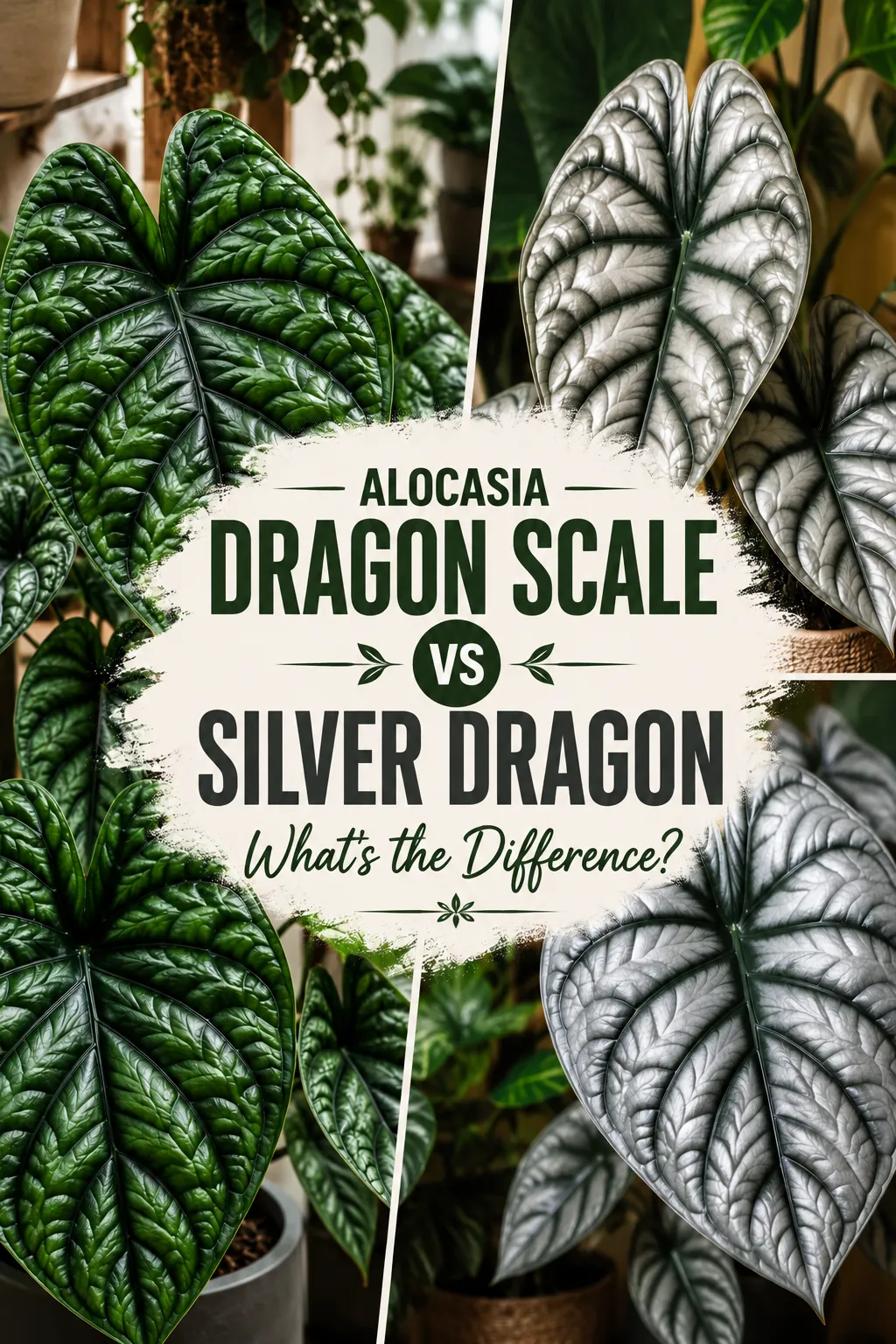
Silver Dragon is known for heavily textured silver-green leaves with dark veining. The surface has the armored look that gives the “dragon” group its name.
Choose it when you want a lighter, high-contrast jewel Alocasia that works well as a compact display plant.
Metallic copper and purple foliage
Alocasia Cuprea is grown for glossy, metallic leaves that can read as copper, red, purple, or deep green depending on light and leaf age. The undersides can be especially dark and reddish-purple.
Choose it when the foliage itself needs to be the focal point.
Keep moisture consistent without keeping roots wet
The useful rule from the original care approach is simple: do not let either plant stay bone dry, but do not keep the root zone saturated.
Check the upper substrate
Let the upper layer begin to dry before watering again. Do not use a fixed calendar if the substrate is still wet.
Water thoroughly
When the plant is ready for water, wet the root ball evenly and allow excess water to leave through the drainage holes.
Watch the plant and pot
Drooping, yellowing, slow drying, and a permanently heavy pot can all tell you that the watering routine needs adjustment.
Bright indirect light is the safer default for both
The original text treated Cuprea as needing more light and suggested Dragon Scale-type Alocasias could sit in a south-facing window. A better practical rule is to focus on bright indirect light and protect both from harsh unfiltered sun unless they have been carefully acclimated.
If the plant corner is too dim
Solve the light problem before adding humidity equipment or changing fertilizer. Weak light can slow growth and make watering harder because the root zone stays wet longer.
Use an airy mix that still holds some moisture
These Alocasias need a root zone that drains well but does not dry as aggressively as a gritty cactus or succulent mix.
What you want
- Open structure
- Good drainage
- Some moisture retention
- Air around the roots
Useful components
- Quality potting base
- Orchid bark
- Perlite
- Other coarse aroid amendments appropriate to your routine
Do not repot a healthy new arrival immediately just to switch it into your preferred mix. Acclimation comes first unless the existing root zone is clearly failing.
Measure first; humidify only when the room is actually dry
Silver Dragon and Cuprea both benefit from stable humidity, but a universal “60–80% or nothing” target is too rigid for a home-care guide. They can adapt to normal indoor conditions when the rest of the care system is stable.
Start with measurement
Put a hygrometer in the actual plant area so you know whether dry air is really part of the problem.
Do not use humidity to hide root problems
A humid room does not compensate for saturated soil, weak light, cold conditions, or a poorly draining pot.
Feed active growth, not stressed roots
A balanced houseplant fertilizer can be used during active growth according to the product directions. Avoid turning fertilizer into a fixed ritual when the plant is dormant, newly shipped, freshly divided, or recovering from root problems.
Golden Standard rule
Light, watering, roots, and temperature are the foundation. Fertilizer is an optimization step, not a rescue treatment.
Propagate by division or corms
Silver Dragon and Cuprea do not propagate from ordinary leaf cuttings. The practical methods are dividing offsets and growing corms found around the root system.
Method 1: Divide an offset
Wait for a real offset
Use a side plant that has its own growth point and, ideally, some roots rather than forcing apart a tiny undeveloped shoot.
Remove the plant carefully
Expose the root system gently so you can see where the offset connects to the mother plant.
Separate with minimal damage
Where possible, preserve roots on both plants. Use a clean tool if the connection does not separate naturally.
Pot into an airy mix
Keep the division warm, lightly moist, and out of harsh direct sun while it re-establishes.
Method 2: Grow a corm
Collect mature corms
Look around the root system when you are already repotting or dividing the plant. Do not repeatedly unpot a healthy Alocasia just to hunt for corms.
Use an airy propagation medium
Perlite or sphagnum can work when kept lightly moist with good airflow around the developing roots.
Keep warmth and moisture stable
Avoid waterlogged propagation media and avoid letting the corm dry out completely.
Pot after roots and growth develop
Move the young plant into an appropriate Alocasia mix after it has established enough root growth to handle the transition.
Buy only what solves the problem you have
This is intentionally a short list. Silver Dragon and Cuprea do not need an accessory catalog to grow well.
Affiliate disclosure: As an Amazon Associate, Inplanty may earn from qualifying purchases.

Govee Indoor Hygrometer Thermometer H5075 with Bluetooth App Control
Problem it solves: You are guessing whether the plant area is actually humid or dry.
Best for: Silver Dragon or Cuprea owners who want to monitor the growing zone before adding a humidifier.
Why it works: It gives you a simple temperature and humidity baseline for the exact plant area.
What to check before buying: Place it near the plants but away from direct mist, standing water, or a heating vent.
Check on Amazon
SANSI Grow Lights for Indoor Plants, Pot Clip-On Plant Light, 1-Pack
Problem it solves: The intended plant spot does not provide enough bright indirect light.
Best for: Shelves, desks, or compact Alocasia displays that need supplemental light.
Why it works: A focused clip-on grow light can make a dim indoor placement more workable.
What to check before buying: Use it to supplement a genuinely dim space rather than pushing either plant into excessive light.
Check on Amazon
Molly's Aroid Potting Mix, Chunky Soil-Free for Indoor Plants, 3 Dry Quarts
Problem it solves: A Silver Dragon or Cuprea eventually needs a more open root-zone mix when repotting is actually justified.
Best for: Later repotting after the plant has acclimated and root condition shows a change is needed.
Why it works: A chunky aroid mix is built around drainage and root-zone air space.
What to check before buying: Do not repot a healthy new plant simply because a new substrate is available.
Check on Amazon
Legigo 4 Quarts Organic Perlite for Plants Indoor, Soil Mix Amendment
Problem it solves: You want an airy propagation medium for Alocasia corms or an amendment for a denser mix.
Best for: Corm propagation and adding extra aeration where the existing substrate is too fine.
Why it works: Perlite creates more air space around developing roots and can be used as part of a propagation setup.
What to check before buying: Keep propagation media appropriately moist rather than saturated, and avoid assuming every corm will sprout on the same schedule.
Check on AmazonThree practical Silver Dragon / Cuprea setups
Bright Room Setup
Use: plant + draining pot + hygrometer.
Best when: bright indirect natural light is already good.
Do not add: grow lights or humidity equipment unless measurement shows a real need.
Low-Light Setup
Use: plant + SANSI clip-on grow light + hygrometer.
Best when: the preferred shelf or desk is too dim.
Priority: correct the light limitation first.
Propagation Setup
Use: mature corm + lightly moist perlite + warm stable conditions.
Best when: you already found viable corms during normal repotting.
Priority: air around developing roots without letting the medium stay waterlogged.
What usually goes wrong
Using a fixed watering schedule
The same plant can dry at very different speeds depending on light, season, temperature, pot size, and substrate.
Letting the root ball become bone dry
Repeated severe drying can lead to drooping, yellowing, and unnecessary stress.
Keeping the soil constantly wet
“Likes moisture” does not mean “likes saturated roots.” Air in the root zone matters.
Giving harsh direct sun
Metallic or bright foliage does not mean the plant needs unfiltered intense sunlight.
Repotting too often
Repeatedly disturbing roots to inspect corms or change mixes can create more problems than it solves.
Trying to propagate a leaf
These Alocasias are propagated through offsets and corms, not ordinary leaf cuttings.
The simple system
- Bright indirect light.
- Water when the upper substrate begins to dry, not by calendar.
- Keep the root zone airy and draining.
- Measure humidity before buying a humidifier.
- Feed during active healthy growth according to fertilizer directions.
- Divide offsets only when they are developed enough to separate.
- Propagate corms in a lightly moist, airy medium.
- Do not treat Silver Dragon and Cuprea as if they require completely different care systems.
Frequently Asked Questions
Is Alocasia Silver Dragon easier than Cuprea?
Their core care is similar. Both need bright indirect light, careful watering, an airy root zone, warmth, and stable humidity. Your room conditions matter more than choosing one because it is supposedly much easier.
How often should I water Silver Dragon or Cuprea?
Do not water by a fixed calendar. Check the substrate and water when the upper layer has begun to dry while the root zone is still not bone dry. The goal is consistent moisture without keeping the pot saturated.
Can Silver Dragon and Cuprea grow in direct sun?
Strong direct sun can scorch Alocasia foliage, especially when the plant is not acclimated to it. Bright indirect light is the safer default for both.
What soil is best for these Alocasias?
Use an airy, well-draining mix that still retains some moisture. A chunky aroid-style mix with components such as bark and perlite can work well when the proportions fit your watering habits and indoor conditions.
Do I need a humidifier for Alocasia Silver Dragon or Cuprea?
Not automatically. Measure the plant area first. If humidity is consistently low, a humidifier may help, but humidity does not compensate for poor light, cold conditions, or waterlogged roots.
How do you propagate Alocasia Silver Dragon or Cuprea?
The practical methods are division of offsets and propagation from corms found around the root system. Corms can be started in an airy, lightly moist medium such as perlite or sphagnum before being potted once they establish roots and growth.
Move from this comparison to long-term Alocasia care
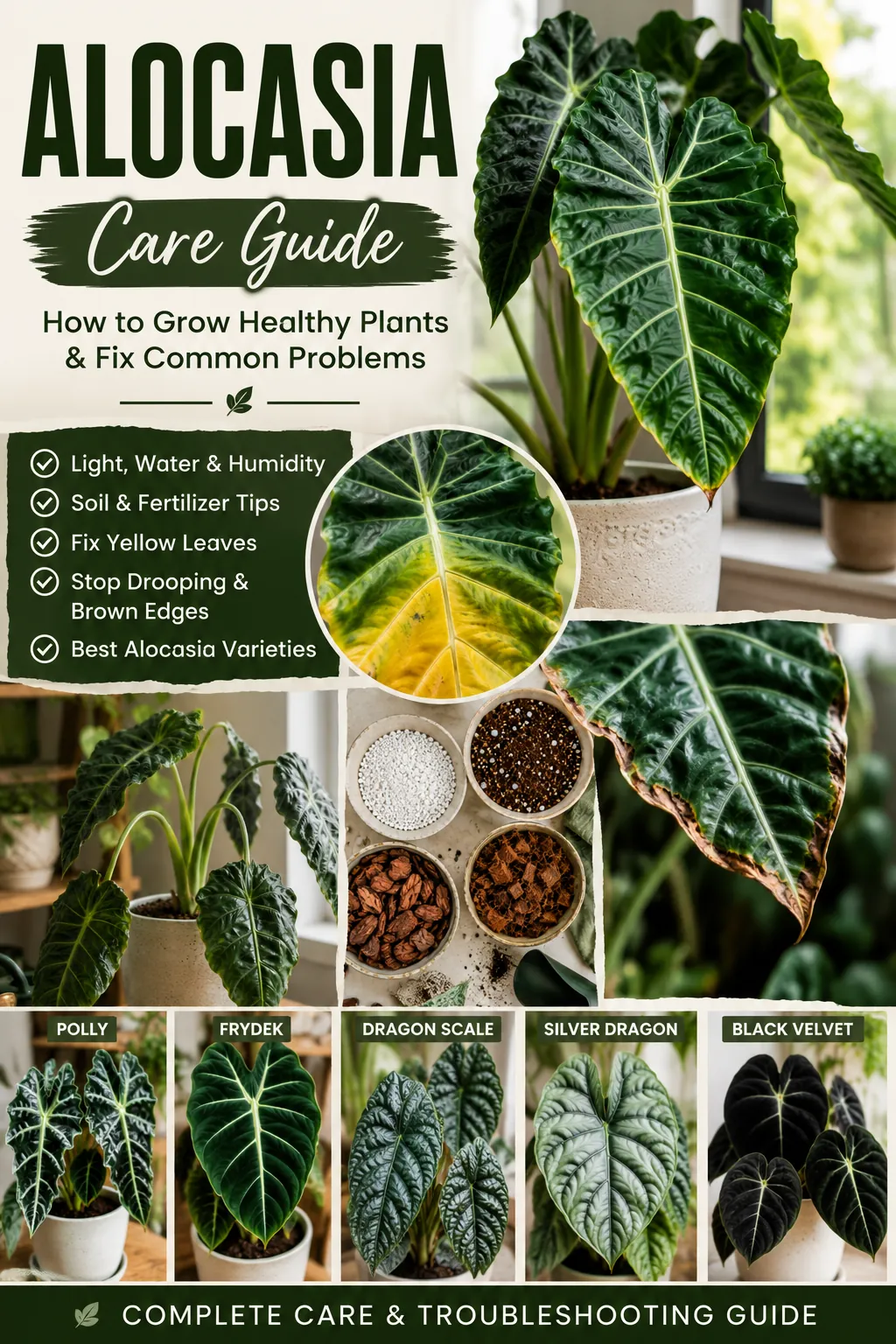
Silver Dragon and Cuprea fit into the same broader Alocasia care system. For watering, root health, light, repotting, and long-term troubleshooting, continue with the Alocasia Care Guide.