Quick Answer
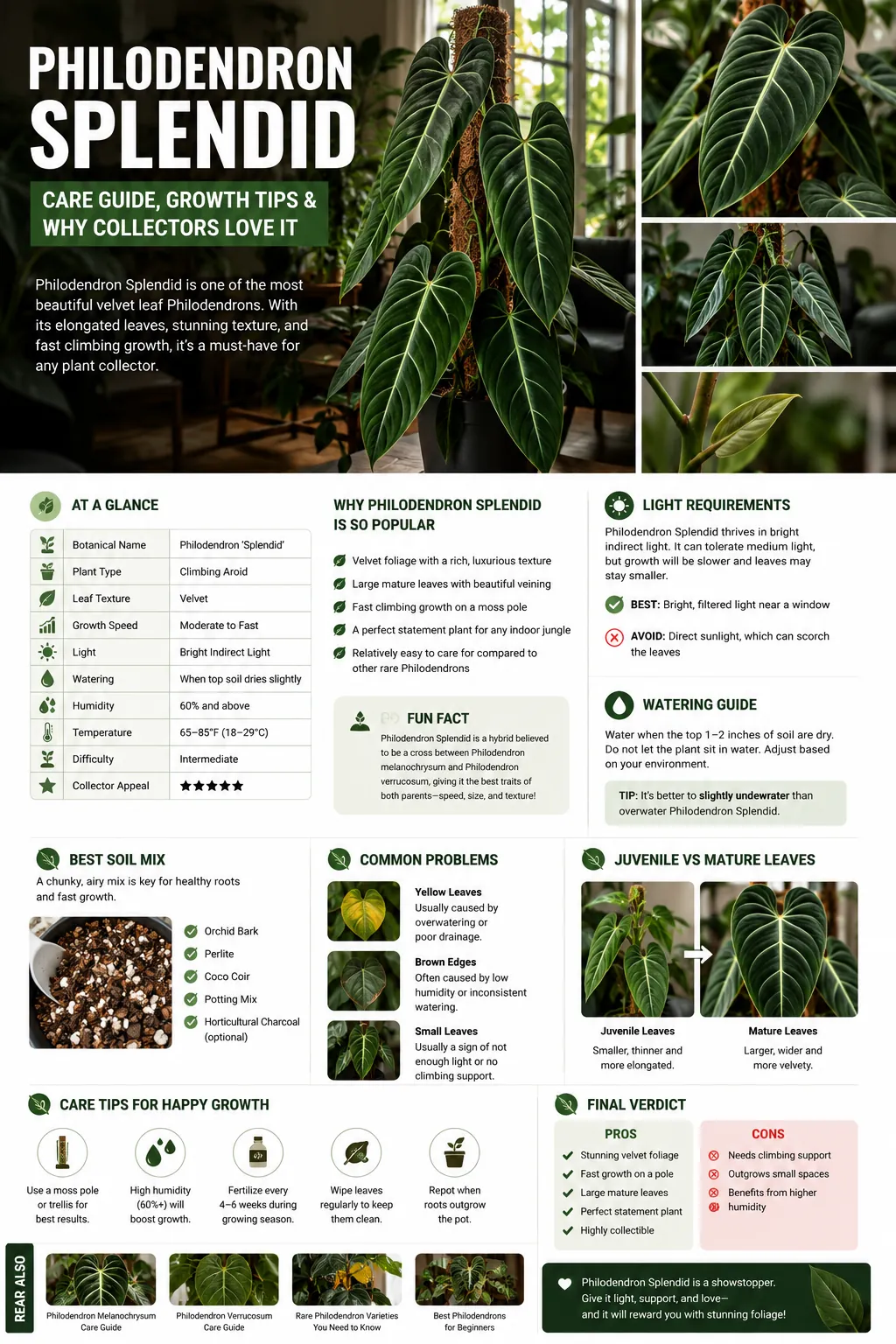
Mamei is the rounder baseline plant, Silver Cloud is often treated as a silver-heavy Mamei form, Mamei Silver is described in the source as more elongated and Plowmanii-influenced, and Plowmanii usually shows narrower leaves, stronger silver streaking, and more extensive petiole ruffling. All four are crawlers, so horizontal pot space matters more than vertical climbing support. For more collector comparisons and care guides, explore our Philodendron & Rare Aroids guide.
On This Page
Mamei family comparison at a glance
The distinction is not completely settled
The supplied source explicitly notes that there is no strong published distinction between Mamei and Silver Cloud and that some growers may consider them the same plant or very closely related forms. If you are comparing these plants with Monstera, Alocasia, or easier houseplants, use the Indoor Plants hub to move between the larger plant groups.
The usual visual explanation is that Silver Cloud shows heavier silver swatches that look like clouds, while some Mamei forms appear narrower and others rounder.
For a dedicated side-by-side discussion, see Philodendron Mamei vs Philodendron Silver Cloud.
More elongated, more silver, and stronger ruffling
In the supplied source, Mamei Silver is described as a Mamei × Plowmanii cross. The practical visual clues are a more elongated leaf shape, stronger silver streaking, and ruffling that runs farther down the petiole than on standard Mamei.
Leaf shape
More elongated than the rounder Mamei forms.
Silver pattern
Stronger silver streaking, reflecting the Plowmanii comparison.
Petiole ruffles
Ruffling is described as continuing farther down the petiole.
The leaf proportions and petiole ruffles are the strongest clues
Mamei
Rounder heart-shaped foliage, lobes that may cross over, glossy leaves, and ruffling that becomes more obvious higher on the petiole.
Plowmanii
Narrower heart-shaped foliage, more silver streaking, and stronger petiole ruffling.
The source also notes a difference at the leaf base: Mamei may show more red coloration, while Plowmanii is described as greener at the base. For the dedicated two-plant comparison, see Philodendron Mamei vs Plowmanii.
What to inspect before naming the plant
Leaf width
Rounder, overlapping lobes point you toward Mamei-type forms; narrower leaves point more toward Plowmanii influence.
Silver pattern
Cloud-like swatches suggest Silver Cloud; stronger streaking suggests Plowmanii or Mamei Silver.
Petiole ruffles
Check how far the ruffles extend rather than just whether ruffles exist.
Mature growth
Do not identify from one juvenile leaf alone. Mature form gives you better clues. You can also compare the identification logic used in Philodendron Glorious vs Gloriosum when working through another easily confused collector pair.
The care system is largely shared
Light
Bright indirect light is the safest default. The source notes normal indirect light through most of the day.
Soil
A chunky aroid mix is appropriate for the root zone.
Humidity
Normal room humidity can work, but strong heating or cooling airflow may create a drier microclimate.
Temperature
Stable room temperature is adequate. Avoid placing the plants directly in hot or cold HVAC blasts. If this level of plant identification and setup feels more involved than you want, start with our beginner-friendly indoor plant guide instead.
These are crawlers, not vertical climbers
The rhizome travels horizontally across the top of the substrate. A longer planter gives the plant somewhere to go and makes future propagation easier.
For propagation, the source describes waiting for a section to develop aerial roots that begin functioning as real roots before fully separating it.
Buy for the growing problem, not the collector label
Mamei, Silver Cloud, Mamei Silver, and Plowmanii do not need a long list of rare-plant accessories. Start with the limiting factor in your room: weak light, unknown humidity, or a root zone that stays wet too long.
Affiliate disclosure: As an Amazon Associate, Inplanty may earn from qualifying purchases.
Weak natural light?
Start with supplemental light. This is the most useful upgrade when growth is weak or the plant sits too far from a usable window.
Guessing about humidity?
Measure the plant zone first. A hygrometer tells you whether dry air is actually a problem before you buy humidity equipment.
Repotting a crawler?
Prioritize the root zone. Use a well-aerated aroid mix when repotting is justified, while also giving the rhizome horizontal room to travel.

SANSI Clip-On Grow Light
Buy this if: your crawler is growing in a spot where natural light is genuinely insufficient.
Why it earns its place: improving usable light addresses a fundamental growth limitation rather than adding decorative plant gear.
Skip it if: the plant already receives strong bright indirect light through much of the day.
Check the SANSI Grow Light
Govee H5075 Hygrometer
Buy this if: heating, air conditioning, or seasonal changes make you unsure how dry the plant zone actually is.
Why it earns its place: it replaces humidity guesswork with a real temperature and humidity baseline.
Skip it if: you already monitor the room reliably and know the conditions are stable.
Check the Govee Hygrometer
Molly's Aroid Potting Mix
Buy this if: you are already repotting and the existing substrate stays wet or compacted for too long.
Why it earns its place: a chunkier mix supports drainage and root-zone air space for aroids.
Skip it if: the plant is healthy in its current substrate. Amazon currently shows limited availability, so this is an optional repotting choice rather than an essential purchase.
Check Molly's Aroid MixWhat should you buy first?
Low-light room → grow light. Unknown room conditions → hygrometer. Repotting because the mix stays wet → aroid mix. If none of those problems exists, keep your money and focus on horizontal growing space for the rhizome.
Three practical crawler setups
Standard Mamei Setup
Use: long planter + chunky aroid mix + bright indirect light.
Why it works: matches the horizontal rhizome instead of forcing the plant upward.
Silver Collector Setup
Use: Silver Cloud or Mamei Silver + stable light + measured humidity.
Why it works: supports leaf quality without overcomplicating the environment.
Dry HVAC Room
Use: crawler + hygrometer, then add humidity support only if readings show the room is genuinely dry.
Why it works: solves the actual room problem instead of guessing.
What makes identification harder
Treating Silver Cloud as unquestionably separate
The supplied source itself says the distinction is not well established.
Identifying from one silver patch
Use leaf shape, ruffles, and mature growth together.
Calling crawlers climbers
Mamei and Plowmanii need horizontal room rather than a standard moss-pole setup.
Ignoring petiole structure
How far the ruffles extend can be more useful than leaf color alone.
Placing the plant beside HVAC
Direct hot or cold airflow can create unstable conditions.
Overcomplicating care
Chunky mix, good light, stable room conditions, and proper crawling space matter more than exotic accessories.
Which plant are you looking at?
- Rounder leaf + overlapping lobes → Mamei-type form.
- Heavy cloud-like silver swatches → often sold as Silver Cloud.
- More elongated leaf + stronger silver + longer ruffling → Mamei Silver in the supplied description.
- Narrower heart shape + stronger ruffling + more silver streaking → Plowmanii.
- All are crawlers, so horizontal pot space is essential.
Frequently Asked Questions
Is Philodendron Mamei the same as Silver Cloud?
The source material notes that the distinction is not well established and that some growers treat Silver Cloud as a form of Mamei. The most commonly cited visual difference is heavier silver cloud-like patterning and sometimes a rounder leaf shape.
What is Philodendron Mamei Silver?
In the supplied source, Mamei Silver is described as a cross between Mamei and Plowmanii, with more elongated foliage, stronger silver streaking, and ruffling that continues farther down the petiole.
How is Plowmanii different from Mamei?
The source describes Plowmanii as having more silver streaking, narrower heart-shaped leaves, different ruffling, and a greener leaf base, while Mamei tends to have rounder leaves with overlapping lobes.
Are Mamei and Plowmanii climbers?
No. Both are described as crawling Philodendrons, so they need horizontal room for the rhizome rather than a vertical climbing setup.
Do these Philodendrons need a humidifier?
Not automatically. The source notes that the plants can live at normal room humidity, but dry heated air or strong HVAC exposure may justify additional humidity support.
What soil works for Mamei and Plowmanii?
The source uses a chunky aroid mix. The important principle is a well-aerated root zone that drains properly without staying compacted.