
How to Organize Winter Gear in a Small Entryway
Give wet boots, bulky coats, hats, gloves, and winter bags separate zones so the entrance stays usable even when everyone comes home carrying more gear.
Quick Answer
Organize winter gear by creating four simple zones: a washable area for wet boots, vertical hooks for everyday coats and bags, one small bin or basket for hats and gloves, and secondary storage for backups or rarely used winter items. Keep only the current daily rotation in the entryway so the space does not become the storage room for the entire season.
What an Organized Winter Entryway Should Look Like
You should be able to enter the home without stepping around boots, remove a coat without knocking down someone else's gear, and find hats or gloves without searching several baskets.
The floor should stay mostly clear except for the active wet-footwear zone, and backup outerwear should live somewhere else once it is dry.
Success checklist
- Wet footwear has one washable zone.
- Daily coats hang vertically.
- Hats and gloves have a defined home.
- Extra shoes are not spread across the floor.
- Backup winter gear lives elsewhere.
Table of Contents
Keep the Entryway Focused on the Current Winter Rotation
Pull together the coats, boots, shoes, hats, gloves, scarves, bags, umbrellas, and other winter items currently living near the door. Separate what each person uses regularly from backups, occasional gear, and items that belong in a bedroom or closet.
A small entryway should serve the daily arrival-and-departure routine, not store every coat and pair of boots owned by the household.
If the entrance has no closet, use How to Organize a Small Entryway With No Closet. For the larger entryway system, see the Entryway Organization Guide.
8 Ways to Organize Winter Gear in a Small Entryway
Create one wet-boot zone
Use one washable tray or mat for the active pairs coming in from rain, snow, or slush instead of letting wet shoes spread across the entire floor.
Hang daily coats vertically
Wall hooks keep bulky coats off chairs and benches and usually use less depth than a freestanding rack.
Limit each person to one or two entryway coats
Keep the current everyday options near the door and move formal, backup, and rarely worn coats to secondary storage.
Give hats and gloves one compact zone
Use one small basket, bin, or shelf section for each person or for the whole household, depending on how much space you have.
Separate wet boots from dry shoes
Active wet footwear needs a washable landing zone, while dry everyday shoes can move into a bench, cabinet, or other storage.
Keep bags on dedicated hooks
Backpacks and winter totes are bulky enough to create floor clutter quickly. Give them their own hooks instead of sharing coat space at random.
Move off-season and backup gear out
Extra gloves, spare boots, and less-used winter gear can live in a closet or seasonal storage zone until needed.
Reset the entryway at the end of the day
Return dry shoes to storage, match gloves, hang coats, and remove anything that migrated in from another room.
If coats are the biggest problem, How to Store Coats Without a Coat Closet goes deeper on vertical options. For footwear, use How to Organize Shoes by the Front Door.
Need an Entryway Organizer?
Choose the product based on the winter category causing the congestion.
Boot tray
Wall hooks with shelf
Closed storage bench
Best Storage Method by Winter Gear Type
| Winter category | Best small-entryway storage | What to avoid |
|---|---|---|
| Wet boots | Washable boot tray or mat | Scattering pairs across the floor |
| Daily coats | Wall hooks or compact hanging zone | Keeping every coat by the door |
| Hats and gloves | Small basket, bin, or shelf section | Several catch-all baskets |
| Dry everyday shoes | Bench, cabinet, or narrow shoe storage | Mixing them into the wet-boot zone |
| Backpacks and totes | Dedicated lower or side hooks | Dropping them on the floor |
| Backup winter gear | Closet or seasonal storage | Using prime entryway space |
How to Organize Winter Gear Step by Step
Gather All Winter Gear by the Door
Bring together coats, boots, shoes, hats, gloves, scarves, bags, and umbrellas so you can see the real volume.
Separate Daily Gear From Backup Gear
Keep only the current daily rotation near the entrance and move occasional items into secondary storage.
Create the Wet-Footwear Zone
Choose one washable area for active boots and make sure it does not narrow the walking path.
Build the Coat-and-Bag Zone Vertically
Install appropriate hooks or use existing wall storage so bulky outerwear leaves the floor and furniture.
Create One Accessory Zone
Keep hats, gloves, and scarves together in one small basket or shelf area rather than several loose piles.
Move Dry Shoes Into Secondary Storage
Use a bench, cabinet, or existing shoe storage so the wet tray is reserved for active weather-exposed footwear.
Test the Entryway During a Busy Morning
If people must move gear to reach the door, reduce the visible rotation or move one category farther from the entrance.
Three Small Winter Entryway Setups
Boot Tray + Existing Hooks
Ideal for: A small entryway that already has usable wall hooks.
Layout: Wet boots on one tray, one coat per person on hooks, hats and gloves in one small basket.
Relevant product: tchdio boot tray.
Why it works: It solves the wet-floor problem without adding another large furniture piece.
Wall Hooks + Accessory Shelf
Ideal for: An apartment entrance with a clear wall but no coat closet.
Layout: Coats and bags on wall hooks, hats and gloves on the shelf, boots below in one wet zone.
Relevant product: Homode wall hooks with shelf.
Why it works: It uses wall height and keeps bulky winter layers off the floor.
Wet Zone + Closed Shoe Bench
Ideal for: Several people sharing a narrow entryway.
Layout: Current wet boots on a tray, dry daily shoes behind bench doors, coats hung vertically, one accessory basket per person or shared category.
Relevant products: Homleke shoe bench and tchdio boot tray.
Why it works: Wet and dry footwear stop competing for the same floor area.
3 Verified Products for Winter Entryway Organization
These products solve three different problems: wet footwear, hanging winter layers, and excess visible shoes. Most entryways need only one or two.
Affiliate disclosure: As an Amazon Associate, Inplanty may earn from qualifying purchases.

tchdio Rubber Boot Tray and Shoe Mat
Problem it solves: Wet or muddy winter boots spreading moisture and grit across a small entryway floor.
Best for: Homes that need one defined wet-footwear zone directly inside the door.
Why it works: A tray creates a washable boundary for active winter footwear instead of letting boots spread across the entrance.
What to check before buying: Measure the entryway footprint and the number of daily boot pairs so the tray does not block the walking path.
Check on Amazon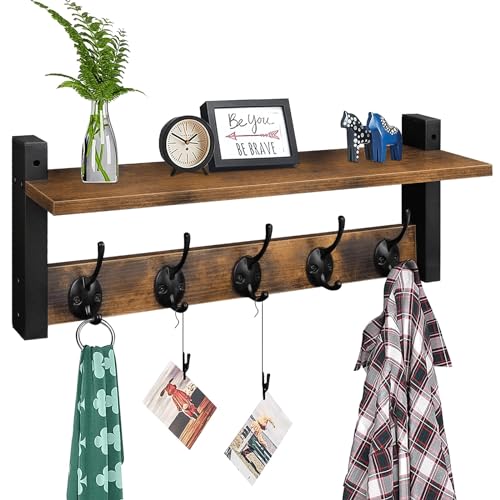
Homode Wall Hooks with Shelf
Problem it solves: Coats, scarves, hats, and bags landing on chairs or piling near the front door.
Best for: Small entryways with usable wall space and a need for one compact vertical grab zone.
Why it works: Hooks keep bulky winter layers vertical while the shelf can hold lightweight daily accessories.
What to check before buying: Confirm wall type, mounting method, available width, and the product's load guidance before installation.
Check on Amazon
Homleke Shoe Storage Bench with 4 Doors & Padded Seat Cushion
Problem it solves: Several everyday shoes and boots making a narrow entryway look crowded.
Best for: Entryways that need both seating and concealed footwear storage in one footprint.
Why it works: The bench combines a place to sit while removing extra shoes from open view.
What to check before buying: Measure width, depth, door clearance, and whether the compartments fit the footwear you plan to store.
Check on AmazonCommon Winter Entryway Organization Mistakes
Keeping every winter coat by the door
A small entryway should hold the active rotation, not the household's full outerwear collection.
Mixing wet and dry footwear
Keep weather-exposed boots in a washable zone and move dry everyday shoes into separate storage.
Using several catch-all baskets
Too many small containers can create as much clutter as the accessories themselves. Keep the categories simple.
Adding deep furniture to a narrow entrance
Measure the walking path before buying a bench or cabinet.
Ignoring drying needs
Wet coats, gloves, and footwear need appropriate drying before closed storage.
Skipping the daily reset
Winter gear multiplies quickly when yesterday's coats, bags, and dry shoes never leave the entryway.
Final Winter Entryway Reset Checklist
- Wet boots stay inside one washable floor zone.
- Only current daily coats and bags remain near the door.
- Hats, gloves, and scarves return to one defined accessory zone.
- Dry everyday shoes move off the open floor.
- Backup winter gear stays in secondary storage.
- The entrance and door swing remain completely usable.
Frequently Asked Questions
How do I organize winter gear in a small entryway?
Create separate zones for wet footwear, hanging coats, small accessories, and overflow. Keep only the current daily rotation near the door and move backups or rarely used winter items elsewhere.
Where should wet boots go in a small entryway?
Place the active pairs on a boot tray or other washable wet-footwear zone directly inside the entrance, making sure it does not block the walking path.
How do you store hats, gloves, and scarves in a small entryway?
Use one small basket, bin, or shelf section for each person or category so small winter accessories do not spread across hooks, benches, and floors.
How many coats should stay by the front door?
Keep only the coats currently used most often near the entry. Move backups, formal coats, and off-season outerwear to a closet or secondary storage area.
What if my entryway has no closet?
Use vertical wall hooks, a narrow bench or shoe cabinet, and one compact accessory zone. Avoid adding several freestanding pieces that narrow the entrance.
How do I stop winter gear from taking over the entryway?
Set capacity limits for boots, coats, and accessories and reset the space daily by removing dry gear, returning hats and gloves to their zone, and clearing items that belong elsewhere.