
How to Organize Water Bottles in a Kitchen
Stop reusable bottles from rolling through cabinets and losing their lids by giving the collection one dedicated zone, a practical quantity limit, and stable storage that matches the shape of your cabinet or drawer.
Quick Answer
Gather every reusable bottle first, remove damaged and rarely used extras, then choose one cabinet or deep drawer for the collection. Store bottles in stable horizontal lanes or upright rows depending on the available height, keep compatible lids and straws in one nearby section, and move oversized or specialty bottles out of the prime daily zone.
What an Organized Water-Bottle Zone Should Look Like
You should be able to grab one bottle without pulling out five others, find the correct lid or straw quickly, and return clean bottles after dishwashing without rebuilding the whole cabinet.
School, sports, work, and everyday bottles can share one zone as long as the quantity stays realistic. Large jugs and rarely used specialty bottles should not crowd the bottles used every morning.
Success checklist
- Bottles no longer roll or collapse.
- The daily collection fits in one zone.
- Lids and straws stay nearby.
- Oversized bottles are separated.
- The system is easy to reset after washing.
Table of Contents
Start by Reducing the Bottle Collection
Before you buy a rack, pull every reusable bottle, tumbler, sports bottle, kids' bottle, travel bottle, lid, and straw into one place. The collection often feels like a storage problem when it is partly a quantity problem.
Remove damaged bottles and any pieces that no longer have compatible lids. Then separate the bottles used in a normal week from oversized jugs, event bottles, and specialty pieces that come out only occasionally.
Choose the kitchen zone based on the daily collection, not the total collection. If the bottle problem is part of a larger cabinet reset, the Kitchen Organization Guide can help reorganize the surrounding storage. If you are working with limited space overall, see How to Organize a Small Kitchen.
8 Water Bottle Storage Ideas That Work
Give water bottles one dedicated zone
Do not split daily bottles between several cabinets. One defined zone makes it obvious when the collection has grown beyond the available space.
Use horizontal lanes in a short cabinet
If bottles are too tall to stand comfortably, individual horizontal lanes can stop them from rolling and make each bottle easier to remove.
Use upright rows in a deep drawer
A drawer gives top-down visibility when the bottles fit upright. Dividers can keep school, sports, and everyday bottles from sliding together.
Keep lids and straws in one nearby section
Loose accessories need one small home directly beside the bottles. Avoid scattering lids across utensil drawers and random cabinet shelves.
Create a family bottle limit
Keep enough bottles for normal routines plus a small backup. When each person has several nearly identical options, the category expands faster than the storage zone.
Group bottles by routine
School, sports, commuting, and travel bottles are easier to manage when the bottles used for the same routine stay together.
Move oversized bottles out of prime storage
Large insulated jugs and rarely used specialty bottles can move to a higher shelf, pantry, or secondary cabinet if they consume too much of the daily zone.
Reset the zone during dishwashing
Return clean bottles to the same rows and put compatible lids back in the same section. Remove damaged extras before they become permanent storage.
If a deep cabinet is the main problem, How to Organize Deep Kitchen Cabinets covers pull-forward access and visibility. If you want to dedicate a deep drawer to bottles, How to Organize Kitchen Drawers can help divide the space.
Need an Organizer?
Choose the organizer based on the storage problem, not simply the number of bottles you own.
Horizontal bottle rack
Adjustable dividers
Compact shelf riser
Drawer vs Cabinet Water Bottle Storage
| Storage method | Best when | Watch for |
|---|---|---|
| Horizontal cabinet rack | Cabinet height is limited and bottles roll when stacked loosely | Rack width, depth, and bottle diameter |
| Upright deep drawer | The drawer is tall enough and you want top-down visibility | Drawer height and divider stability |
| Loose upright cabinet row | You own only a few bottles and they stand securely | Bottles falling when one is removed |
| Lids kept with bottles | The collection is small and bottles fit comfortably | Extra height and drying before storage |
| Lids stored separately | You need to save height or manage many accessories | Keeping the lid zone close enough to avoid mismatches |
| Family shared zone | Bottle shapes are similar and everyone can use the same system | Too many duplicates accumulating |
| Person-by-person rows | Family members use different bottle sizes or routines | Using more space than a shared system |
How to Organize Water Bottles Step by Step
Gather Every Bottle, Lid, and Straw
Check cabinets, backpacks, lunch bags, drying racks, cars, and the dishwasher so you can see the real size of the collection.
Remove Damaged and Rarely Used Extras
Keep the bottles that support normal routines. Move specialty pieces out of the active kitchen zone rather than making daily storage larger.
Choose One Cabinet or Deep Drawer
Pick a zone close enough to the lunch-prep or drink area that clean bottles are easy to return.
Decide Between Horizontal and Upright Storage
Use cabinet height and bottle shape to decide. Do not force tall bottles upright in a shelf that barely clears them.
Create a Lid-and-Straw Zone
Keep accessories in one small nearby section. If keeping lids on bottles works better for your collection, make sure the bottles are fully dry before closed storage.
Add a Rack or Dividers Only if Needed
Add structure only when bottles roll, slide, or become difficult to remove. A small collection may not need an organizer at all.
Test the System During a Normal Week
If the bottles used most often remain easy to grab and return, keep the system. If one row becomes a catch-all, simplify the categories.
Three Simple Water Bottle Setups
One Cabinet, No Extra Furniture
Ideal for: A small collection that fits on one shelf.
Layout: Daily bottles grouped together, accessories in one small section, oversized bottles stored elsewhere.
Relevant product: None unless bottles roll or collapse.
Why it works: It solves the problem by reducing the collection before adding storage.
Horizontal Cabinet Rack
Ideal for: A short cabinet where tall bottles cannot stand comfortably.
Layout: Bottles stored horizontally in individual lanes with lids kept nearby.
Relevant product: spospo water bottle organizer.
Why it works: Removing one bottle does not trigger the rest of the stack.
Deep Drawer With Rows
Ideal for: Families with several daily school, work, or sports bottles.
Layout: Upright bottle rows separated by routine or person, with a small accessory zone.
Relevant product: SpaceAid drawer dividers.
Why it works: Everyone can see and return bottles from above without unloading a cabinet.
3 Verified Products for Water Bottle Organization
These products solve different problems. You may need only one—or none—if the edited bottle collection already fits securely.
Affiliate disclosure: As an Amazon Associate, Inplanty may earn from qualifying purchases.

spospo Water Bottle Organizer for Cabinet, 2 Pack
Problem it solves: Round bottles rolling, leaning, or collapsing into one another inside a cabinet.
Best for: Cabinets where bottles need individual horizontal lanes.
Why it works: The rack separates bottles so you can remove one without disturbing the rest of the row.
What to check before buying: Measure cabinet width, depth, and available height, then compare those measurements with the exact organizer listing and the largest bottle you plan to store.
Check on Amazon
SpaceAid Bamboo Drawer Dividers with Inserts and Labels
Problem it solves: Bottles sliding across a wide drawer or mixing with tumblers, lids, and accessories.
Best for: Deep drawers that can store bottles upright.
Why it works: Adjustable dividers create separate bottle rows and can reserve a smaller section for compatible lids or straws.
What to check before buying: Confirm the drawer is tall enough for your bottles and that the divider expansion range fits the internal width.
Check on Amazon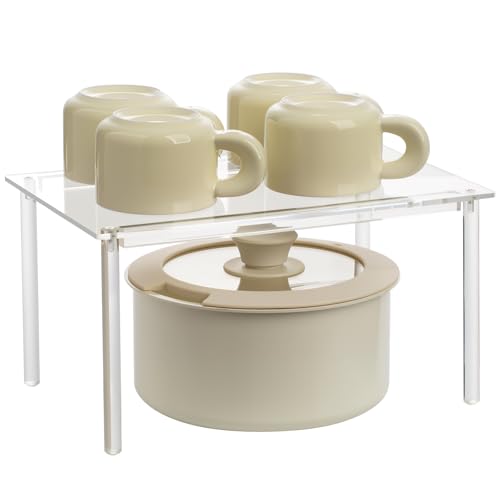
HENABLE Acrylic Cabinet Organizer Shelf
Problem it solves: Short accessories, cups, or small bottle parts consuming shelf space that could be separated vertically.
Best for: Cabinets where a small riser can separate bottle accessories from another short category without crowding the bottles themselves.
Why it works: A second level can keep smaller pieces visible instead of letting them disappear behind tall bottles.
What to check before buying: Measure shelf width and height and make sure the riser does not reduce clearance for the bottles you use most.
Check on AmazonCommon Water Bottle Organization Mistakes
Keeping too many bottles
A rack cannot fix a collection that is far larger than the household's normal routine requires.
Mixing bottles with travel mugs and cups
Different shapes create unstable piles. Separate categories when the storage method no longer works for both.
Scattering lids across several drawers
One accessory zone is easier to maintain than multiple small hiding places.
Ignoring bottle height
A cabinet that looks large may still be too short for upright storage once lids or handles are considered.
Using prime space for oversized jugs
Move large specialty bottles elsewhere if they crowd out the bottles used every day.
Buying a rack before measuring
Measure the shelf and the largest bottle first so the organizer solves the real layout problem.
Final Water Bottle Reset Checklist
- Every daily bottle has a stable position.
- Bottles can be removed without knocking others over.
- Lids and straws stay in one nearby zone.
- School, work, and sports bottles are easy to identify.
- Oversized and rarely used bottles do not occupy prime storage.
- The whole zone resets quickly after dishwashing.
Frequently Asked Questions
What is the best way to organize water bottles in a kitchen?
Choose one dedicated cabinet or deep drawer, keep only the bottles your household actually uses, and store them in stable rows instead of a loose pile. Horizontal racks work well in short cabinets, while deep drawers can work well for upright storage.
How do you stop water bottles from falling over in a cabinet?
Use individual lanes, a bottle rack, dividers, or another stable boundary so each bottle has a predictable position and removing one does not disturb the rest.
Should water bottles be stored with lids on?
If bottles fit comfortably and are fully dry, keeping compatible lids with the bottles can simplify matching. If lids reduce usable height or create unstable storage, keep them in one nearby labeled section.
Where should water bottle lids and straws go?
Keep them in one small drawer section, bin, or shelf zone directly beside the bottles so accessories do not spread through unrelated kitchen storage.
How many reusable water bottles should a family keep?
Keep enough for normal school, work, sports, and travel routines plus a small backup. Move specialty or rarely used bottles out of the prime kitchen zone.
Is a drawer or cabinet better for water bottles?
A deep drawer gives excellent top-down visibility if bottles fit upright. A cabinet is often better when bottles need to lie horizontally or when the drawer height is limited.