
How to Store Seasonal Items in an Apartment
Keep the current season easy to reach and move everything else into compact secondary storage. In a small apartment, seasonal storage works best as a rotation system—not as permanent overflow.
Quick Answer
Store seasonal items by keeping the current season in easy-access closets and drawers while moving off-season clothing, linens, decor, and gear into under-bed storage, upper closet shelves, or another secondary zone. Group items by season and category, label concealed bins, and rotate everything at the start of each major season.
What an Organized Seasonal Storage System Should Look Like
Your everyday closet should not be packed with heavy winter coats in summer or warm-weather accessories in January. The active season gets the easiest space; the outgoing season moves to a clearly defined secondary zone.
You should also be able to find a seasonal category without opening six unrelated bins. Clothes, linens, holiday decor, sports gear, and seasonal household items are easier to manage when they stay separate.
Success checklist
- Current-season items are easiest to reach.
- Off-season categories live in secondary storage.
- Each bin has one clear purpose.
- Bulky soft goods use space efficiently.
- The next seasonal rotation is easy to reverse.
Table of Contents
Edit Seasonal Categories Before You Pack Them Away
Do not spend apartment storage on items you already know you will not use next season. Before packing anything, remove damaged clothing, worn-out accessories, broken decor, and duplicate seasonal items that no longer earn their space.
Then separate the remaining items into practical categories: off-season clothing, outerwear, bedding and blankets, holiday decor, sports or outdoor gear, and seasonal household accessories.
For a broader apartment storage plan, use How to Add Storage to a Small Apartment. If most of your unused space is below the bed, How to Store Things Under the Bed can help turn that footprint into a dedicated seasonal zone.
8 Seasonal Storage Ideas for Small Apartments
Use under-bed space for the outgoing season
Seasonal clothes, extra linens, and other low-frequency soft goods can move under the bed when the containers fit the available clearance.
Reserve top closet shelves for seasonal categories
High shelves are ideal for bins you access only a few times a year, while eye-level space stays available for current needs.
Compress suitable bulky soft items
Vacuum storage bags can reduce the volume of compatible blankets and clothes when care instructions allow compression.
Keep hanging coats grouped together
Off-season coats and jackets can remain on a secondary section of the closet rod, ideally grouped so they do not mix into the active wardrobe.
Separate decor from clothing
Holiday and seasonal decor often has different shapes and protection needs. Keep it in its own labeled bins rather than filling gaps around clothes.
Use one bin per simple category
“Winter accessories” is easier to maintain than a bin containing scarves, beach towels, holiday lights, and travel gear together.
Create a small transition zone
Keep a few transitional layers or weather-dependent items accessible instead of moving the entire season at once.
Rotate on a predictable schedule
At each major season change, bring the next group forward, clean or review the outgoing items, and return them to the same secondary zones.
If closets are the main bottleneck, Closet Organization Guide can help you decide which shelves and rods should stay active. If floor space is tight, How to Use Vertical Storage shows how to use higher zones more effectively.
Need Seasonal Storage?
Choose storage based on the item type and the apartment space you actually have.
Compression bags
Lidded bins
Garment covers
Separate storage bins
Best Storage Method by Seasonal Item
| Seasonal item | Best storage zone | What to watch for |
|---|---|---|
| Off-season clothes | Under bed, upper closet shelf, or secondary closet section | Fabric care, moisture, and easy identification |
| Coats and jackets | Secondary hanging rod or garment storage | Garment length and closet depth |
| Blankets and bedding | Upper shelves or compatible compression storage | Care instructions and ventilation needs |
| Holiday decor | Lidded labeled bins | Fragile items need separate protection |
| Seasonal accessories | Small labeled bin or basket | Avoid mixing multiple seasons together |
| Outdoor or sports gear | Secondary closet or utility storage | Clean and dry items before storage |
How to Store Seasonal Items Step by Step
Gather the Outgoing Season
Bring together seasonal clothes, accessories, linens, decor, and gear so you can see the real volume before choosing storage.
Declutter Before Packing
Remove damaged, unused, and duplicate items rather than paying for storage space to keep them another year.
Group by Category
Keep clothing, outerwear, bedding, decor, and gear in separate groups so each storage container has a clear purpose.
Choose the Secondary Zones
Use under-bed space, top closet shelves, and other low-frequency storage for the outgoing season while prime storage stays open for the current season.
Use Compression Only Where Appropriate
For suitable soft goods, compression can save space. Follow textile and storage-product instructions rather than compressing everything by default.
Label Concealed Storage
Use simple labels such as “Winter Accessories” or “Holiday Decor” so you know what is inside without opening every bin.
Bring the New Season Forward
Once the outgoing season is packed, move the current season into the easiest closet, drawer, and entryway positions.
Three Simple Seasonal Storage Setups
Under-Bed Rotation
Ideal for: A studio or one-bedroom with little closet depth.
Layout: Current-season clothes stay in the closet; outgoing soft goods move under the bed; one small shelf bin holds accessories.
Relevant products: Criusia storage bins and Cozy Essential compression bags where appropriate.
Why it works: It uses hidden floor space without adding freestanding furniture.
High Shelf + Hanging Zone
Ideal for: A closet with limited floor area but usable upper shelving and hanging space.
Layout: Lidded bins on the top shelf, off-season coats grouped together in garment covers, current clothes kept at eye level.
Relevant products: Criusia lidded baskets and Perber garment bags.
Why it works: Prime closet space stays focused on the current season.
Category-Based Seasonal Bins
Ideal for: Several people sharing limited storage.
Layout: Separate bins for winter accessories, summer gear, seasonal linens, and decor; labels identify each category; current items move forward by season.
Relevant product: Criusia multi-bin storage set.
Why it works: The system scales without mixing every person's seasonal items into one large container.
4 Verified Products for Seasonal Apartment Storage
These products solve different storage problems. Choose only the products that match your edited seasonal collection and the space you have measured.
Affiliate disclosure: As an Amazon Associate, Inplanty may earn from qualifying purchases.

Criusia Storage Baskets with Lids, 4 Pack
Problem it solves: Seasonal accessories and folded items spreading across open shelves.
Best for: Closet shelves where light seasonal categories need a defined, covered home.
Why it works: Lidded bins can keep each seasonal category together while making the shelf look calmer.
What to check before buying: Measure shelf width, depth, and height and keep each bin assigned to one simple category.
Check on Amazon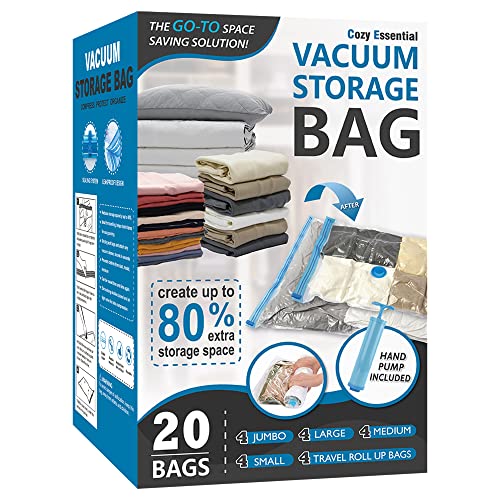
Cozy Essential Vacuum Storage Bags, 20-Count Combo
Problem it solves: Bulky seasonal clothing, blankets, or bedding taking up too much apartment storage.
Best for: Soft compressible items that can be stored according to the bag and textile-care instructions.
Why it works: Compression can reduce the volume of soft goods so they fit more efficiently in under-bed or closet storage.
What to check before buying: Avoid compressing items that should not be stored this way, and follow garment or textile care guidance before sealing.
Check on Amazon
Perber 40-Inch Clear Garment Bags, 12 Pack
Problem it solves: Off-season coats, jackets, and hanging clothes mixing into the active wardrobe.
Best for: Closets where seasonal hanging pieces can remain on the rod but need to be grouped and protected.
Why it works: Clear covers keep the stored category visible while separating off-season garments from the current rotation.
What to check before buying: Confirm garment length, closet depth, and appropriate storage conditions for the fabrics you plan to cover.
Check on Amazon
Criusia Closet Organizers and Storage Bins, 6 Pack
Problem it solves: Several small seasonal categories needing separate storage without adding rigid furniture.
Best for: Closets, upper shelves, or other measured apartment storage zones that suit the bin dimensions.
Why it works: Multiple bins can separate hats, scarves, decor, linens, or other light seasonal categories without mixing them together.
What to check before buying: Measure the target shelf or under-bed clearance and avoid buying more bins than the edited seasonal collection actually needs.
Check on AmazonCommon Seasonal Storage Mistakes
Storing everything you own
Seasonal rotation is a good time to remove items you already know you will not use next year.
Using prime storage for the off-season
Eye-level shelves and easy drawers should support what you are wearing and using now.
Mixing unrelated seasonal categories
A bin of coats, decor, beach gear, and bedding is hard to retrieve from and harder to rotate.
Buying bins before measuring
Apartment storage is unforgiving. Measure under-bed clearance and closet shelves before choosing containers.
Compressing everything
Compression is useful for suitable soft goods, not a universal storage method for every textile or seasonal item.
Skipping the next-season review
Hidden seasonal storage accumulates quickly when nothing is reassessed during rotation.
Final Seasonal Storage Checklist
- Current-season items occupy the easiest closet and drawer space.
- Off-season categories live in measured secondary storage.
- Clothes, decor, linens, and gear are separated by category.
- Concealed bins are labeled clearly enough to identify without opening.
- Bulky soft goods use compression only when appropriate.
- The system can reverse easily at the next seasonal change.
Frequently Asked Questions
Where should I store seasonal items in a small apartment?
Start with low-frequency zones such as under the bed, top closet shelves, the back of a closet, and other secondary storage areas. Keep current-season items in the easiest-to-reach spaces.
What seasonal items should go under the bed?
Under-bed storage works well for off-season clothes, extra linens, travel gear, and other lightweight categories that do not need daily access, provided the containers fit the available clearance.
How do I store bulky winter clothes in an apartment?
Edit the collection first, then use high closet shelves, under-bed containers, or compatible compression bags for suitable soft items. Keep frequently worn transitional pieces more accessible.
Should seasonal decor be stored with seasonal clothes?
Usually it is easier to keep decor and clothing in separate labeled categories so fragile, bulky, or differently shaped items do not damage or bury one another.
How often should I rotate seasonal apartment storage?
Review it at each major seasonal change. Bring the next season forward, move the outgoing season into secondary storage, and remove anything you no longer use.
How do I remember what is inside hidden seasonal bins?
Use clear containers where practical or simple labels that name the category and season. Keep the labeling broad enough that the system stays easy to maintain.