Quick Answer
Keep Stromanthe in bright indirect light, water before the root zone becomes completely dry, and monitor humidity if the leaf tips turn crispy. You do not need to chase greenhouse-level humidity if the plant is otherwise growing well. Stable conditions matter more than one perfect number.
On This Page
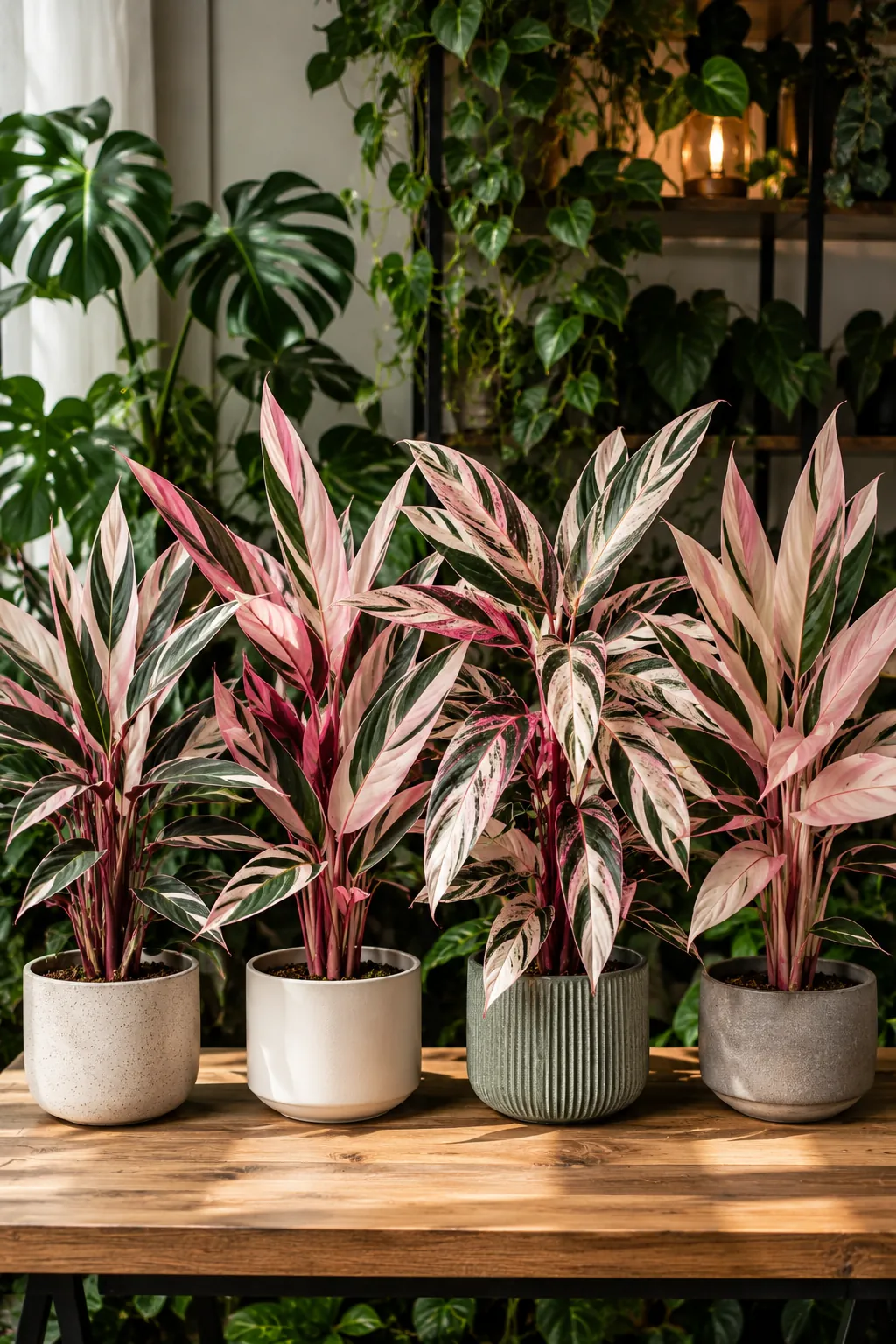
Four Stromanthe varieties at a glance
More resilient than its reputation suggests
In the source experience, Triostar went about three weeks without water after repotting, lost a large amount of foliage, then recovered and pushed new leaves within roughly a month.
That does not mean severe drying is safe. It does show that an established plant can recover if the root system remains healthy.
Its color also changed with seasonal light: greener foliage in winter and stronger pink tones when brighter light returned.
The strongest grower in this collection
Magic Star was already large when purchased and continued producing leaves rapidly in one stable location. The source kept it several meters from the window in the brightest room, where it remained without repeated relocation.
Takeaway
For Stromanthe, a stable bright-indirect position may matter more than constantly chasing a supposedly perfect location.
Slower growth does not automatically mean a problem
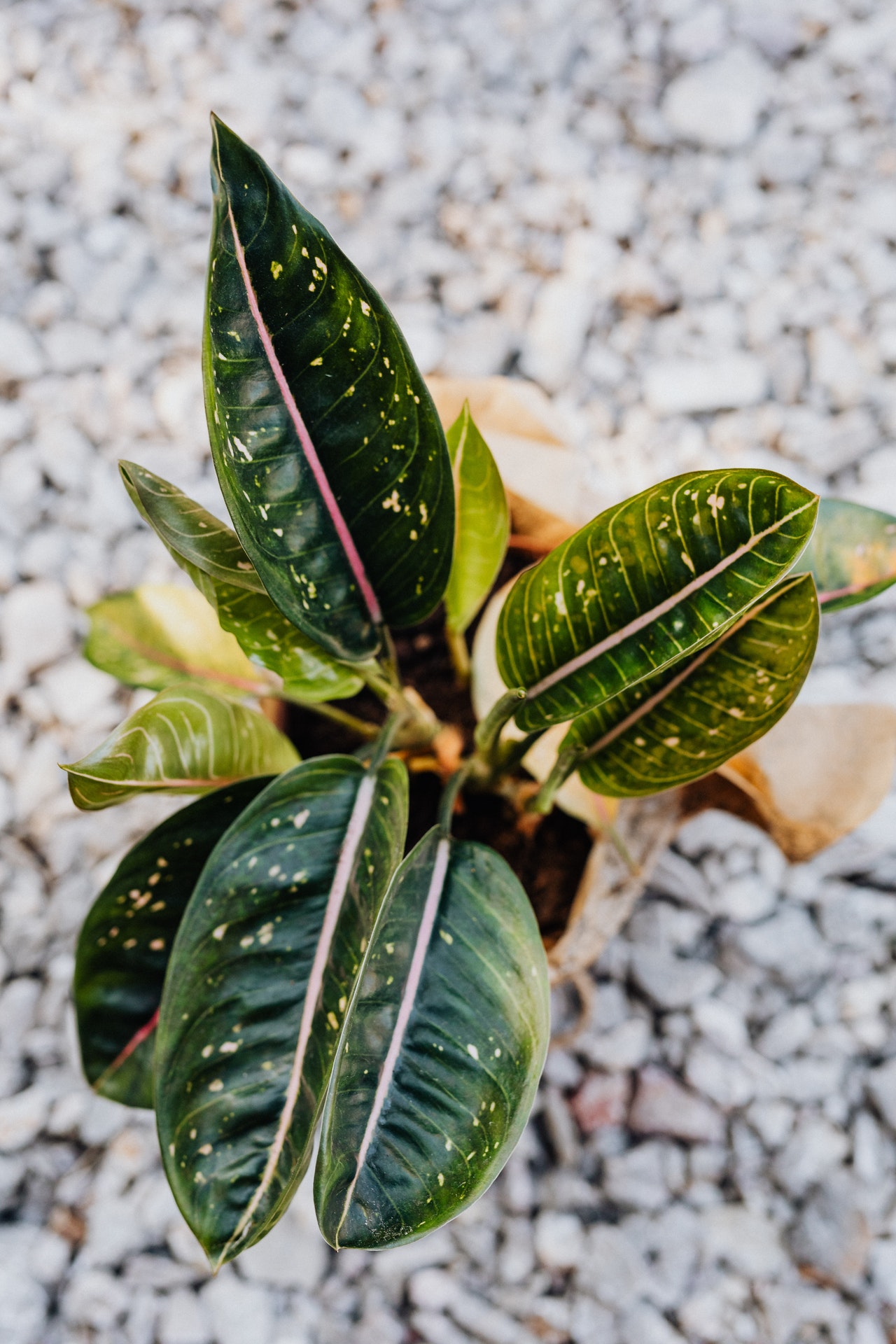
Multicolor / Sanguinea
Stayed small and grew slowly in the source collection while living near the Triostar.
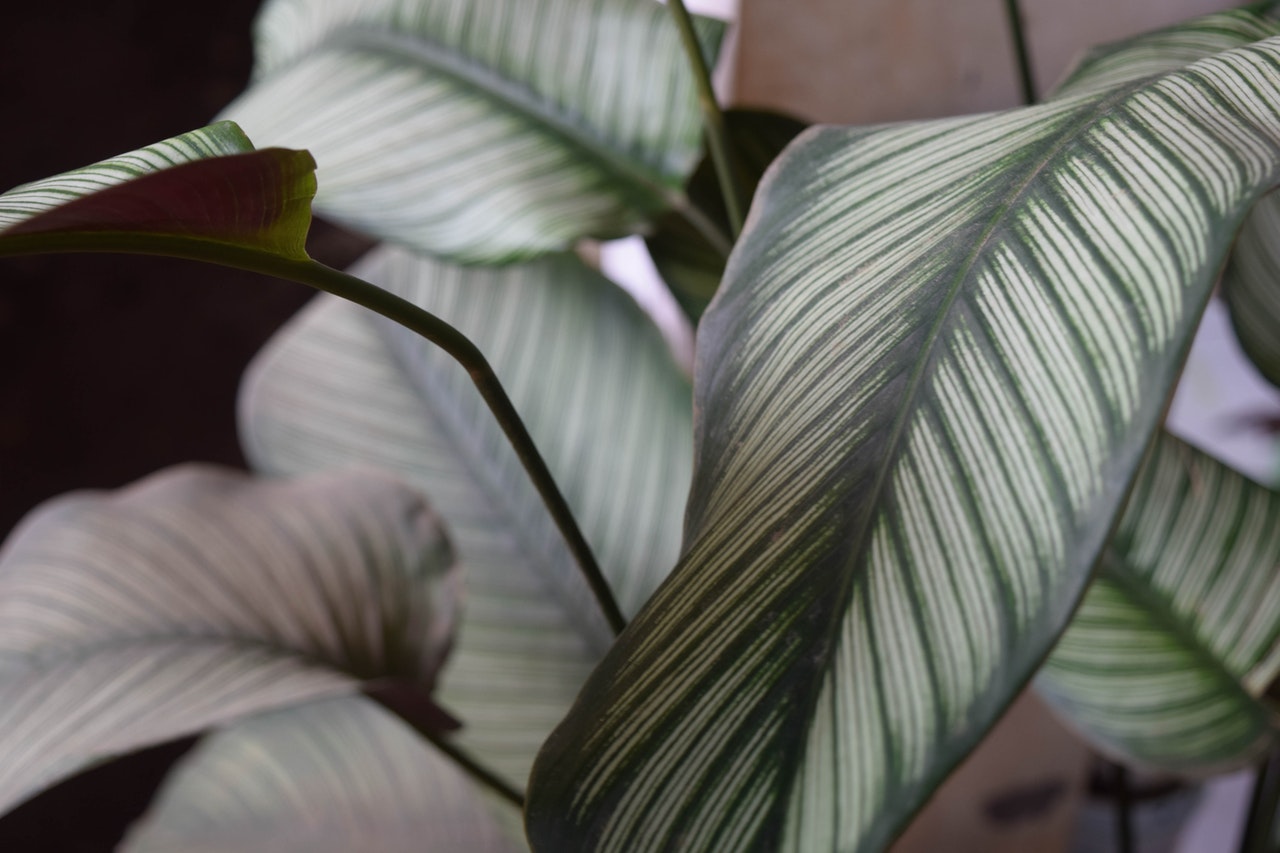
Horticolor
Also remained small early on, with a greener color that stood out from the other varieties.
Do not let the root zone become bone dry
The source waters about once a week when roughly the upper third of the soil has dried. The useful principle is not the seven-day schedule—it is the moisture level.
Stromanthe generally prefers more even moisture than drought-tolerant houseplants, but the pot should not remain saturated.
Bright indirect light supports stronger color
Triostar and other variegated Stromanthe can become more colorful with better usable light. Harsh direct sun is not the goal; stronger indirect light is.
Color can change seasonally
Greener winter leaves do not necessarily mean the plant is unhealthy if it is otherwise growing normally.
You do not need to chase 90%
The source notes that Stromanthe may enjoy very high humidity, but these plants were being grown around 50–60% household humidity without a humidifier running constantly.
Crispy tips can happen in drier conditions, but humidity is not the only possible cause. Watering consistency and mineral buildup can matter too.
Feed active growth, not stress
The source fertilizes about twice a month. A safer general rule is to feed during active growth according to the fertilizer label and reduce or stop feeding if the plant is stressed or barely growing.
Buy only what solves the real problem
The highest-value purchases are usually room monitoring, supplemental light for a genuinely dim spot, or better drainage when repotting is actually needed.
Affiliate disclosure: As an Amazon Associate, Inplanty may earn from qualifying purchases.

Govee Indoor Hygrometer Thermometer H5075 with Bluetooth App Control
Problem it solves: You are guessing whether crispy tips are connected to a dry room.
Best for: Triostar, Magic Star, Multicolor, and Horticolor grown in heated or air-conditioned rooms.
Why it works: It gives you a real temperature and humidity baseline for the exact plant zone.
What to check before buying: Measure near the plant rather than relying on a reading from another room.
Check on Amazon
SANSI Grow Lights for Indoor Plants, Pot Clip-On Plant Light, 1-Pack
Problem it solves: Your Stromanthe is losing color or growing slowly because the room is too dim.
Best for: Smaller Stromanthe plants in rooms without enough bright indirect light.
Why it works: Supplemental light can support stronger color and steadier growth without moving the plant into harsh sun.
What to check before buying: Use only if natural light is genuinely insufficient.
Check on Amazon
Molly's Aroid Potting Mix, Chunky Soil-Free for Indoor Plants, 3 Dry Quarts
Problem it solves: The plant actually needs repotting and the current mix stays wet or compacted too long.
Best for: Stromanthe after acclimation when a more open root zone is needed.
Why it works: An airy mix can improve drainage and root-zone oxygen.
What to check before buying: Stromanthe is not an aroid, so use this only as a drainage-oriented component or base rather than assuming every ingredient is ideal by default.
Check on AmazonThree Stromanthe setups
Bright Room Setup
Use: Triostar or Magic Star + bright indirect light + consistent moisture.
Why it works: supports stronger color and steady leaf production.
Dry-Room Setup
Use: Stromanthe + hygrometer.
Why it works: confirms whether humidity is really low before you add equipment.
Dim-Room Setup
Use: smaller Stromanthe + supplemental light when natural light is clearly insufficient.
Why it works: solves the light bottleneck without exposing the leaves to harsh sun.
What Stromanthe dislikes most
Letting the soil dry completely
Severe drying can cause widespread browning and leaf loss.
Harsh direct sun
More light can improve color, but intense sun can damage foliage.
Very dry air
Crispy tips become more likely when the room is persistently dry.
Constant relocation
Once a Stromanthe is doing well in a stable position, repeated moving is rarely necessary.
Overreacting to one brown tip
Minor cosmetic damage does not mean the whole care system is failing.
Following a fixed weekly watering rule
Check the soil first because drying speed changes with season and location.
A simple Stromanthe care routine
- Give bright indirect light.
- Water before the root zone becomes completely dry.
- Do not keep the pot saturated.
- Measure humidity before buying a humidifier.
- Expect some seasonal color change.
- Feed only during active growth.
- Leave a successful placement alone.
Frequently Asked Questions
Is Stromanthe Triostar hard to care for?
It can be sensitive to dry soil, harsh sun, and low humidity, but the source experience shows that an established Triostar can recover from stress if the roots remain healthy.
How often should I water Stromanthe?
The source waters about once a week when roughly the upper third of the soil has dried. A better rule is to check the soil rather than follow a fixed weekly schedule.
How much light does Stromanthe need?
Bright indirect light is the safest default. More usable light can support stronger color, but harsh direct sun can damage the foliage.
Does Stromanthe need 90% humidity?
The source says Stromanthe may enjoy very high humidity, but the author's plants were growing around 50–60% household humidity. Exact needs vary with the room and plant condition.
Why do Stromanthe leaf tips turn brown?
Crispy tips can be associated with dry air, inconsistent watering, mineral buildup, or other environmental stress. Check the whole care setup rather than assuming humidity is the only cause.
What is the difference between Triostar and Magic Star?
The source describes Triostar as highly variegated with pink tones and Magic Star as a very vigorous, larger-growing plant. Both follow a similar core care system.