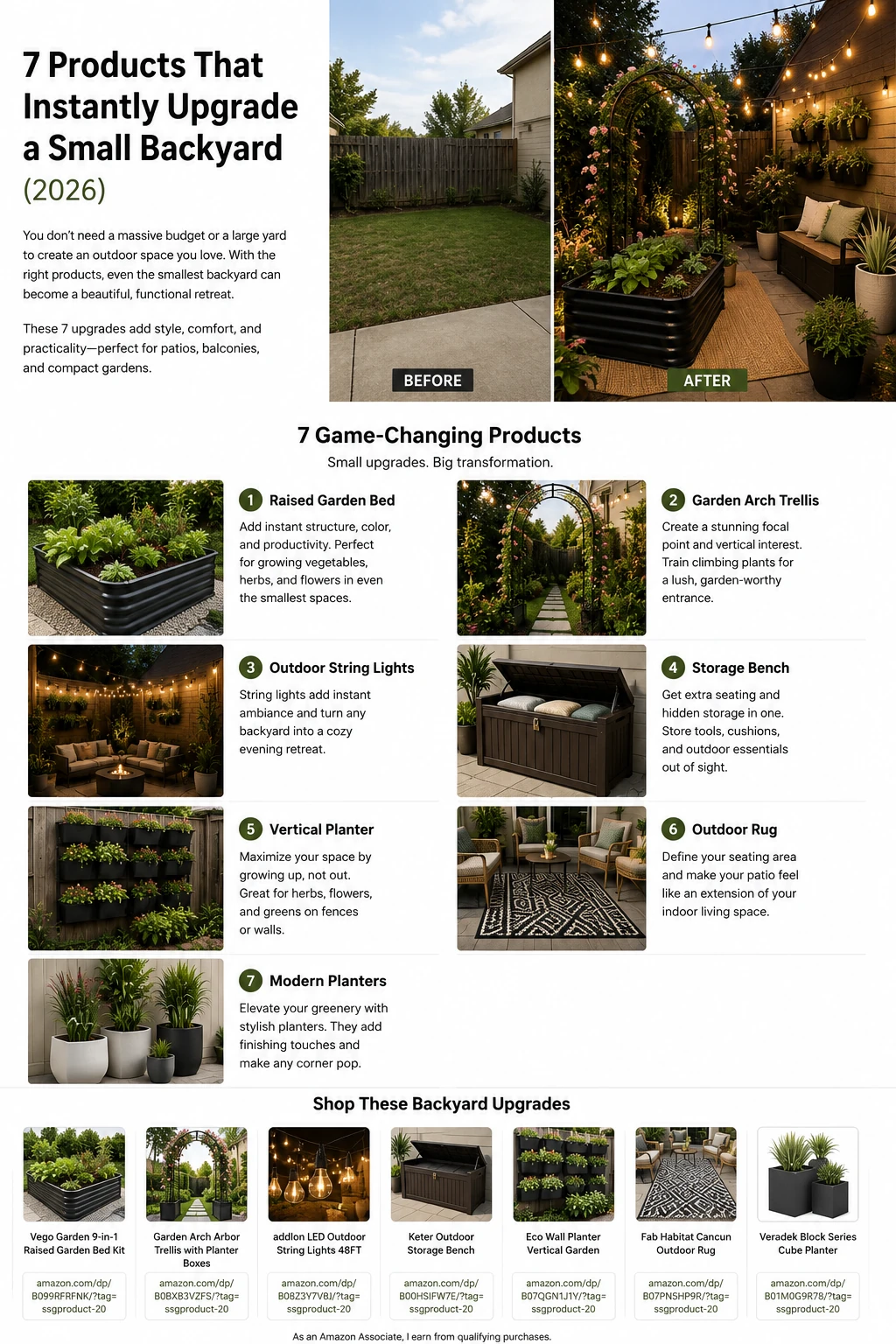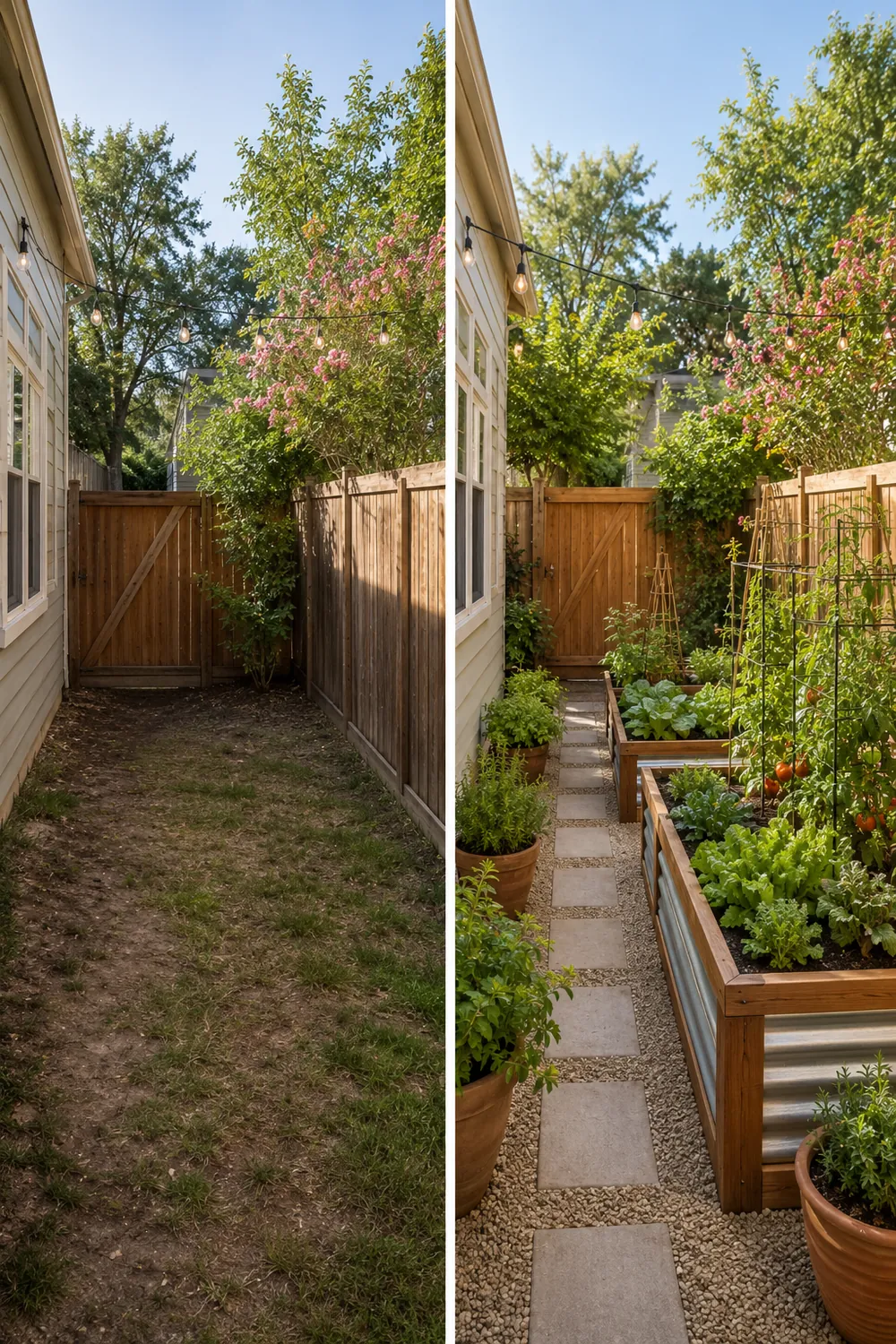
A tiny backyard can feel more intentional than a large one
A compact outdoor space does not have to feel cramped. In many cases, a small yard is easier to style because every element can support a clear purpose.
The biggest visual improvement comes from reducing clutter and guiding the eye. Open center space, layered planting, repeated materials, and one strong focal point can make a narrow yard feel wider, calmer, and more complete.
Use these ideas as building blocks rather than a checklist. The strongest backyard transformations usually combine only a few of them well.
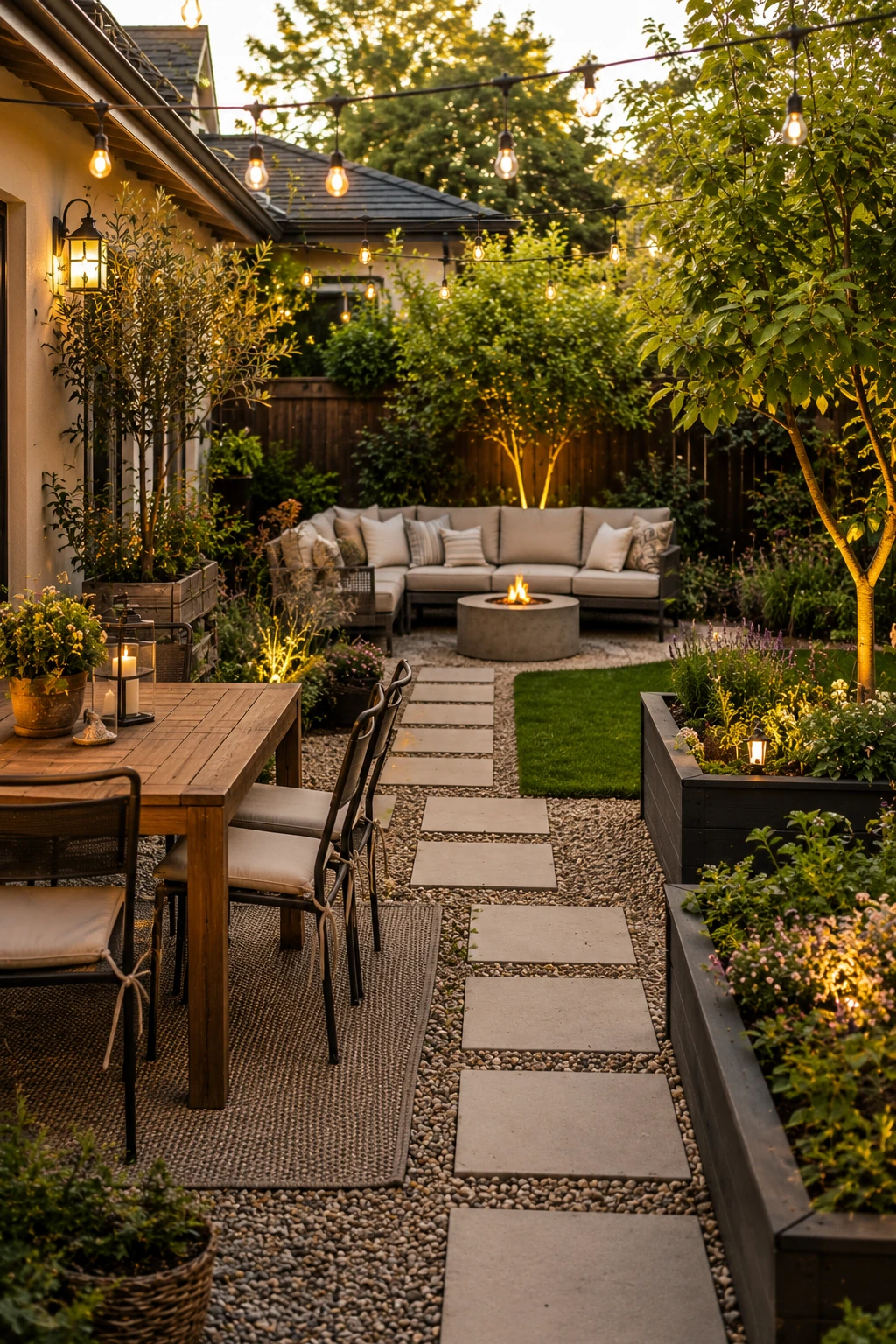
Start with the layout, not the accessories
Protect the sightline
Keep the center visually open so the eye can travel through the entire yard.
Add vertical height
Trellises, pergolas, tall planters, and string lights make the space feel taller.
Repeat materials
Using the same wood, stone, or planter finish creates visual continuity.
Choose one destination
A bistro set, fountain, fire pit, or reading chair gives the yard a reason to exist.
Tiny backyard upgrades that create more visual space
Create separate outdoor zones
Assign clear roles to dining, relaxing, gardening, and entertaining. Even two small zones feel more intentional than one undefined area.
Use light-colored pavers
Beige, pale gray, and natural stone tones reflect more light and visually open the yard.
Build along the edges
Move seating, benches, and planters toward the perimeter to preserve open center space.
Choose multi-functional furniture
Storage benches, folding tables, nesting side tables, and hidden compartments reduce clutter.
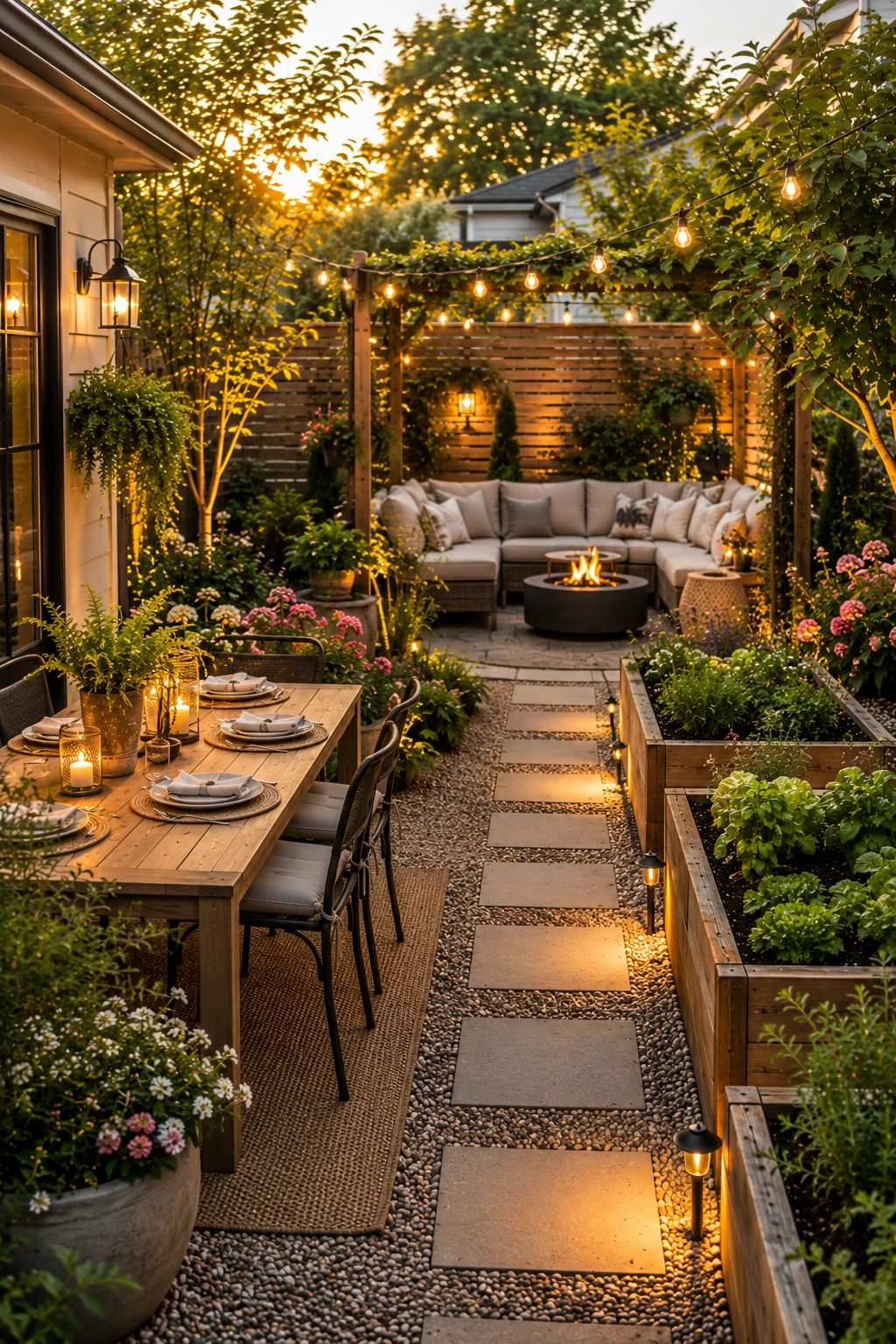
Install a vertical garden
Wall planters, hanging baskets, trellises, and climbing plants add greenery without using floor space.
Add a gravel patio
Gravel defines an outdoor room affordably and works especially well in narrow or irregular yards.
Use mirrors outdoors
A weather-safe mirror can reflect light and greenery, creating the illusion of depth.
Create a curved pathway
Curved lines keep the entire yard from being revealed at once and encourage the eye to move.
Hang string lights
Lighting draws attention upward and turns a small area into a cozy evening destination.
Add built-in seating
Built-in benches save space and can provide hidden storage underneath.
Keep the lawn small
Reduce unused grass and give more space to seating, planting, or entertaining.
Grow up instead of out
Pergolas, climbing roses, and tall structural elements increase perceived height.
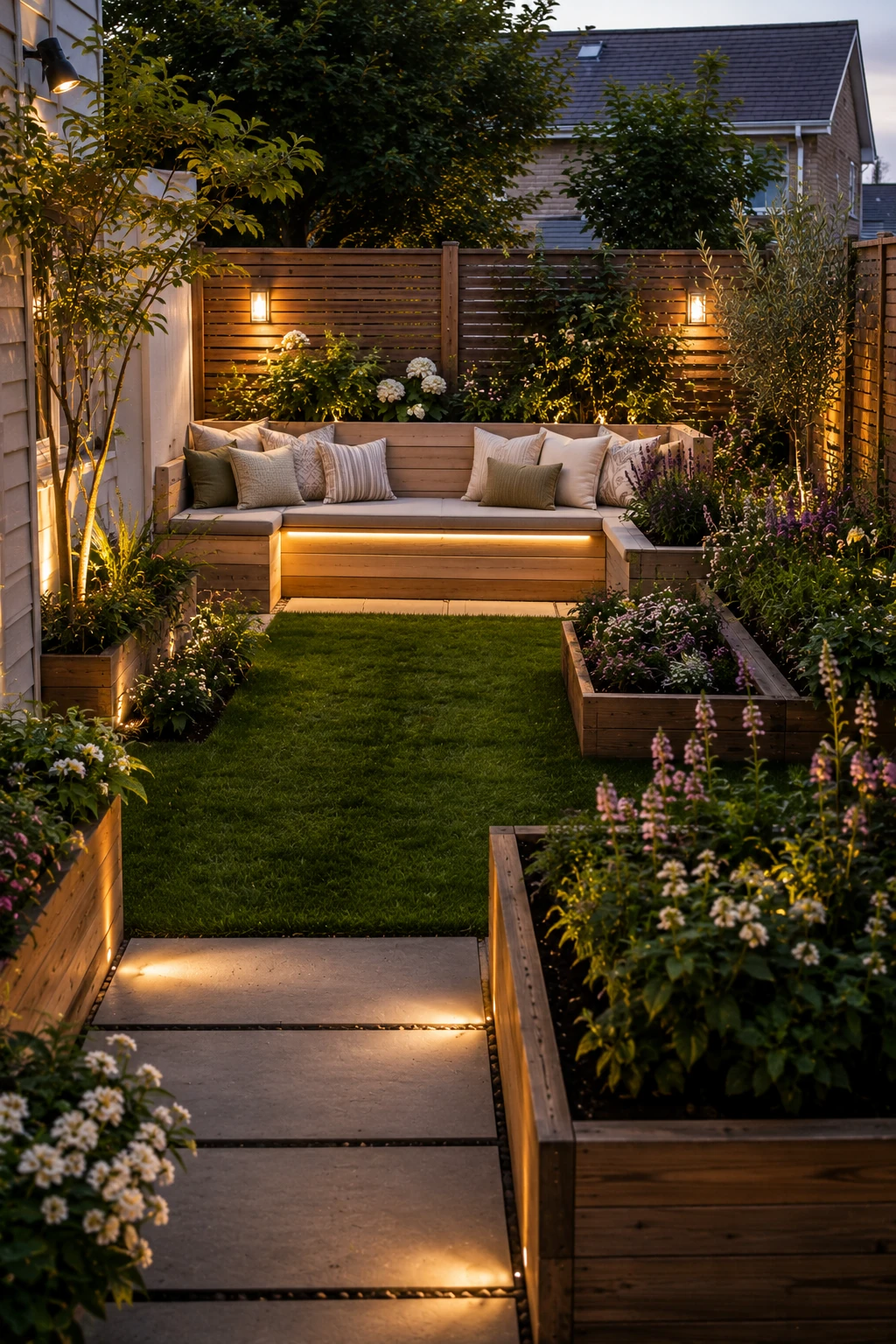
Add a small water feature
A compact fountain creates a focal point and adds relaxing sound without taking over the yard.
Use larger planters
A few substantial pots look cleaner and more sophisticated than many tiny containers.
Create a reading corner
A comfortable chair, side table, and one or two plants can transform an unused corner.
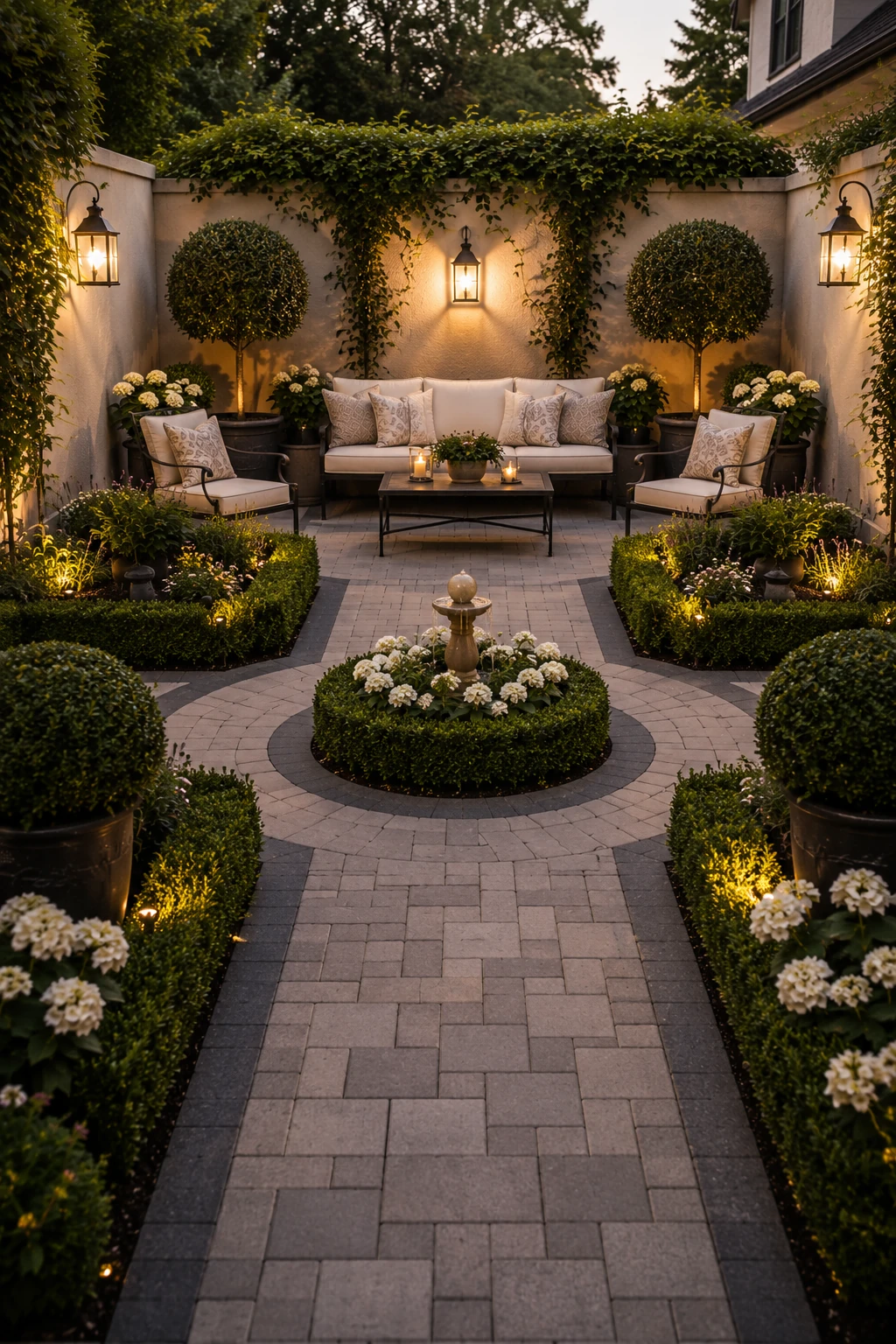
Try a courtyard layout
Defined edges, symmetry, and a central focal point create structure in a compact yard.
Add a pergola
A compact pergola defines an outdoor room, adds height, and supports lights or climbing plants.
Repeat plant colors
Repeating the same flower or foliage colors creates continuity and stronger visual flow.
Create privacy without blocking light
Use open trellises, horizontal slats, climbing plants, or decorative screens instead of solid barriers.
Use an outdoor rug
A properly sized rug anchors furniture and makes a seating area feel like a complete outdoor room.
Add a bistro set
A small table and two chairs can turn an overlooked corner into a charming dining spot.
Plant in layers
Place tall plants in back, medium plants in the middle, and ground cover in front to create depth.
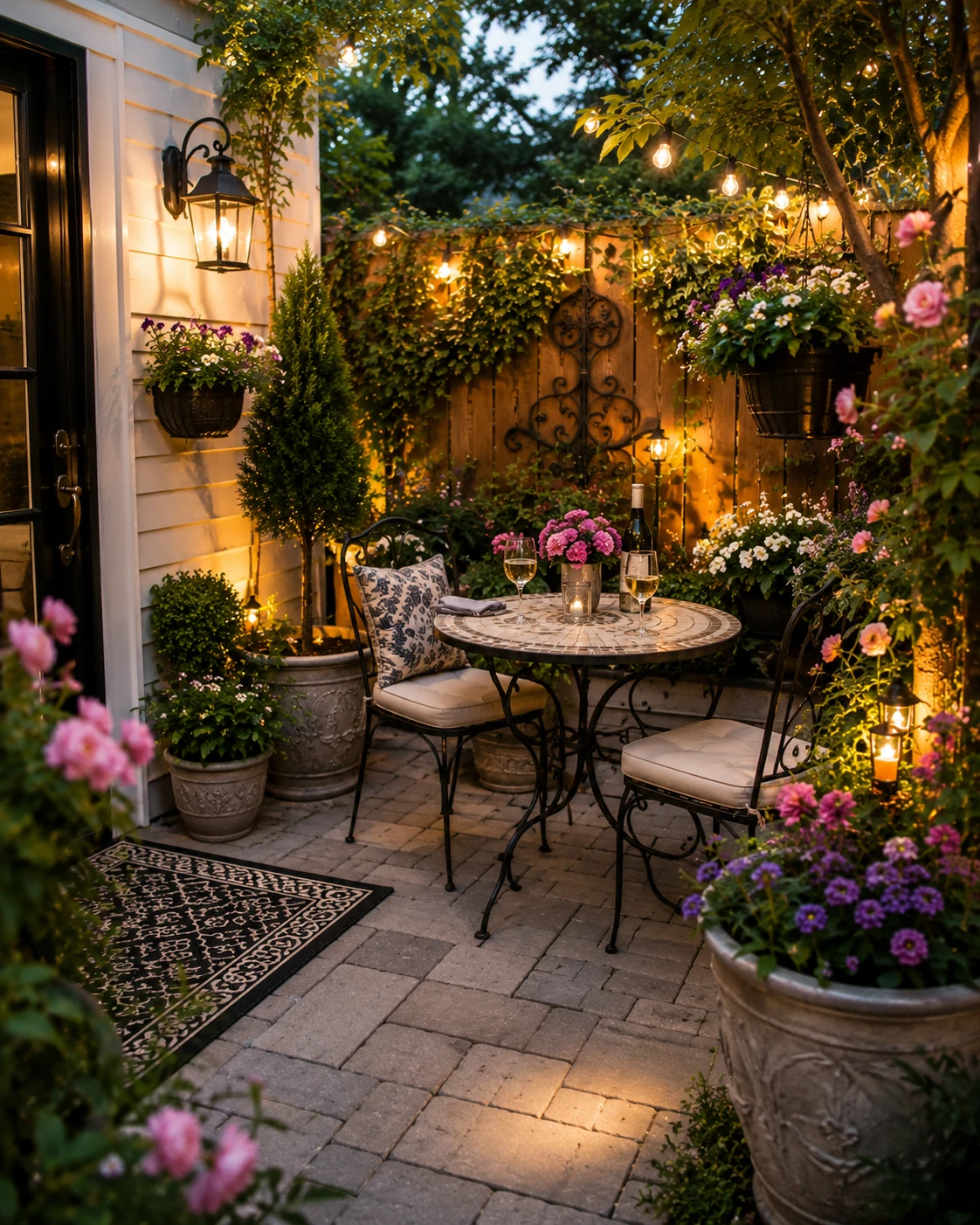
Use corner garden beds
Turn overlooked corners into planting zones that soften fences and hard edges.
Create a compact fire pit area
A portable fire pit can add a gathering point, provided local rules and safe clearances are followed.
Focus on one statement feature
Choose one hero element—a pergola, fountain, fire pit, dining area, or flower garden—and let it lead the design.
Know when to stop
Once the space has one destination, one visual rhythm, and enough room to move, resist adding more.
5 products that solve real tiny-backyard problems
These picks map directly to the layout strategies above: create a compact destination, hide clutter, draw the eye upward, define a zone, or move planting off the ground.
Affiliate disclosure: As an Amazon Associate, Inplanty may earn from qualifying purchases. Amazon US availability was checked on August 6, 2026.

Grand patio 3-Piece Folding Patio Bistro Set
Problem it solves: You need a real dining destination without permanent furniture bulk.
Best for: Narrow patios, courtyard corners, balconies, and tiny backyards where furniture may need to fold away.
Why it works: A folding table and two chairs create a complete zone with a smaller visual footprint than a full patio dining set.
What to check before buying: Measure chair pull-out space as well as the table footprint so the set does not block your main path.
Check on Amazon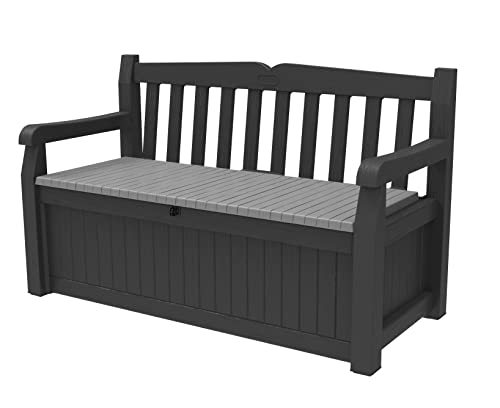
Keter Solana 70 Gal Outdoor Storage Bench
Problem it solves: Cushions, tools, toys, or outdoor accessories are creating visible clutter.
Best for: Tiny yards where one piece needs to provide seating and concealed storage.
Why it works: Combining two functions in one footprint follows the strongest small-space rule: every large object should earn its space.
What to check before buying: Confirm the bench fits along a boundary without narrowing circulation.
Check on Amazon
Brightech Ambience Pro Outdoor String Lights
Problem it solves: The backyard feels flat after dark and visually ends at eye level.
Best for: Pergolas, fence lines, patio zones, and small courtyards where overhead lighting can create height.
Why it works: String lights pull the eye upward and define an outdoor room without taking floor space.
What to check before buying: Plan safe attachment points, power access, weather exposure, and overhead clearance before hanging.
Check on Amazon
nuLOOM Wynn Indoor/Outdoor Area Rug, 5' × 8'
Problem it solves: A seating area feels like loose furniture rather than a finished outdoor room.
Best for: Small patios where one rug can visually connect chairs and a table.
Why it works: One appropriately sized rug creates a clear boundary and reduces the need for extra decorative objects.
What to check before buying: Check the 5-by-8-foot footprint against your actual patio; an oversized rug can make a tiny yard feel crowded.
Check on Amazon
Ogrmar 36-Pocket Wall Planter
Problem it solves: You want more greenery but have almost no planting footprint left on the ground.
Best for: Fences or walls that can support a lightweight vertical planting system.
Why it works: It moves planting upward and leaves precious floor area open for movement or seating.
What to check before buying: Confirm the wall or fence can support the wet planted weight and plan for drainage before mounting.
Check on AmazonBuild your tiny backyard in four layers
Define the floor
Choose gravel, pavers, decking, or a small lawn area to establish the main zone.
Add the destination
Select seating, dining, a reading corner, or a fire feature as the core purpose.
Build the edges
Add planters, layered beds, screens, or built-in benches around the perimeter.
Finish with atmosphere
Use lighting, textiles, repeated colors, and one focal accessory.
- Keep a clear path from the house to the main seating area.
- Use no more than two or three primary materials.
- Choose furniture sized for the actual footprint, not the catalog photo.
- Repeat one planter color or finish throughout the yard.
- Place the tallest elements near boundaries, not in the center.
- Leave some negative space so the design can breathe.
Where to spend first
A compact backyard does not need to be completed all at once. Prioritize the changes that affect layout and daily use before buying decorative details.
| Priority | Upgrade | Why it matters | Good for |
|---|---|---|---|
| 1 | Floor or ground surface | Defines the usable area and instantly makes the space feel intentional. | Every small backyard |
| 2 | Space-saving seating | Determines whether the yard is actually comfortable and functional. | Dining, relaxing, entertaining |
| 3 | Privacy or vertical structure | Adds enclosure, height, and visual softness. | Urban and overlooked yards |
| 4 | Lighting | Extends use into the evening and draws the eye upward. | Cozy atmosphere |
| 5 | Decor and accessories | Finishes the look after the layout works. | Final styling |