
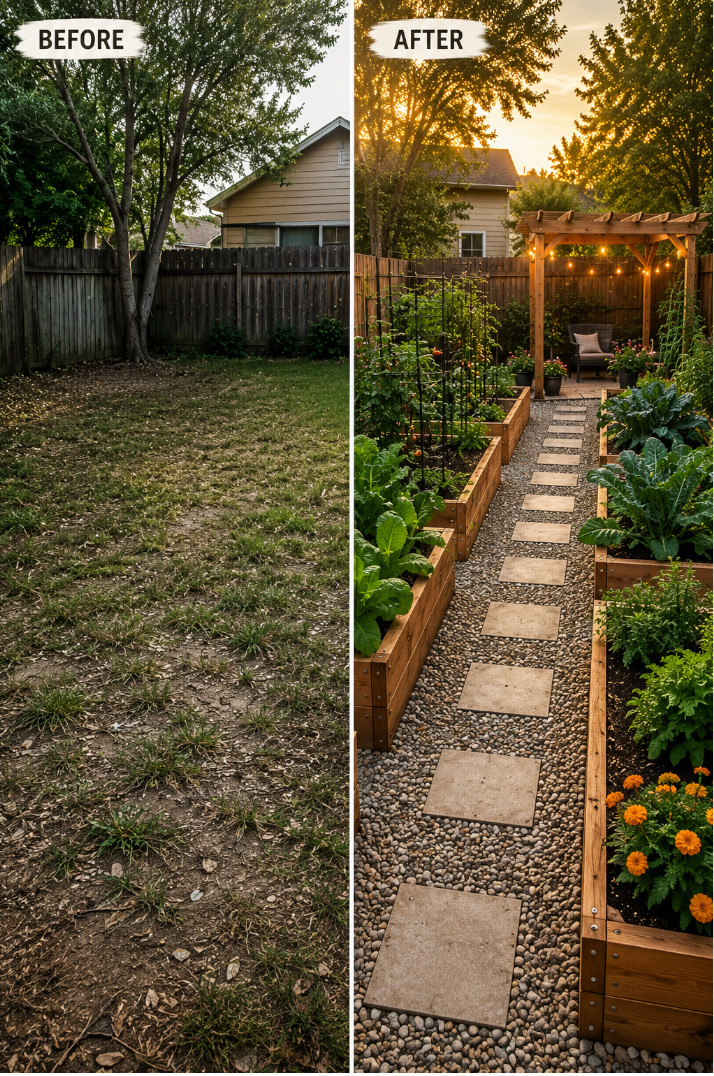
25 Raised Bed Garden Before and After Transformations
Turn an empty lawn, neglected corner, narrow side yard, or compact patio into a productive garden with better soil, clearer pathways, vertical growing, and a layout that feels intentional.
Raised beds create structure before the first plant even grows
Raised beds are one of the fastest ways to make a backyard feel organized. They define where food is grown, where people walk, and where tools, irrigation, and trellises belong.
They are especially useful in small backyards because the growing area can be concentrated into productive zones instead of scattered through the lawn.
The strongest transformations start with one or two beds, clear access on every side, and a simple planting plan that can expand over time.
Six practical benefits
Better soil
Fill each bed with a mix designed for vegetables, herbs, or flowers.
Improved drainage
Roots are less likely to sit in compacted, waterlogged ground.
Fewer weeds
Defined beds make weeding more targeted and manageable.
Easier access
Raised soil is more comfortable to plant, maintain, and harvest.
Efficient yields
Plants can be spaced carefully inside a controlled growing area.
Cleaner design
Repeated materials and paths create a polished backyard layout.
Raised bed transformations you can adapt
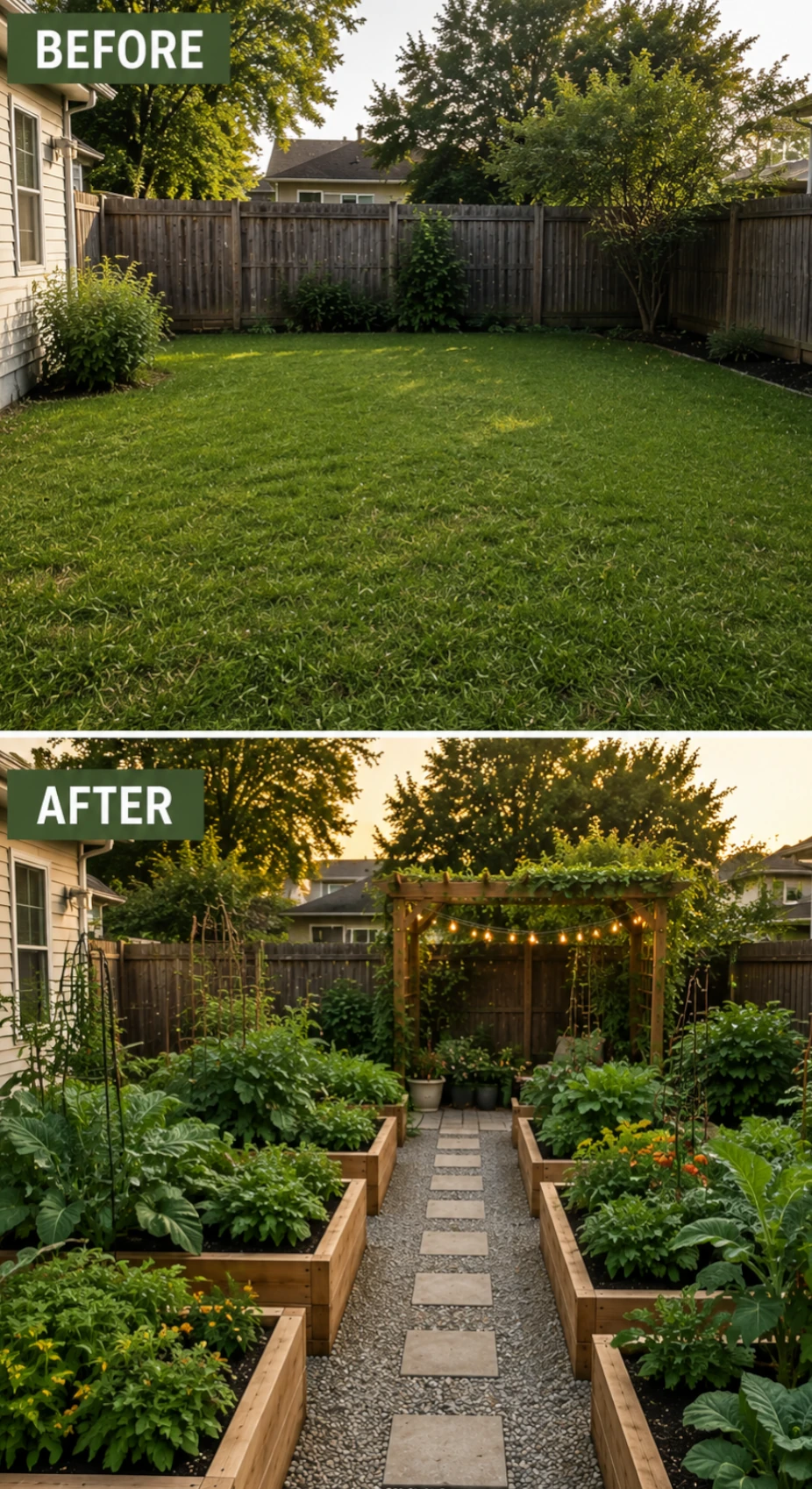
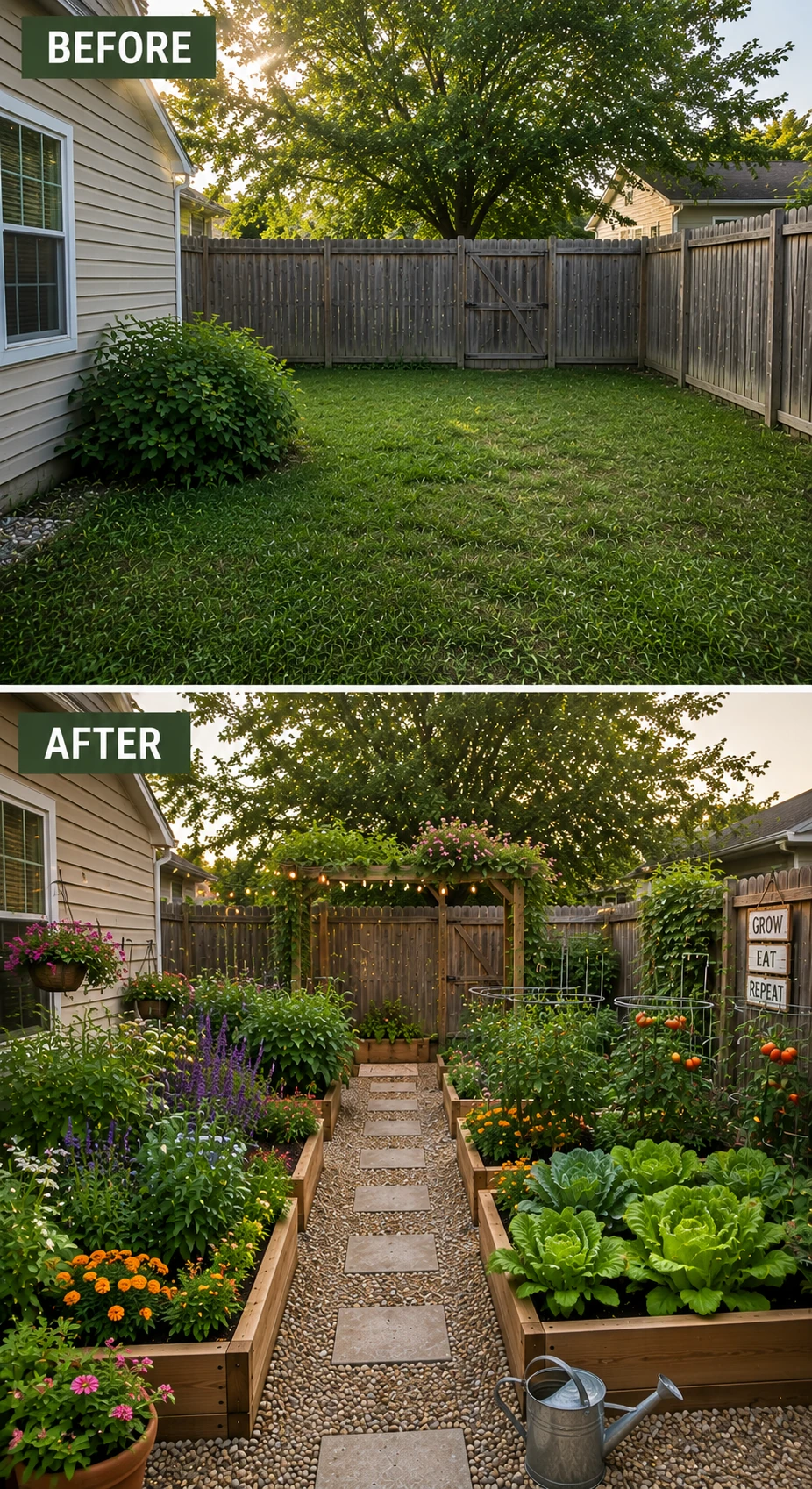
1. Empty Lawn → Productive Vegetable Garden
Replace unused grass with two or three cedar beds, herbs, and a simple path.
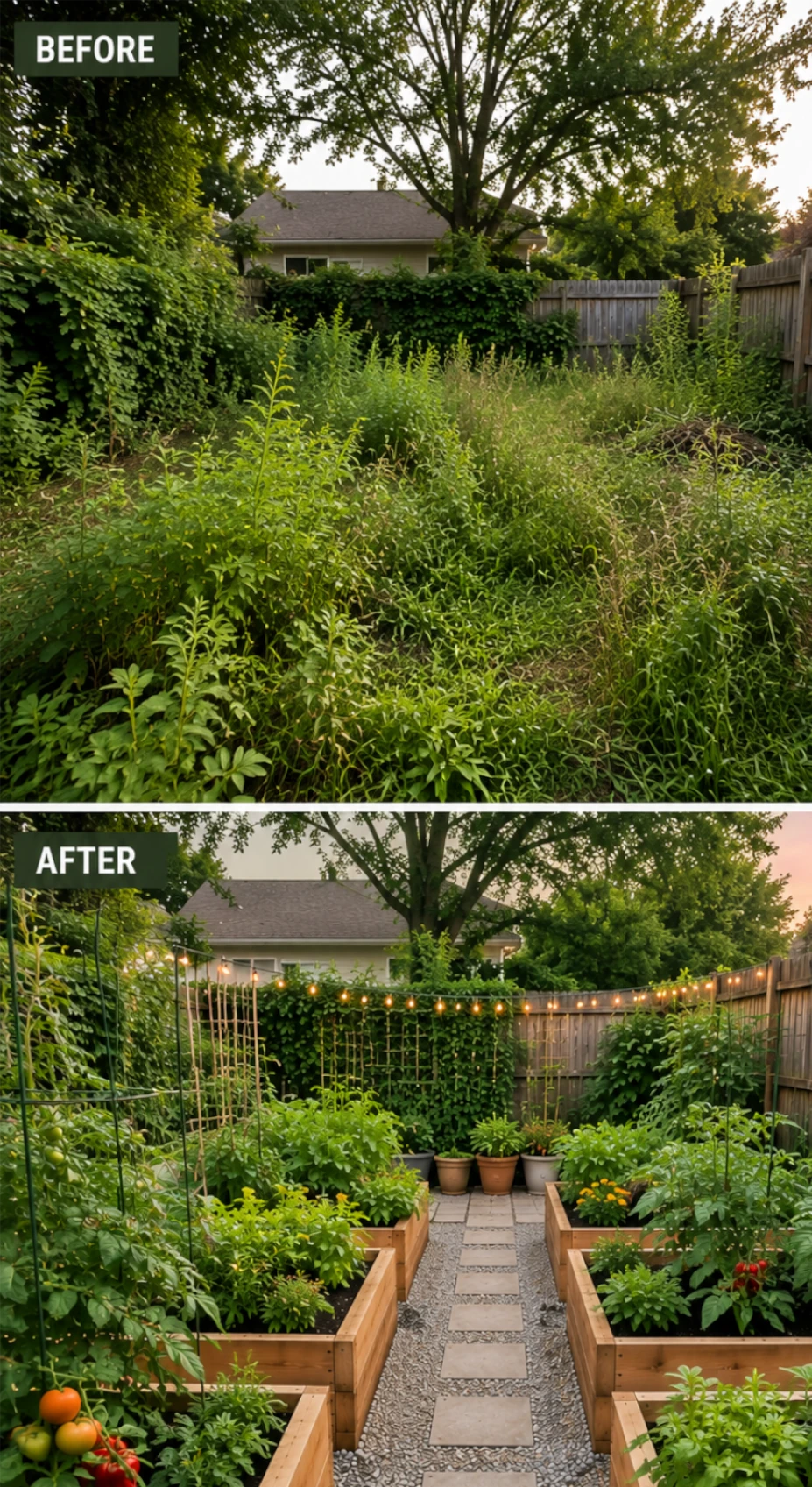
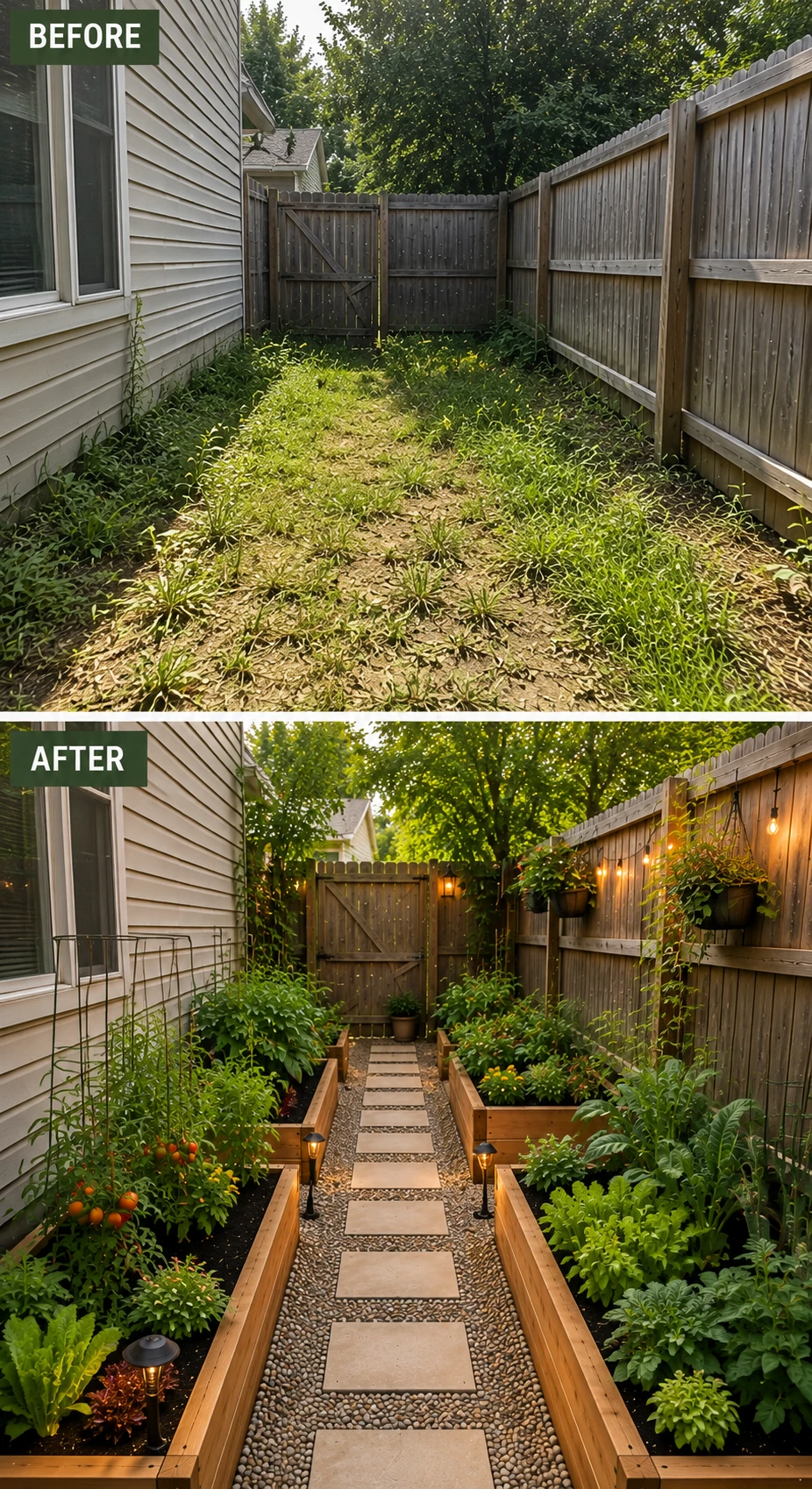
2. Weedy Backyard → Organized Food Garden
Use gravel or mulch pathways to turn an overgrown space into clearly defined growing zones.
3. Small Backyard → Functional Layout
Place beds around a central walkway so every planting area stays easy to reach.
4. Budget Raised Bed Makeover
Start with basic wood beds and improve the space gradually instead of building everything at once.
5. Cottage Garden Raised Beds
Mix vegetables with flowers to create a softer, informal garden style.
6. Modern Raised Bed Design
Combine dark metal beds with geometric paths for a contemporary backyard.
7. Corner Garden Conversion
Use an overlooked corner for one productive bed, herbs, and vertical support.
8. Side Yard Vegetable Garden
Arrange narrow beds in a line to make use of long, unused side-yard space.
9. Family Food Garden
Repeat several manageable beds for vegetables that the household eats regularly.
10. Beginner Four-Bed Setup
Create a simple grid with wide paths and one crop family per bed.
11. Backyard Homestead Garden
Combine raised beds with berries, herbs, composting, and seed-starting areas.
12. Pollinator-Friendly Garden
Pair vegetables with flowers that attract bees and beneficial insects.
13. Beds Around a Patio
Frame outdoor seating with productive beds that also soften the hardscape.
14. Gravel Garden Transformation
Use raised beds and gravel to solve muddy paths and poor drainage.
15. Trellis Garden Upgrade
Add arches or vertical supports for cucumbers, beans, tomatoes, and vines.
16. Pollinator Garden Conversion
Dedicate one or more beds to long-blooming flowers and herbs.
17. Privacy Garden Design
Use tall crops and trellises to create a soft seasonal screen.
18. Small Urban Backyard Garden
Choose compact beds, vertical crops, and clear walking space.
19. Rustic Raised Bed Garden
Use natural wood, mulch paths, and informal planting for a farmhouse feel.
20. Kitchen Herb Garden
Place shallow herb beds close to the kitchen door for daily access.
21. Raised Beds with Pergola
Combine food growing with a shaded seating or dining area.
22. Backyard Market Garden
Use repeated bed sizes and irrigation for maximum production.
23. Children's Garden Area
Choose reachable beds, wide paths, and easy crops such as strawberries and lettuce.
24. Orchard and Garden Combination
Integrate small fruit trees with sunny raised beds between them.
25. Dream Backyard Garden
Combine vegetables, flowers, seating, pathways, and one strong focal feature.
Plan the garden before buying the beds
| Decision | Best practice | Common mistake |
|---|---|---|
| Bed width | Keep the center reachable from the sides | Building beds too wide to maintain comfortably |
| Sunlight | Choose a location with strong daily sun for vegetables | Using a convenient but shaded corner |
| Paths | Leave enough room for a wheelbarrow or watering can | Squeezing too many beds into the footprint |
| Water | Plan hose access or drip irrigation before filling beds | Adding irrigation after plants are established |
| Soil | Use a raised-bed mix with compost and drainage | Filling beds with dense yard soil |
| Expansion | Start with one or two beds and add more later | Building a full garden before learning the workload |
Best crops for raised beds
| Crop | Difficulty | Why it works | Space note |
|---|---|---|---|
| Tomatoes | Easy–medium | High yield and easy vertical support | Give each plant room and a trellis |
| Lettuce | Easy | Fast harvest and compact growth | Good for edges and succession planting |
| Peppers | Easy | Productive in warm sunny beds | Compact compared with sprawling crops |
| Cucumbers | Easy | Very productive when grown vertically | Add a sturdy trellis |
| Strawberries | Easy | Good for edges and family gardens | Control runners |
| Basil and herbs | Easy | Frequent harvest and small footprint | Keep near the kitchen if possible |
| Carrots | Medium | Benefit from loose controlled soil | Choose deeper beds for long varieties |
| Zucchini | Easy | High yield | One plant can occupy significant space |
Build the raised bed system in the right order
Start with the bed and soil, then solve watering, vertical support, pathways, and tool storage. Buying accessories before the layout is fixed usually creates waste.
Infinite Cedar Raised Bed
A verified cedar bed option for a structured, natural-looking vegetable garden.
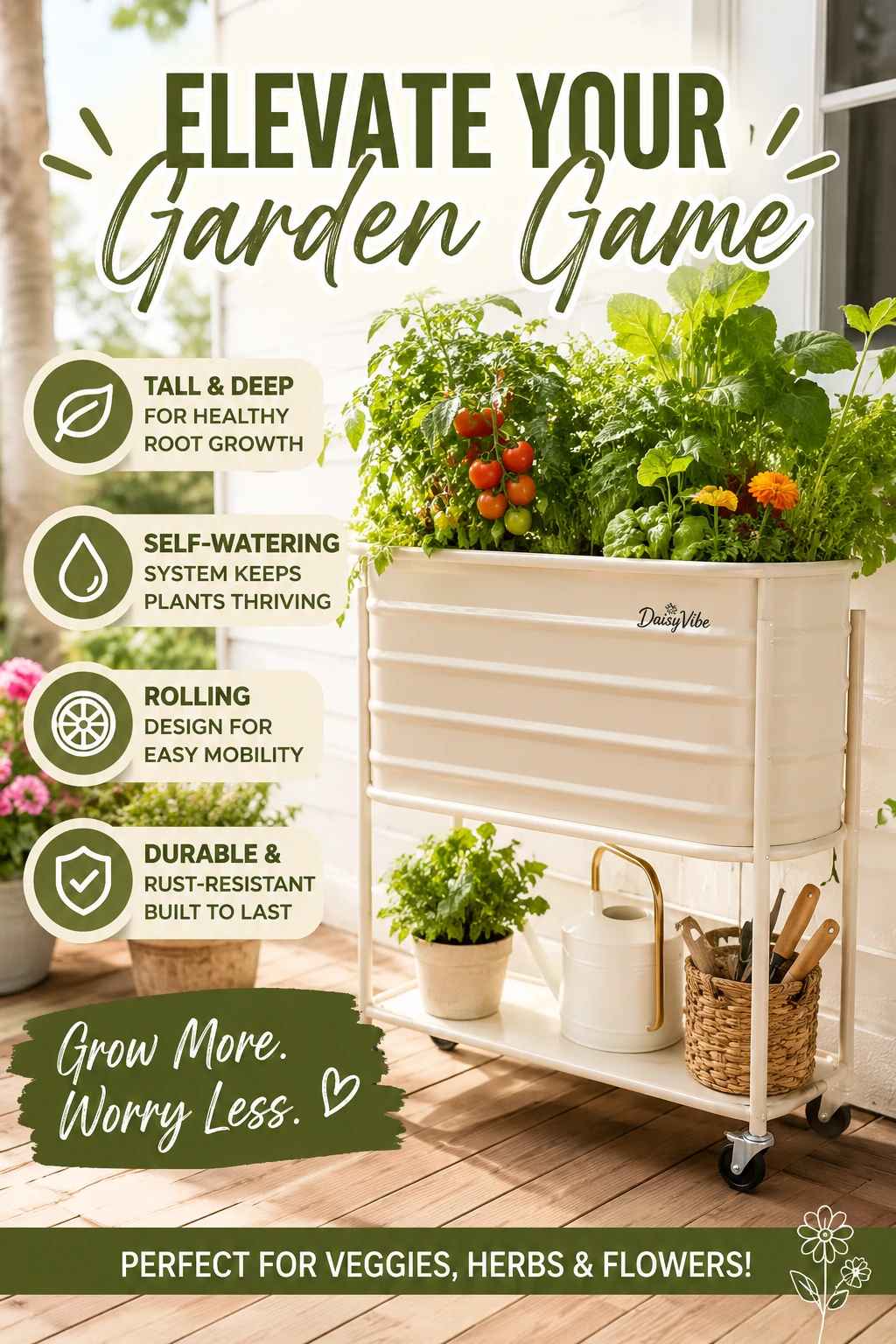
🛒 Check on AmazonDaisyVibe Rolling Raised Bed
A mobile self-watering bed for patios, balconies, and compact garden zones. Current stock is limited.
🛒 Check on AmazonBack to the Roots Organic Coir
Expanding coir that can support a lighter soil mix when blended appropriately.
🛒 Check on AmazonOld Potters Organic Compost
Plant-based compost for enriching a raised-bed soil blend.
🛒 Check on AmazonRAINPOINT Drip Irrigation System
A verified drip system for consistent watering. Current stock is very limited.
🛒 Check on AmazonVego Garden Arched Trellis
Supports cucumbers, beans, tomatoes, and vines while adding height to the garden.
🛒 Check on Amazoniropro Landscape Fabric
Heavy-duty woven ground cover for selected paths and landscape zones.
🛒 Check on AmazonCraft911 Garden Tool Set
A basic hand-tool set for planting, transplanting, and routine bed maintenance.
🛒 Check on AmazonProducts were verified on July 22, 2026. Prices and availability change. As an Amazon Associate, Inplanty may earn from qualifying purchases.
Frequently asked questions
What is the cheapest way to start a raised bed garden?
Start with one simple bed, use locally available materials, and spend first on soil quality and reliable watering rather than decorative accessories.
How wide should a raised bed be?
It should be narrow enough that you can comfortably reach the center without stepping into the soil. Access from one side requires a narrower bed than access from both sides.
Do raised beds need more watering?
They can dry faster than in-ground plots, especially in hot weather. Mulch and drip irrigation help stabilize moisture.
Which vegetables are easiest for beginners?
Lettuce, peppers, basil, bush beans, cucumbers on a trellis, and compact tomato varieties are practical starting choices.
Should I use landscape fabric under every bed?
Not always. The right base depends on drainage, soil contact, weeds, bed depth, and whether you want roots and soil organisms to connect with the ground below.