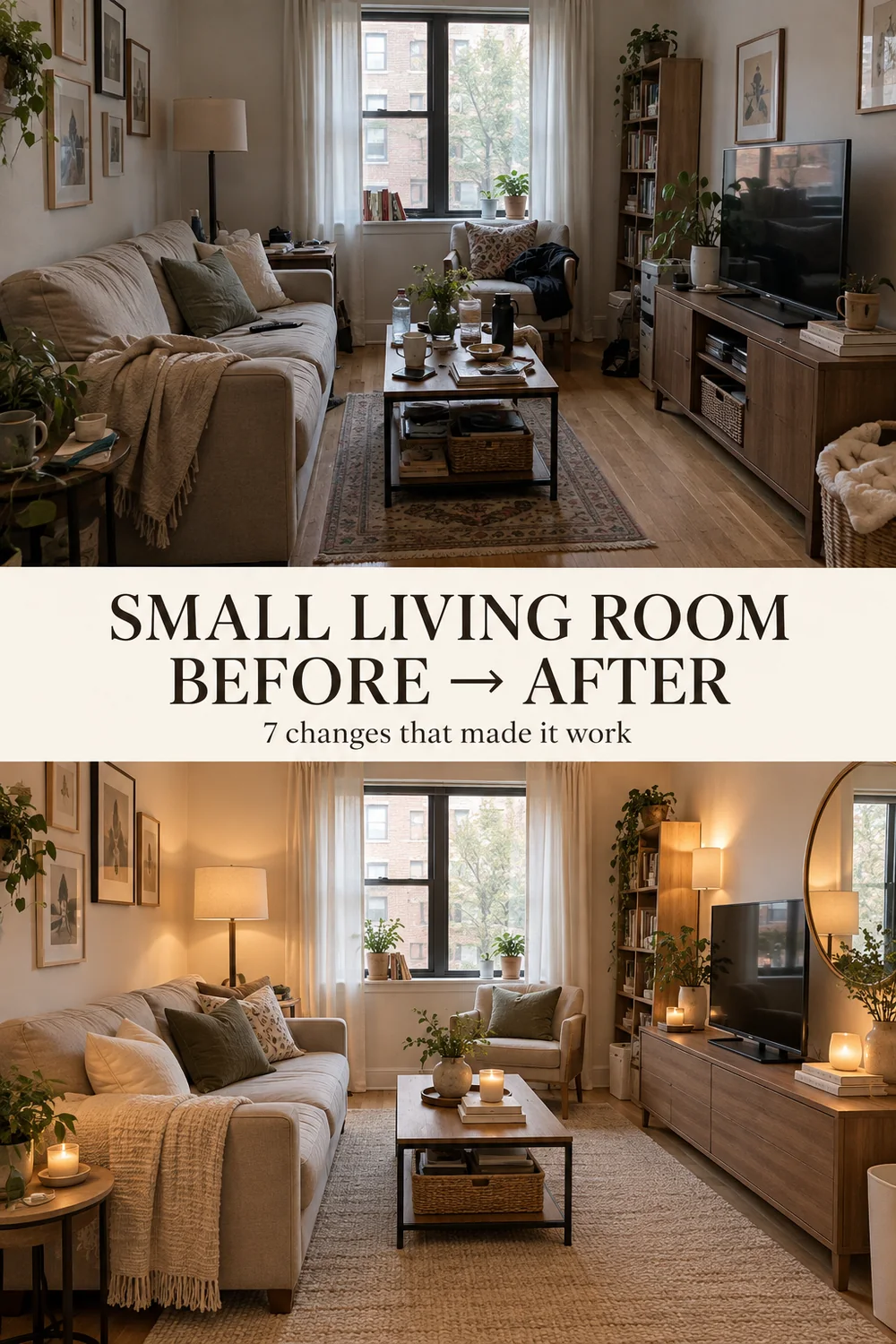
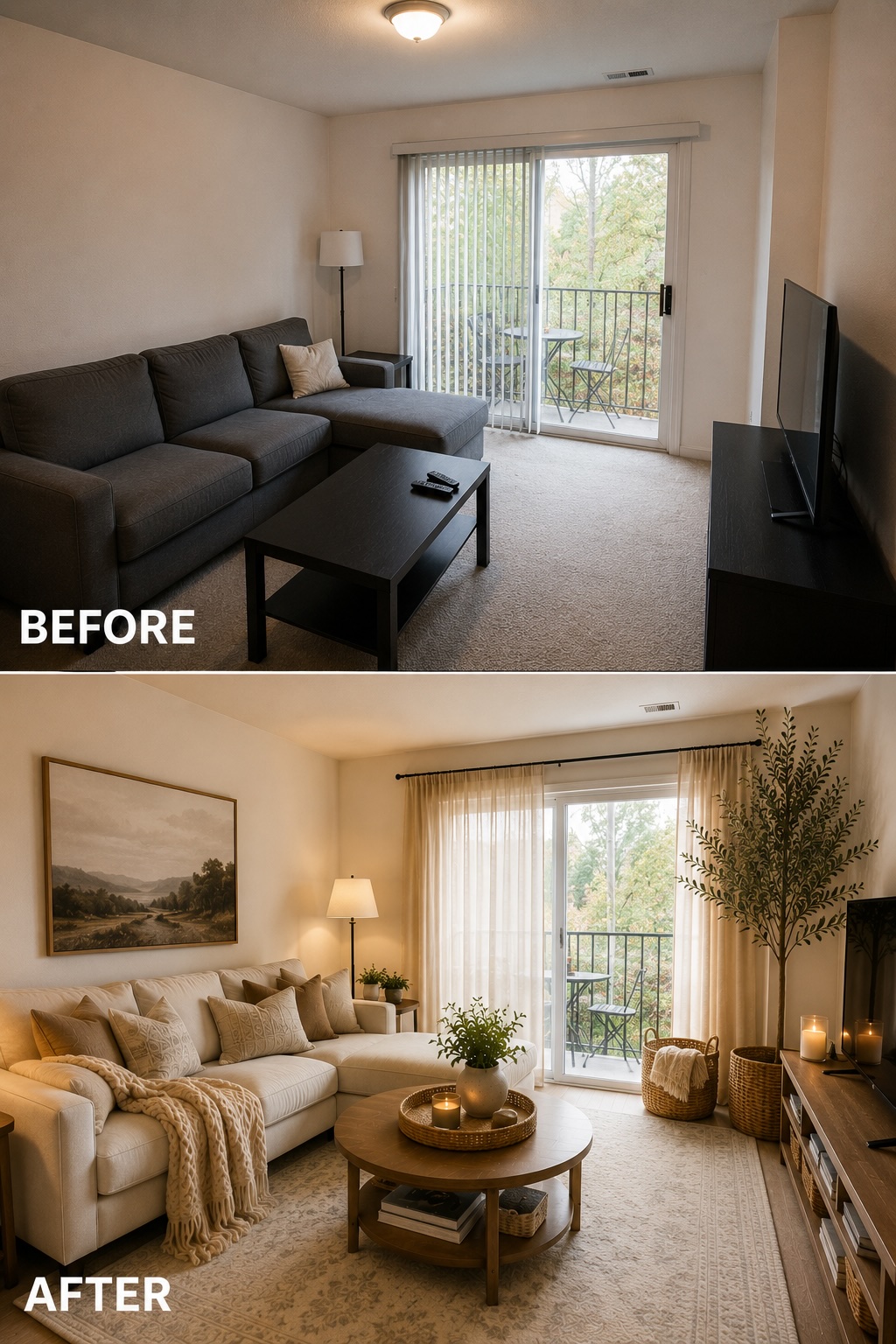
The layout, lighting, and visible clutter made it feel smaller
A compact living room can feel crowded even when it contains only a few furniture pieces. The problem is often not square footage. It is the number of objects competing for attention and the lack of clear visual structure.
This makeover focused on hidden storage, furniture that performs more than one job, softer lighting, a properly scaled rug, a clearer focal point, and natural texture.
No walls were removed and no built-in cabinetry was added. The transformation came from using the existing room more intentionally.
What made the room feel crowded
Before
- Too many useful items remained visible.
- The coffee table offered no storage.
- Blankets and pillows collected on the sofa.
- Harsh overhead lighting flattened the room.
- The walls felt unfinished.
- There was no clear focal point.
- Small clutter made the whole space feel busy.
After
- Everyday clutter had a hidden home.
- Furniture provided more than one function.
- Lighting created separate cozy zones.
- The rug visually connected the seating.
- The sofa looked styled but not crowded.
- A mirror added depth and reflected light.
- Greenery and natural materials softened the room.
How the makeover made the room feel twice as big
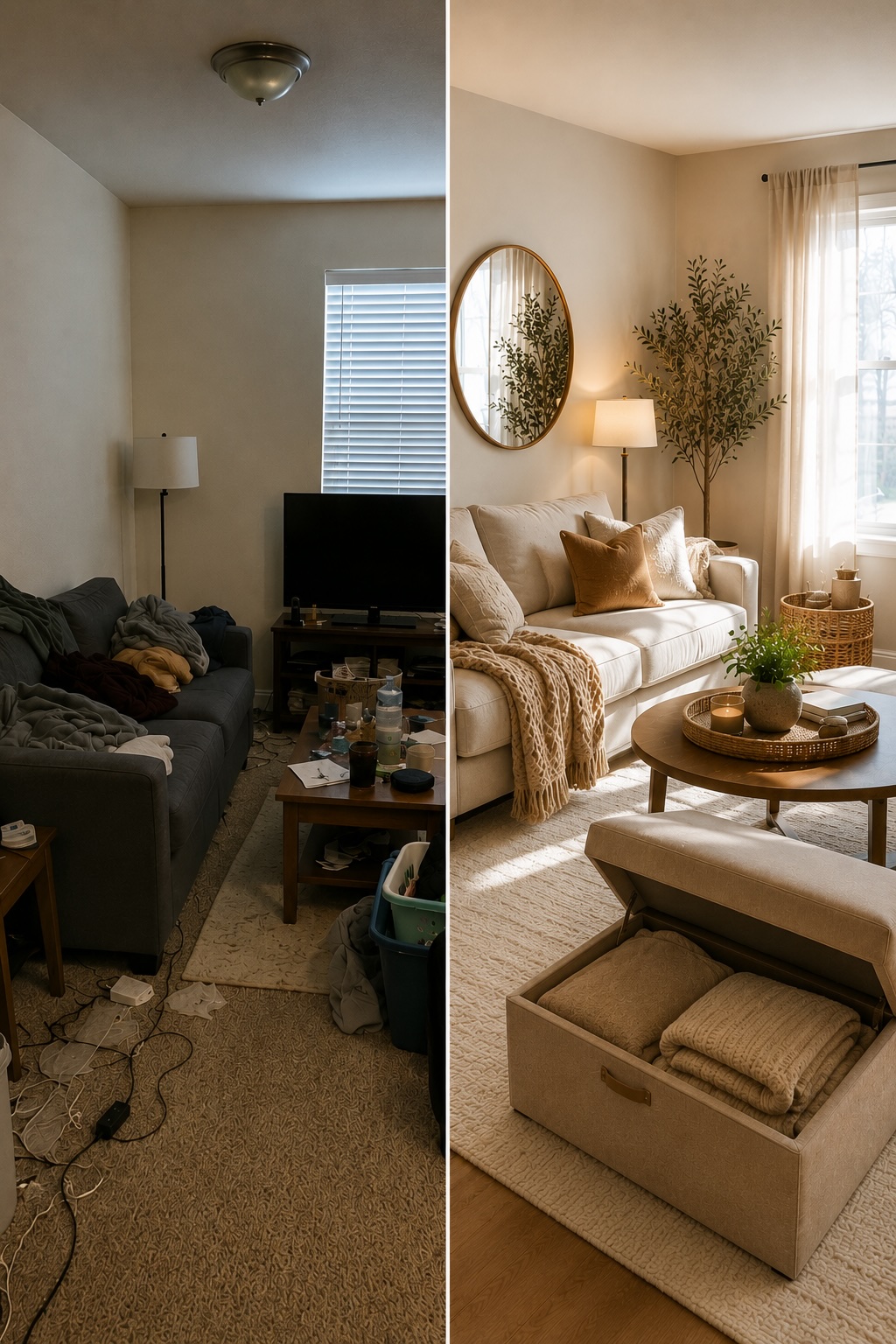
1. Replace Visual Clutter With Hidden Storage
Blankets, games, remotes, chargers, and pet supplies can make a small room feel busy even when each item is useful. A storage ottoman or basket gives those objects a home without adding another bulky cabinet.
- Blankets disappeared from the sofa.
- The seating area looked calmer.
- The ottoman added softness and texture.
- Storage and seating occupied one footprint.
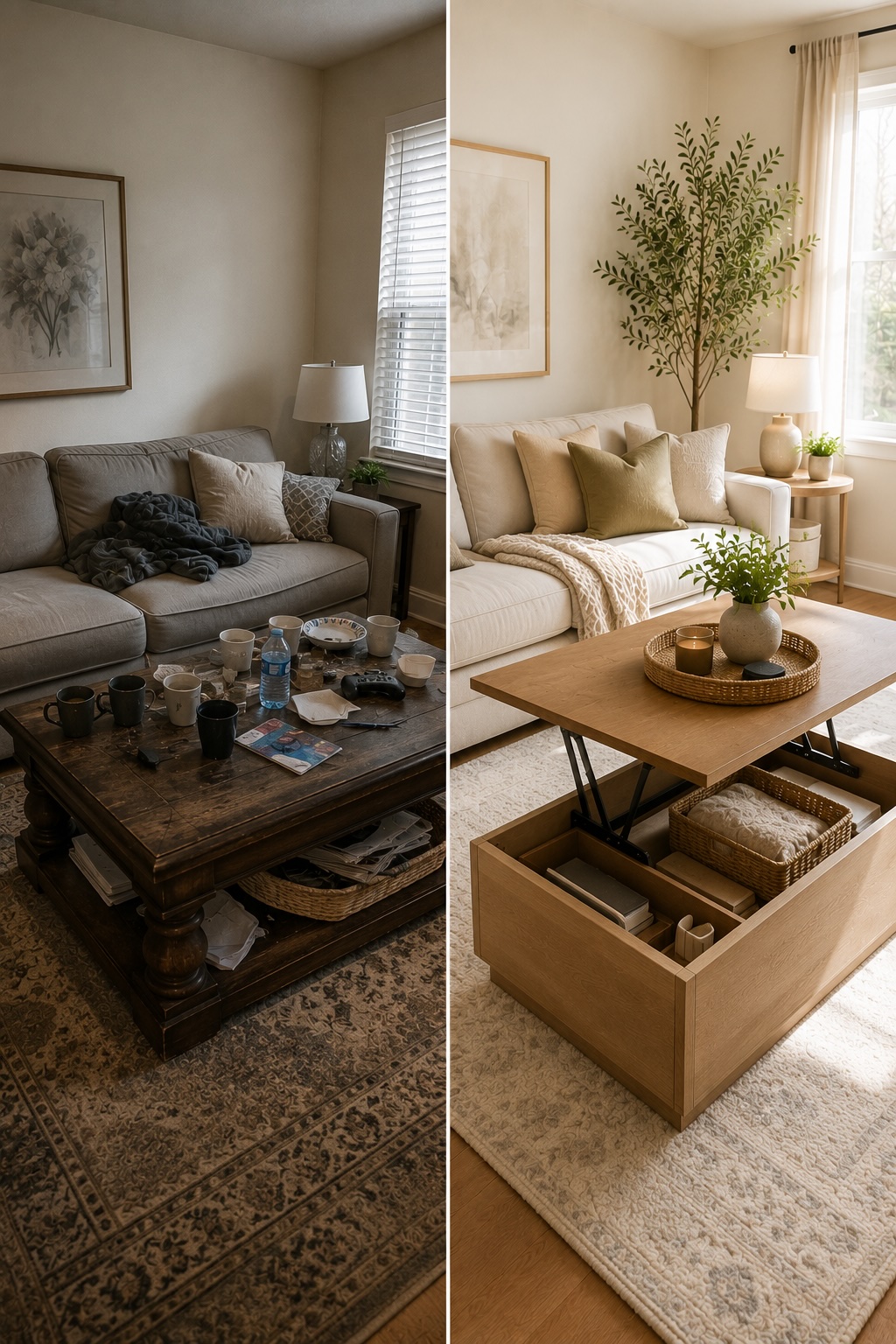
2. Swap the Bulky Coffee Table for a Smarter One
A small-room coffee table should do more than hold a few objects. A lift-top or storage model can conceal remotes, books, chargers, and electronics while still providing a useful surface.
- Small clutter gained a dedicated place.
- The table became more functional.
- No additional cabinet was required.
- The room stayed visually lighter.
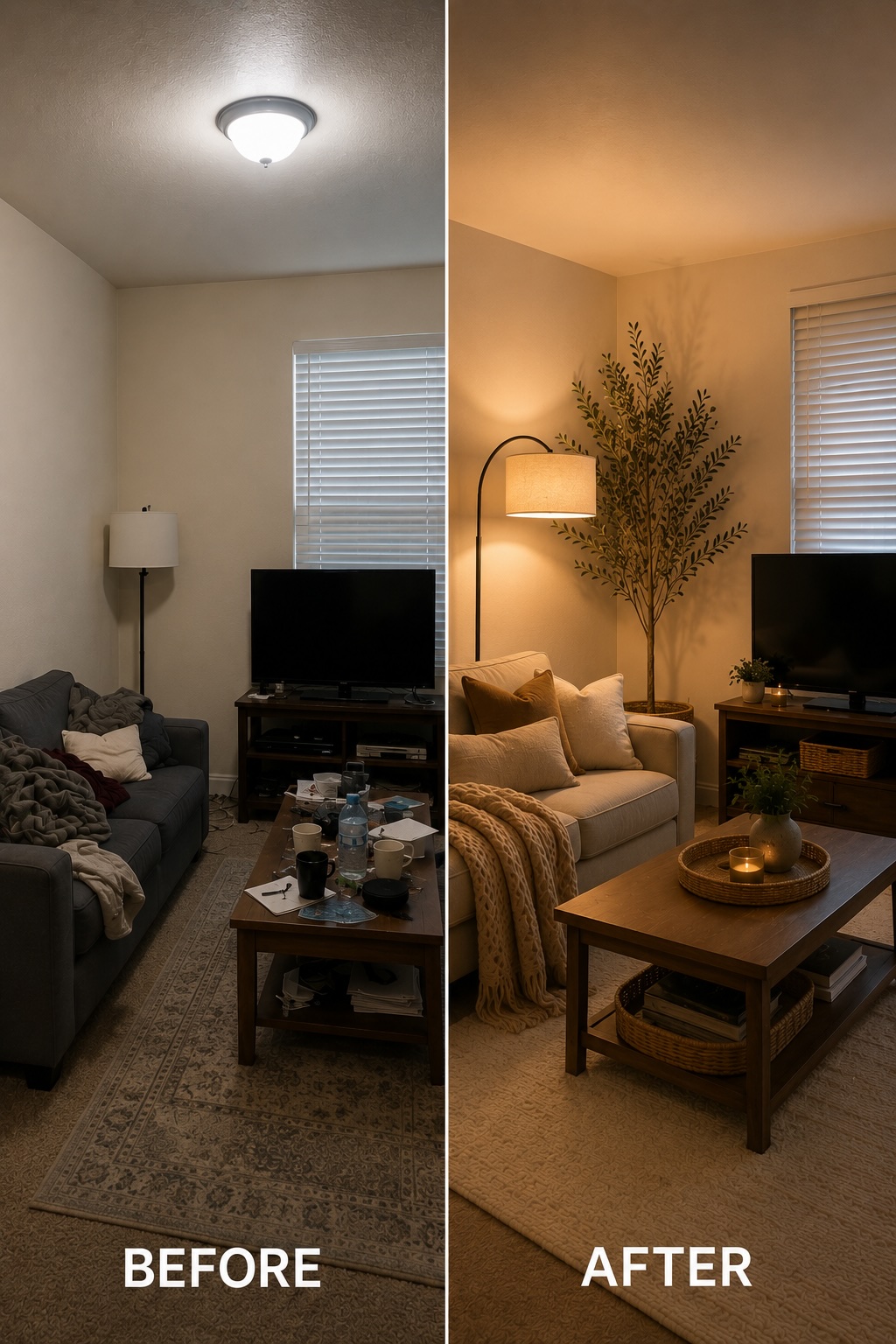
3. Add Layered Lighting
Relying only on overhead light can make a small room feel flat and harsh. A floor lamp, table lamp, or wall light creates separate visual zones and makes dark corners feel more intentional.
- The room felt warmer in the evening.
- Dark corners became part of the design.
- Lighting created more visual depth.
- The space felt styled rather than purely functional.
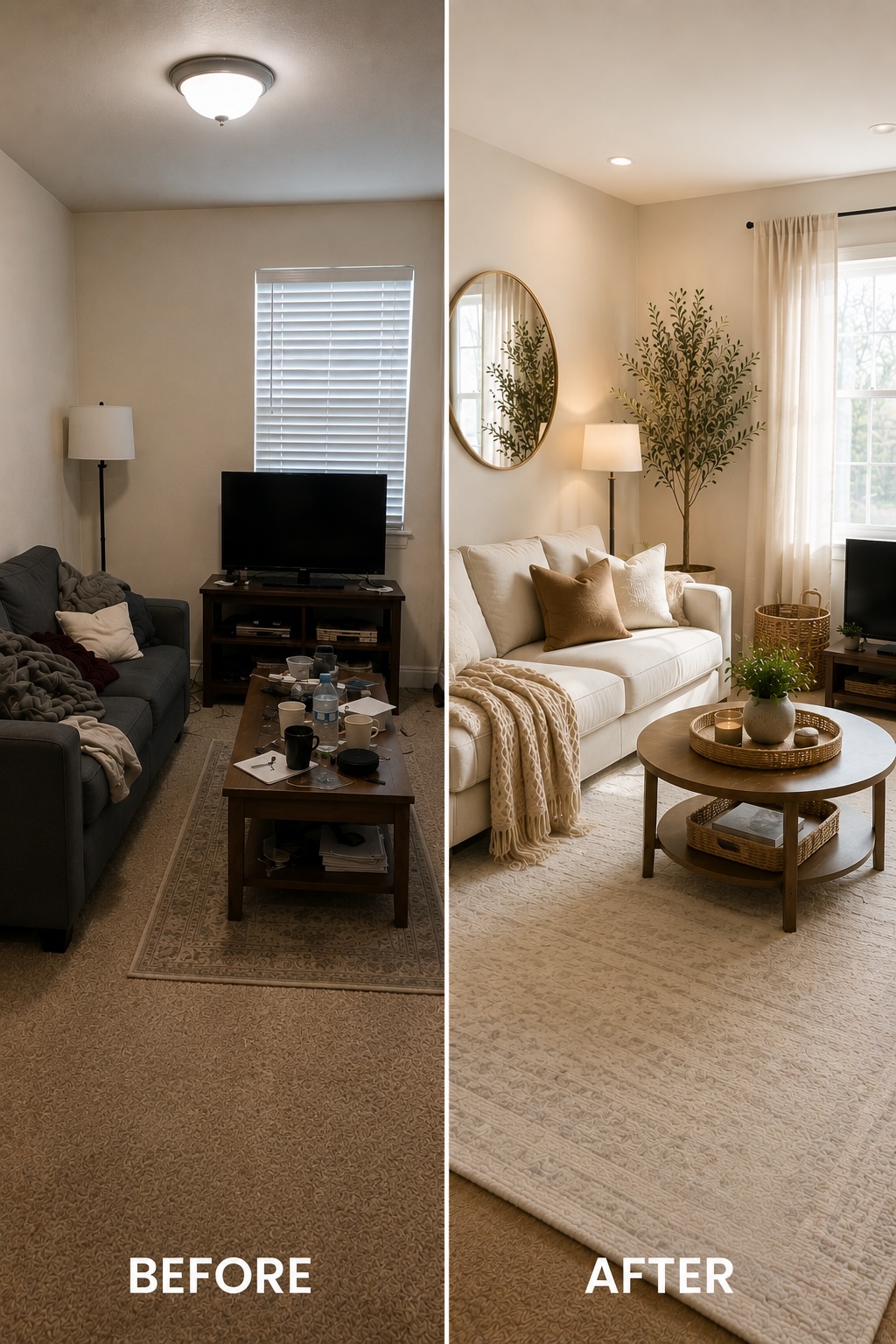
4. Use a Larger Rug to Define the Space
A rug that is too small makes every furniture piece look isolated. A properly scaled rug visually connects the sofa, table, and chair, making the seating area feel wider and more complete.
- The furniture read as one group.
- The room felt more polished.
- The neutral tone kept the space calm.
- The seating zone appeared larger.
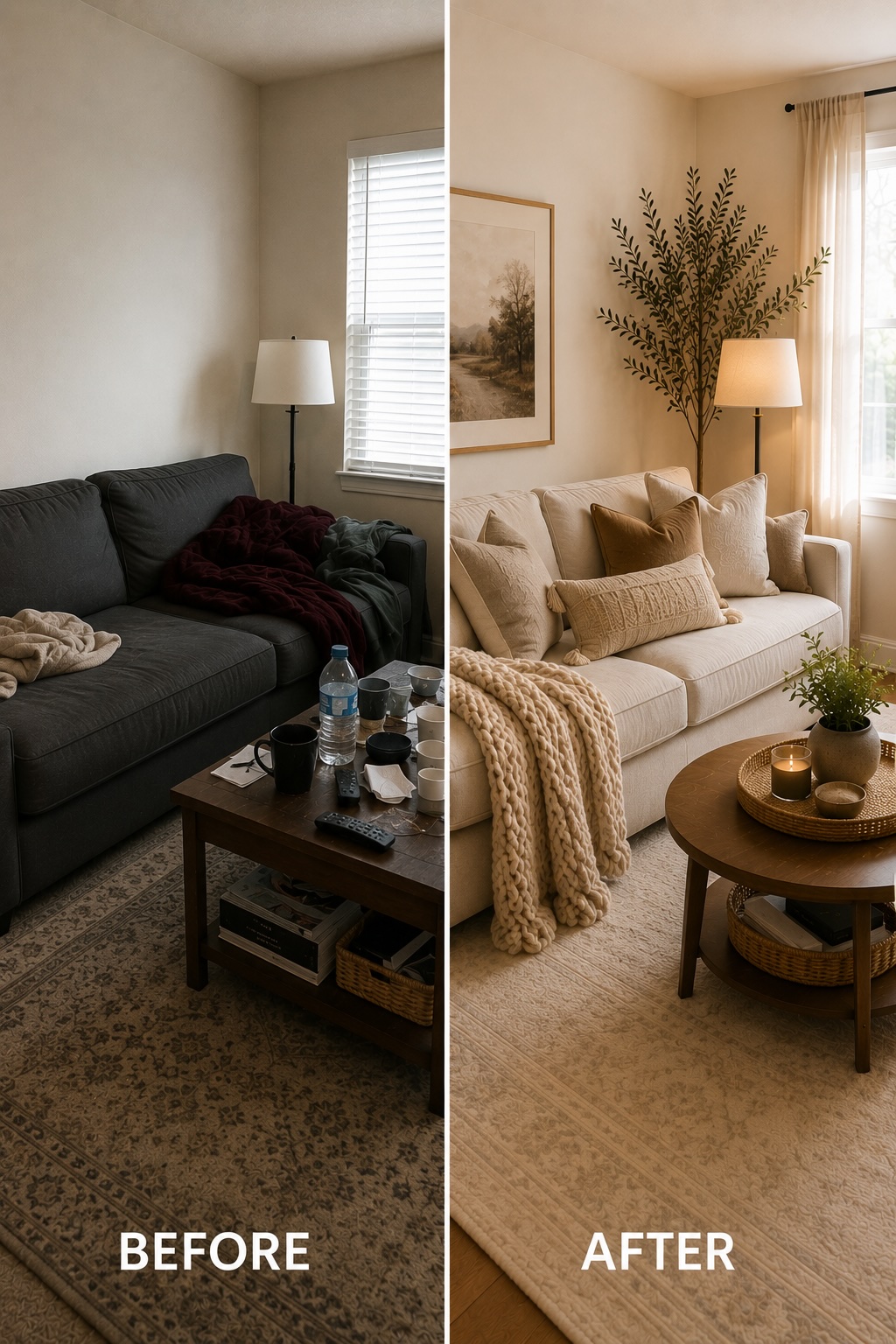
5. Style the Sofa With Pillows and Throws
The sofa is usually the largest object in a compact living room. A controlled palette of neutral pillows and one textured throw can make it feel intentional without creating more visual noise.
- The sofa became the focal point.
- The room felt softer and more comfortable.
- The neutral colors prevented visual clutter.
- The space looked finished with only a few pieces.
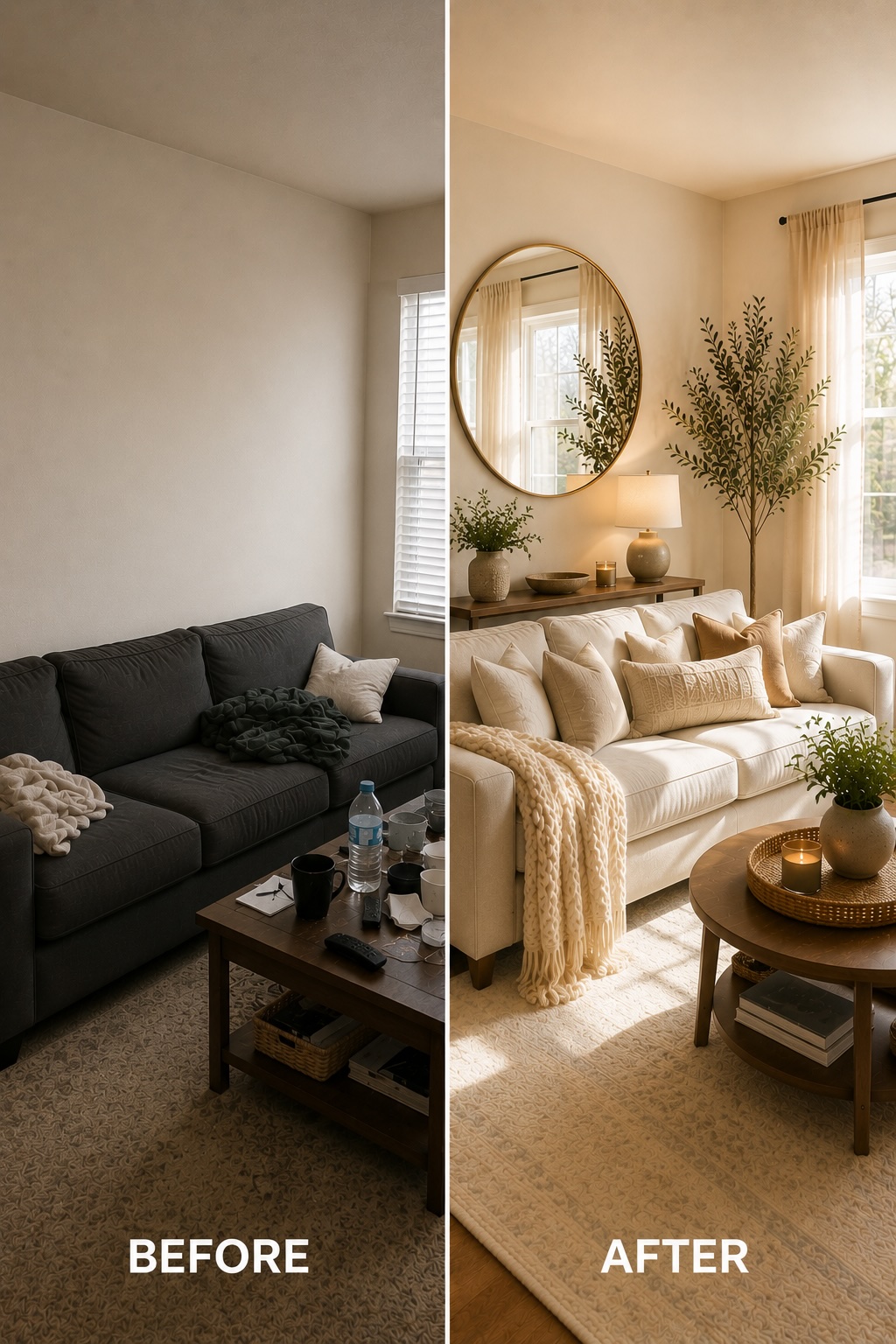
6. Add a Mirror to Create Depth
A large mirror reflects light, fills an empty wall, and creates the impression of depth. A round shape is especially effective in rooms dominated by rectangular furniture.
- The room appeared brighter.
- The wall gained a clear focal point.
- The reflection extended the visual field.
- The round shape softened the furniture lines.
7. Bring in Greenery and Natural Texture
Plants, woven baskets, and wood prevent a small room from feeling flat or overly hard. One tree or statement plant is often more effective than several small decorative objects.
- The room felt warmer and more alive.
- Natural texture balanced electronics and furniture.
- The final styling looked complete.
- One strong plant avoided decorative clutter.
As an Amazon Associate, Inplanty may earn from qualifying purchases.
A living room that feels brighter, calmer, and more intentional
After the seven changes, the room no longer felt like a collection of furniture and visible belongings. Hidden storage reduced visual noise, the larger rug connected the layout, layered lighting created depth, and a few restrained accessories finished the space.
The biggest lesson is that a small living room does not need a major renovation to feel transformed. The room needs clearer functions, fewer visible items, and stronger visual relationships between the furniture.
Use this order for your own small living room
Frequently asked questions
How can I make a small living room feel bigger?
Reduce visible clutter, use multifunctional furniture, anchor the seating with a properly scaled rug, reflect light with a mirror, and add layered lighting instead of relying only on the ceiling fixture.
What furniture works best in a small living room?
Storage ottomans, lift-top coffee tables, nesting tables, slim consoles, storage benches, and other multifunctional pieces provide the most value per square foot.
Do mirrors really make a room look bigger?
Yes. They reflect light and extend the visual field, especially when placed opposite a window, lamp, or attractive part of the room.
What is the easiest makeover idea?
Reducing visible clutter with hidden storage usually creates the fastest improvement because it changes the entire room before any decorative styling is added.
Should a small living room use a small rug?
Not necessarily. A rug that is too small can make the furniture look disconnected. A larger rug that reaches beneath the front legs of the main seating often makes the room feel more unified and spacious.