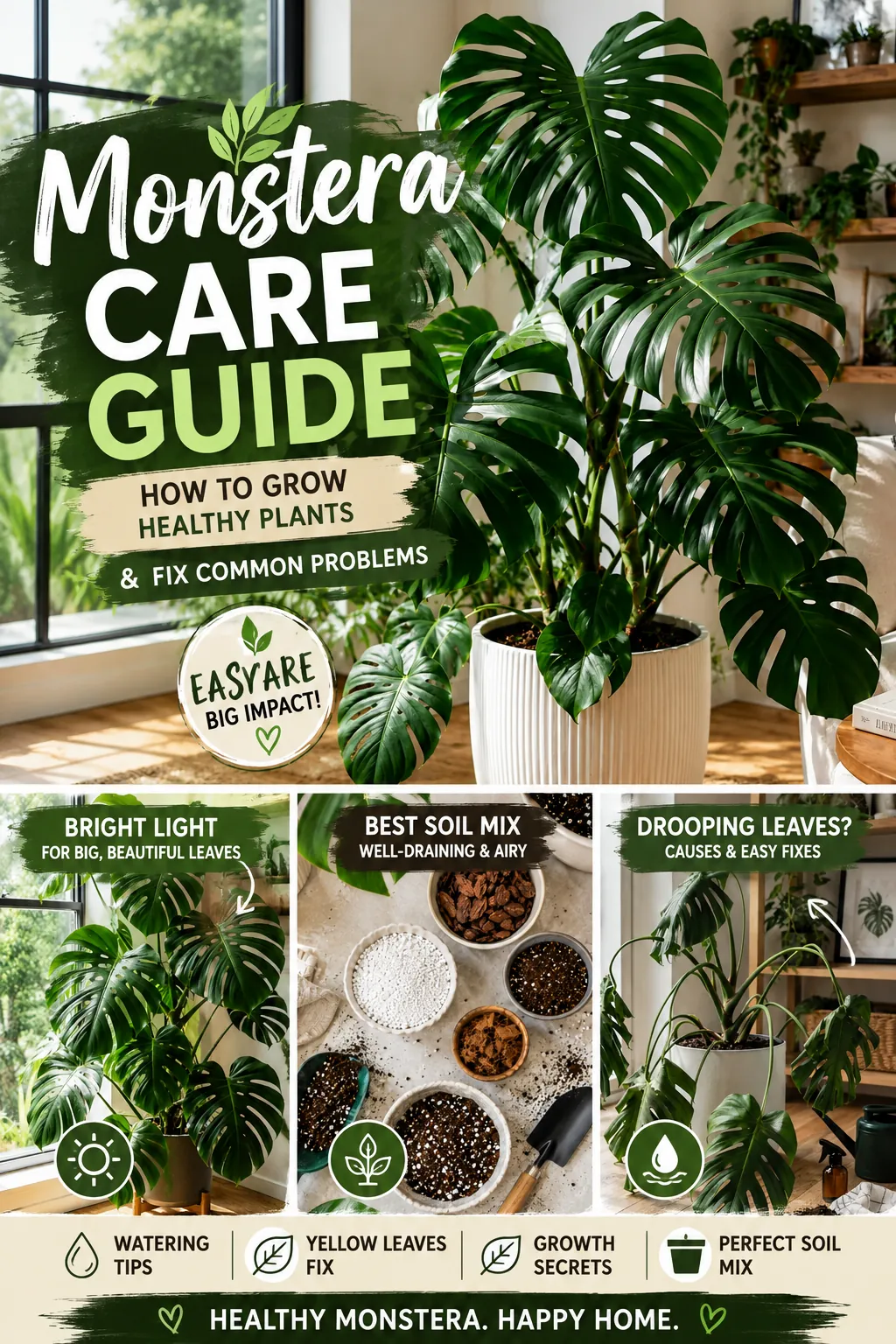
Monstera Care Guide: How to Grow Healthy Plants and Fix Common Problems
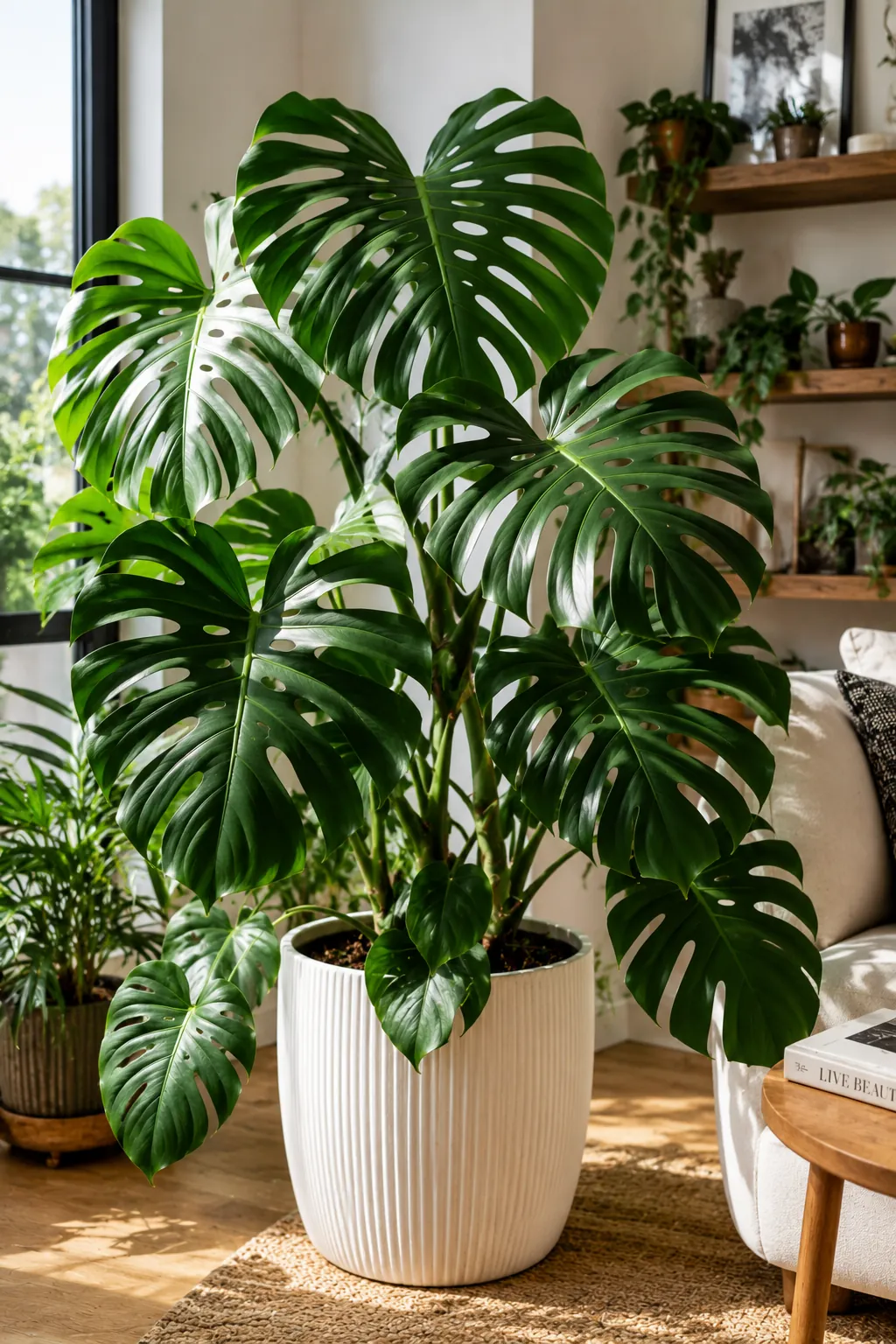
Monstera deliciosa has become one of the most popular houseplants in the world—and it's easy to see why. Its large split leaves, fast growth, and tropical appearance make it a favorite among beginner and experienced plant lovers alike.
While Monstera are generally easier to care for than Alocasias, they can still develop problems such as yellow leaves, drooping stems, brown spots, or slow growth when their needs aren't met.
This guide covers everything you need to know to keep your Monstera healthy and thriving indoors.
Monstera Care Basics
| Feature | Monstera |
|---|---|
| Light | Bright indirect light |
| Water | Moderate |
| Humidity | Medium to High |
| Difficulty | Easy |
| Growth Rate | Fast |
| Pet Safe | No |
Monstera thrive when given bright indirect light, well-draining soil, and consistent watering. Unlike many tropical plants, they can tolerate average indoor conditions quite well, making them one of the best beginner houseplants.
How Much Light Does Monstera Need?
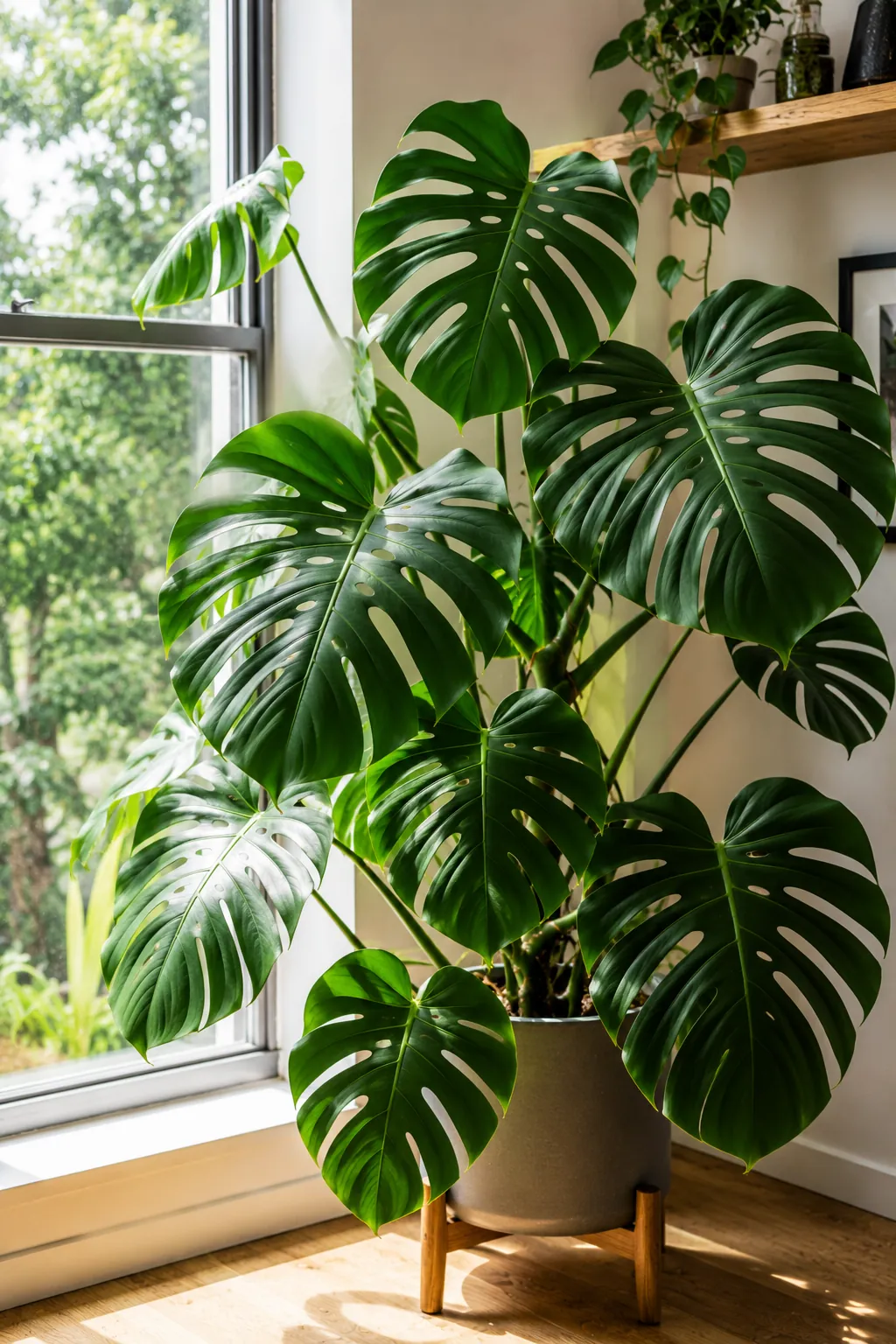
Monstera grows best in bright indirect light.
Ideal locations include:
- Near east-facing windows
- A few feet from south-facing windows
- Bright rooms with filtered sunlight
Too little light often causes:
- Smaller leaves
- Lack of leaf splits
- Slow growth
Too much direct sunlight may burn the foliage.
Why Are My Monstera Leaves Turning Yellow?
Yellow leaves are one of the most common Monstera problems.
Overwatering
The most common cause.
Signs include:
- Yellow lower leaves
- Wet soil
- Soft stems
Underwatering
Dry soil can also cause yellowing.
Natural Aging
Older leaves occasionally yellow and die off as the plant grows.
This is completely normal.
Why Is My Monstera Drooping?
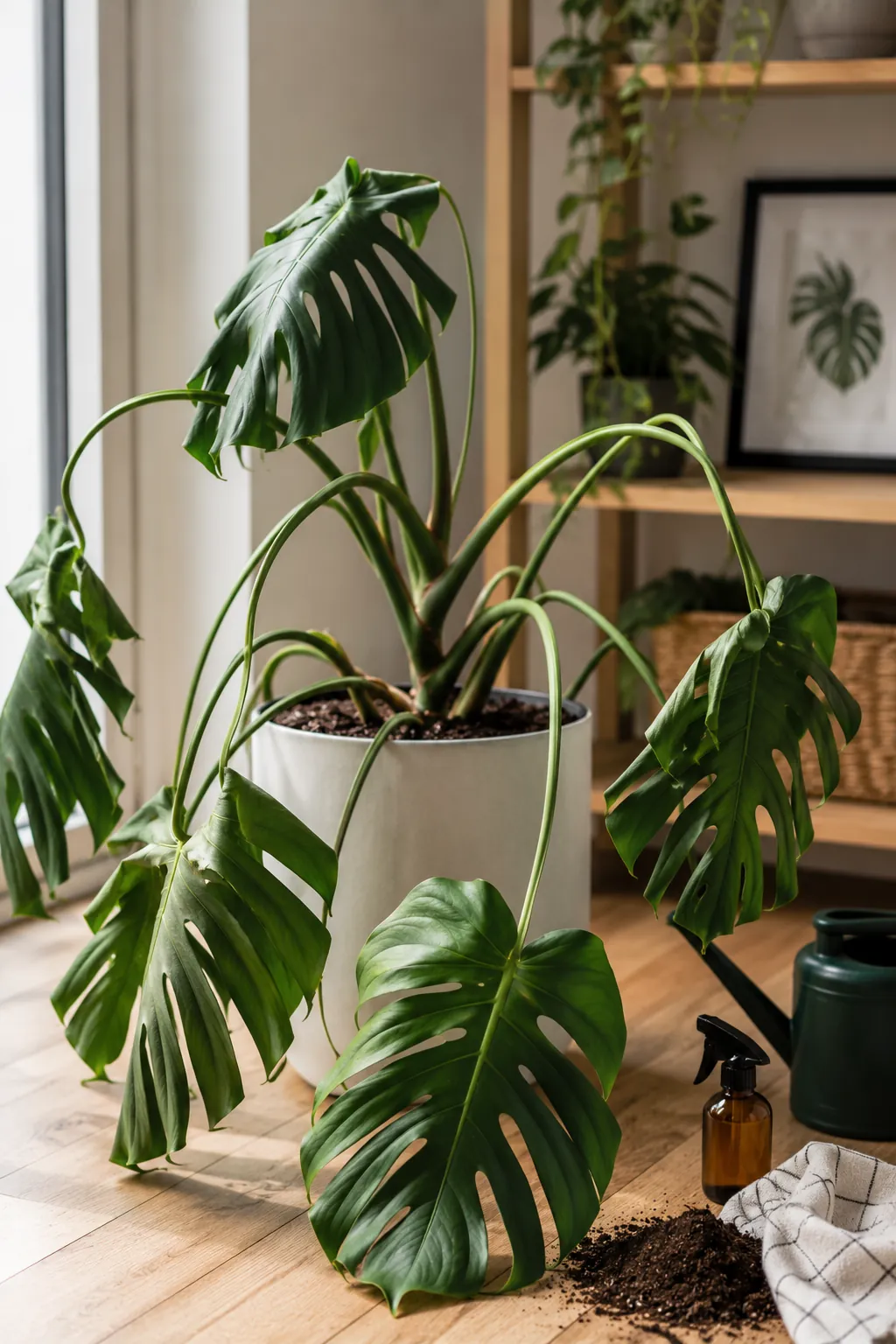
Drooping usually indicates stress.
Common causes include:
Dry Soil
Monsteras often perk back up after a thorough watering.
Root Problems
Root rot from overwatering can cause severe drooping.
Temperature Stress
Cold drafts and sudden temperature changes may shock the plant.
Brown Spots and Crispy Edges
Brown spots often indicate:
- Low humidity
- Inconsistent watering
- Sunburn
- Pest damage
If the spots appear dry and crispy, low humidity is often the cause.
If the spots appear dark and soft, check for overwatering issues.
How Often Should You Water Monstera?
Instead of following a strict schedule:
- Check the soil weekly
- Water when the top 2 inches feel dry
- Reduce watering during winter
Most indoor Monstera need water every:
- 7–14 days in spring and summer
- 2–3 weeks in winter
Best Soil for Monstera
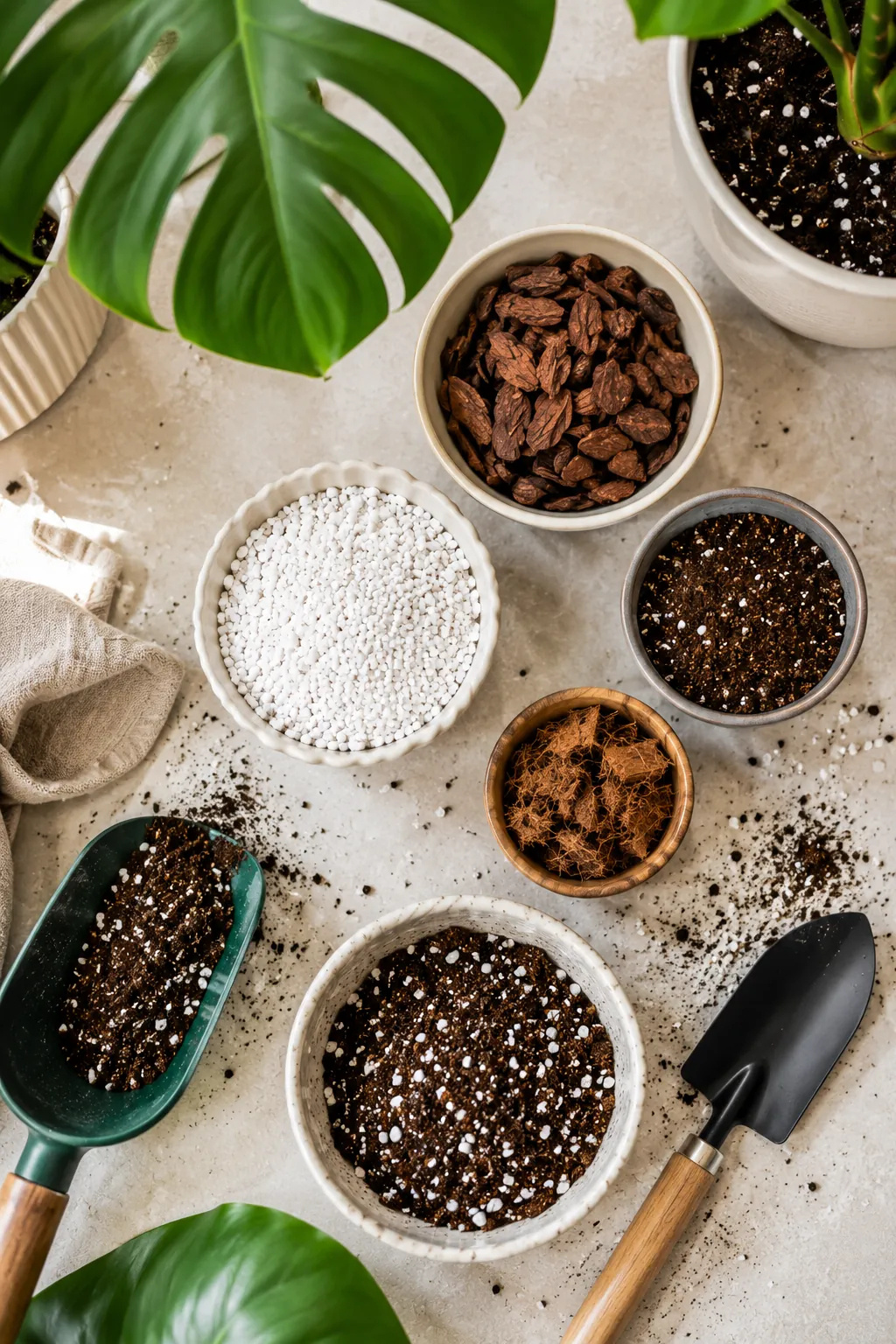
Monstera prefers chunky, airy soil.
A great mix contains:
- Potting soil
- Orchid bark
- Perlite
- Coco coir
This allows roots to breathe while retaining enough moisture.
Common Monstera Care Mistakes
Avoid these mistakes:
- Overwatering
- Placing in dark corners
- Using heavy soil
- Ignoring drainage
- Expecting fenestrations in low light
Most Monstera problems can be prevented by improving light and soil conditions.
Read Also
- 10 Stunning Monstera Varieties Every Plant Lover Should Know
- Alocasia Care Guide: How to Grow Healthy Plants and Fix Common Problems
- 15 Best Low-Light Houseplants for Beginners (That Actually Survive Dark Rooms)
- 25 Small Indoor Plant Corner Ideas for Apartments and Small Spaces
- Houseplants that look like Philodendron Gloriousum
Final Thoughts
Monstera plants are among the easiest tropical houseplants to grow indoors. With bright indirect light, proper watering, and a well-draining soil mix, they can thrive for years and produce the large split leaves that make them so popular.
If your Monstera develops yellow leaves, drooping stems, or brown spots, don't panic. Most issues can be corrected quickly with small adjustments to its care routine.