Best and Worst Rare Anthuriums for Beginners
Some rare Anthuriums adapt surprisingly well to normal homes. Others demand stable humidity, careful watering, excellent airflow, and patience. This guide separates the safest first choices from the plants better left for experienced collectors.
Leaf thickness, root sensitivity, humidity tolerance, and recovery speed matter more than collector status
Many growers fall in love with rare Anthuriums after seeing velvet leaves and bright veins online. The problem is that mature display photos rarely show how differently these plants respond to shipping, repotting, dry air, or inconsistent watering.
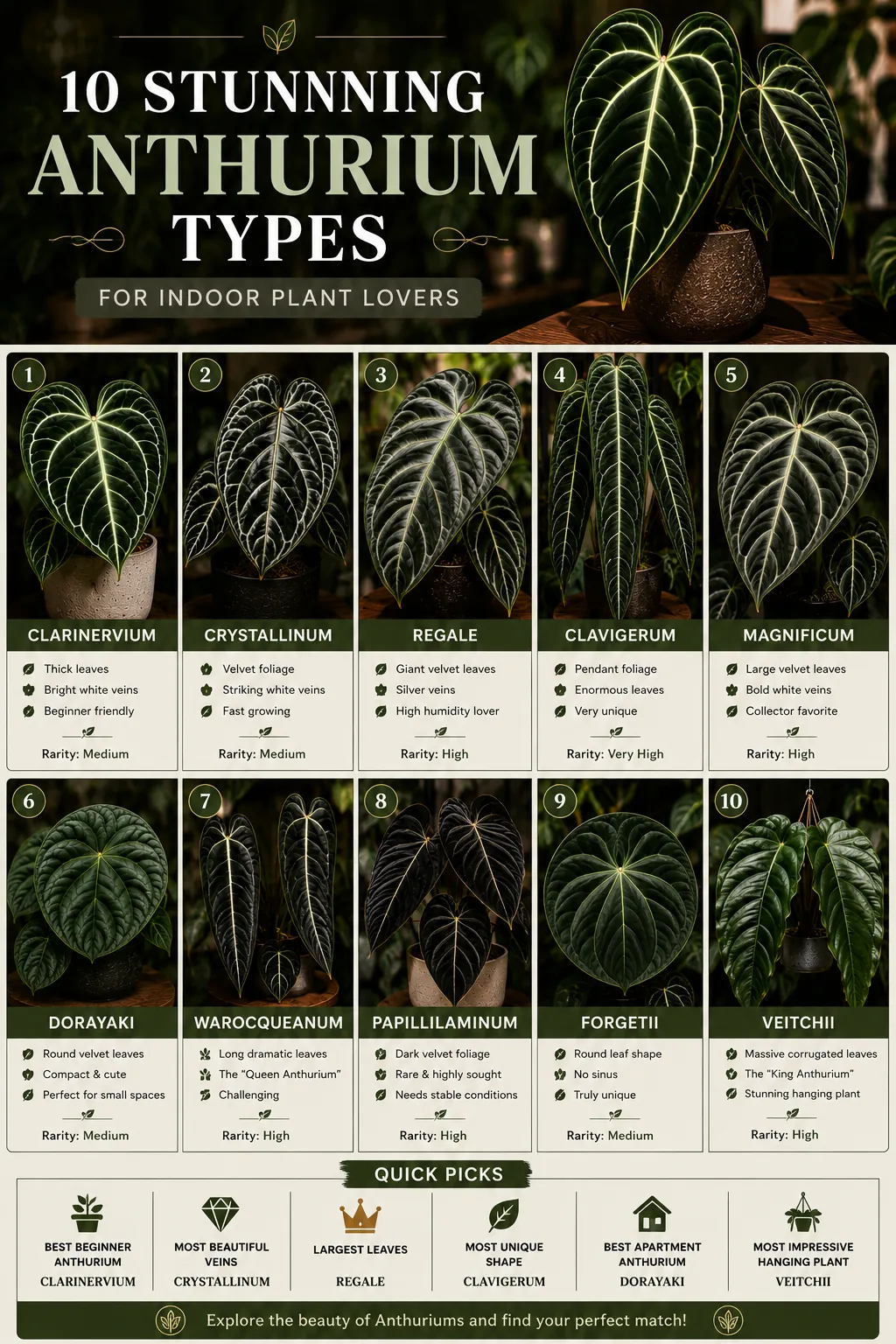
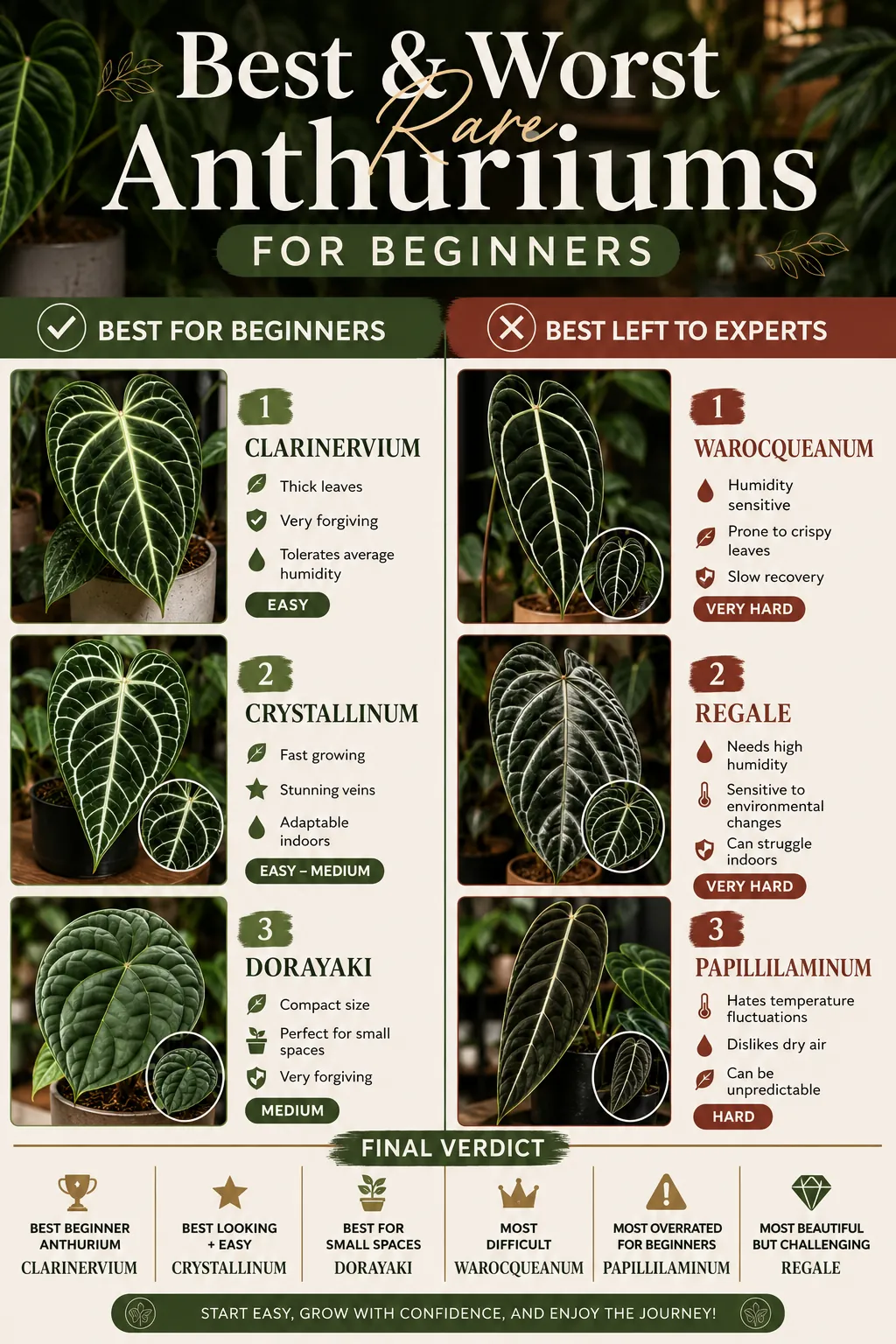
Clarinervium, Crystallinum, and Dorayaki are usually better first choices because they remain manageable and recover more predictably. Warocqueanum, Regale, and Papillilaminum are more likely to punish unstable conditions.
The right first Anthurium should teach you the genus without forcing you to build a greenhouse around one plant.
Four traits define beginner friendliness
Leaf thickness
Thicker leaves usually tolerate household conditions and small mistakes better.
Humidity tolerance
Some species decline quickly when humidity or airflow changes.
Root sensitivity
More sensitive roots make shipping, repotting, and watering errors harder to recover from.
Recovery speed
Beginner-friendly plants should rebound reasonably well after environmental stress.
Rare Anthuriums ranked by beginner difficulty
| Anthurium | Beginner level | Difficulty | Main reason | Best fit |
|---|---|---|---|---|
| Clarinervium | Excellent | Easy–medium | Thick leaves and compact growth | First rare Anthurium |
| Crystallinum | Very good | Easy–medium | Adaptable collector look | Growers wanting velvet foliage |
| Dorayaki | Very good | Medium | Compact and manageable | Apartments and shelves |
| Magnificum | Moderate | Medium | Needs steadier humidity and space | Second or third rare Anthurium |
| Papillilaminum | Low | Hard | Can react unpredictably to change | Experienced collectors |
| Regale | Very low | Very hard | Large leaves and sensitive environment needs | Controlled growing spaces |
| Warocqueanum | Very low | Very hard | Humidity sensitivity and slow recovery | Advanced growers |
Three plants that offer collector appeal without extreme difficulty
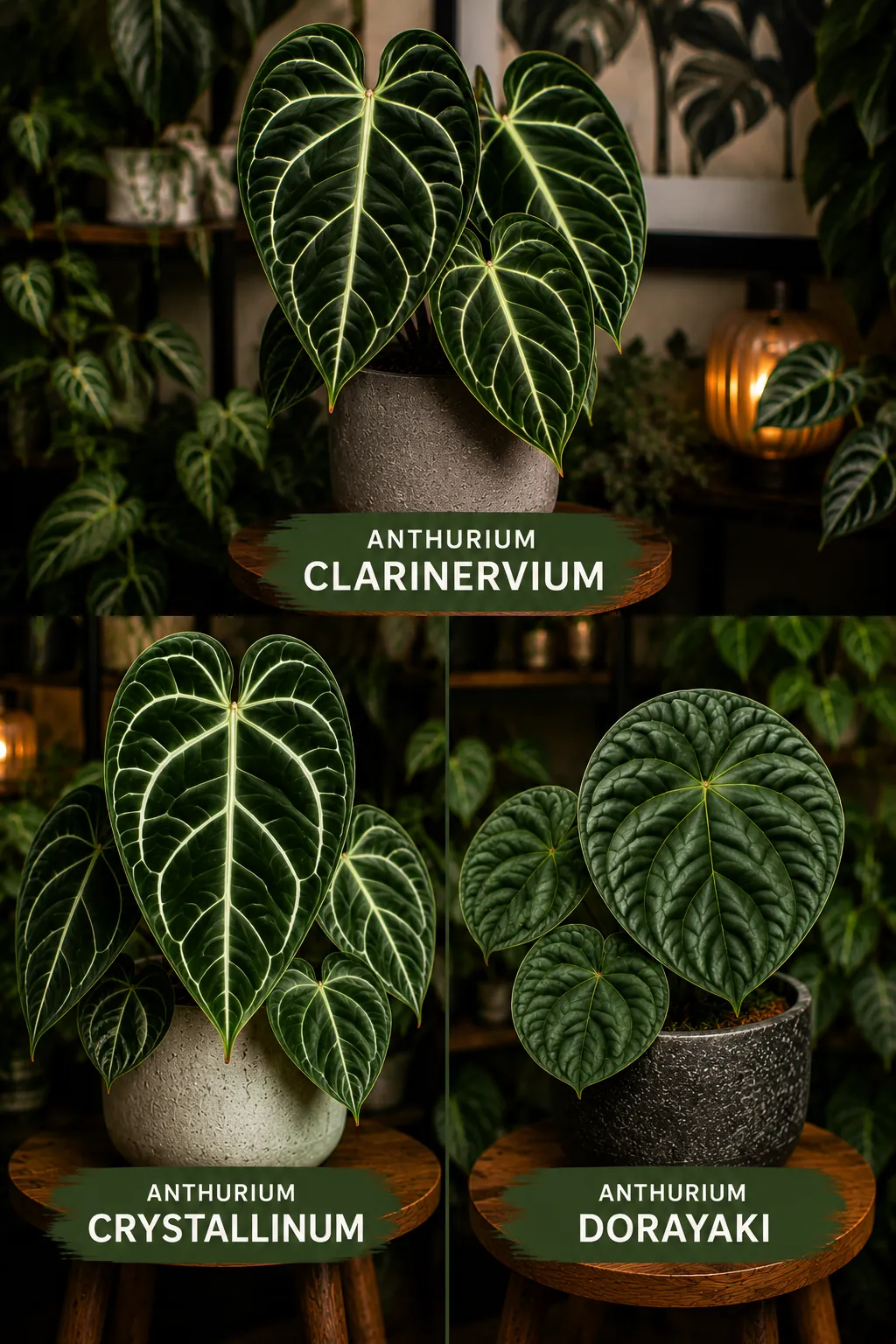
Anthurium Clarinervium
Clarinervium is the strongest first rare Anthurium because its thick leaves, compact growth, and steadier pace make it easier to understand and manage.
- More tolerant than delicate velvet species
- Fits shelves and smaller rooms
- Distinctive white veining
- Growth is slow but predictable
Anthurium Crystallinum
Crystallinum delivers the classic velvet Anthurium appearance with elegant silver-white veins while remaining more adaptable than many advanced collector species.
- Premium collector appearance
- Often grows more actively than Clarinervium
- Manageable mature size
- Good bridge into rarer velvet Anthuriums
Anthurium Dorayaki
Dorayaki is valued for rounded velvet leaves and compact proportions, making it one of the easiest collector Anthuriums to display in apartments.
- Does not need a huge footprint
- Works well on plant shelves
- Distinctive leaf shape
- Less intimidating than giant-leaf species
Beautiful plants that are better after you have more experience
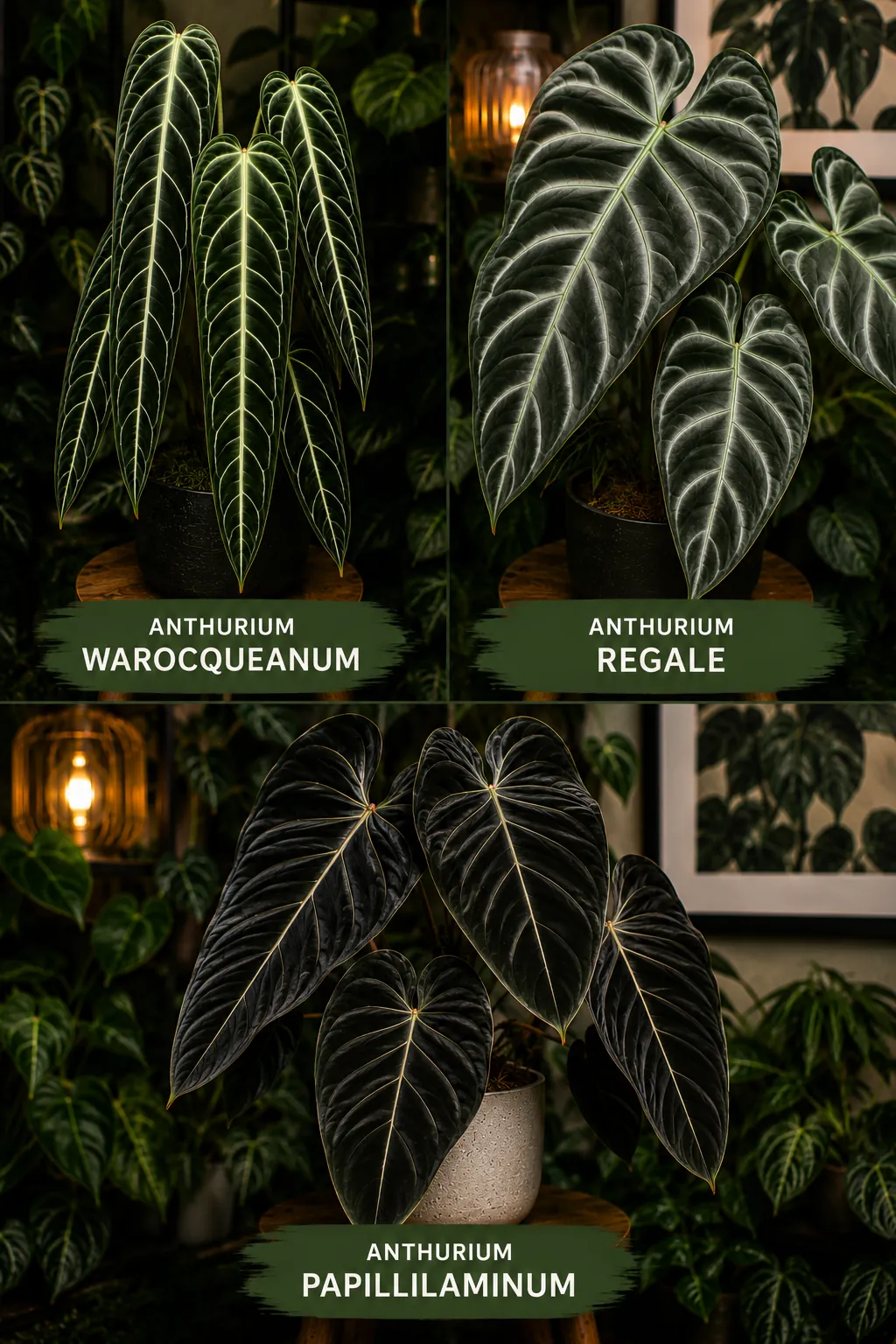
Anthurium Warocqueanum
The Queen Anthurium is unforgettable, but long pendant leaves and sensitivity to humidity, shipping, and environmental change make it a poor first purchase.
- Crispy leaf edges
- Humidity stress
- Shipping shock
- Slow recovery after damage
Anthurium Regale
Regale can produce some of the most dramatic velvet foliage in the genus, but its mature scale and sensitivity make it difficult in ordinary rooms.
- Needs stable humidity
- Reacts to sudden environmental changes
- Requires significant space
- Can decline after shipping or repotting
Anthurium Papillilaminum
Papillilaminum is a dream plant for dark-foliage collectors, but it can respond poorly to temperature shifts, dry air, root disturbance, and inconsistent care.
- Temperature sensitivity
- Dry-air stress
- Repotting setbacks
- Less predictable indoor response